
MSI RX3870-T2D512E-OC (Radeon HD 3870)
We've evaluated an overclocked Radeon HD 3850 card that offered really interesting performance and this time around, we've tested a speedier Radeon HD 3870 graphics card from MSI. Can it rival the GeForce 8800 GT 512MB? Find out in this review.

Introduction
Our first encounter with a Radeon HD 3000 series card was an interesting one indeed. With an overclocked PowerColor Radeon HD 3850 graphics card that has double the frame buffer size for its SKU and a third-party cooler, it was a swell and cool performer, albeit the din of the card could ward off a potential customer. While we haven't had a chance yet to test-drive a stock version of the Radeon HD 3850, today we show you what an overclocked edition of the speedier 3870 variant has to offer with the MSI RX3870-T2D512E-OC.
Just to recap, the Radeon HD 3000 series has a lot in common with the current Radeon HD 2000 series in terms of architecture and features, so don't get carried away with the new naming scheme. In essence, the Radeon HD 3000 series is a 55nm part of the Radeon HD 2000 series where the 3850 and 3870 models take on most the architectural and feature aspects of the Radeon HD 2900 XT. What's new is that the new GPU models are the first to support the DirectX 10.1 standard (and thus Shader Model 4.1 as well), Integrated Universal Video Decoder (UVD, which was formerly lacking on the 2900 XT model) and ATI's PowerPlay technology (a power saving technique in controlling the clocks of the various GPU domains usually found on mobile GPUs).
DirectX 10.1 is completely backward compatible with the existing established DirectX 10 standard, thus there's no incompatibility concerns at all. In fact a lot of the features in the DirectX 10.1 standard are either already supported in the Radeon HD 2000 series (and that of NVIDIA's GeForce 8 series) or can be executed via DirectX 10 code structures. We digress a little further, but it is important to understand that DirectX 10.1 brings about is easier game developer programmability for certain implementations and promotes GP-GPU initiatives with the stricter rules imposed (as opposed to being optional or open ended on DirectX 10). With no prior DirectX 10.1 hardware before the Radeon HD 3000 series and no games targeting this standard, there's simply no concern for any consumer of this new spec. In fact, we've spoken to big time game developers (such as Epic Games - the folks behind Unreal Tournament), small time game developers and Microsoft folks themselves and there is a unanimous consensus among them. None of them have plans to incorporate DirectX 10.1 standards for current or near-term future projects as it is just a slight superset of the established DirectX 10. They view DirectX 10.1 as more of a 'patch' or 'bug fix' than an evolutionary API.
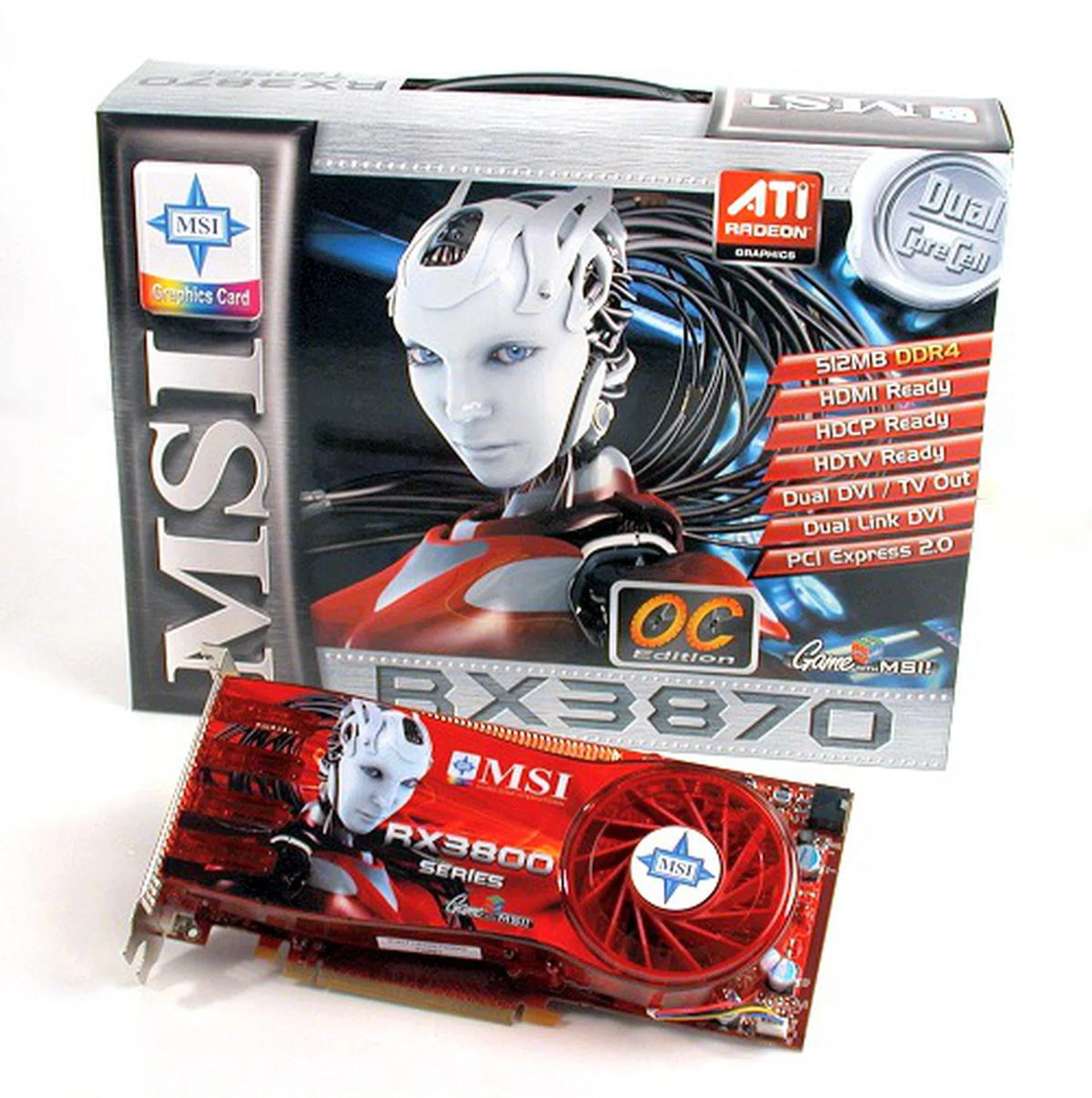
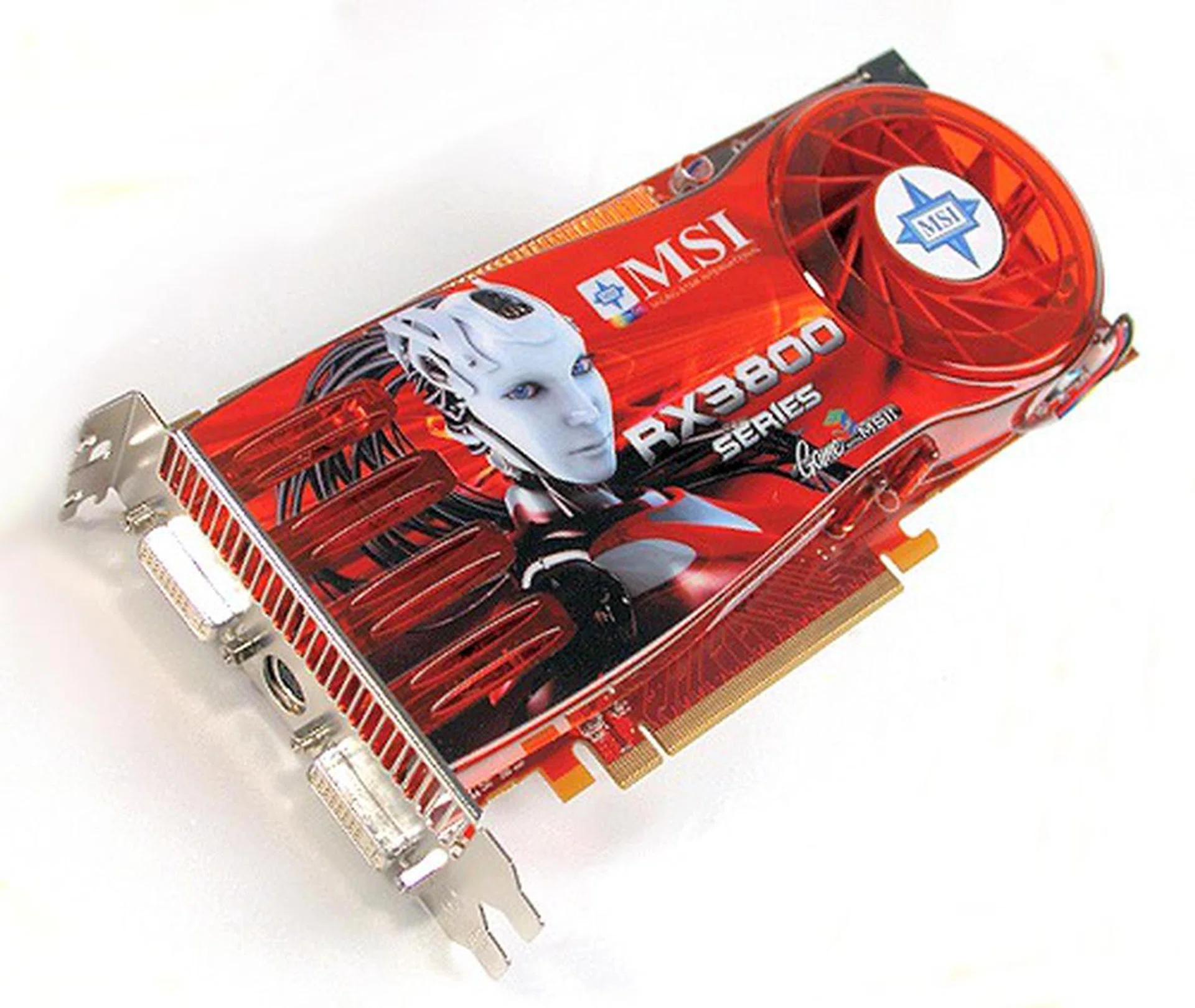
MSI's plain-Jane RX3870-T2D512E-OC graphics card looks identical to that of any other Radeon HD 3870, but has a higher core clock of 800MHz.
Back to the MSI RX3870-T2D512E-OC graphics card, it stays true to a reference Radeon HD 3870 graphics card, but under the hood, it has been slightly overclocked out of the box to 800MHz for the core. Compare that with the specs of a standard Radeon HD 3870 (and even the Radeon HD 3850 for that matter since they are architecturally similar and differ only in clock speeds). On the NVIDIA front, watch for the GeForce 8800 GT 512MB whose price is in the same ballpark as the ATI Radeon HD 3870.
Model | ATI Radeon HD 3870 512MB | ATI Radeon HD 3850 256MB | ATI Radeon HD 2900 XT 512MB | NVIDIA GeForce 8800 GT 512MB | NVIDIA GeForce 8800 GTS 640MB | NVIDIA GeForce 8800 GTX 768MB |
Core Code | RV670 | RV670 | R600 | G92 | G80 | G80 |
Transistor Count | 666 million | 666 million | 700 million | 754 million | 681 million | 681 million |
Manufacturing Process | 55nm | 55nm | 80nm | 65nm | 90nm | 90nm |
Core Clock | 775MHz | 670MHz | 742MHz | 600MHz | 500MHz | 575MHz |
Stream Processors | 64 Shader Processors (consisting of 320 Stream Processing Units) | 64 Shader Processors (consisting of 320 Stream Processing Units) | 64 Shader Processors (consisting of 320 Stream Processing Units) | 112 Stream Processors | 96 Stream Processors | 128 Stream Processors |
Stream Processor Clock | 775MHz | 670MHz | 740MHz | 1500MHz | 1200MHz | 1350MHz |
Texture Mapping Units (TMU) or Texture Filtering (TF) units | 16 | 16 | 16 | 56 | 48 | 64 |
Raster Operator units (ROP) | 16 | 16 | 16 | 16 | 20 | 24 |
Memory Clock | 2250MHz DDR4 | 1660MHz DDR3 | 1650Hz DDR3 | 1800MHz DDR3 | 1600MHz DDR3 | 1800MHz DDR3 |
DDR Memory Bus | 256-bit | 256-bit | 1024-bit | 256-bit | 320-bit | 384-bit |
Memory Bandwidth | 72.0GB/s | 53.1GB/s | 105.6GB/s | 57.6GB/s | 64.0GB/s | 86.4GB/s |
Ring Bus Memory Controller | 512-bit | 512-bit | 512-bit | NIL | NIL | NIL |
PCI Express Interface | PCIe ver 2.0 x16 | PCIe ver 2.0 x16 | x16 | Supports PCIe 2.0 (x16) | x16 | x16 |
Molex Power Connectors | Yes | Yes | Yes (dual) | Yes | Yes | Yes (dual) |
Multi GPU Technology | Yes (CrossFireX) | Yes (CrossFireX) | Yes (CrossFire) | Yes (SLI) | Yes (SLI) | Yes (SLI) |
DVI Output Support | 2 x Dual-Link | 2 x Dual-Link | 2 x Dual-Link | 2 x Dual-Link | 2 x Dual-Link | 2 x Dual-Link |
HDCP Support | Yes | Yes | Yes | Yes | Yes | Yes |
Street Price | From US$240 | From US$150 | ~US$329 | ~ US$259 | ~US$349 | ~ US$529 - US$549 |
MSI's Radeon HD 3870 Overclocked Edition
As pointed out earlier, MSI's RX3870-T2D512E-OC graphics card is hardly differentiated from the reference version, which in turn is hard to tell apart from the Radeon HD 2900 XT. While the underlying heatsink assembly on the Radeon HD 3870 differs quite a bit from the Radeon HD 2900 XT, the cooling unit on the whole looks quite similar. You would be glad to know that the noise levels are in check on this new card like its predecessor and quite a stark difference from the overclocked PowerColor card we last reviewed.
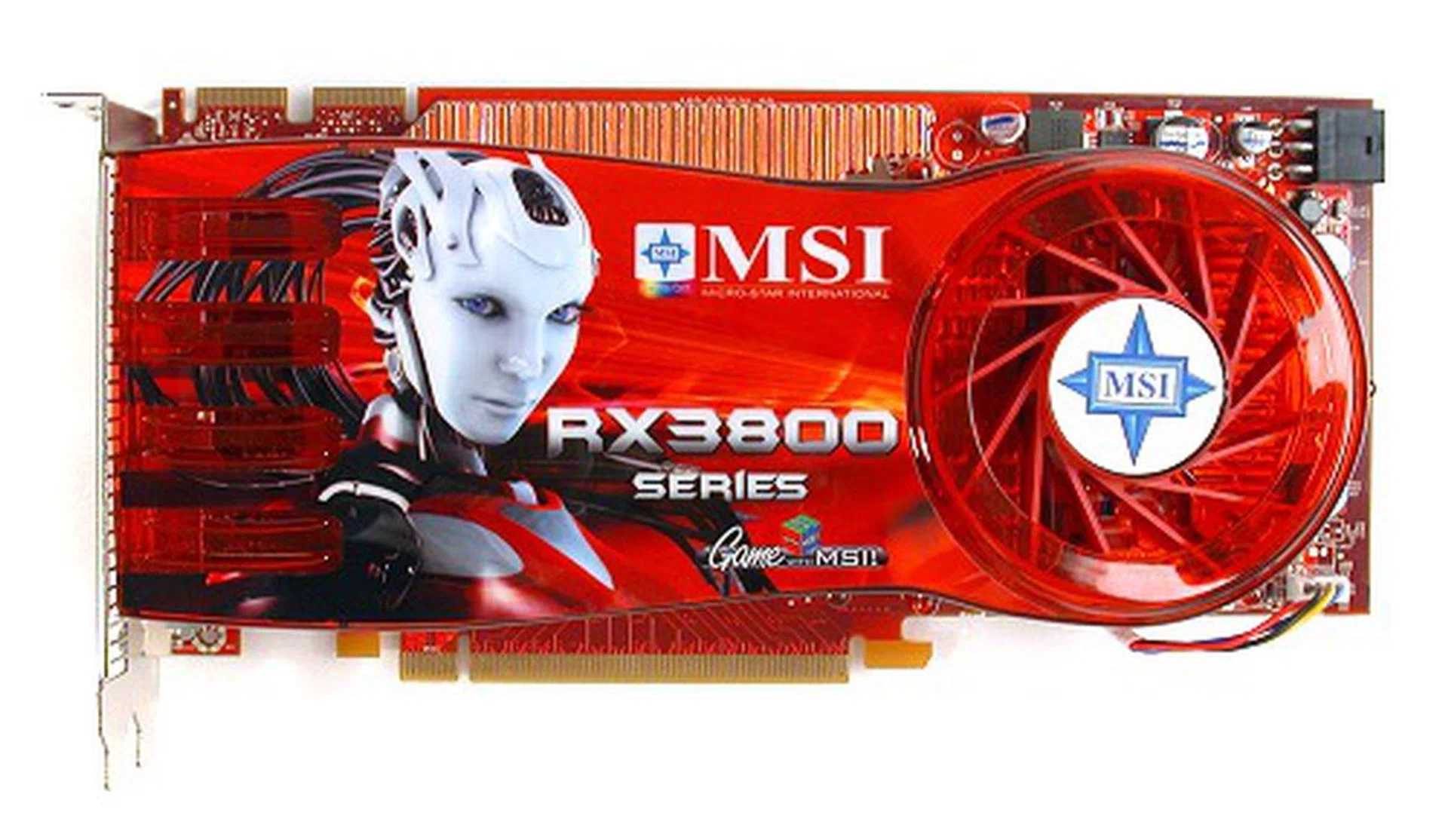
A new decal, a new card; MSI takes the straightforward approach to the RX3870-T2D512E-OC graphics card. Underneath however, it's overclocked to 800/2250MHz versus the usual 775/2250MHz. Not a spectacular overclock, but something better than nothing.
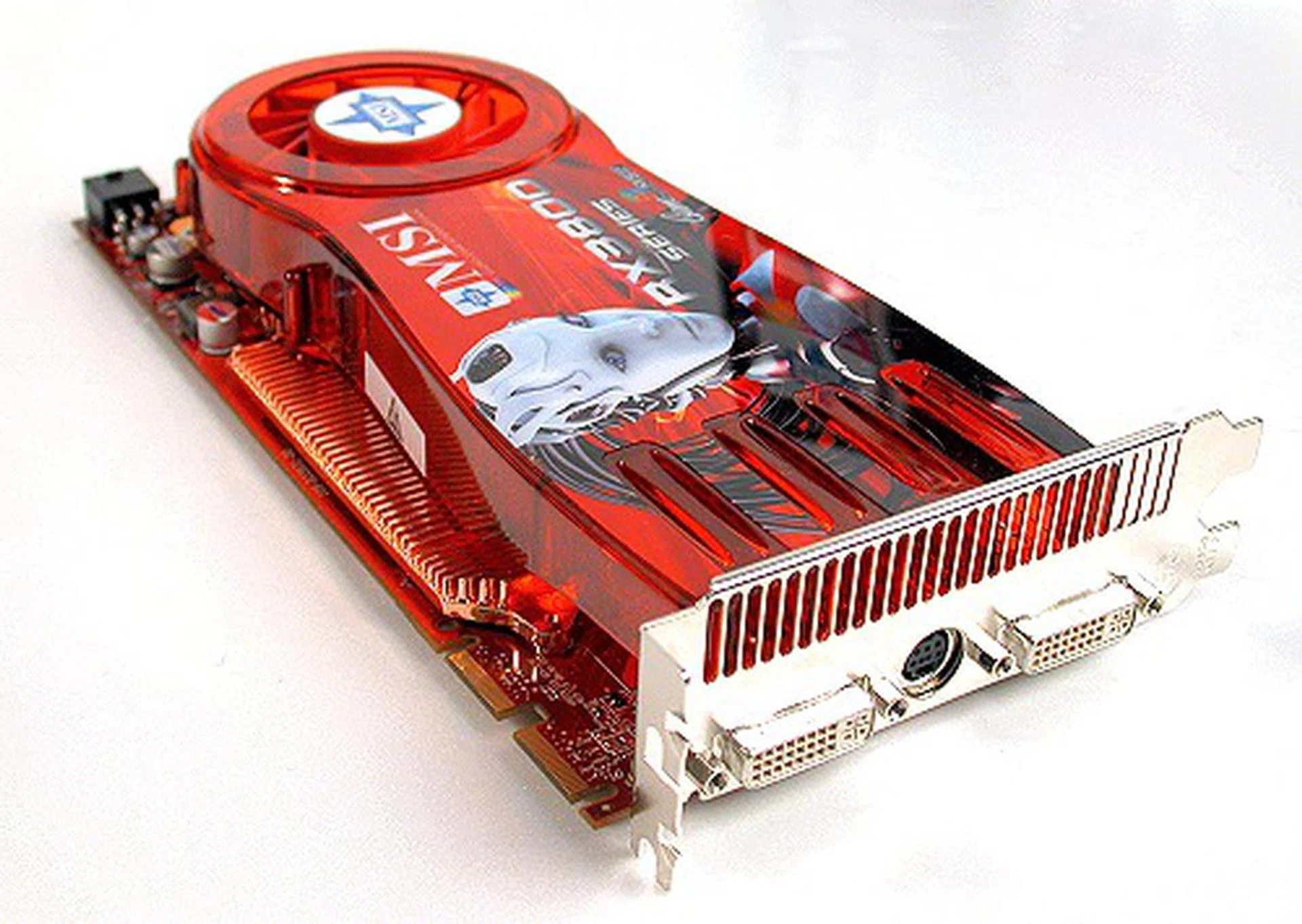
Note the dual-slot configuration like all high-end graphics cards. It's good in a sense that the card expels the heat out of the system and not circulated within the system. Two dual-link DVI outputs are on the rear faceplate and they are HDMI-HDCP compliant. Remember, the Radeon HD 3870 has UVD integrated within the GPU and even an multi-channel audio controller, so it doesn't require a pass-through S/PDIF cables for a full A/V HDMI connection. MSI bundles one DVI-to-HDMI converter in the package to facilitate this.
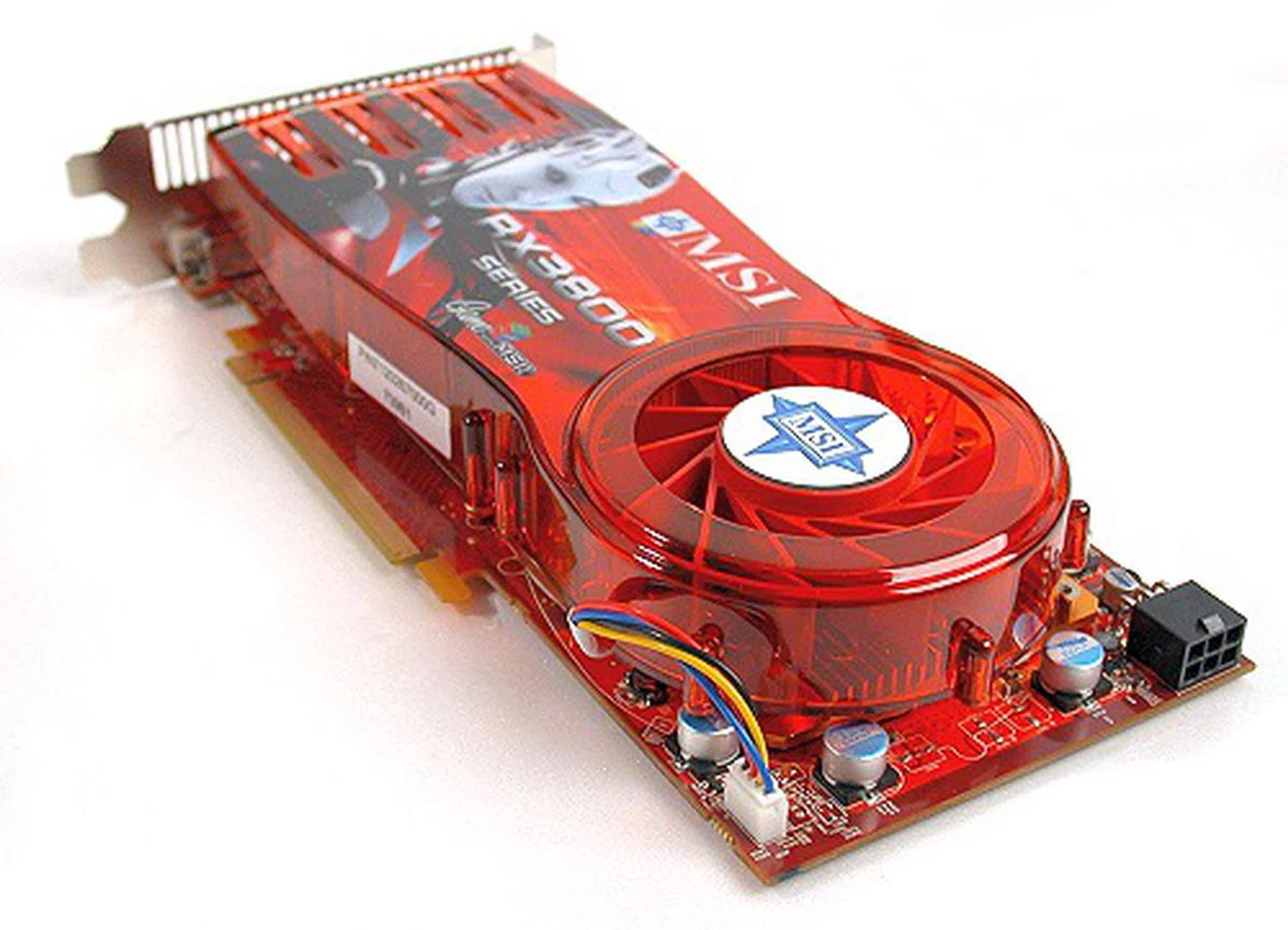
The Radeon HD 3870 has a rated TDP of 105W and requires only a single PCIe Molex power connector.
The contents of the MSI package are unexpectedly sparse in the software/games department, but the most necessary accessories have made their way as noted below.
- DVI-to-HDMI adapter
- DVI-to-VGA adapter
- 7-pin mini-DIN to Component dongle
- 7-pin mini-DIN to Composite adapter
- 6-pin Molex power connector
- CrossFire bridge
- Driver CD
- Installation guide
One other note is the D.O.T. support on the MSI RX3870-T2D512E-OC graphics card. While dynamic overclocking capability via MSI's driver control tab is a welcomed extra, we highly doubt that the Radeon HD 3870 is capable of very high clock speeds to manage the highest D.O.T. stage considering the muted response we met while pushing the overclocked PowerColor Radeon HD 3850 graphics card. Stay tuned to the overclocking section for more information, but first let's move on to the performance standings in proper.
Test Setup
Before we answer the burning question of whether the ATI Radeon HD 3870 has got what it takes to counter NVIDIA's recently launched GeForce 8800 GT SKU, we'll walk through the performance findings from a handful of games at out test lab. For this purpose, we'll be using our current test system that is configured with an Intel Core 2 Duo E6700 processor (2.66GHz) on an Intel D975XBX 'Bad Axe' motherboard. There were two sticks of 1GB DDR2-800 HyperX memory from Kingston and we also used a Seagate 7200.7 SATA hard drive, on which was installed Windows XP Professional with Service Pack 2 and DirectX 9.0c. While some of our games tested already support DirectX 10, we've not yet transitioned the main testbed to Windows Vista as we're holding out for a few more new games and hopefully the first service pack for Vista before we move over for good. As such, we'll still be showcasing DirectX 9.0c performance for just a little while more. In any case, drivers are still in the on-going improvement phase where we still notice large number of changes from one version to another on the Vista platform. This clearly indicates the still-evolving nature of the Vista ecosystem that hasn't reached a steady-state yet.
Since the Radeon HD 3870 has a suggested reference price point of US$240, we've amassed a number of graphics cards of the upper performance scale. Here are the cards included in the benchmarks, with their driver versions:
- MSI RX3870-T2D512E-OC (Catalyst driver ver 8.43)
- ATI Radeon HD 3870 512MB GDDR4 (Catalyst driver ver 8.43)
- PowerColor Radeon HD 3850 Xtreme 512MB GDDR4 (720/1800MHz) (Catalyst driver ver 8.43)
- ATI Radeon HD 2900 XT 512MB GDDR4 (Catalyst driver ver 8.37)
- NVIDIA GeForce 8800 GTX 768MB (ForceWare 158.19)
- NVIDIA GeForce 8800 GTS 640MB (ForceWare 158.19)
- NVIDIA GeForce 8800 GT 512MB (ForceWare 167.37)
The following benchmarks were tested:
- Futuremark 3DMark06 (ver. 102)
- F.E.A.R
- Supreme Commander
- Company of Heroes (ver 1.3)
- Unreal Tournament 3 Beta Demo
- Crysis Demo
Results - 3DMark06 Pro
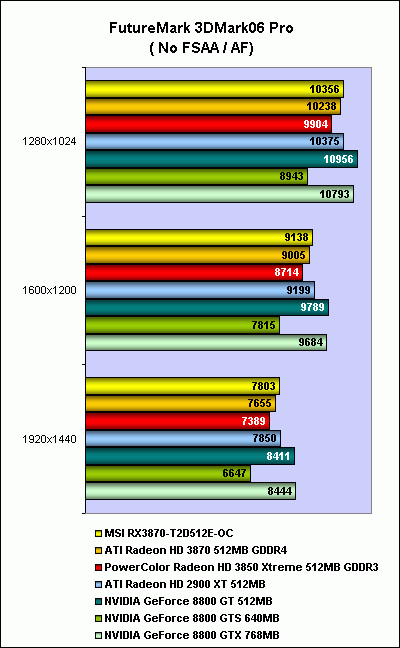
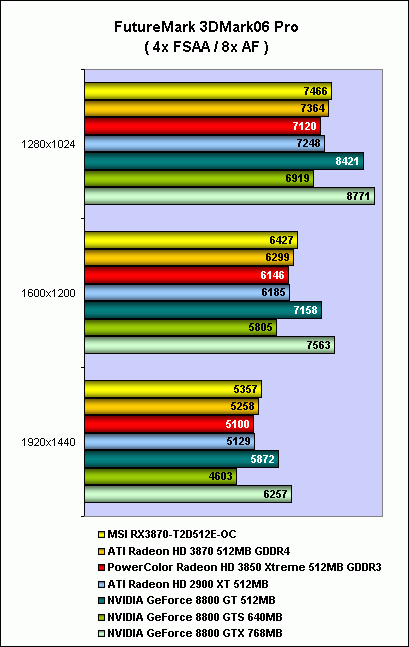
Our first salvo of benchmarks from the synthetic 3DMark06 series places the overclocked MSI graphics card barely faster than the reference ATI Radeon HD 3870. With just a 25MHz core clock advantage, the margin of advantage is quite minimal as the benchmarks show. Also note how close the overclocked Radeon HD 3850 from PowerColor pulls up to the Radeon HD 3870 models. ATI's Radeon HD 2900 XT seems to be in the same performance ballpark as their newer Radeon HD 3000 entrants, which is understandable since they are quite similar in architecture and specs. However NVIDIA's GeForce 8800 GT, the direct competitor to the Radeon HD 3870, holds a comfortable at all settings and resolutions.
Results - F.E.A.R
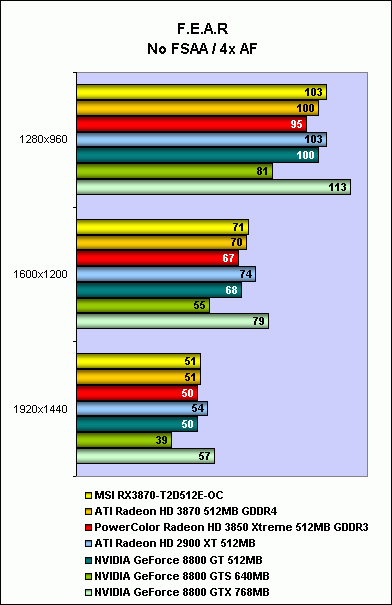
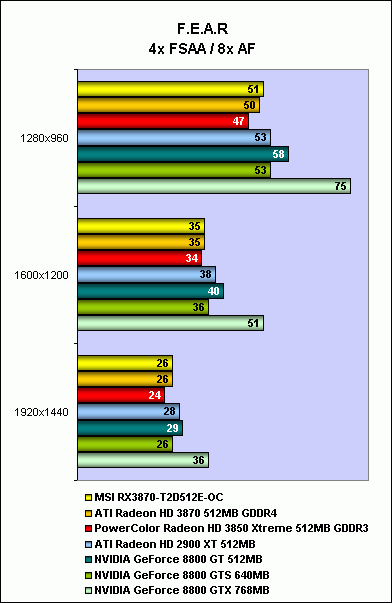
In this game benchmark, we once again see that the MSI RX3870-T2D512E-OC is hardly any better than the reference Radeon HD 3870 graphics card, which in turn is just on average 2 FPS faster than the overclocked PowerColor Radeon HD 3850 graphics card. The GeForce 8800 GT 512MB fares just as much as the Radeon HD 3870 cards, but when considering FSAA performance, the NVIDIA counterpart pulls ahead.
Results - Supreme Commander
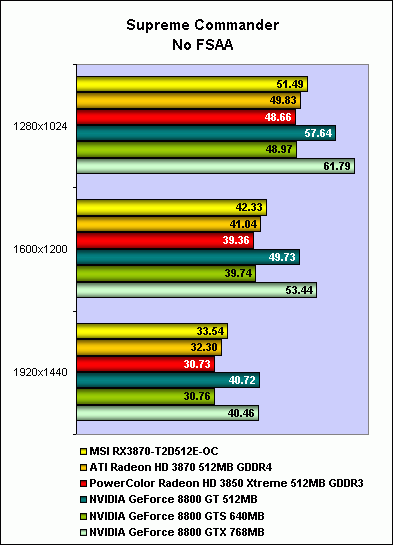
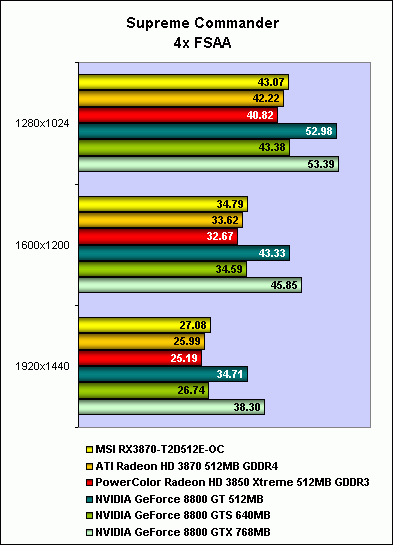
In Supreme Commander, the three new Radeon HD 3000 series cards had slight performance differences of about 3% between each card, which translated to a real world gain of around 1 FPS difference from one card to the next. However, the GeForce 8800 GT 512MB was head and shoulders above all of them (a 30% advantage on average) and was almost as fast as the premium priced GeForce 8800 GTX. The GeForce 8800 GTS 640MB is hardly worth a consideration any more with all of these new generation cards and we smell extinction for it coming shortly.
Results - Company of Heroes, UT3 Demo, Crysis
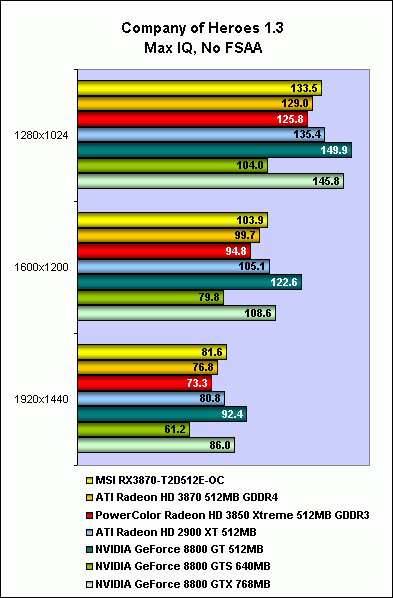
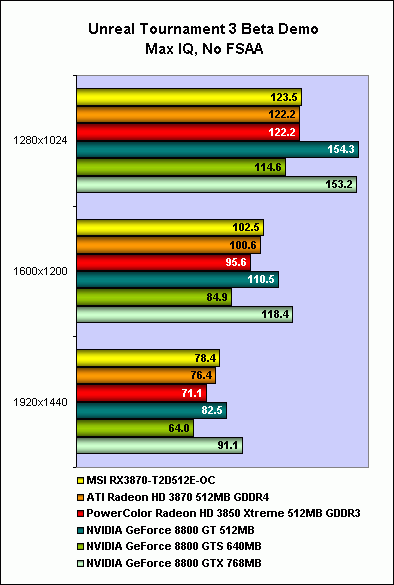
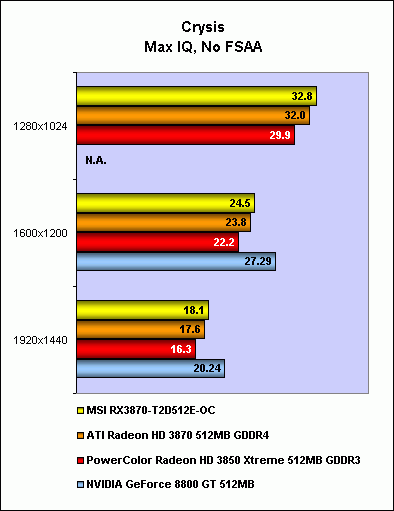
MSI's overclocked Radeon HD 3870 looked good in Company of Heros where as we cranked up the resolutions, its performance advantage rose to about 6% better than the reference card. However, for the more demanding new generation games of Unreal Tournament 3 and Crysis, there was hardly anything going for it. Once again, the GeForce 8800 GT 512MB took the lead in this trio of games as well with a 20% performance advantage in Company of Heroes, but still managed a reasonably good 10% lead in both Unreal and Crysis. Note that we've maxed out the image quality settings for all the games, but looking at the performance figures from Crysis, it looks like you would have to back up notch to get a more fluid gaming experience.
Temperature Testing
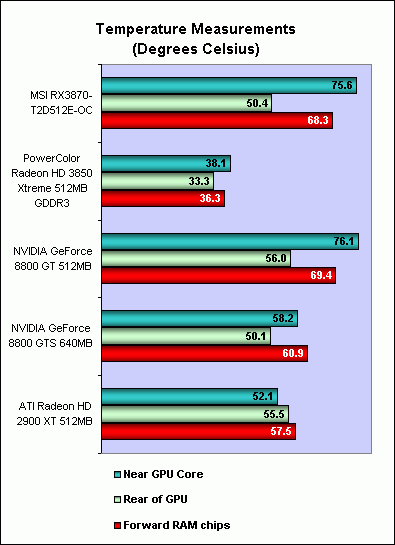
While the overclocked PowerColor Radeon HD 3850 wowed us with rather cool temperature figures, it was scarred with a very noisy cooler unit. Since we hadn't any reference Radeon HD 3850 cards to assess the effectiveness of the new 55nm GPU's heat output, we weren't able to relate very well on that note in the previous review. Now with the faster reference-like MSI Radeon HD 3870 graphics card, we know exactly what to expect. Granted that the MSI card was only slightly overclocked which didn't make much of an impact to the performance figures, the temperature readings are about the same levels as that of a stock GeForce 8800 GT card. To put it bluntly both the competing reference solutions operate quiet but hot. As such, we expect the reference Radeon HD 3850 variants to match the temperatures of the GeForce 8800 GTS or thereabout.
Power Consumption
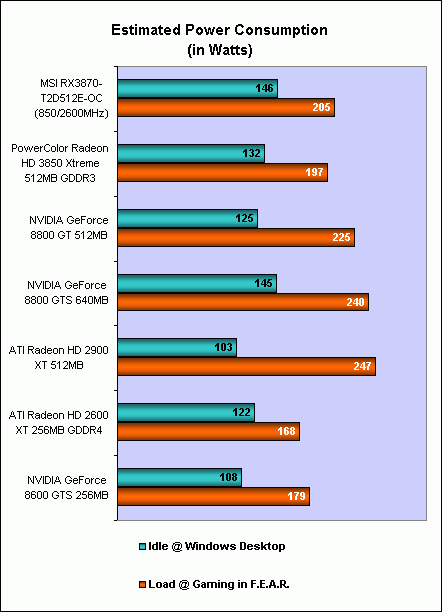
The power consumption figures of the Radeon HD 3870 and Radeon HD 3850 cards are a little on the amusing side to say the least. They consume more power at idle than the GeForce 8800 GT 512MB, but consume equally less when fully loaded in a game. At the end of the day, your overall system's power draw is bound to be the same for any of these three cards since most people work and game on the same personal machine.
Overclocking
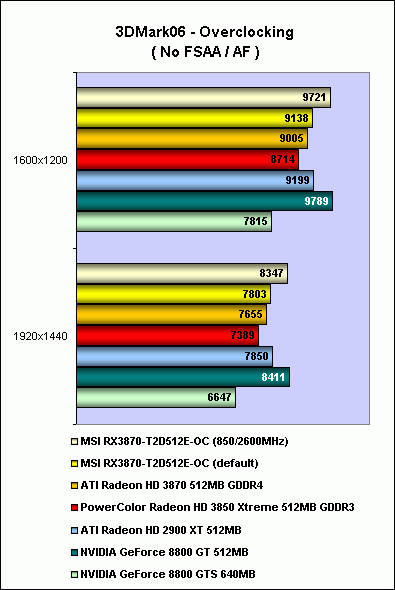
Unlike the Radeon HD 3850 from PowerColor that seemed have maxed out, we were able to wring out quite a bit more juice out of the Radeon HD 3870 core. After all, the latter is just a better quality core that has been qualified for higher clock speed operation. After some tweaking and trial and error, we managed a stable overclock of 850MHz for the core and 2.6GHz for the memory. From the 3DMark benchmarking, you can see that this degree of overclocking finally put it on par with the GeForce 8800 GT, which is a decent boost.
Conclusion
After all's been said and done comes the million-dollar question:- Is the Radeon HD 3870 a better option than the NVIDIA GeForce 8800 GT? To answer that, we'll summarize our findings of the Radeon HD 3870. First and foremost is performance. In this department, the GeForce 8800 GT 512MB is the clear leader in many games. There are a few areas where the Radeon HD 3870 does come at a striking distance, but generally, NVIDIA has better all-round performance. The second most crucial aspect is the price and hence, the price-performance factor. ATI states that the Radeon HD 3870 will debut from a price of US$240. The key-word here is 'from' and we already know of more than a handful of standard retail cards going for US$269. So there's a price range involved as expected and this puts the Radeon HD 3870 squarely in the same price bracket as the GeForce 8800 GT 512MB. In other areas such as heat and power consumption, ATI's cards didn't really showcase advantage from their superior 55nm dies, nor from their inclusion of PowerPlay technology. So all things considered, the GeForce 8800 GT 512MB is still the better overall choice despite the more technologically updated card from ATI. Street prices for the Radeon HD 3870 seem more favorable in several Asian countries, but it's not a whole lot cheaper either. Still, that could be your tilting factor if you've a strict budget.
Despite 2 weeks since the launch of the Radeon HD 3850 and 3870, the speedier 3870 variant is hard to come by and vendors like MSI have told us that they've yet to obtain adequate quantity to populate the retail channel. Then again, it looks the GeForce 8800 GT too is drying up in certain stores and regions. With NVIDIA planning to launch the 256MB edition shortly, it remains to be seen how they would manage the demands of the holiday season for both SKUs of the GeForce 8800 GT. If they don't buck up, ATI will be picking up their losses with the Radeon HD 3850 and maybe the 3870 model too (supply withstanding).
MSI's slightly overclocked Radeon HD 3870 graphics card is quite down-to-earth even in its bundle packaging. It's no speed demon, but it overclocks decently. Its purchase appeal factor however solely lies with the expected retail price, for which we would only recommend if it's not marked up too much for such a mildly clocked card.
Having tested MSI's overclocked Radeon HD 3870, we wonder the need for them to offer the standard edition and vice-versa. After all, throughout the testing phase we noticed minimal gains by the MSI RX3870-T2D512E-OC over the reference edition. As of the time of publication, MSI was unable to advise us on the retail price of the RX3870-T2D512E-OC as it is not yet available but they did assure that it would ship soon. Considering the lack of any special bundle to further differentiate the overclocked edition from the normal version, we would only recommend the MSI RX3870-T2D512E-OC if the price isn't marked up unusually high.
** Updated on 30th November 2007 **
Just two days after our publication, MSI seems to have gotten some stock to prepare their recommended retail price and it sounds sweet. At S$399 (which is about US$260), it sounds pretty decent. Not exactly fantastic since the reference designed GeForce 8800 GT cards are just $10 more, but thankfully they are priced more realistically than previously expected. So there you have it, a mildly overclocked Radeon HD 3870 card for a decent price.
Our articles may contain affiliate links. If you buy through these links, we may earn a small commission.