
Intel Core 2 Duo E6300 - Small Budget, Big Overclocker
The Core 2 Duo 'fever' is on! If you thought the E6600 processor is the sweet spot for performance and price, you would be shocked to find out what the affordable E6300 model can dish with the right motherboard, some voltage boost and some FSB love.

Shoestring Budget CPU's Hidden Potential
"Core" is fast becoming a catch phrase everywhere in the tech circles as Intel pulls the plug on the Pentium processor and overhauling the mobile, desktop and server space with their latest microarchitecture. As tested by www.hardarezone.com and other technology publications, the Core 2 Duo and Core 2 Extreme processors for the desktop space have set new milestones in processor efficiency, performance, power and heat dissipation, so the Core 'fever' is quite expected.
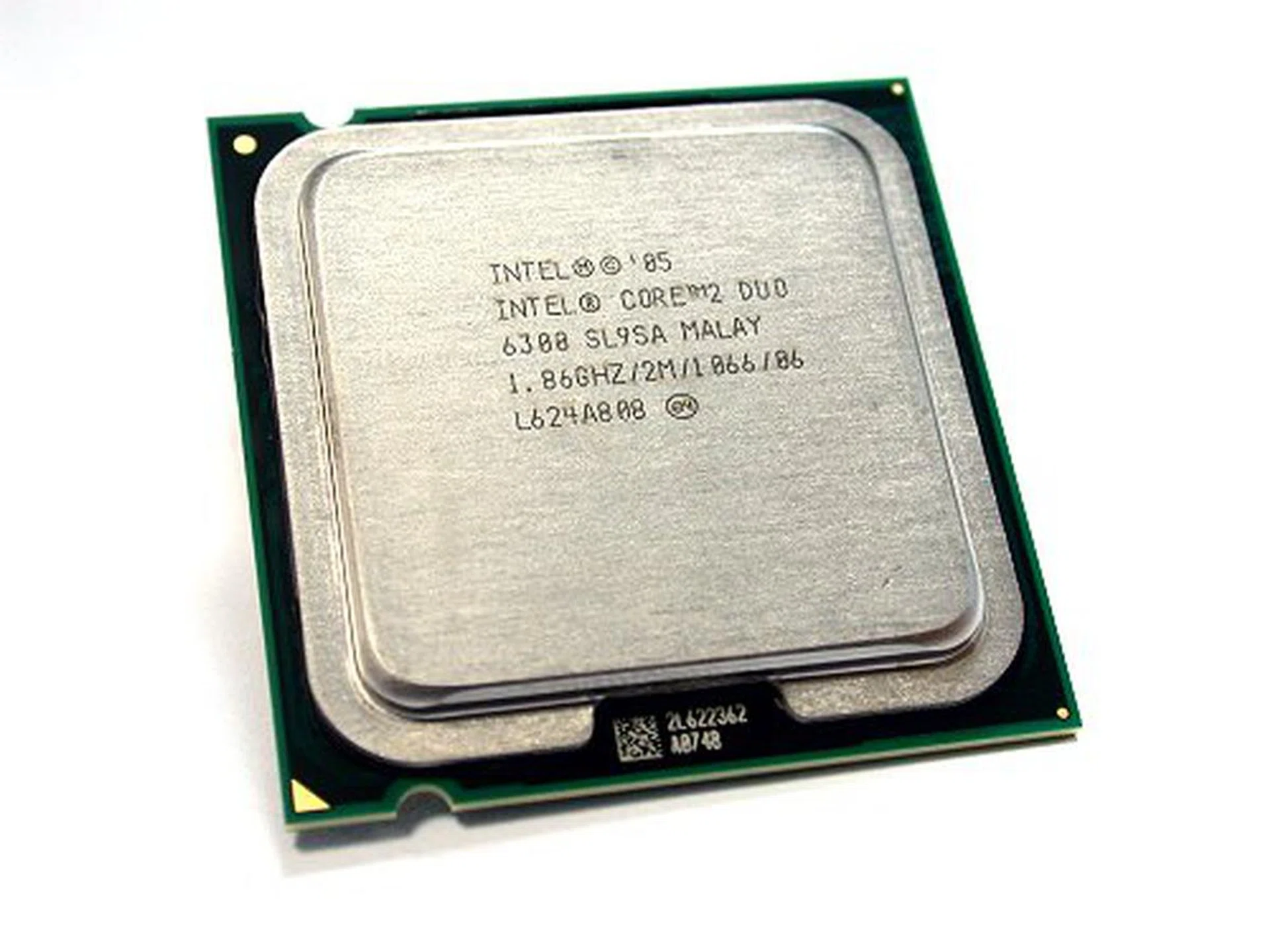
The Intel Core 2 Duo E6300 is just brimming with potential. Pair it with the right motherboard, bump up some voltages and crank up the FSB and you have a star performer!
So we've all seen what the Conroe core based Intel Core 2 Duo processors are capable (be careful not to confuse "core" from "Core"), but what about the lower priced Allendale core based Intel Core 2 Duo processors? To those uninitiated, the Core 2 Duo processors are available in five flavors:- X6800, E6700, E6600, E6400 and E6300. All are endowed with the Core microarchitecture, but the first three feature 4MB of L2 cache and are known by the codename of Conroe. The Core 2 Duo E6400 and E6300 models are equipped with only 2MB of L2 cache and go by the core codename of Allendale.
At less than US$200, the E6300 of course represents Intel's lowest cost Core 2 Duo processor and that's exactly what interests us and many other enthusiasts itching to get their hands on one. Low cost of ownership generally equates to popularity, but that's just part of the reason. Operating at only 1.86GHz and built on the same engineering process and microarchitecture as its other dearer brethrens, a burning question surrounds its overclocking competency and what kind of performance awaits us at its peak. Well, as we found out firsthand, there's tremendous headroom in it and with the right motherboard, you can hit some pretty amazing numbers.
Successful Overclocking Starts with the Right Motherboard
For this review, we bought an Intel Core 2 E6300 processor and as with most other retail class Core 2 processors, they are of the B2 stepping unlike the B1 stepping found in engineering samples which weren't all too satisfactory in hitting high clocks. This was a key enabler in our overclocking attempts but luckily it's not an issue for consumers since it's unlikely that you would end up with a B1 stepping.
With the right processor at hand, we now needed the appropriate platform to push the Core 2 Duo E6300 to greater heights. Remember, besides the Extreme X6800, the other Core 2 Duo processors have their multipliers partially locked. That's to say they cannot be jacked up, but the CPU multiplier can be lowered down if necessary. The E6300 model uses a 7x multiplier in normal operation (clocks down using the 6x multiplier when idle) and because of its low multiplier value, it requires a motherboard that is very competent in handling high front side bus (FSB) frequencies.
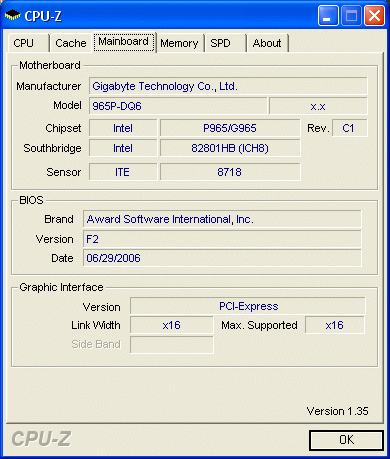
We've thus far chanced upon two such boards and they are Gigabyte's GA-965P-DQ6 flagship board and the entry-level GA-965P-DS3. These are the only boards in our lab thus far that managed a 480MHz FSB and completely rock stable at that as we've been throwing them some pretty tough industry level benchmarks such as SPECCPU and others to ensure our claims are completely tested, repeatable and reliable. In the end, our choice for this article was the GA-965P-DQ6 as it exhibited a higher tolerance level and had far more voltage fine-tuning options, though we managed the same overclocking potential on both boards. Additionally, the ICH8R Southbridge's AHCI support for NCQ was preferable to keep our results in-line with our previous set of Core 2 Duo performance numbers based on the Intel D975XBX board.
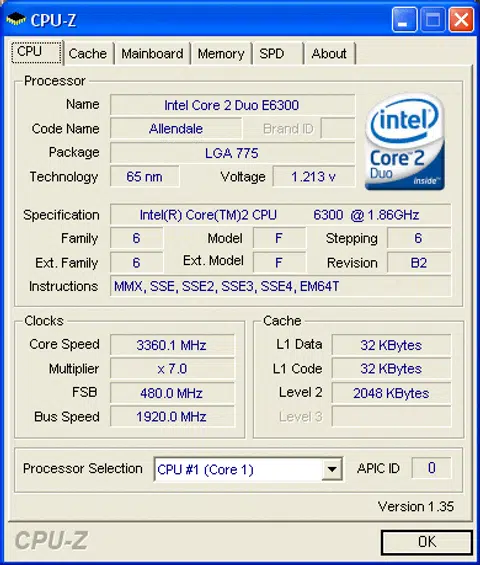
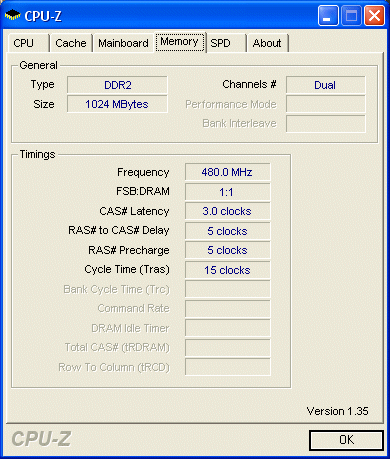
So we have the Core 2 Duo E6300 on Gigabyte's GA-965P-DQ6 motherboard, but the magic doesn't start unless you pump up some voltage options. Boosting the processor with 1.6 Volts, MCH and FSB voltage up by + 0.35 Volts, we overclocked the 1.86GHz processor to 3.36Ghz with the PSB running at a whopping 1920MHz using a 480MHz x 7 FSB to CPU multiplier ratio. Here's some CPU-Z screenshots for information and the following pages will show you what sort of performance to expect from this accomplishment:-
Test Setup
To give you a comparison of how speedy the Core 2 Duo E6300 is at 3.36GHz, we've compared its results against the standard clocked Core 2 Duo E6600, E6700 and Core 2 Extreme X6800 processors. An AMD Athlon 64 FX-62 was also thrown into the comparison for a good measure. The testbed setups used are as follows:-
Core 2 Duo E6300 Overclocking Setup
- Gigabyte GA-965P-DQ6 (Intel P965 chipset)
- Intel Core 2 Duo E6300 CPU @ 3.36GHz (480x7)
- 2 x 512MB Corsair XMS DDR2-1000 memory modules (CAS 5. 5-5-15) @ DDR2-980
- Seagate Barracuda 7200.7 80GB SATA hard disk drive (one single NTFS partition)
- MSI GeForce 7900 GT 256MB - with NVIDIA Detonator XP 84.21
- Microsoft Windows XP Professional with Service Pack 2
Core 2 Extreme & Duo Reference Setup
- Intel Desktop Board D975XBX (Intel 975X Express chipset)
- Intel Core 2 Extreme X6800, Core 2 Duo E6700 and E6600
- 2 x 512MB Corsair XMS DDR2-800 memory modules (CAS 4. 4-4-12)
- Seagate Barracuda 7200.7 80GB SATA hard disk drive (one single NTFS partition)
- MSI GeForce 7900 GT 256MB - with NVIDIA Detonator XP 84.21
- Microsoft Windows XP Professional with Service Pack 2
Athlon 64 FX-62 Reference Setup
- ASUS M2N32-SLI Deluxe (nForce 590 SLI chipset)
- AMD Athlon 64 FX-62
- 2 x 512MB Corsair DDR2-800 memory modules (CAS 4, 4-4-12)
- Seagate Barracuda 7200.7 80GB SATA hard disk drive (one single NTFS partition)
- MSI GeForce 7900 GT 256MB - with NVIDIA Detonator XP 84.21
- Microsoft Windows XP Professional with Service Pack 2
The benchmarks used in this review include:-
- BAPCo SYSmark 2004
- Futuremark PCMark 2005 Pro
- Cinebench 2003
- XMpeg 5.03 (DivX encoding)
- Futuremark 3DMark06 Pro
- Unreal Tournament 2004
- AquaMark3
- Quake 4 ver.1.20
Results - SYSmark 2004
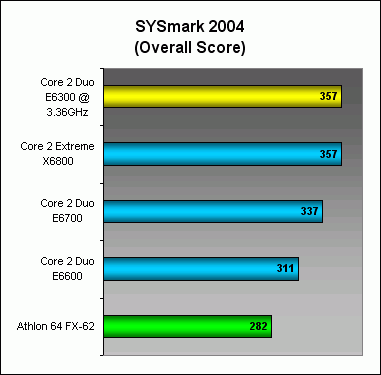
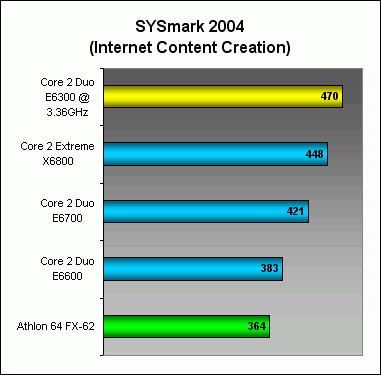
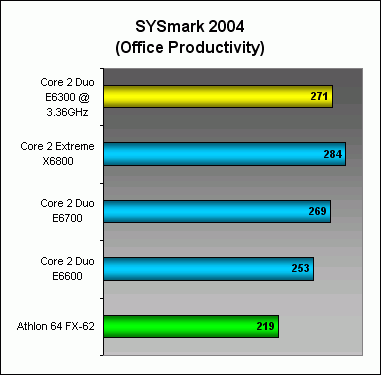
The Athlon 64 FX-62 was the fastest ever consumer processor available just over a month ago, but these results below depict otherwise. What was once the top ranker in our charts, it has now become one the more lower level comparisons. Times have sure changed in such short notice that the Athlon 64 FX-62's impact has almost gone unnoticed today. What's stunning is that the sub US$200 overclocked E6300 at 3.36GHz has what it takes to rival the US$999 X6800 model and is more than 25% speedier than the US$827 Athlon 64 FX-62 that rakes in last in this comparison. If you notice the breakdown of the scores, the E6300 @ 3.36GHz actually excels ahead of the X6800 by a few percent in the Internet Content Creation suite where the multimedia faceted tests benefit from higher clock speeds always. In the Office Productivity suite, a processor's cache size plays a huge role in the large varying workloads, so the 2MB L2 cache wasn't enough to clinch top spot despite its higher clocks. Still, the results are quite impressive when you consider the performance-to-price ratio.
Results - Futuremark PCMark05
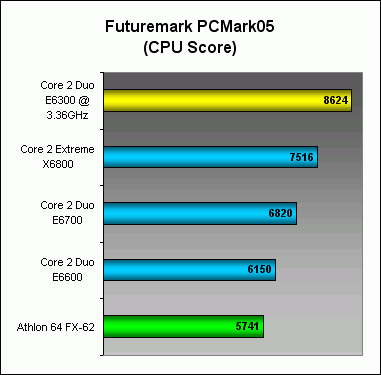
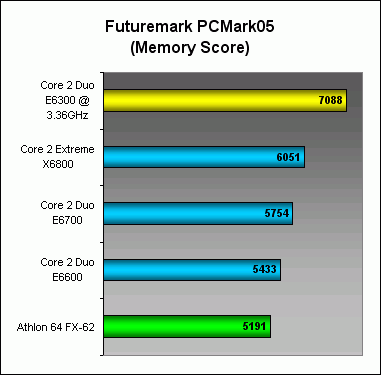
With high clock speeds and on a 480MHz FSB, PCMark05 scores for both the CPU and memory subsystem scaled very well. Not to mention that the overclocked E6300 system was operating the memory at DDR2-980 and synchronously at that, the combination of speed and high FSB widened the memory performance index by up to 18%.
Results - Cinebench 2003
The Core 2 Extreme X6800 managed an impressive score of 942 in Cinebench's multi-threaded rendering benchmark, but the inexpensive E6300 clocked at 3.36GHz shattered the 1K mark and scored 1076.

Results - XMpeg 5.03
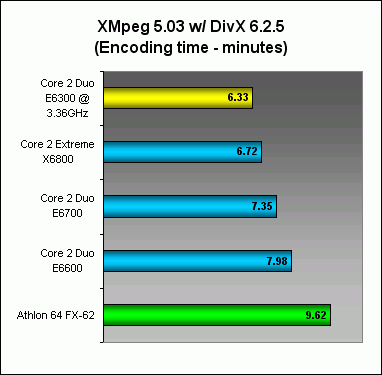
Clock speed isn't king everywhere and you can tell that from our XMpeg DVD encoding tests where the highly clocked E6300 just managed a 20-second lead against the X6800. Obviously, this is a test where the L2 cache plays an important role, as we'll reveal in yet another article just how much better a Conroe class processor handles this over the Allendale core.
Results - Futuremark 3DMark06
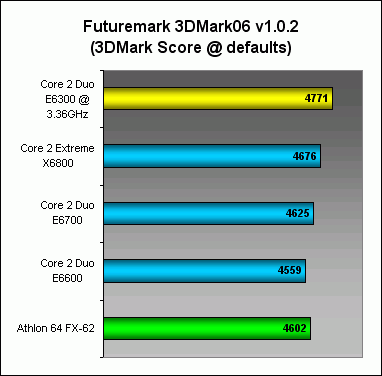
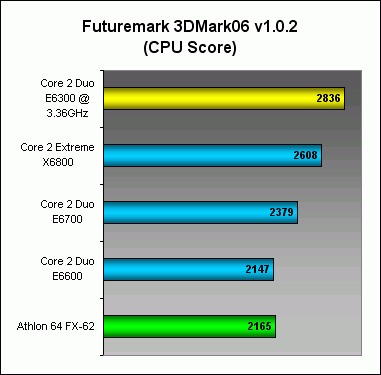
Focusing on gaming results, our expectations were on the mark with the 3.36GHz overclocked E6300 processor in 3DMark06's overall score where it did fare better than an X6800, but not by very much. This is because the test is primarily dependant on the graphics subsystem like many modern games. Peering in to the CPU's processing power in rendering workloads via software emulation, we can see that the overclocked E6300 is more than 30% speedier than the Athlon 64 FX-62 and the Core 2 Duo E6600, while still outgunning the X6800 by more than 8%.
Results - AquaMark3
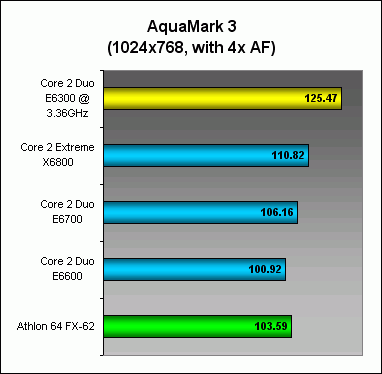
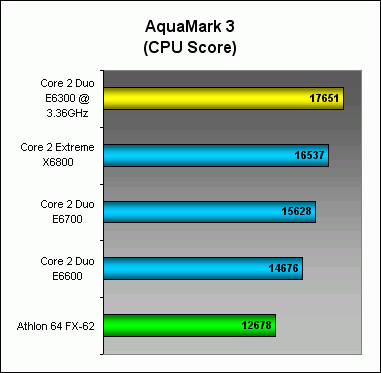
Different game engines react to subsystem improvements in different ways. Unlike 3DMark06, AquaMark3 benefits from every boost in subsystem performance. As such, it scaled very well in both the overall rendering performance as well as the CPU performance score, which takes into consideration many platform parameters. At a 3.36GHz clock rate, 1920MHz PSB, 480MHz FSB and DDR2-980, it's no wonder that the E6300 netted a significant increase of 15 to 25 frames per second rendered against the comparisons.
Results - Quake 4
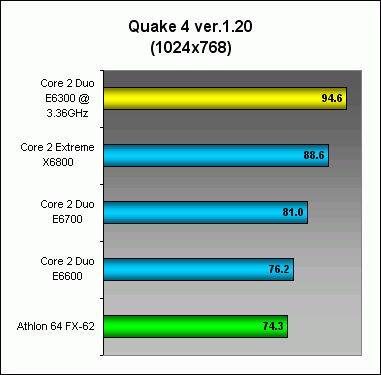
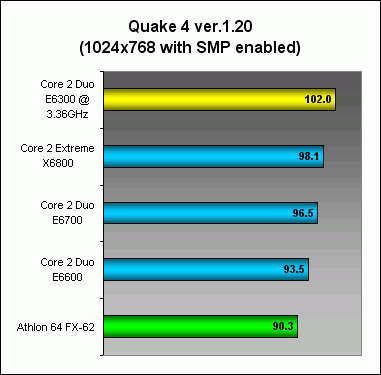
Quake 4 thrives on the capabilities of both the platform and GPU performance, but more than a good CPU, it's imperative that you get a very fast graphics card to enjoy the maximum visual aspects of the game. This is quite representative of many of the latest titles, which requires even more than a GeForce 7900 GT (which we are using) to enjoy the best of what the game has to offer. Still, that doesn't mean you can make do with a mid-range CPU for a high-end graphics card as the GPU would end up idling since the CPU can't feed it fast enough. As always, it's a vicious cycle to get the right match of components while staying within your upgrade budget. As seen in the graph below, each processor upgrade nets you a couple of frames per second more than the previous rung, but when SMP is enabled to take advantage of the current processor's dual-core nature, the difference is even narrower, but still visible. Thus, you can see that the GeForce 7900 GT GPU is actually becoming more of a bottleneck in our test system even though it's no slouch itself.
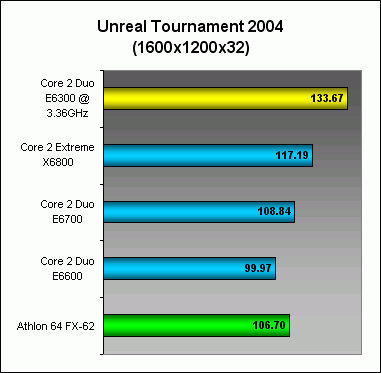
Results - Unreal Tournament 2004
In UT2004 we've configured the game with a multitude of bots to simulate an intense multiplayer environment within one of the more CPU intensive maps. Thus, we are able to showcase the performance impact of a strong processor such as the overclocked E6300, which clearly eclipses all the comparisons here.
Core 2 Duo E6300 - The Next Overclocking King
From our very first performance review of the Intel Core 2 Duo (Conroe) processors, many had set their eyes upon the US$320 E6600 processor model for it had the exact characteristics as the top dog X6800 and can be easily pushed to match or exceed it with practically any Intel P965 or 975 Express chipset motherboard. However, today we've shown you that even the 'low end' sub US$190, E6300 processor has so much potential in it that it can surpass the awesome performance numbers of the X6800, despite the E6300 having only 2MB of L2 cache.
The Core 2 Duo E6300's low processor multiplier of only 7x, heavily relies upon a competent and dependable motherboard platform that not only has an appetite for overclocking with high FSB, but also one that scales in performance with the high FSB (and not one that superficially clocks higher but is troubled by timing issues that degrades actual performance). From the recent spate of new Core 2 ready motherboards, we've already tested and reviewed more than a handful of them, but two specific boards stand out in the abovementioned areas � the Gigabyte GA-965P-DQ6 and the Gigabyte GA-965P-DS3. From our lab tests, both boards were completely stable at 480MHz FSB when given a nudge in voltage for the FSB bus and Northbridge chip. The DS3 model was a relatively simple board and actually climbed the FSB ladder a lot smoother than the higher-end DQ6 board. However, the DQ6 model had a lot more voltage options with finer intervals. The DQ6 was also a keener overclocking board, making it past the 500MHz FSB point, but required excessive voltage input for stability that we felt it required more cooling for long-term reliability. Thus, for this article, we've used a 480MHz FSB and coupled with the processor's 7x multiplier, we obtained a Core 2 Duo processor clocked at a whopping 3.36GHz.
The sheer performance jump was akin to the old overclocking days of the famous Intel Celeron 300A processor that was bound to work at nearly double the clock speed. Likewise, the Intel Core 2 Duo E6300 at 1.86GHz overclocked to 3.36 GHz represents a leap approaching twice the original clock speed and still has room to overclock further. You don't require a costly motherboard to pull off this amazing feat as even an entry-level Intel P965 motherboard such as the Gigabyte GA-965P-DS3 (going for about US$170) is all you will need. Most importantly, the board should have the right overclocking parameters available for manipulation and this board has them. Apart from getting the right motherboard, you'll need good memory to help you scale the FSB ladder. If you notice our CPU-Z screenshots, we are already operating at an FSB:DRAM ratio of 1:1 and most boards wouldn't have a lower memory ratio than this.
Another factor for consideration would be the cooling aspect of the processor. At stock speeds, the supplied cooler is more than adequate and it even caters to some modest overclocking at above 3GHz. However, to reach 3.36GHz or higher, you may need an aftermarket cooler with a better cooling fan or a more efficient heatsink design. Again, you don't have to look far as even some sub US$20 models such as those from Cooler Master's variety would suffice for the job, albeit they can be a little noisy. The stock Intel cooler supplied is also sufficient to replicate the overclocking success we've attained, but it might be operating too hot for comfort, especially in tropical countries such as our own.
The Intel Core 2 Duo E6300 is just brimming with potential. Pair it with the right motherboard, bump up some voltages and crank up the FSB and you have a star performer!
Overall, for less than US$400, you can get yourself a Core 2 Duo E6300 processor, a capable overclocking friendly motherboard, and even spare budget for an aftermarket cooler if you so require the extra performance boost or a quieter computing experience at highly overclocked speeds that would beat the pants off any stock AMD and Intel processor available in the market - including the highly acclaimed Core 2 Extreme X6800 at less than half the processor's cost alone! So for those of you who've been patiently waiting for the next overclocking champ, the Core 2 Duo E6300 has arrived and this is one boat you wouldn't want to miss.
Our articles may contain affiliate links. If you buy through these links, we may earn a small commission.