
HTC Legend - Does It Live On?
First Hero, then Legend. The Legend is HTC's first Android 2.1 equipped device and comes with an improved Sense UI interface and a better physical design that looks ready to dethrone its predecessor. Read on to find out more.

Here Comes a New Hero...
The development progress of Google's Android platform is charging at full force and its 'partner-in-crime', HTC, is still continuously showing love for this popular open source operating system. Now, why do we say that?
Having experienced the awesome HTC Hero (of which, we presume the Legend heavily borrows its namesake from) that released July last year, barely a year later today, the Legend has already begun - well, wordplay here, but you readers should get the drift. And of course, there were a number of other Android HTC phones released between, but for now, we shall let the HTC Legend revel in its rightful place: center stage.
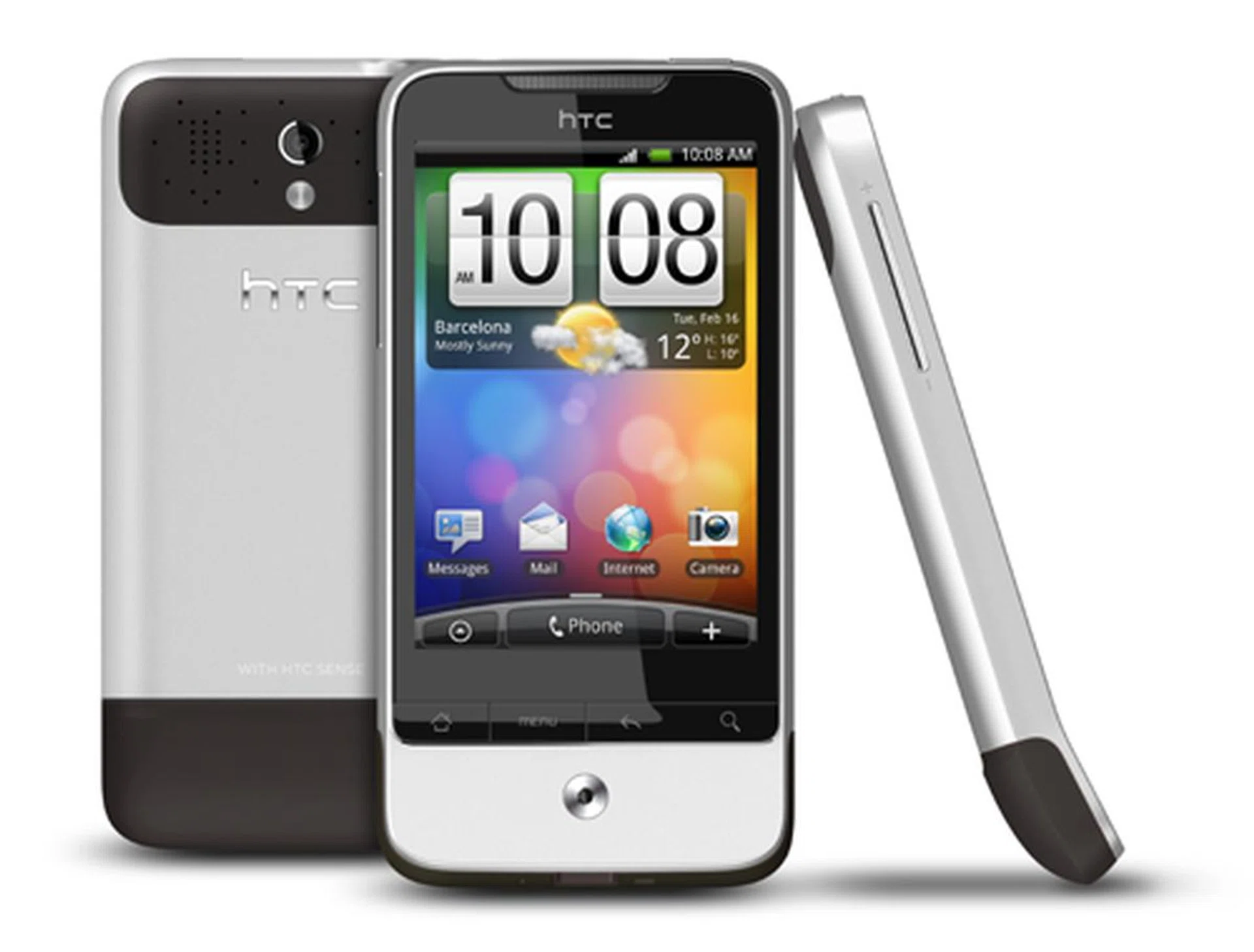
The HTC Legend
Before we delve in, let's break down what's so special about ze HTC Legend. First off, it comes loaded with the latest Android 2.1 (Éclair) operating system and the latest HTC Sense UI. There's nothing much to rehash about the Eclair since it has already been covered quite extensively in our previous online reviews. However, the new, upgraded HTC Sense UI does bring more to the table, including deeper social networking integration within contacts and different networking platforms.
Read on for the full details and check out the specifications tab should you want our usual specs breakdown.
The Legend Tells a Story
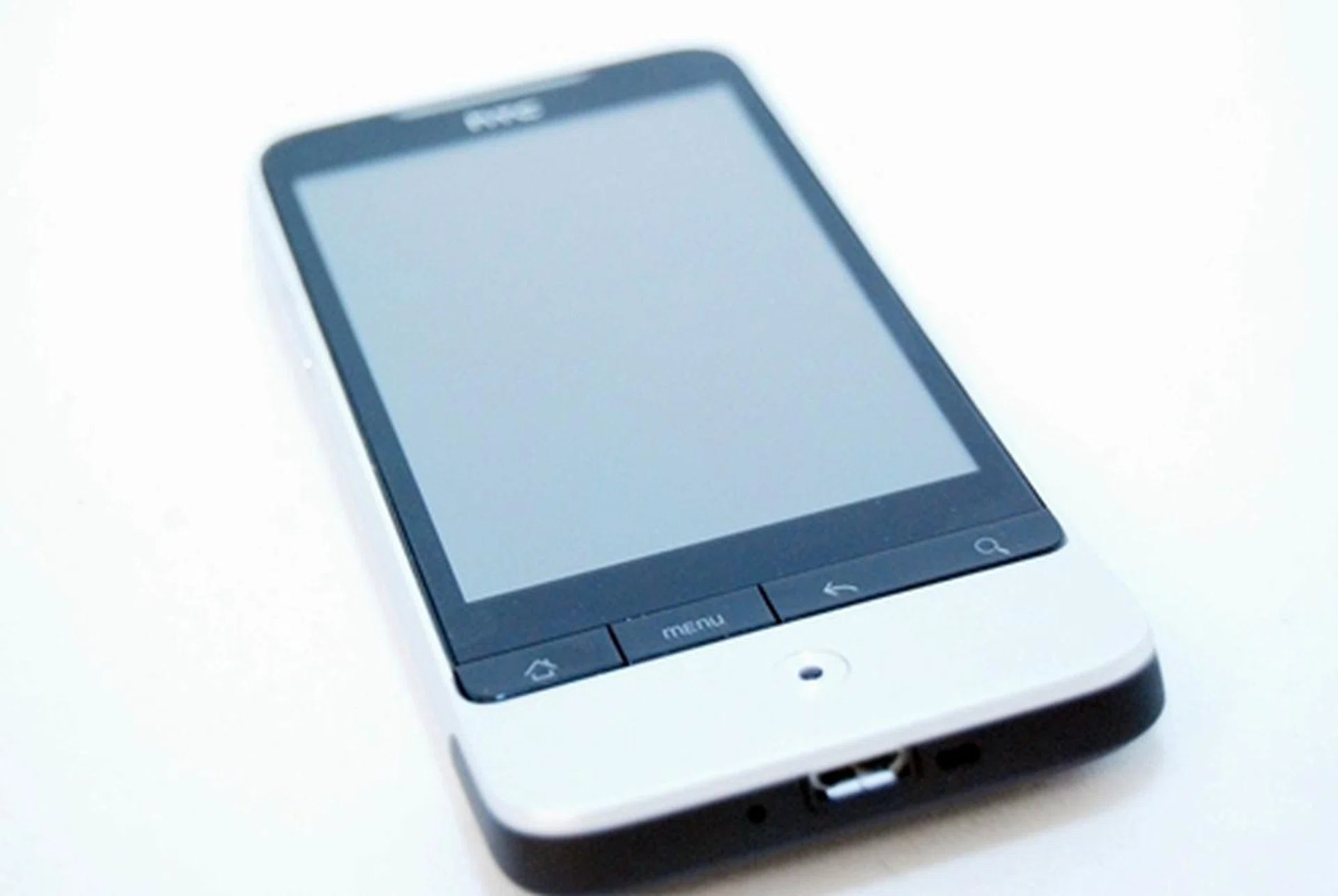
Off the bat, the HTC Legend is a charmer. While it's not exactly the thinnest kid on the block, it is definitely one of the lighter (126g) and classier looking Android devices that one can ever dream of owning. Exaggerations aside, the phone fits snugly and firmly in one's palm without any fear of it slipping out and falling to the ground.
As we all fondly remember, the HTC sported a teflon-coated body with silver metallic sides. This time, the Legend takes an aesthetical nosedive into near perfection - the device looks extremely pleasing to the eye with its sleek unibody chassis framing a large 3.2-inch AMOLED display. The entire body is given a brushed metallic finish topped up with black rubberized parts that enhanced our grip. Other noteworthy physical differences that we spotted was that the Hero's chin has been almost 'surgically' removed, leaving a rather flat chin on the Legend, which we feel that the majority might take a better liking to. Adding to this is its thinner silhouette and it sounds like the Legend is a winner even before you handle it.
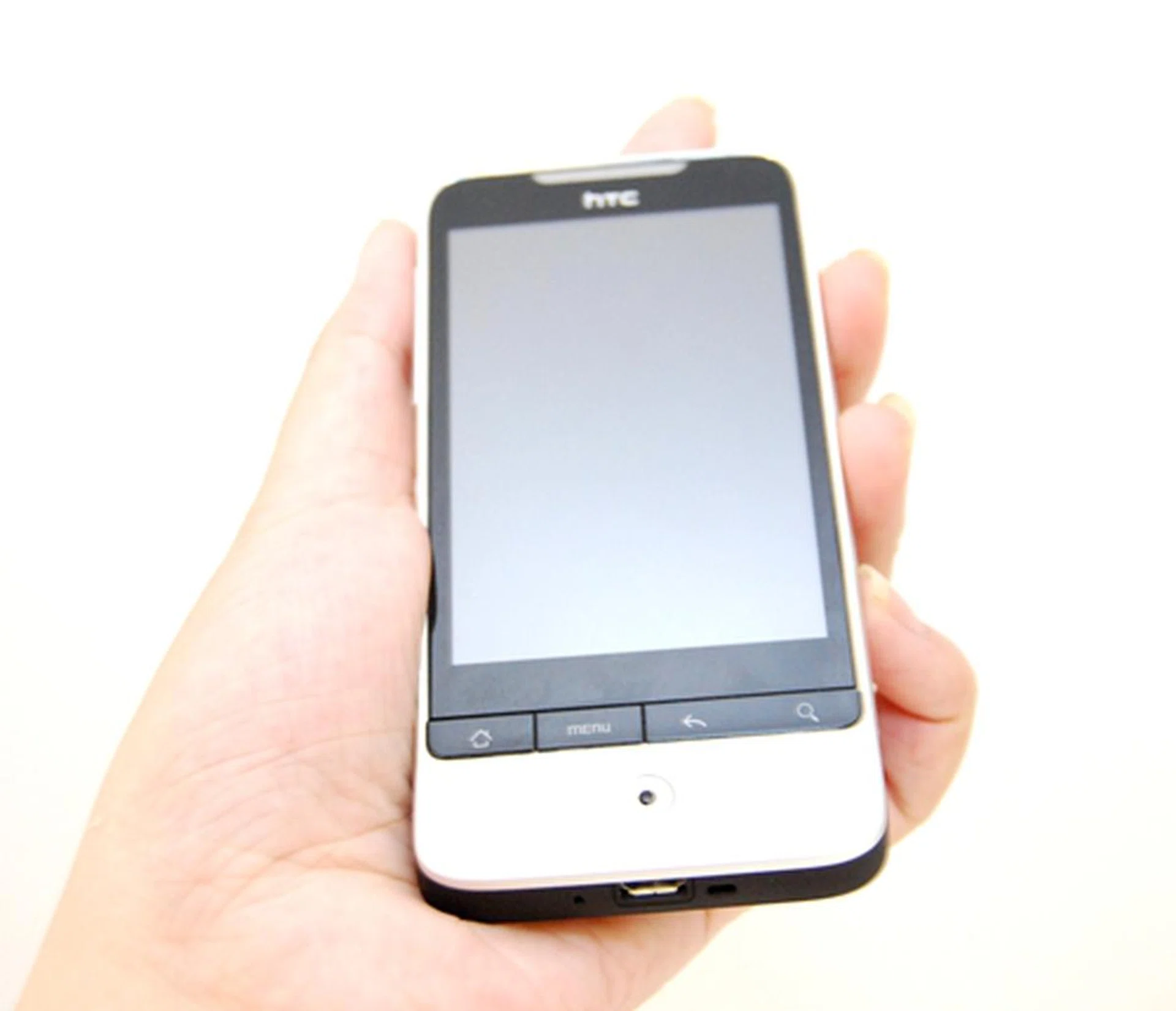
Looks like someone clearly went overboard with the whole "MacBook" impersonation, but hey, no one's really complaining.
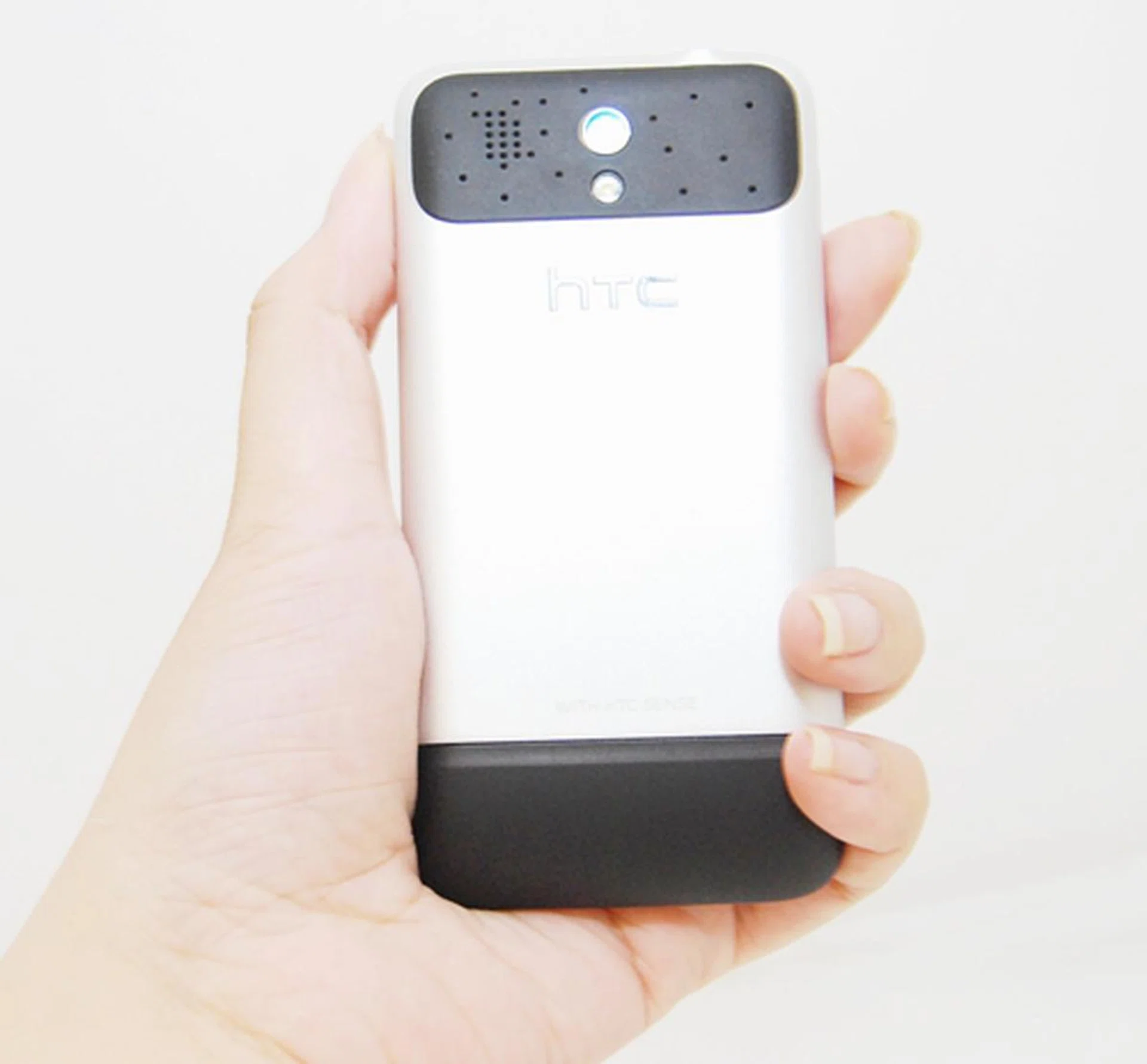
The Legend might look sturdy and heavy, but at 126g, it is even lighter than Google's flagship mobile device, the Nexus One.
The HTC Legend doesn't stray away from the minimalist button layout that its predecessor has, but made a few nifty changes. The power button has been relocated to the top of the device and now accompanies the 3.5mm audio port. Also, instead of six buttons lining the bottom of the screen with a trackball, there are four along with an optical trackpad that makes navigation smoother and more precise. The quartet includes the usual suspects: Home, Menu, Back and Search.
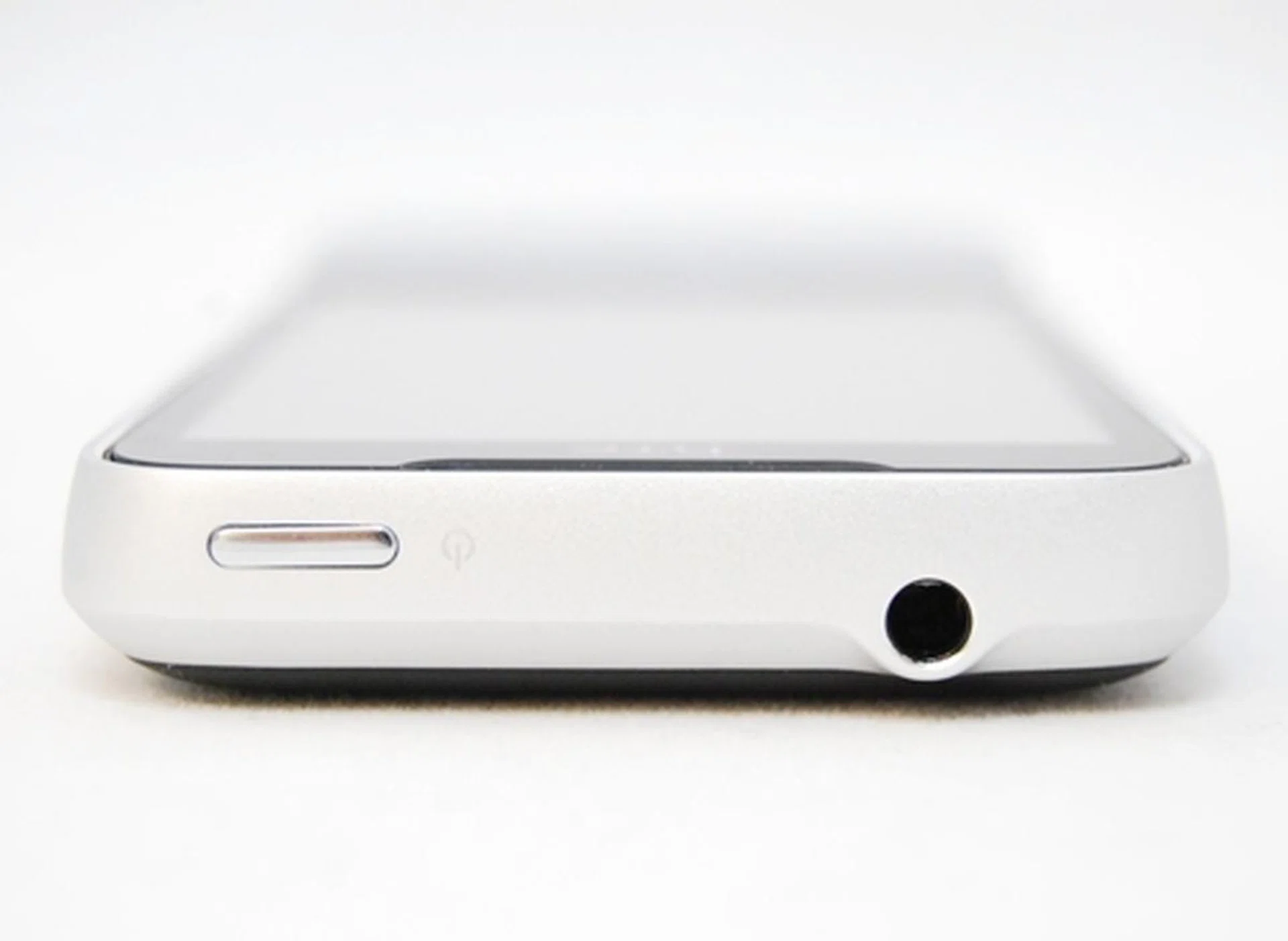
The power button, spotted on top along with the 3.5mm audio port.
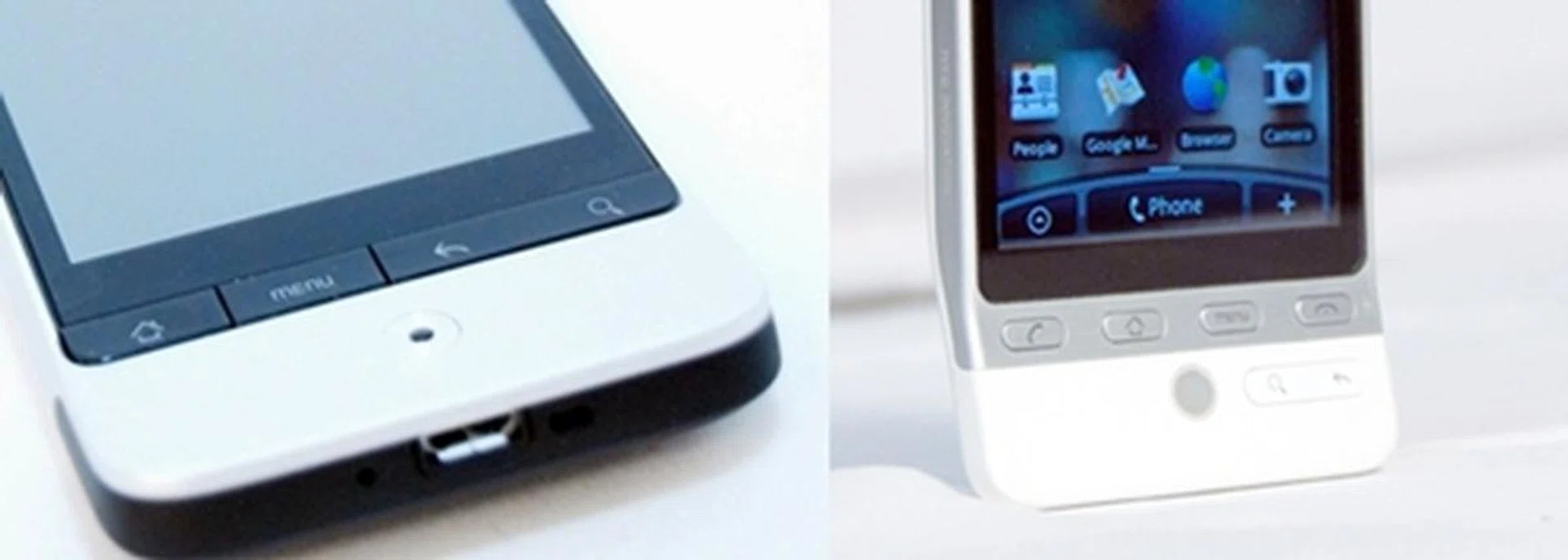
The reduction in the number of buttons might leave the Hero's users in the lurch, but it definitely boosts the minimalist appeal. Shown here on the left is the Legend's bottom half on the left as compared to the Hero's equivalent on the right.
Over on the sides, the volume button has morphed into a thin strip of metal with volume indications for the less adept. Also, like most of the other recent HTC phones in the family, Nexus One (the Google phone made by HTC) and Hero, the Legend does not come with a camera button. While we applaud them for their effort in keeping the phone streamlined and uncluttered, it would have helped if there was a dedicated function button for this purpose on the left or right profile.
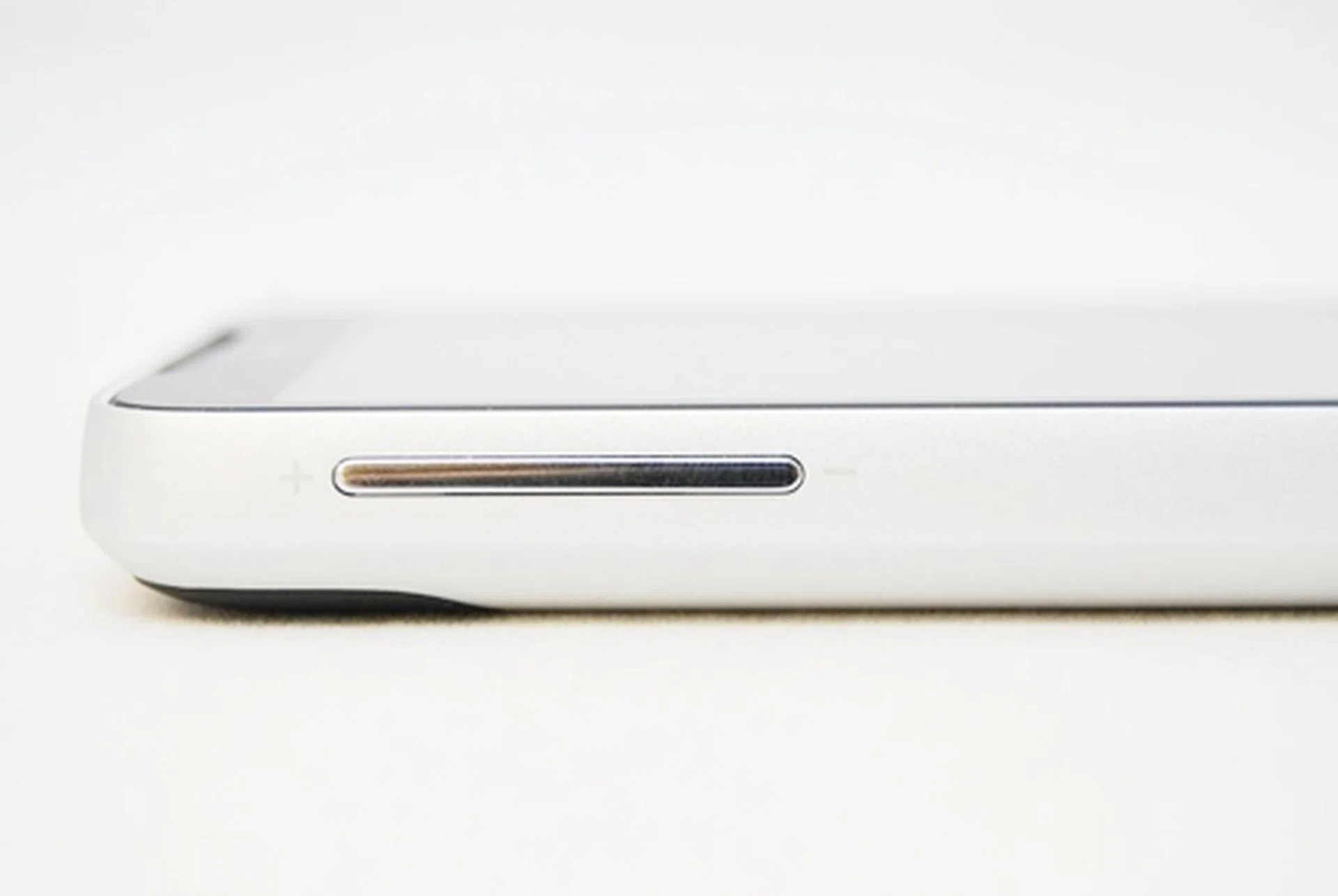
The Hero's volume button might have been a point of contention with its users it causes confusion for those without a sharp eye for quirks. This problem has been thankfully rectified on the Legend. Other than that, it would have been ideal for HTC to have included a camera button somewhere within reach.
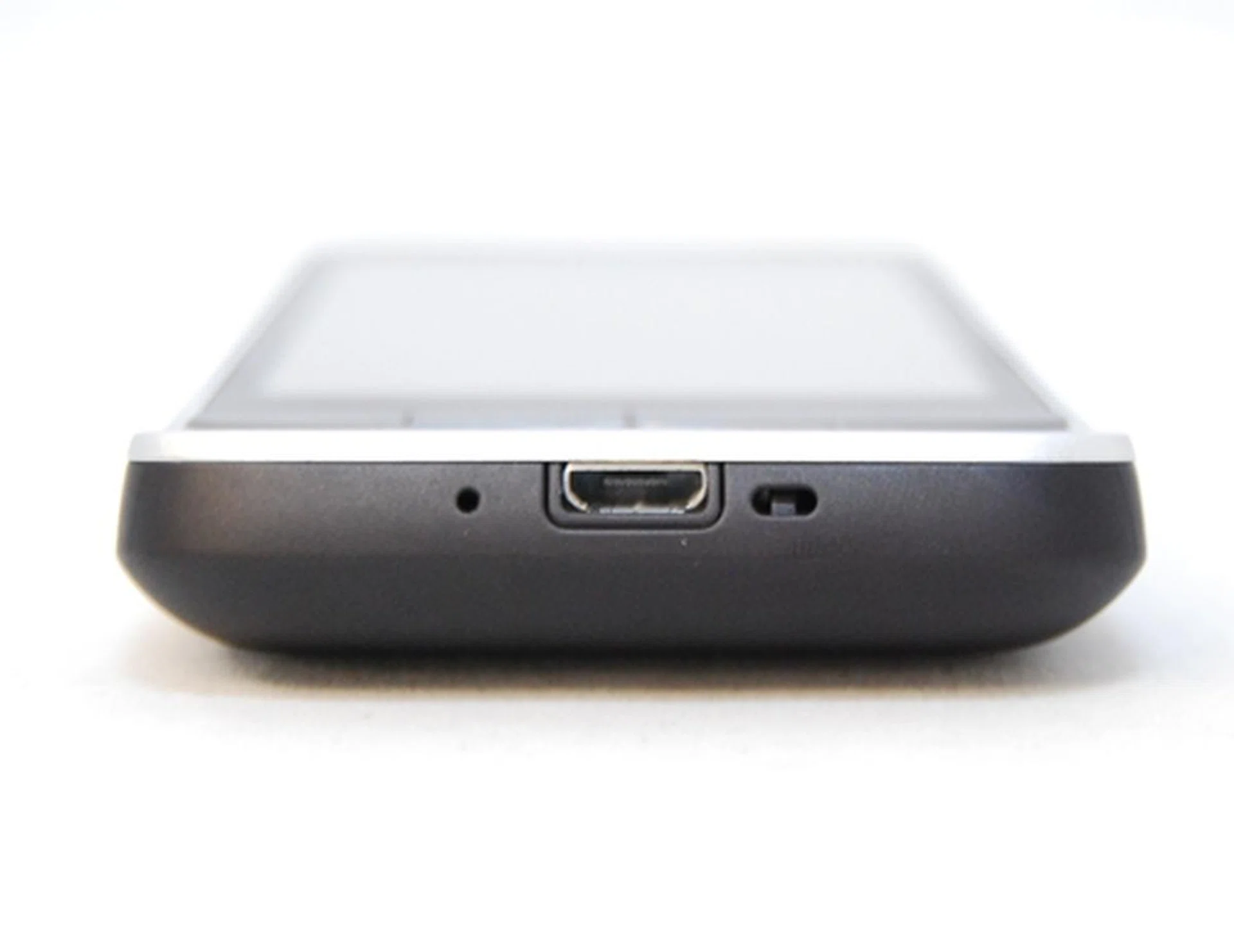
Following the trend of recent mobile devices, the Legend comes with a rather standard-issue microUSB port that allows you to charge and connect to your PC.
Unlike most phones that require you to painfully remove most of the rear cover to access the battery compartment, the Legend handles this rather smoothly thanks to its clever design. Nudging off a small black cover at the bottom rear leads you to not only the battery, but the SIM card as well as the SD card. But first up, there's a safety clasp to pry open before you can make any substantial changes to either removal of cards or battery. The only difficult part in the process is the extra effort required to secure the cover back due to its curved bottom.
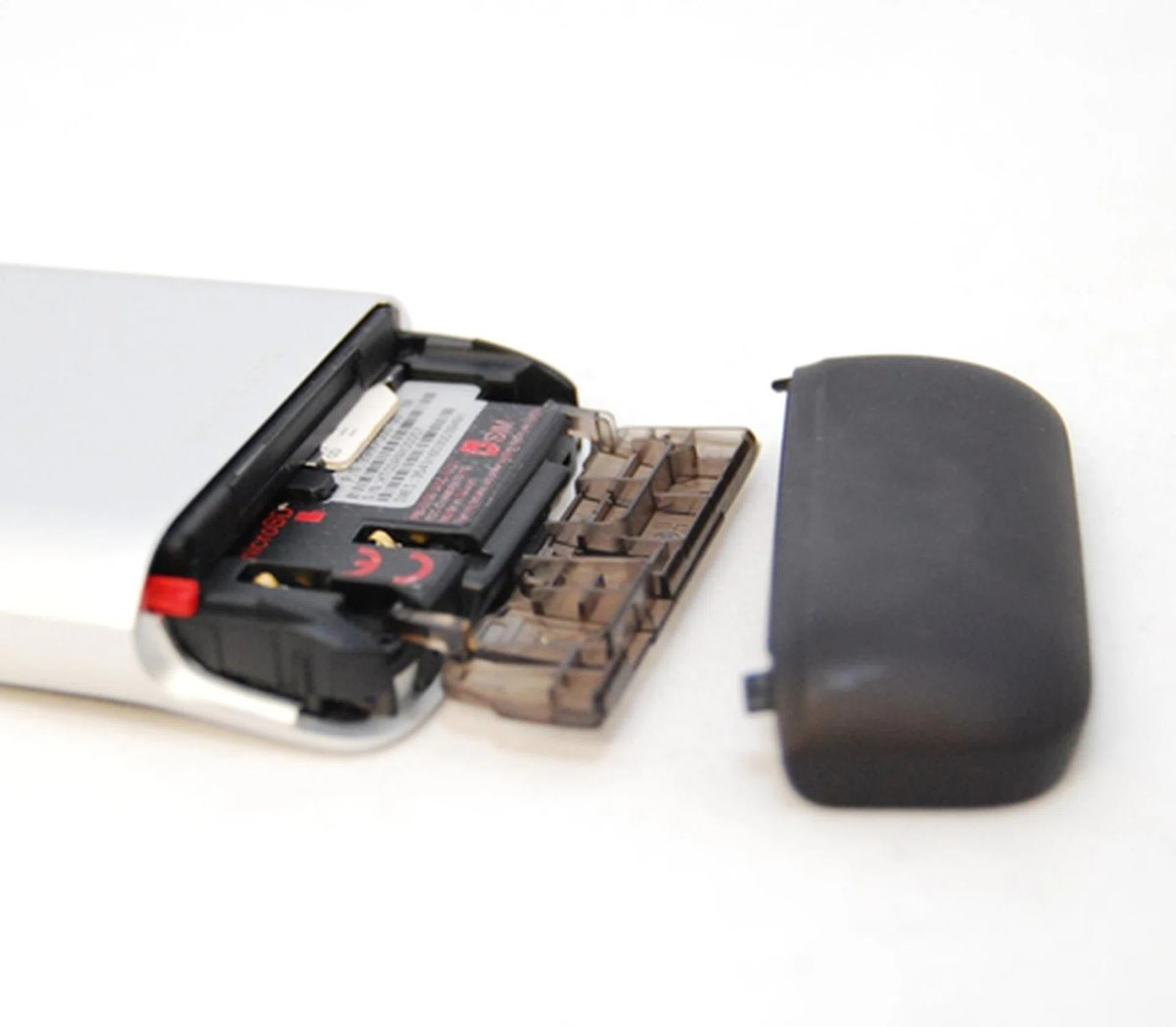
The safety clasp not only keeps everything in place or from falling out, but also as a reminder that the battery has been wrongly inserted - the clasp will only close with a resounding snap if it has been properly set in place.
.
The only major complaint that we have is that the screen attracts fingerprint smudges like bees to honey, and now that the previously metallic-brushed buttons on the Hero have been replaced with glossy buttons on the Legend, the front of the device is pretty much a smorgasbord of fingerprint smudges by the end of a working day.
The Birthright of a Legend
So does the Legend live up to its extraordinary namesake? To get a clear answer, we shall review some of its specifications and put it to task. The Legend comes with a decent 600MHz processor, which is definitely an improvement over Hero's 512MHz processor and a contender to the Milestone's 550MHz processor, but of course, loses out to the likes of Google Nexus One or the upcoming HTC Desire. Nonetheless, it still ranks high amongst the mobile devices for usability as the user experience was smooth, with no lags encountered throughout our testing phase.
There is quite a fair bit to say about the user interface itself, and while it runs on the same OS as the Nexus One and the Milestone, what it has in its favor is the newly upgraded Sense UI. We spotted quite a few significant changes from the version found on Hero, namely in terms of aesthetics and user-friendliness. Two prominent additions that we favored were: Leap, which gives you a skyscraper view of all 7 home screen pages (alternatively, you can press the menu button when you are on the main home screen page) and FriendStream, an integrated live feed of all your Twitter and Facebook updates. The main idea here is to enhance information consumption, hence providing these new tools and functions to allow users to view information at a glance quickly.
Additionally with Leap, there is no longer a need to browse with the trackpad or flick through all seven pages of the home screen with your fingers. With multi-touch capabilities, users can easily pinch on any page for all to appear. This proves to be a rather nifty addition and quite obviously since it allows users to move from a specific page to another almost instantaneously.
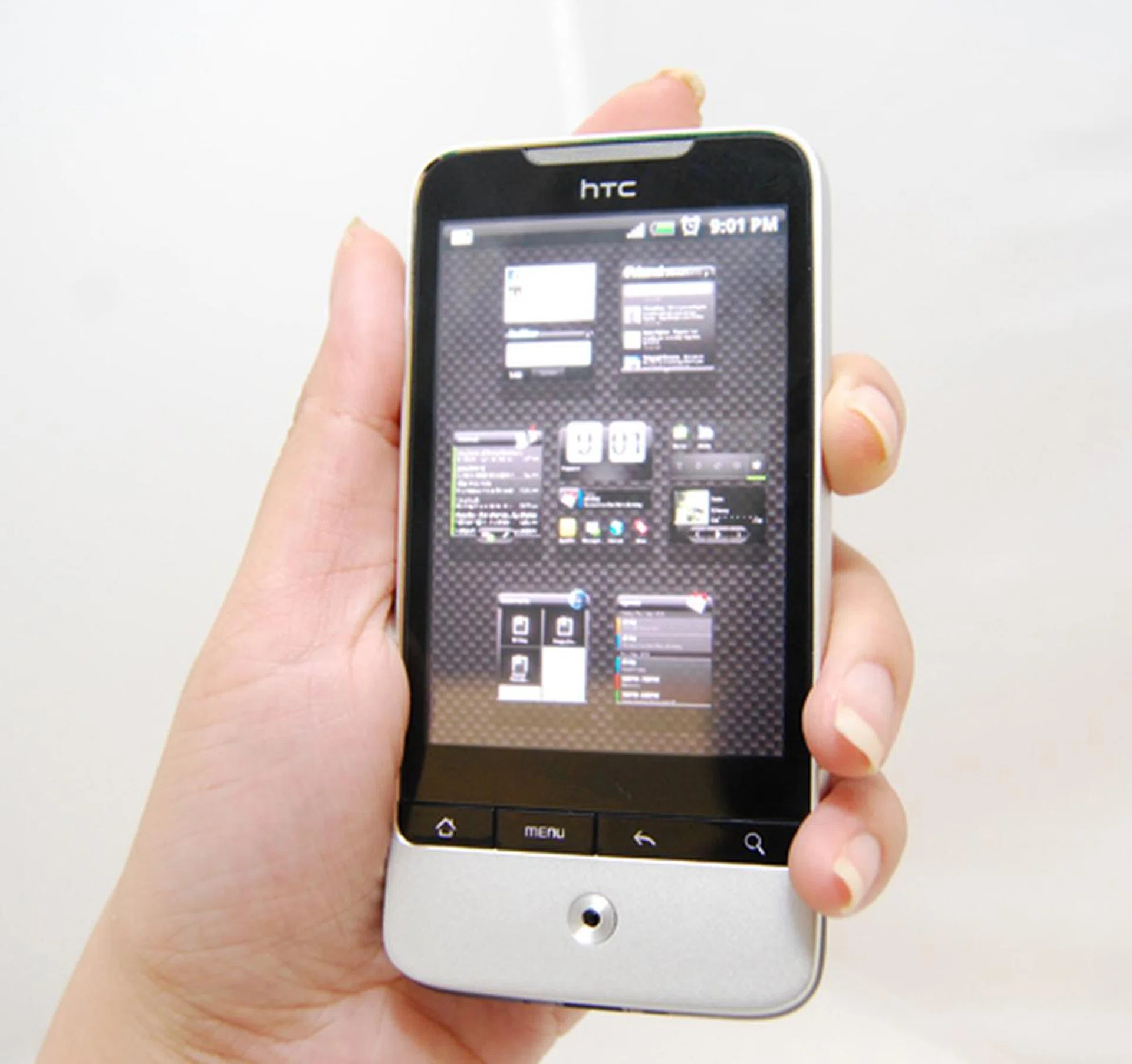
Here's the new Leap function in all its glory.
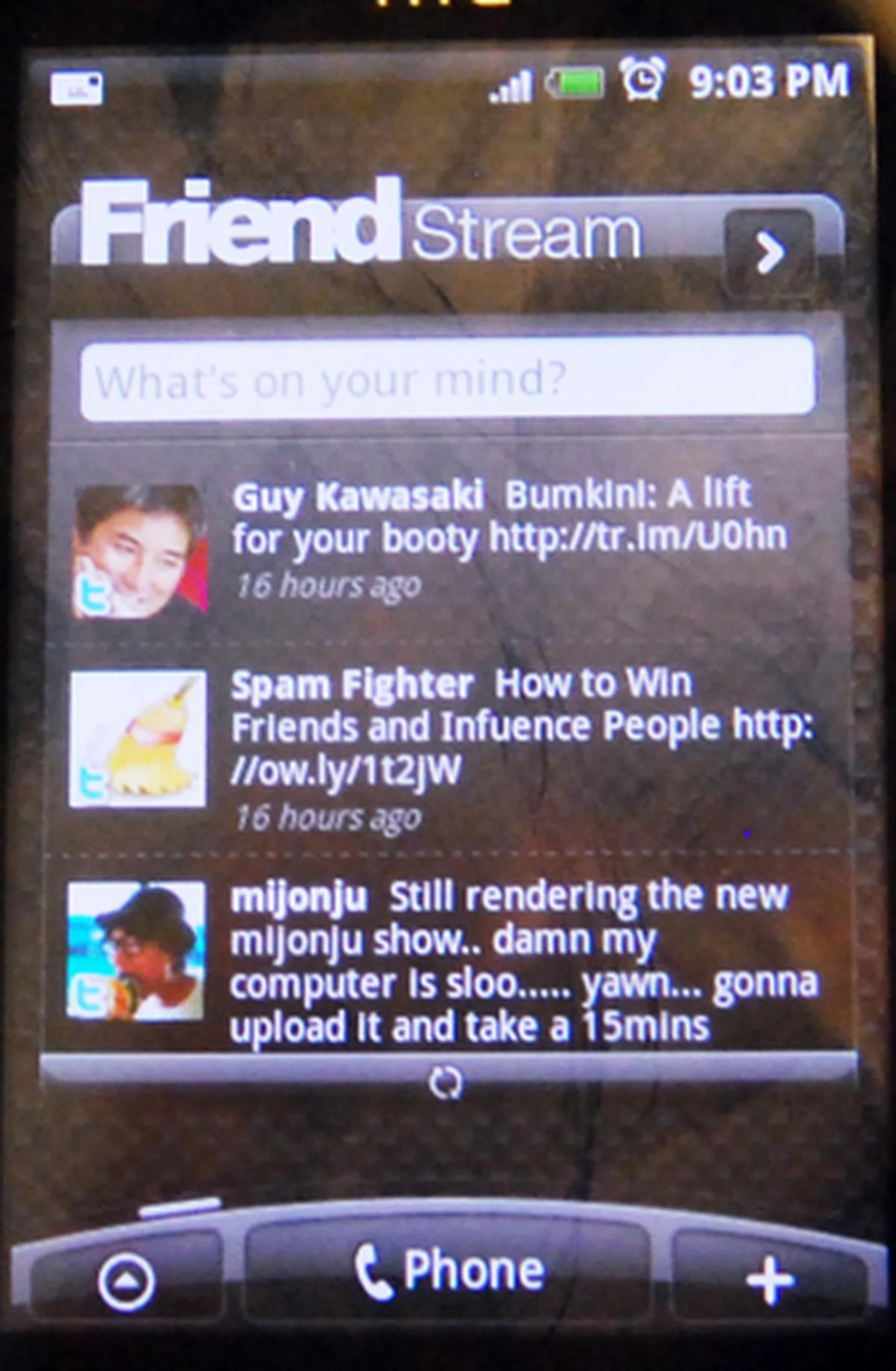
FriendStream combines all newsfeeds from both Twitter and Facebook into a singular page for viewing which is somewhat similar to what Motorola Dext is offering through its Moto Blur function. You can easily update your status through the available text box, which can be posted to both Twitter and Facebook, or either one (along with HTC Sense giving you an indication that the respective status has been updated). Newsfeeds from Twitter and FB are marked with their respective logos as seen above.
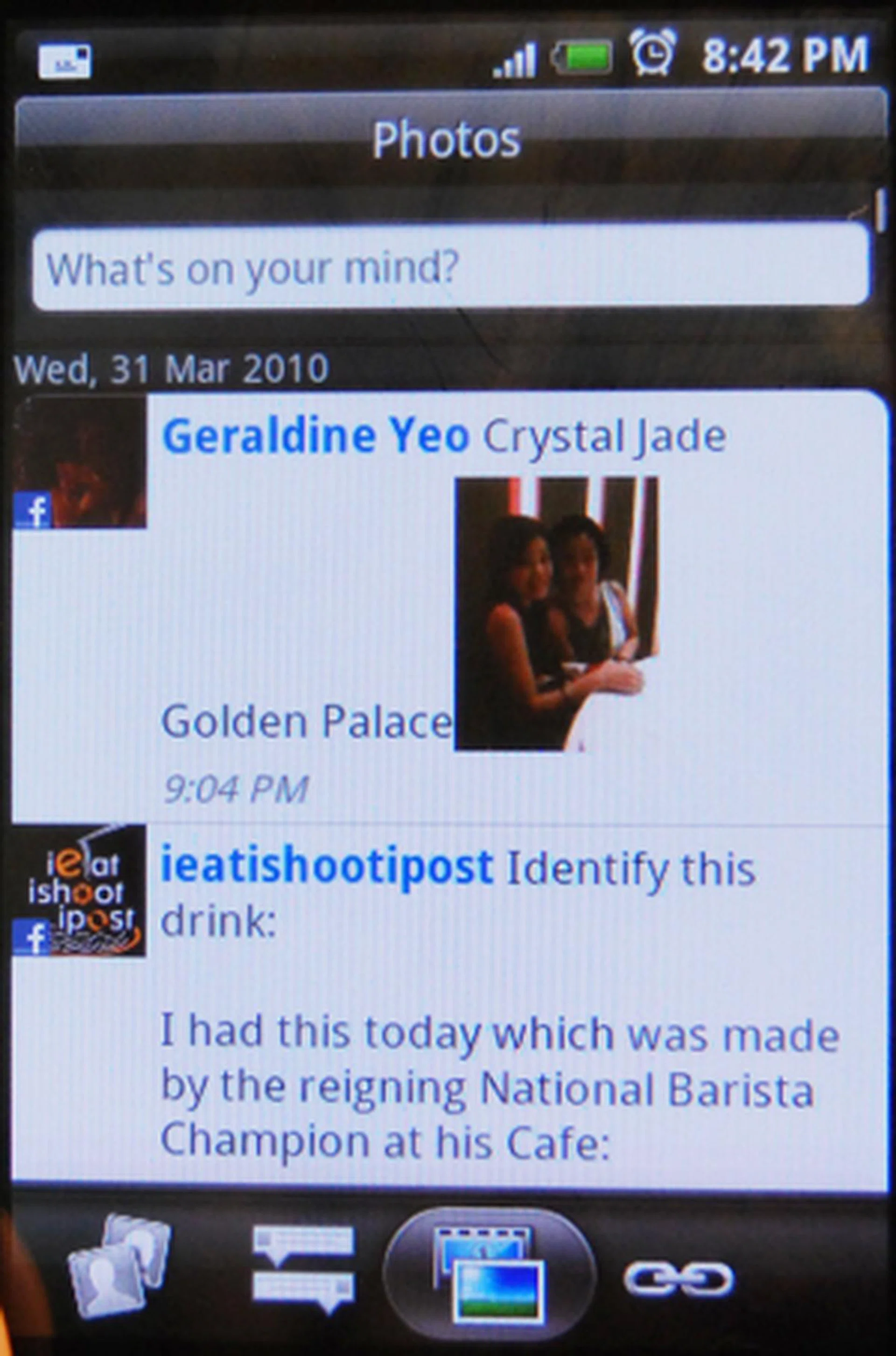
On pressing the enter button (marked with an arrow) on the FriendStream widget brings you to a page with four tabs - All Updates, Status Updates, Photos, and Links. Seen here is the Photos tab, where all updates with photos will be sieved out and displayed here.
Admittedly, FriendStream is a useful app for viewing newsfeeds from both Facebook and Twitter, but once we got over the hype, we realize that there are quite a few quirks worth mentioning. Firstly, clicking on a tweet doesn't direct you to options for replying or re-tweeting - but rather, it redirects you to HTC Peep (Twitter app) and even then, not to the specific tweet on the app. This might prove to be frustrating especially if you were scrolling quite far down and wanted to reply through FriendStream, only to have it redirect you to your main Twitter newsfeed page on HTC Peep with the troublesome option of starting the tweet hunt all over again.
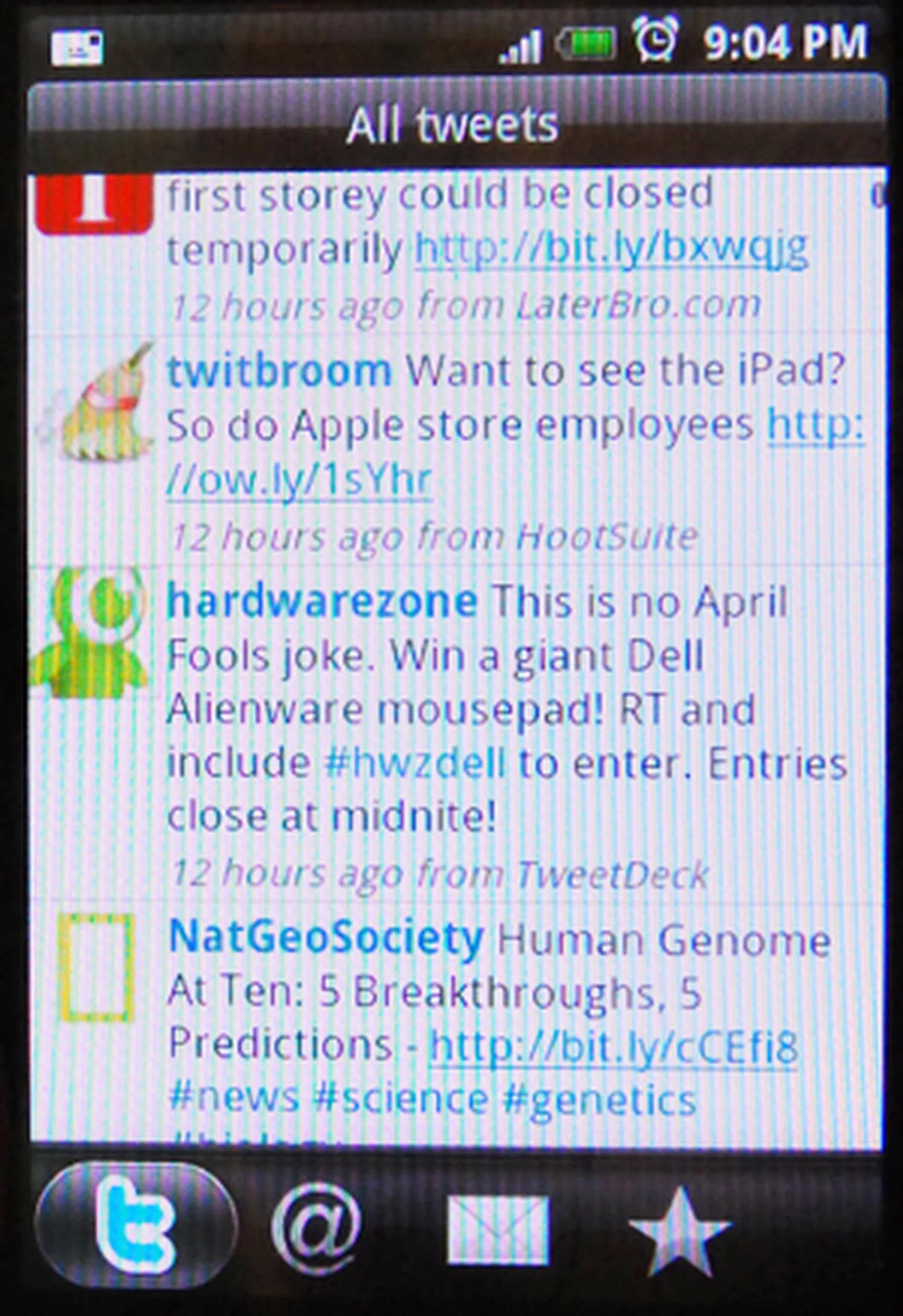
Pressing on a tweet brings you to Peep, HTC's Twitter app.
While we had more luck with the FB side of FriendStream, there are still downsides to it: we can't access profiles or search for a particular friend through the app. The more comprehensive searching has to be done on the main FB app, which thankfully retains a relatively close-to-web browsing experience. On a related note, compared to Twitter, FB statuses are rare and infrequent, so there's a high chance of skipping out on them. More often than not, you would end up placing widgets for both Twitter and Facebook on another homes creen page to utilize. As mentioned earlier, FriendStream is a useful app for viewing newsfeeds at a glance, but not so much so for in-depth browsing.

Clicking on a FB update proves to be less troublesome - while it doesn't redirect you to the FB app, it does however, bring you to a page where you can comment and read other entries.
Even the settings have been streamlined into an optional widget - instead of going in and out of the settings menu, users can now easily change settings like WiFi, Screen Brightness, Bluetooth, and Syncing on their home screens.
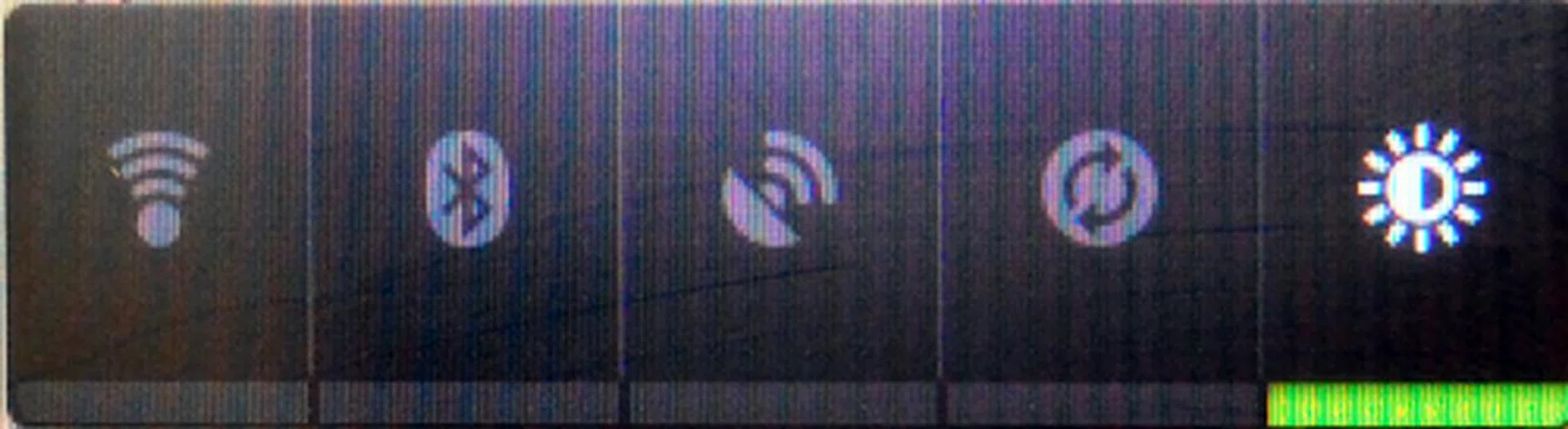
These settings can be easily toggled as required when you add a power control widget to your home screen page. Absent here, however is a tab for switching on the mobile network services.
The Legend Performs
We tackle the Legend's camera performance first before moving on to battery life testing. While the Legend's camera capabilities shrink in the light of other phones from the Android clan (Milestone for example), it certainly boasts of a crucial addition that was a point of contention on the Hero - a LED flash. Yes, it is still a 5-Megapixel camera, but it helps a lot that the addition of a small flash enables some shots to be taken in the dark. The controls for photo taking have not changed since the days of the Hero where you depend on the optical trackpad (in place of the trackball) as a shutter button, and you can control focusing by simply tapping the screen in the intended area focus. However, we found that the Legend wasn't quite as legendary when it came to camera footwork - the auto-focus was found to be buggy and at times, does not register our inputs accurately, often leaving us frustrated with blur, out-of-focus shots. Seems like the camera function of HTC phones have hardly improved for a long time now.
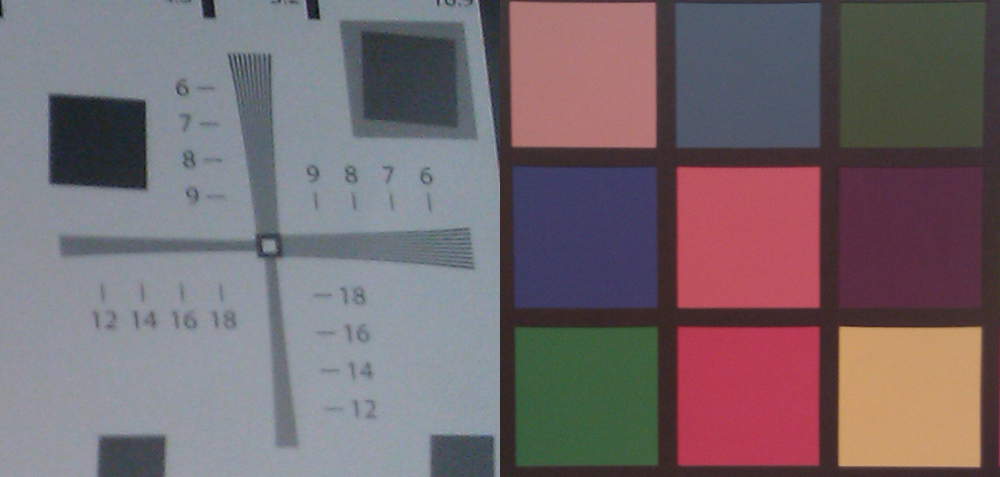
We were not expecting much from a 5-megapixel camera, with readings of about 500 on both vertical and horizontal lines. As spotted on the adjacent color chart, most images turned out looking far too cool and a bit noisy.

Details are a little fuzzy here, and not exactly impressive. We shot this photo under strong incandescent light to test its white balance compensation, and it was way off from our findings here, which left us with a reddish background.
Next up, we compare the Legend's battery performance with a selected group of devices chosen based on their similarities across operating systems, battery capacities, display sizes, resolution and processing power. For this, we normally loop a video endlessly. On a related note, the 3.2-inch screen on the Legend was sufficient for us to enjoy videos, but the resolution support is rather limited compared to the competition. However, its saving grace would be its usage of an AMOLED screen. On to our formal battery test, it consists of looping a 240 x 320 pixels resolution video clip with Wi-Fi and Bluetooth active, plus volume and screen brightness set at 100%. Results after the specs comparison list below:-
Specifications/Device | HTC Legend | Motorola Milestone | Google Nexus One | HTC Hero |
Connectivity |
|
|
|
|
Dimensions |
|
|
|
|
Weight |
|
|
|
|
Screen size |
|
|
|
|
Battery |
|
|
|
|
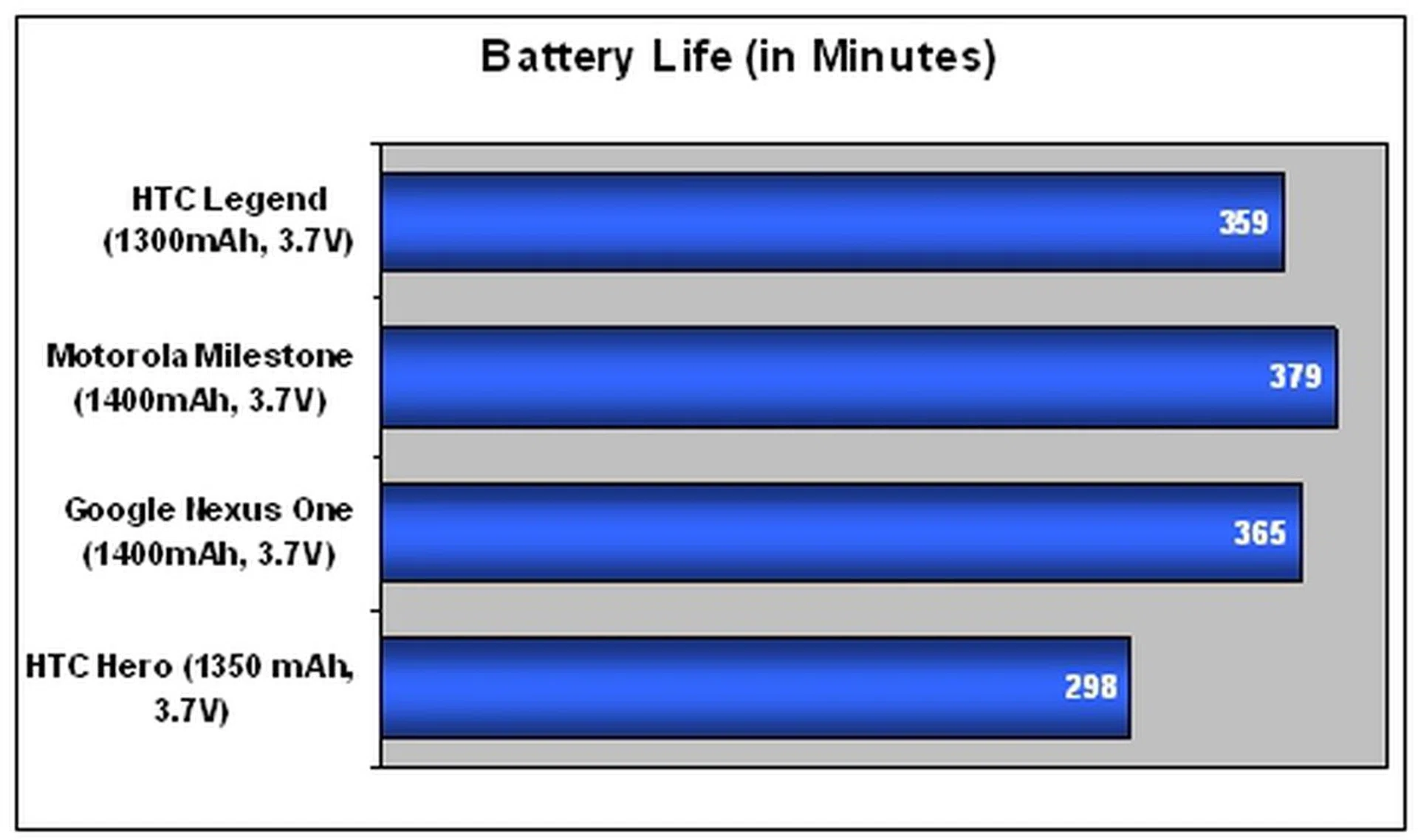
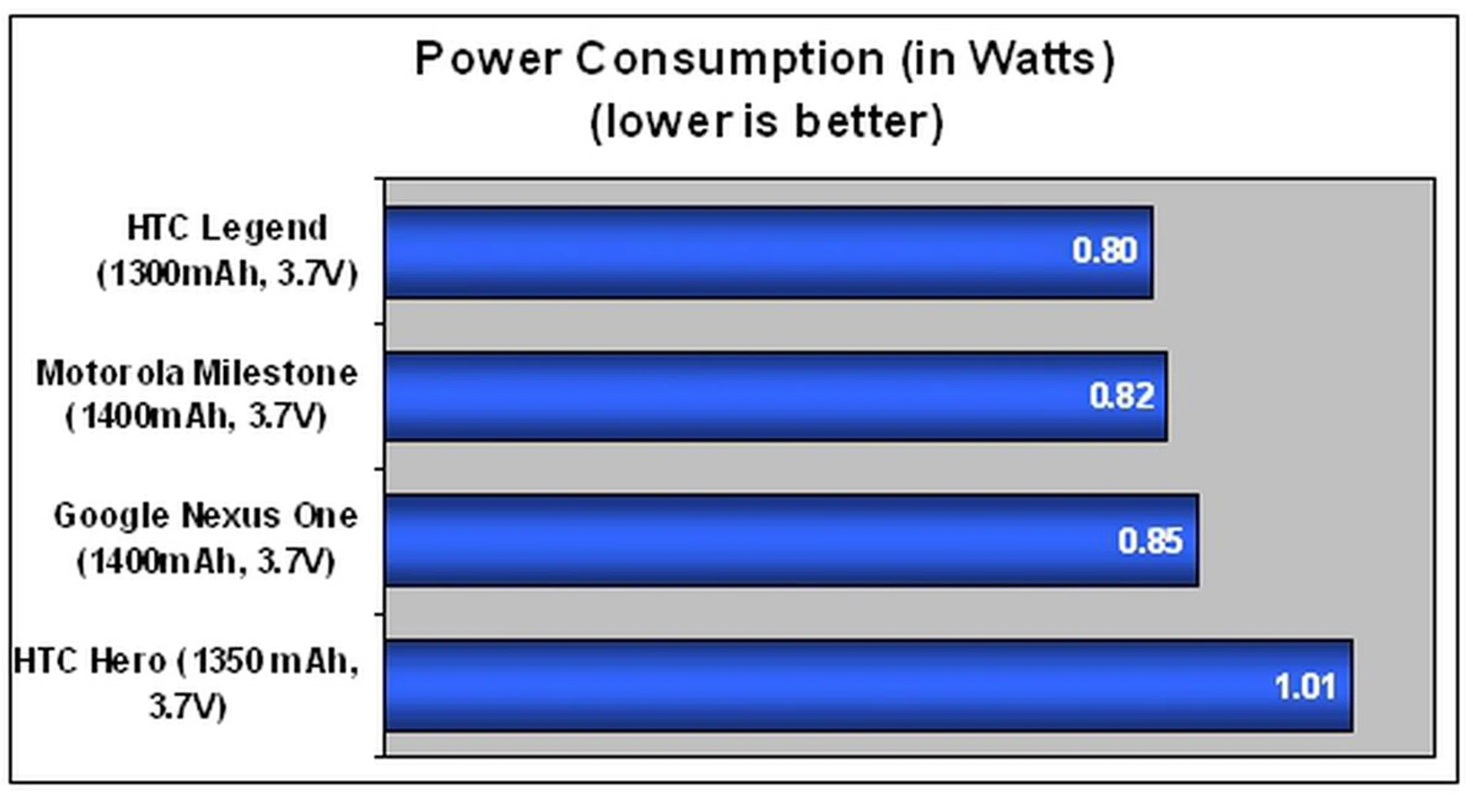

Overall, the Legend fared pretty well in battery life, even though it was a tad behind its nearest competitors. You will notice however that it uses the least power compared to the two giants because of its smaller screen size. No surprises that it fares a lot better than it Hero predecessor since it's the newcomer is better tuned for power efficiency plus it has the advantage of using an AMOLED screen that sips less power than a traditional LCD display.
For the Portability Index where we factor in the battery life which is then divided by the product of a device's weight and volume, we see the Legend trouncing the competition here. The newcomer's more compact dimensions and lighter weight were both advantageous for it in this comparison.
In addition to these strict tests and comparisons, we've also put the Legend through our more day-to-day usage scenario. This included 3G connectivity while partaking in heavy mobile usage throughout the day (e.g. occasional browsing on the web, internet messaging, and taking photos). On a single charge, the phone managed to last us an entire day and made it to the following morning with a little more battery left to spare.
Blazin' With the Legend
While the Android platform does not have the prowess of the Apple's app store (160,000 apps and counting), this is a much younger platform that has a lot of potential because of the advantages of the open source operating system and its tight integration with Google related services and apps. It's no surprise why several phone vendors are decking their line-up with an Android based device these days.
While competition is aplenty and growing, the HTC Legend is a worthy investment from our assessment if you don't already own an existing competitive phone like the Google Nexus One. We also dare say it is one of the better looking phones out there in the market, and a vast improvement over the Editor's Choice winning Hero of last year. When comparing them side-by-side, the once leading Hero looks rather unappealing and overtly plastic. The Legend is quite a makeover in terms of design with its streamlined layout, and svelte unibody build. Just watch out for the easily fingerprint smiudged screen and glossy buttons. Size-wise, the Legend is a good fit, due to its light weight of 126 grams, slim dimensions and a body that provides good grip. The optical trackpad also provides better browsing capabilities, and does not 'jump' like the trackball on the Hero.
Those familiar with the HTC Sense UI will find the latest one a notable improvement over the first - and it is a strong enough reason for other Android phones users to give it a close look. Most of the changes are subtle ones that make the mobile experience a smoother and easier one such as the mute and speaker buttons being on the caller's popup, the option to mass delete emails on your secondary email account, new FriendStream and Leap functions, and most of all, a detailed rundown on battery life usage in the settings menu. While the UI hasn't gone through a complete cosmetic overhaul, the animations peppered throughout the home pages (e.g., weather app, email app) are nice touches to the interface.
Multimedia functionality of the phone didn't fare well unfortunately. The 3.2-inch capacitive touchscreen with a 320 x 480 pixels resolution screen isn't fantastic for video playback as YouTube videos appeared fuzzy and blur - there's no way to read the subtitles on the video. Audio quality was also found to be average. The phone's camera quality however, didn't sit well with us. Photos taken were overly red in the dark, while the autofocus can sometimes be a pain to activate, and controls were a bit iffy. We would have really preferred a physical camera button, instead of having to use the optical trackpad as the shutter button.
Although the phone does not run on a 1GHz processor like the larger upcoming HTC Desire, the Legend is still sufficiently speedy as it ran all the apps well without lag. The user experience is smooth, with screen and app loading showing no signs of slowing down in-between transitions. When putting the Legend through our daily pace of use, which involves 3G connectivity while partaking in heavy mobile phone usage throughout the day, we realized that a full battery charge could last us slightly more than a single day of use.
The HTC Legend is a beautiful phone that's also very user friendly, but it's multimedia performance is unfortunately not its forte. Interested buyers who need a compact smartphone and upgrading from the Hero would definitely like it though.
In summary, the new Legend is an apt update to the previous Hero (and to an extent, it’s sort of a 'Hero 2'), but in-line with the current portfolio of Android devices offered at this level, the Legend faces steep competition. Particularly, its multimedia aspects aren't as polished as the competition from what we've conveyed within the review.
For those who are specifically looking for an Android phone with the updated HTC Sense UI, the HTC Legend is an ideal candidate at S$798. For current owners of the HTC Hero, the differences lie purely in the operating system as well as positive physical design overhaul. While these are reasons to upgrade, do keep in mind that an Android 2.1 upgrade for the Hero is on the way. Those with more time to kill on their hands might want to wait for the arrival of the larger HTC Desire, which also comes with the new HTC Sense UI, But for the impatient, the Legend should suffice.
If your main criteria is to hop on to the Android bandwagon and have no real preference in this mid to high-end tier of phones, you should take a close look at the competition as well as the HTC Legend to see what fits your needs most as it is a close call between them.
Our articles may contain affiliate links. If you buy through these links, we may earn a small commission.