
HTC Desire - Unleashed Android Power
With ample time to refine and enhance the user experience with its HTC Sense UI, the Qualcomm Snapdragon 1GHz powered HTC Desire, loaded with Google's latest Android 2.1, is a clear example of how smartphones of today are more than just a cellular device.

** Updated as of 17th May 2010 - Video Walkthrough Included **
Thou Shalt Desire
It's been more than a year since Google brought forth its open-source mobile platform, Google Android, onto the mobile scene. Though the mobile OS had a slow and uneventful start with the HTC Dream, it got a breakthrough with the help of HTC and its Sense UI on the HTC Hero. For a while, it seemed as though HTC was dominating the Android realm, with its various offerings that also includes entry-level devices such as the HTC Tattoo. But with more manufacturers joining the Google bandwagon, it became anybody's game.
Then came the Google Nexus One, dubbed as the superphone by the Google themselves. True to that, the Nexus One offered much more than its counterparts did, loaded with the latest Android 2.1 version whilst others were still waiting for the update from its earlier Android 1.5 or 1.6 versions. As evident by its strong partnership with HTC, the Nexus One was manufactured by the said Taiwanese company, and that brought up this question - will HTC release its own model loaded with HTC Sense? The answer is a resounding yes, when we first spotted the HTC Desire at Mobile World Congress 2010. Bearing similarities to the Nexus One, the Desire is more than just a clone of the earlier Android device. As expected, a new and improved HTC Sense UI was loaded within the Desire, and that's only the tip of the iceberg. Want to know how big this iceberg really is? Read on as we give you the detailed breakdown of the HTC's new Google Android 2.1 device, the HTC Desire. But just before that, here's a quick video overview to get you up to speed on most pertinent features of the HTC Desire if you're in a hurry to know what's all the fuss about:-
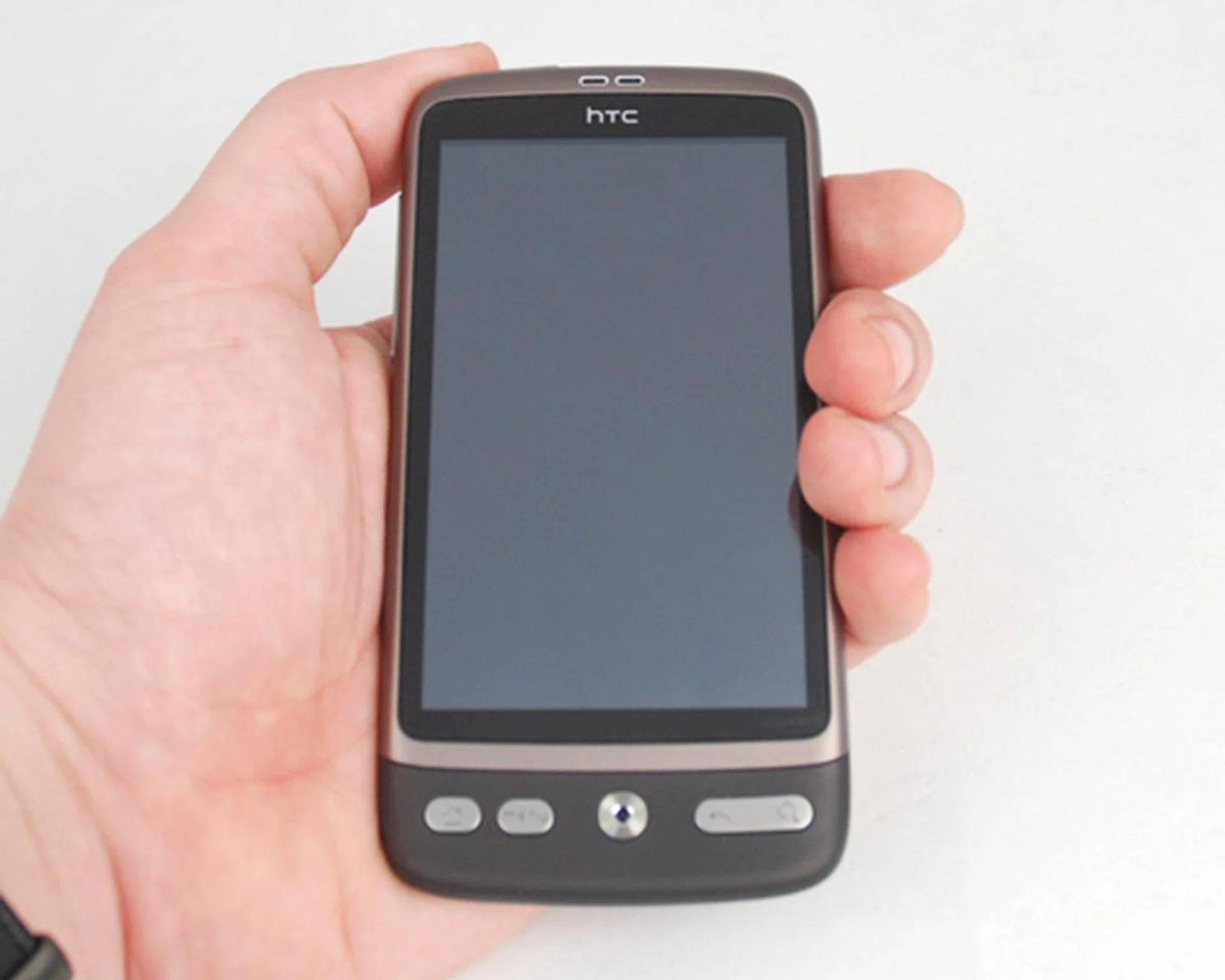
The new HTC Desire.
Sharing a Desire
What makes the Desire, well, desirable, is its simplicity. At first glance, the unit bears a strong resemblance to the Nexus One, down to the curves and matted materials used in its construction. The same 3.7-inch AMOLED capacitive screen populates the front, and a 5-megapixel camera with LED flash is placed at the usual rear of the device. But this isn't an exact clone of the earlier Nexus One, and it has a few obvious differences.
The first of which is its front panel, which uses physical buttons in lieu of the Nexus One's touch panels. Further to that, the buttons have a slight change in placement. An optical trackpad instead of a trackball is placed in between the four buttons. What's more noticeable, both in sight and usage, is the swapping of the Home and Back buttons. For a right-hander, it tends to make more sense for the often used Back button within easier reach on the right. The Desire kept to its slim profile, but not exactly straight. The signature curved chin at the bottom, seen on its other Android devices such as the HTC Dream, Hero and Magic, is also present on the Desire, albeit in a more subdued form.
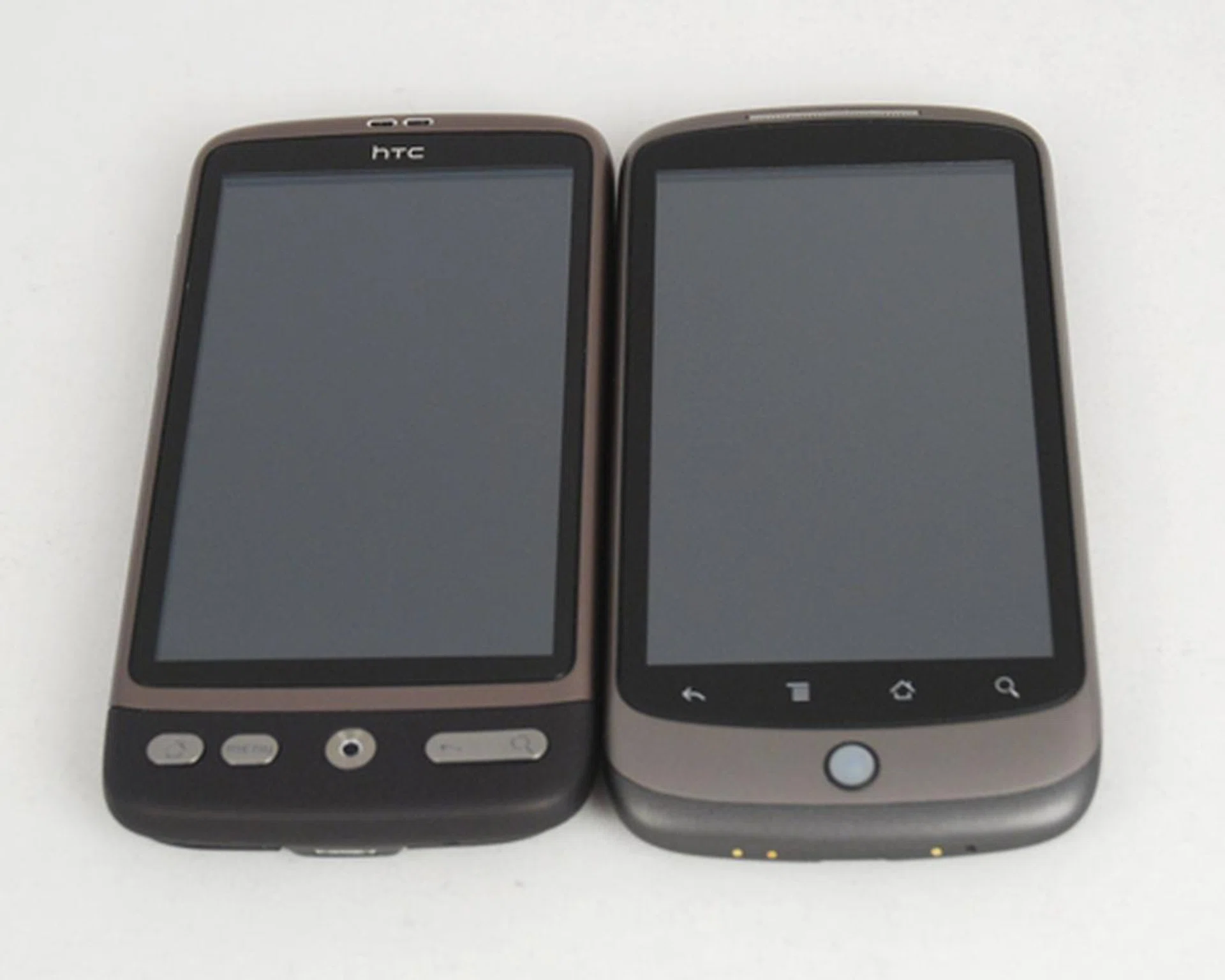
Both the Desire (left) and Nexus One (right) are similar in form factor and size, but that's as far as the similarities end.
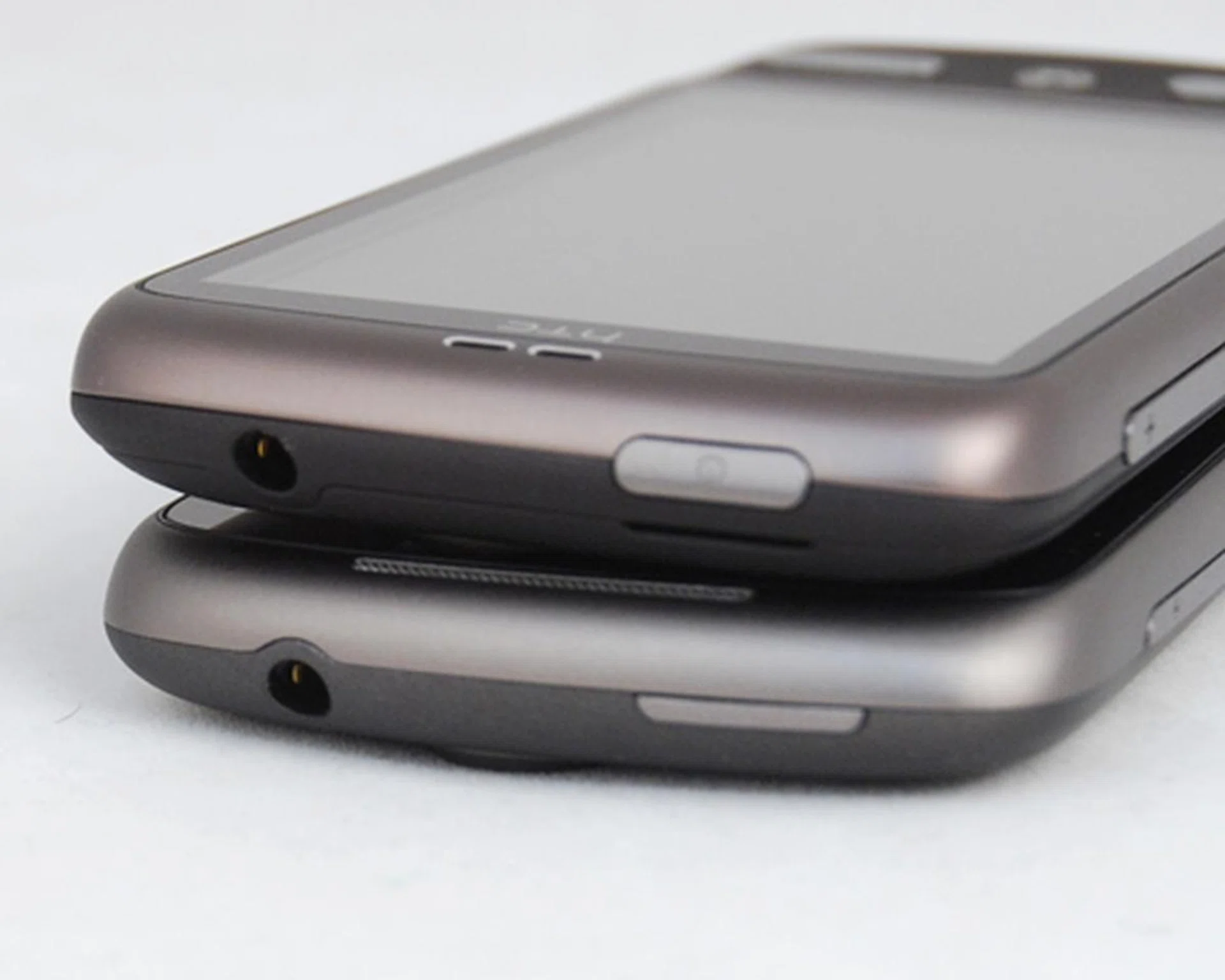
While the Nexus One's Power button is built as a thin strip, the Desire chose to compress it into a thicker and shorter strip for easier access.
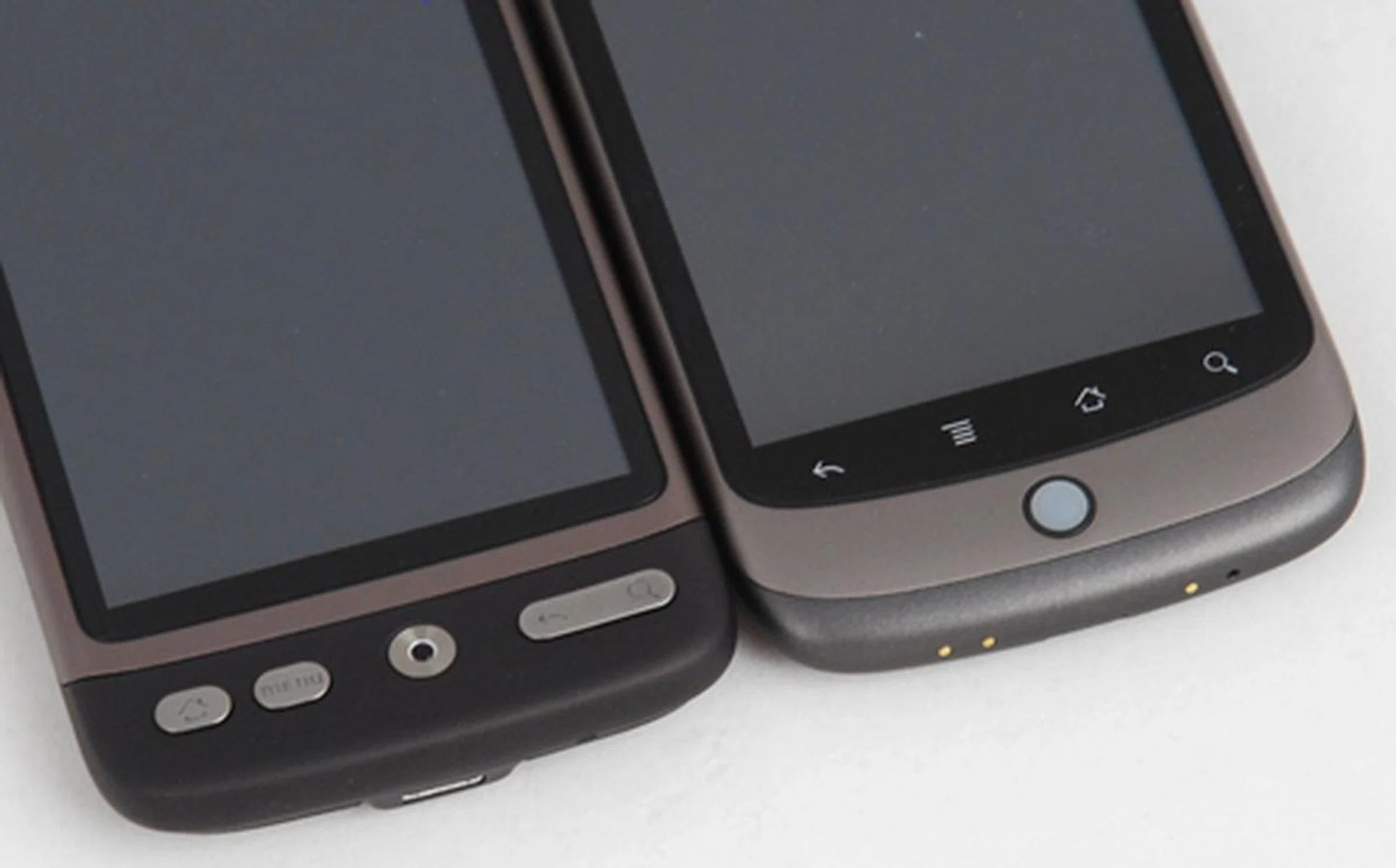
The obvious difference is found on the front panels. The Desire chose to use physical buttons over the Nexus One's touch-sensitive panels.
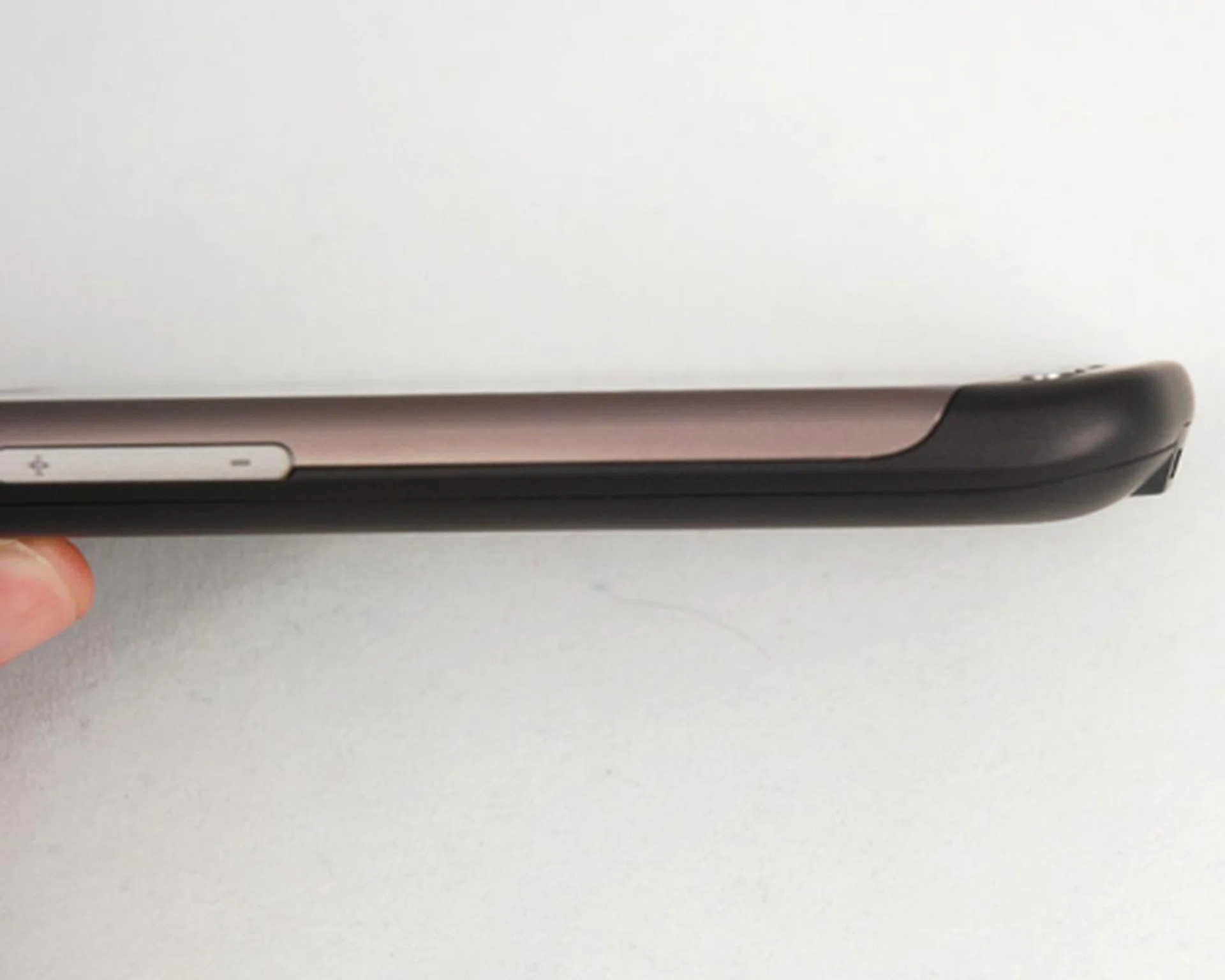
The return of the chin on the Desire, though not as pronounced as its other Android siblings.
For its input ports, the Desire keeps to the usual 3.5mm audio port and a microUSB port at the top and bottom respectively. We were absolutely pleased with what we've been seeing, until we attempted to access the battery. Rather than taking on the Nexus One's approach with a sliding casing, the Desire requires you to pry the casing open to reach for the battery, and by proxy, the microSD and SIM card. But take comfort in the fact that once you've inserted both cards within, you probably won't need to reach for it in the immediate future.
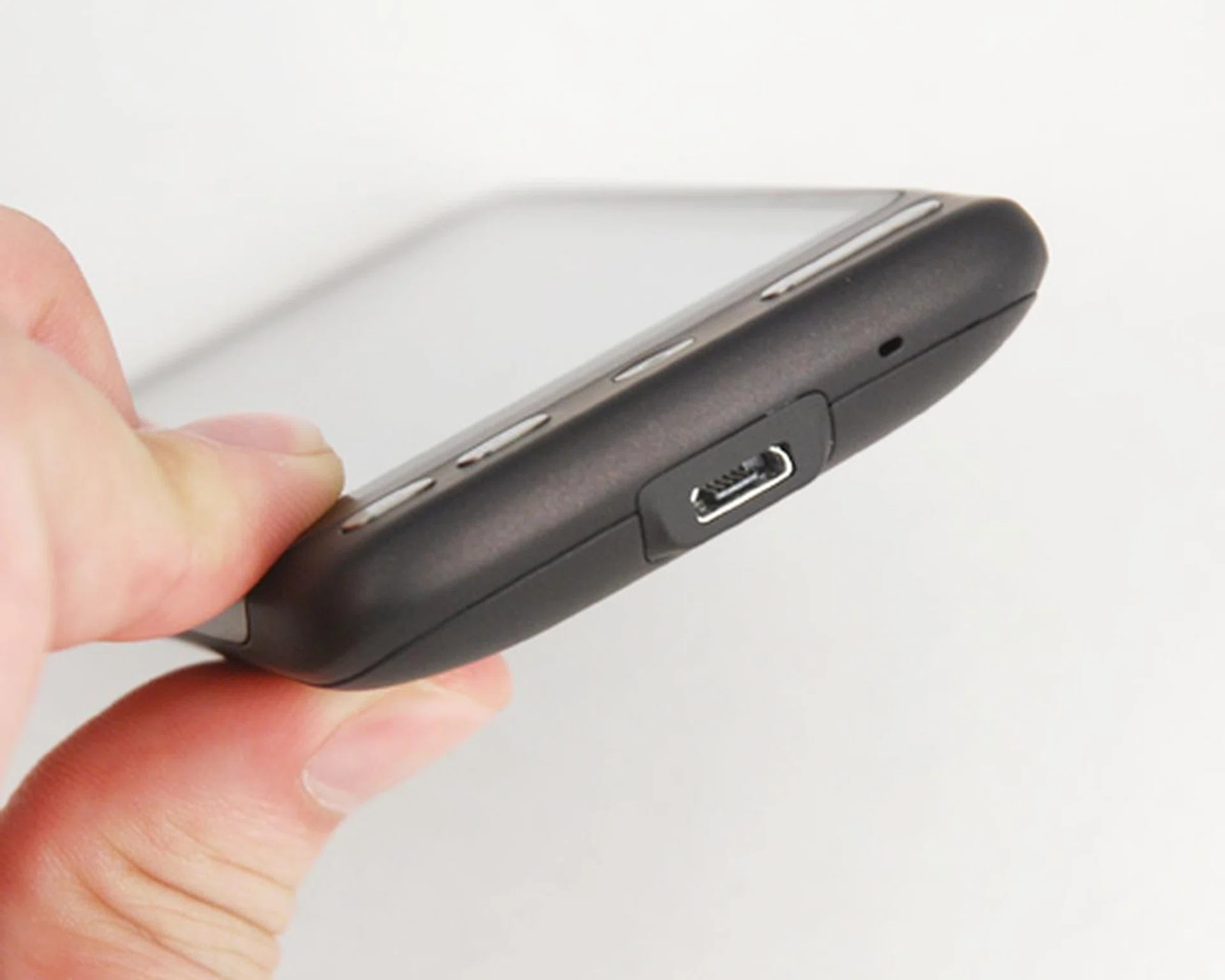
The standard microUSB once more, at the bottom of the device.
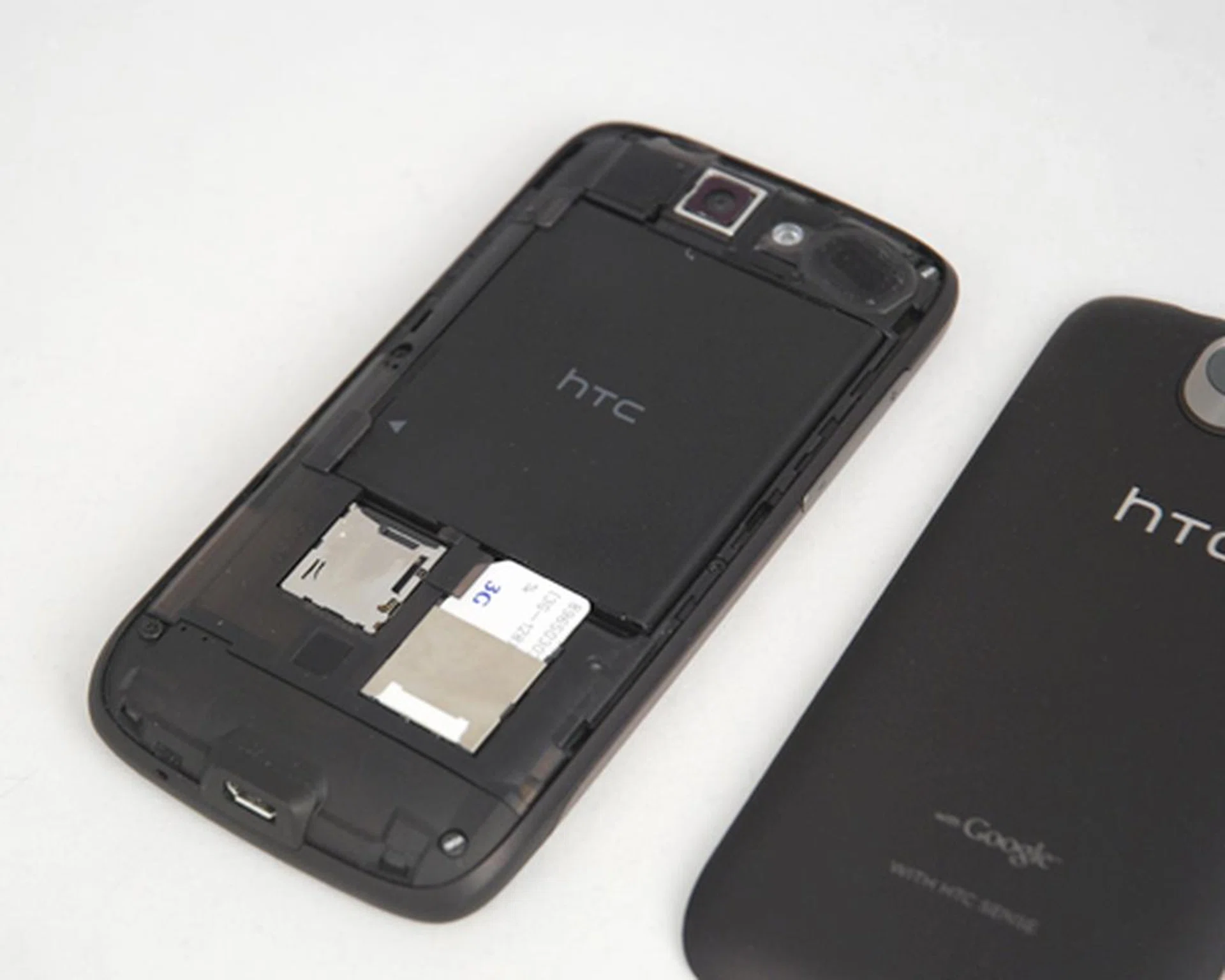
Pry, open and access the battery, microSD and SIM card behind the device.
Beyond Common Sense
So, you want to know what's the draw for the Desire, when it is almost similar to the Nexus One? The answer lies within. Though the Desire shares the same Google Android 2.1 platform with the Nexus One, HTC added its own winning formula in the form of the HTC Sense UI. In doing so, we see a more streamlined user experience within the Desire. Examples include your contacts, which can be linked to the corresponding Facebook profile to consolidate all your communications with the said person. Similarly, images within the Desire or stored with your Facebook or Flickr account are also linked together.
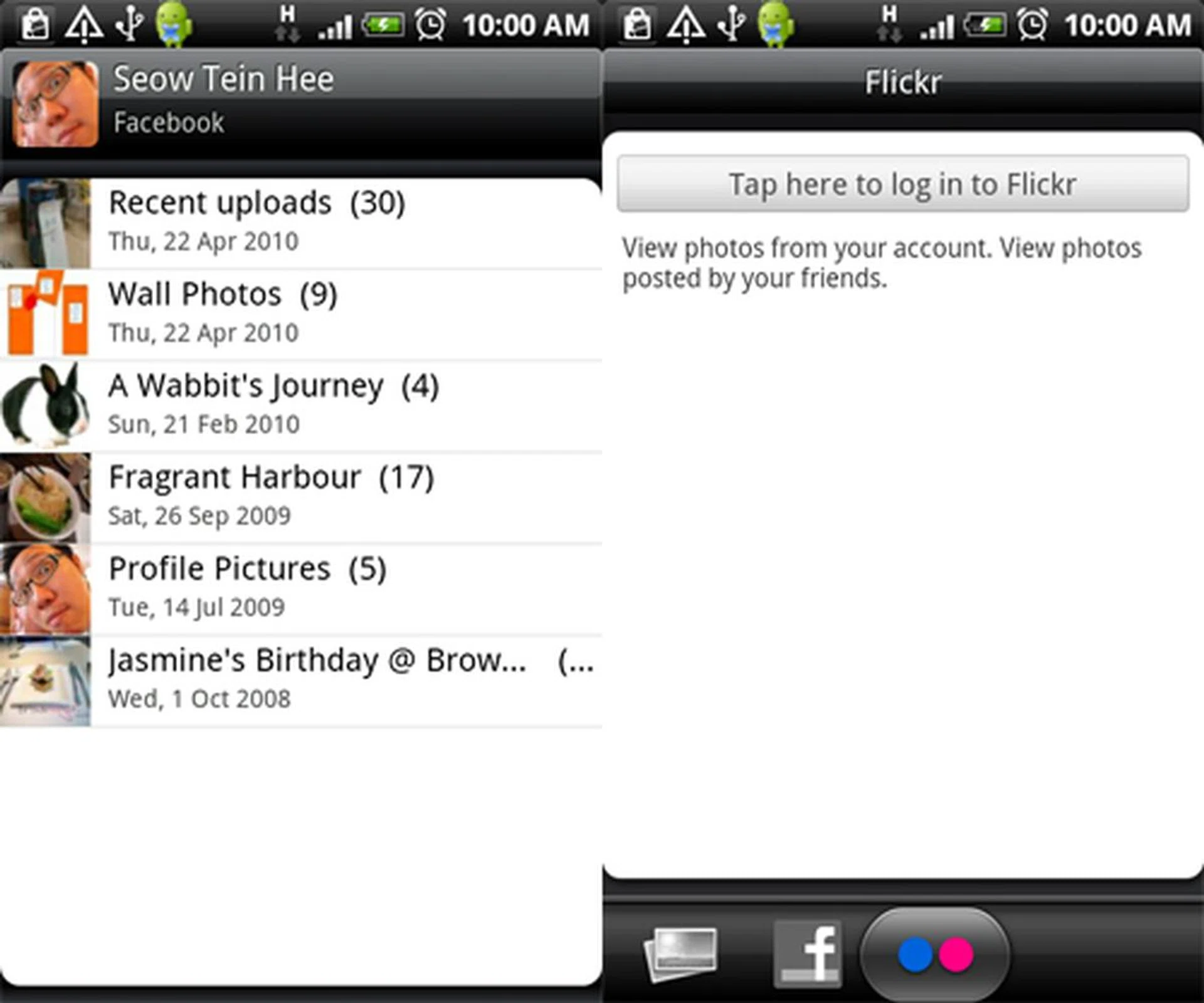
HTC Sense integrates both your offline and online content, such as Facebook updates and photos, within the Desire.
The default interface gets an extreme makeover, on the surface and deep within. As covered in our previous review of the HTC Legend, the Sense UI gets a few updates such as Leap, which requires you to pinch zoom and be presented with a thumbnail view of all seven pages. Internally, the interface looks much more refined and richer than the default Android 2.1 interface. The previously mentioned Friend Stream is also present here, and likewise, you get to post status updates and newsfeeds across three different social networks - Facebook, Twitter and Plurk. Within Friend Stream, you can filter the feeds accordingly to status updates, or those that displays just photos and links within the feed. Alternatively, you can access all three networks via their own widgets.
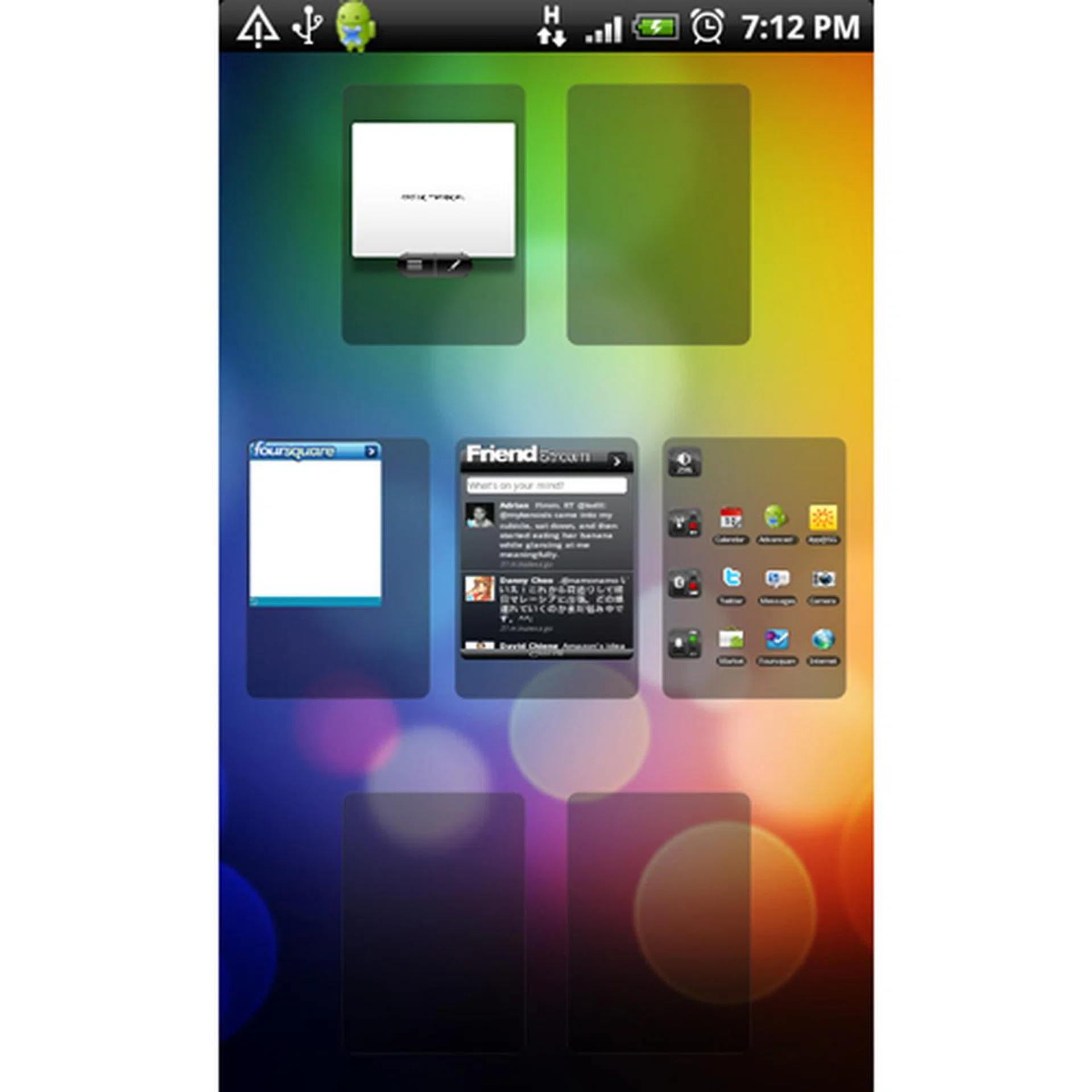
A thumbnail view of the seven home pages for you to populate your widgets and apps.
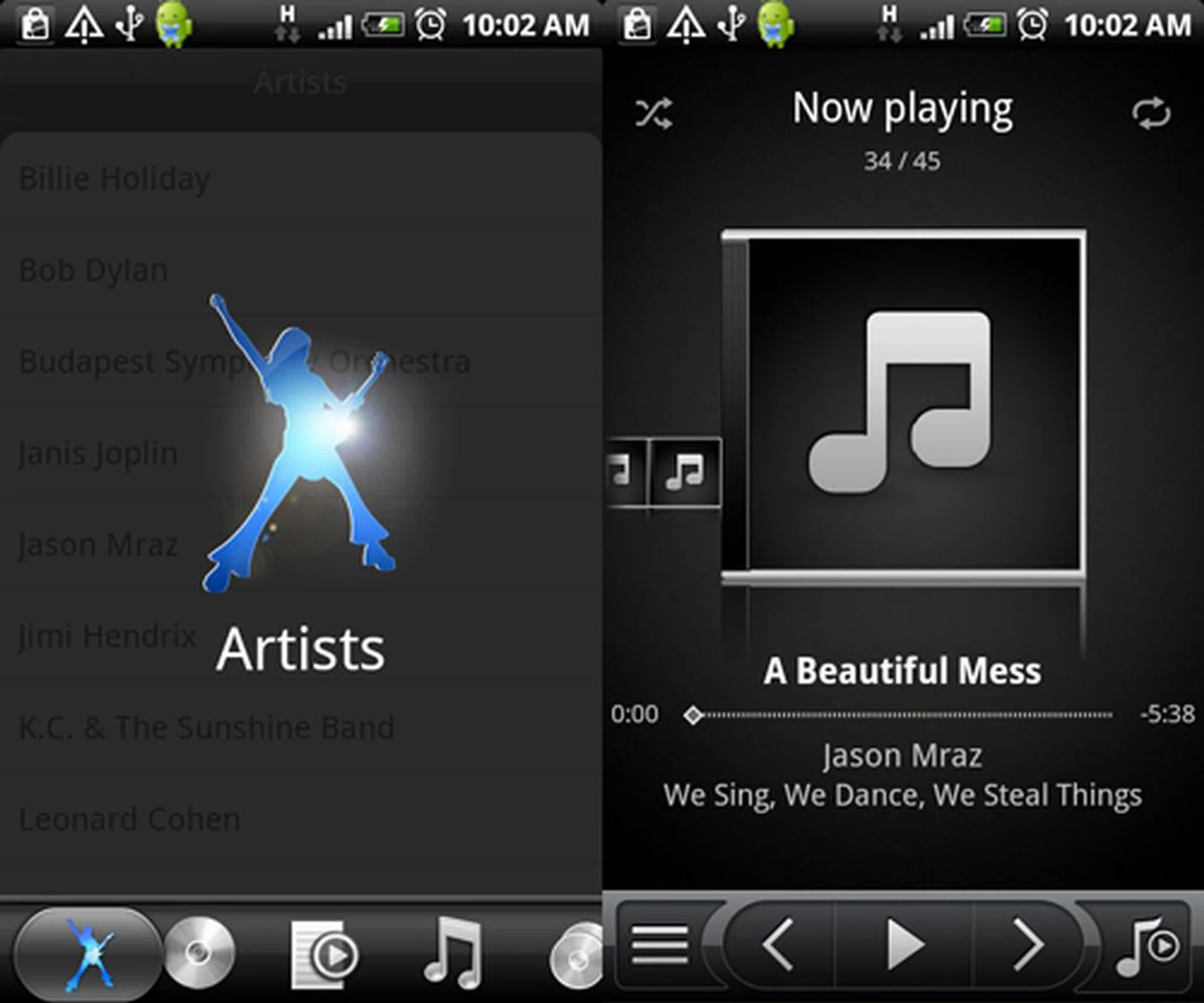
A retooled Music interface that has a better appeal to it than the default Android interface.
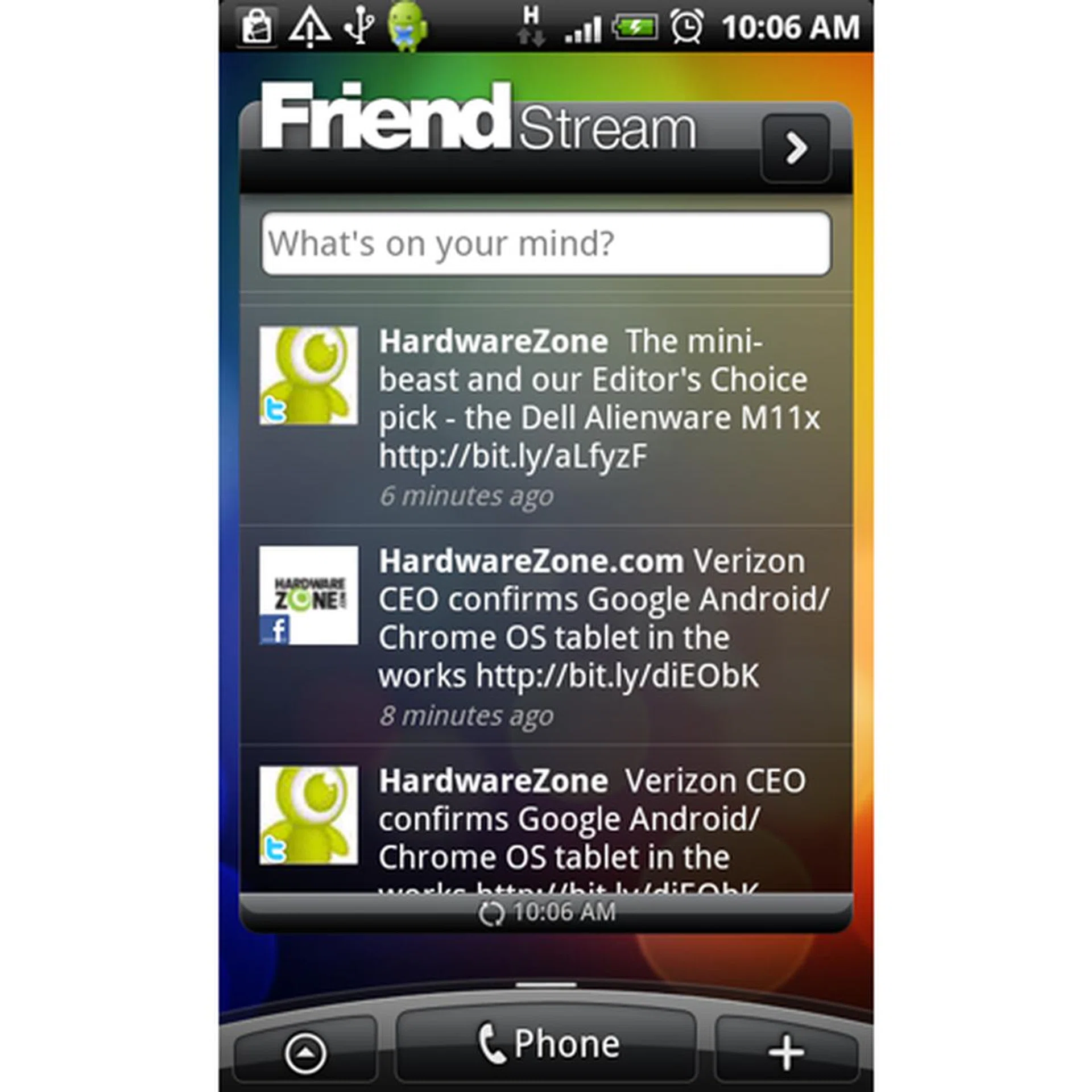
Update or read your feeds via Friend Stream. Replying or retweeting, however, will still require you to access the accounts separately.
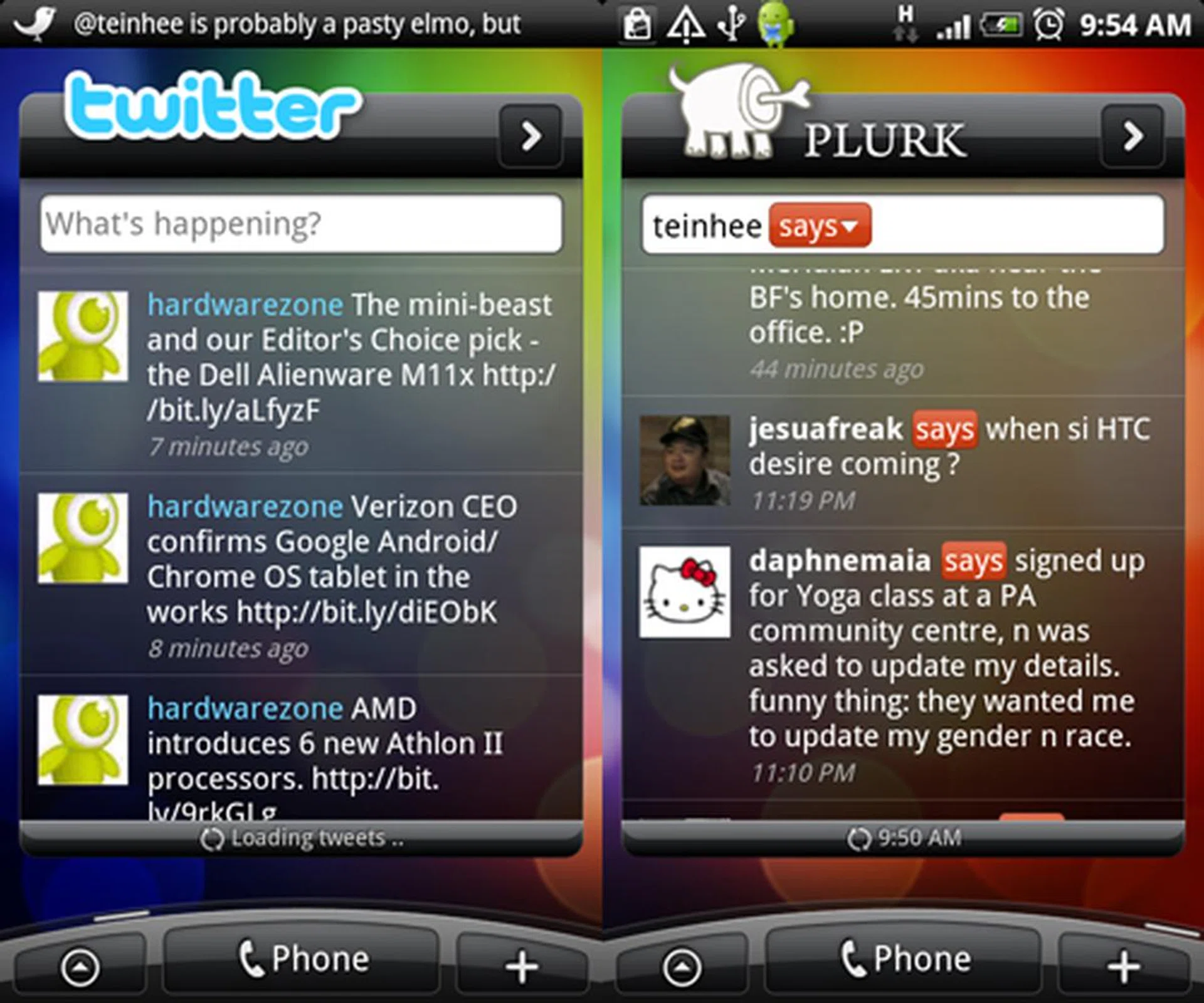
As such, you can opt to include the Twitter (HTC Peep) or Plurk widget.
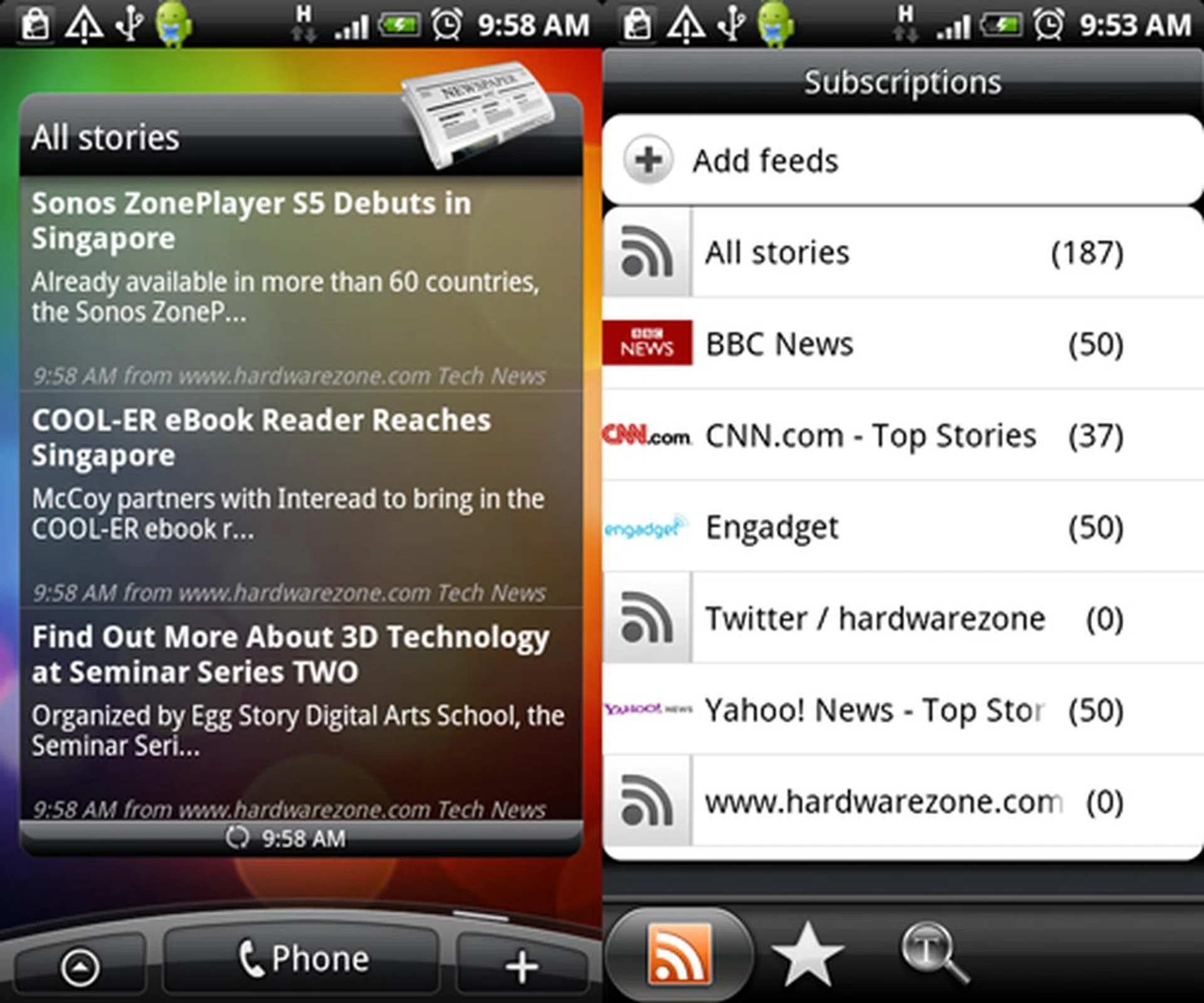
And if your source of news is through RSS feeds, you can also utilize the News app that allows you to add and grab RSS feeds off the web.
Similar to the Legend, the Desire is one of the few Android devices that allows you to do internet tethering without the use of third party apps or going through the rooting process. Doing so requires the use of HTC Sync, which can be downloaded via the HTC website. And yes, as its name implies, HTC Sync allows you to synchronize your calendar and contacts from your Outlook onto the device, and vice versa. At this point, one might see the Desire as an upsized Legend, seeing as how both devices are sharing the same user interface and experience. But take heed that the Desire is also an Android phone that features an FM radio, and by far, is the only one. The other possible candidate would be the Nexus One, which could see its FM radio being enabled with the Froyo (Android 2.2) update.
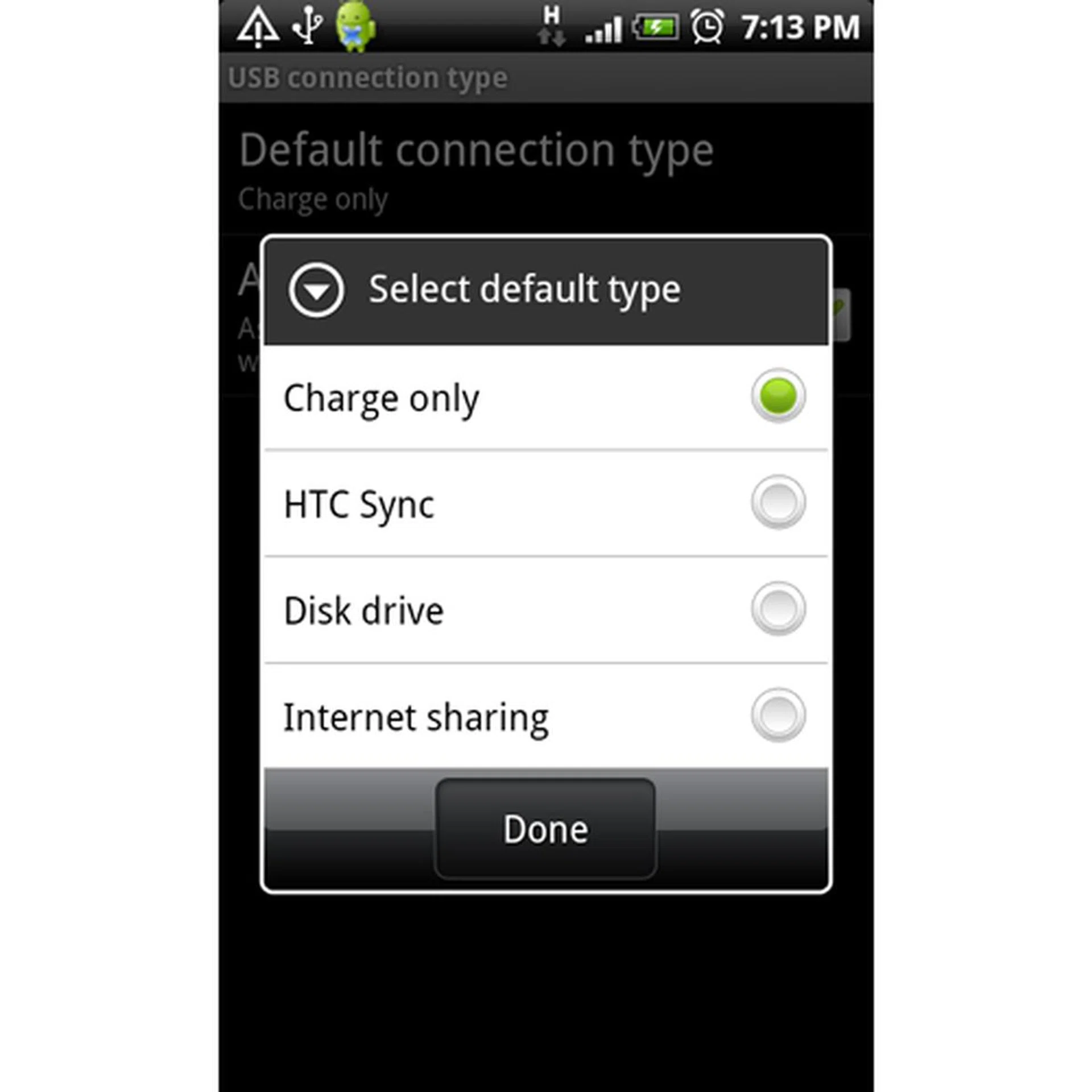
Choose to either let the connection charge the Desire, synchronize with your PC or share your cellular data with your PC.
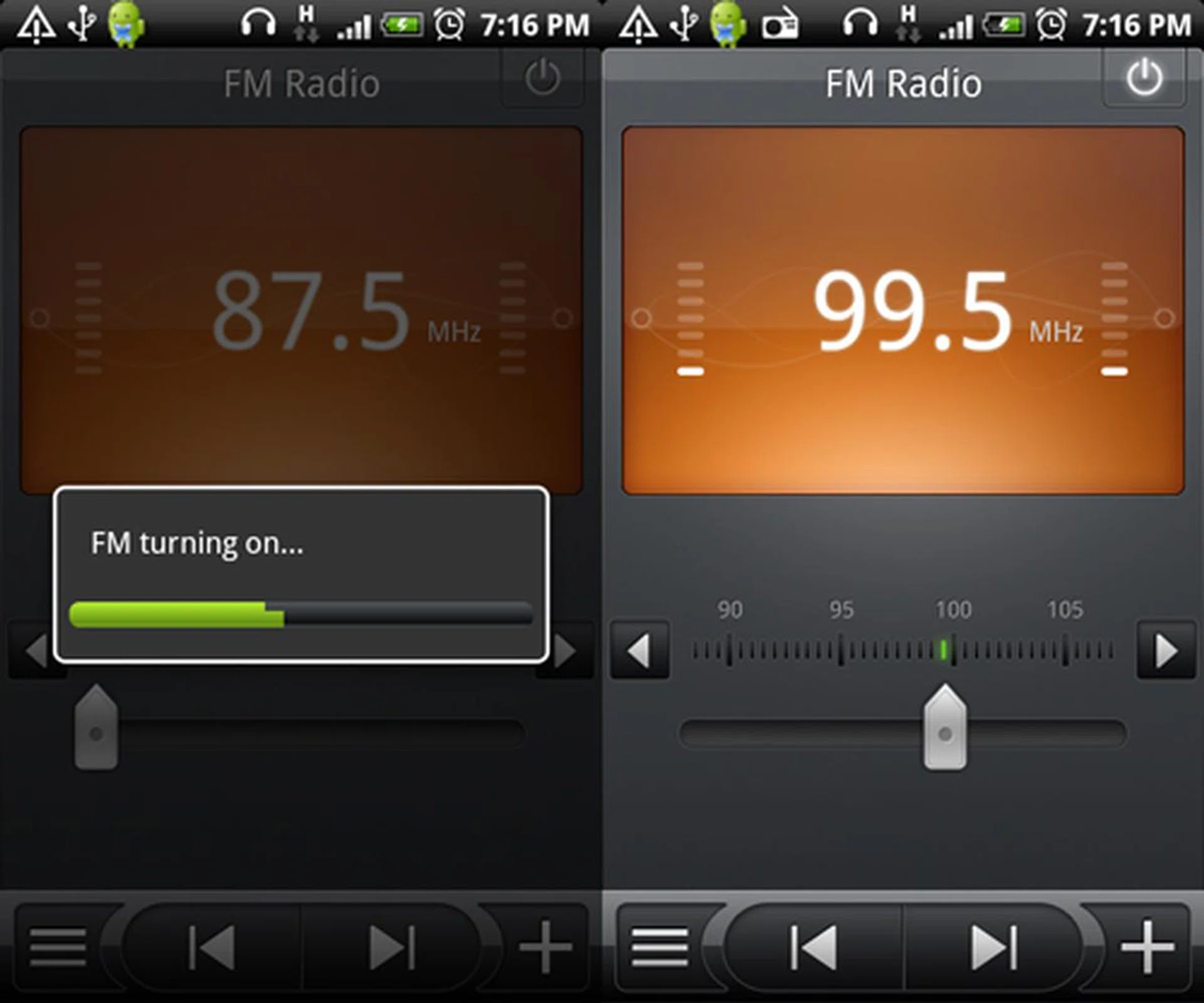
More exclusive features, such as FM radio, on the HTC Desire.
Yearning for More
For those who've been following up with the Nexus One, the Desire doesn't hold much surprises for them. The hardware components are almost identical, which includes the Qualcomm Snapdragon 1GHz processor. The Desire does get a slight bump in its RAM capacity to 576MB, up from the standard 512MB RAM and ROM on the Nexus One. The additional capacity is a definite aid to the Desire's overall experience, which sort of explains the smooth interface transition we saw on the device. Reaction time across the various pages and apps is pleasingly short. With no discernible slow down in the device's reaction time and general performance with multiple apps running, the Desire definitely managed multitasking well.
Text messaging is a smooth affair thanks to the predictive and auto-correct nature of the HTC keyboard. While you can throw caution to the wind and type without looking at the keyboard, you'll do better to keep a close watch on the suggested text and moderate your typing speed to get the best accuracy. Call quality is great on the Desire, though excessive street noise is still an issue.
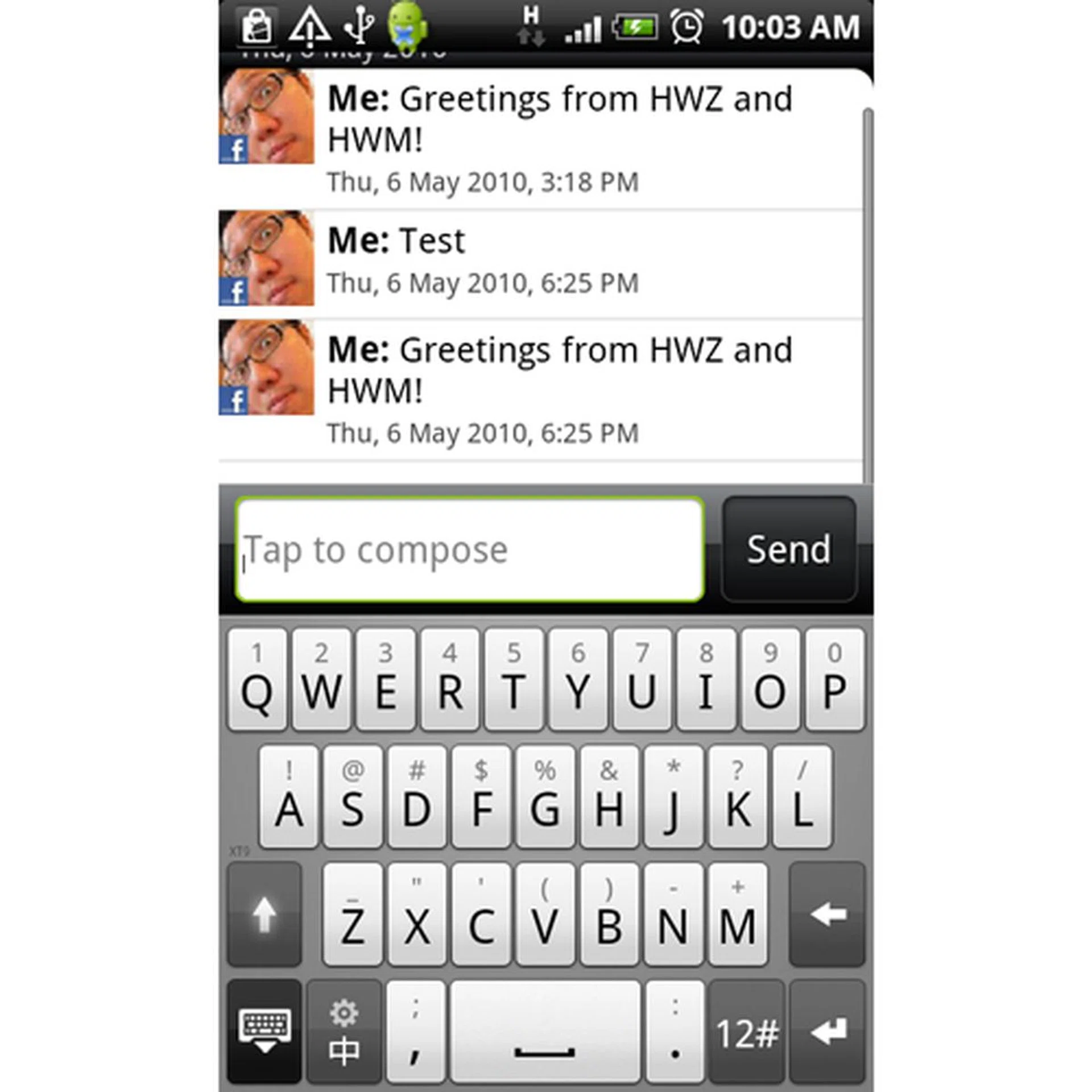
The Desire's keyboard has impressive predictive and auto-correct features.
So, how well does the 3.7-inch AMOLED WVGA screen perform? One word - splendid. We ran a video encoded to the Desire's native resolution of 800 x 480 pixels, and the results were impressive. With both its sizable screen and 1GHz processor, we were greeted with a video performance that was smooth with no lags or visible frame loss, and rich colors thanks to the display's AMOLED nature. But like most phones, under direct and strong sunlight, screen legibility could hinder the experience, which is unavoidable for the most part. Its accompanying audio is average, and thankfully, wasn't too flat on its highs, mids and lows on our test audio tracks.
Imaging is once more under scrutiny, and even more so due to previous HTC devices being unable to perform in this area. The Desire is armed with a 5-megapixel camera and an LED flash, both of which have become a common feature on high-end smartphones. We put the Desire to our usual resolution and color chart test, with one final test image to determine its actual performance. Results for the resolution chart did show up to values of 800 on both the horizontal and vertical LPH (in general, higher values are better). Colors turned out well, with no excessive hues in specific regions. Overall performance is still average given the lack of sharpness and finer details for our controlled test image shot.
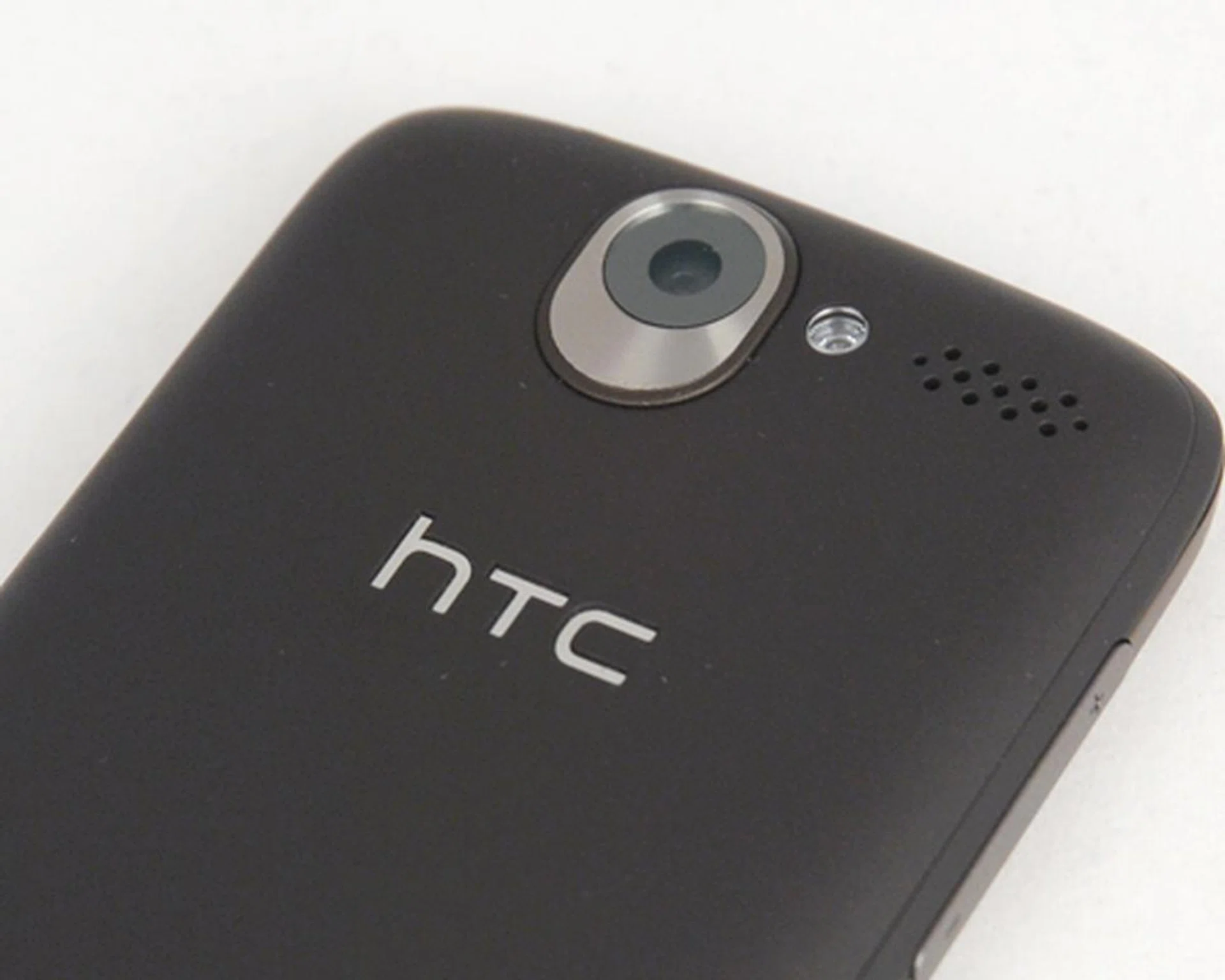
The Desire is loaded with a 5-megapixel camera and LED flash, a common fare amongst smartphones of today.

Both the resolution and camera charts returned average results for its imaging capabilities

There's still room for improvement with the image sharpness, especially so with the finer detail levels.
The final test falls back on the Desire's ability to sustain itself on a single charge. This involves our standard battery test with a test video encoded at 240 x 320 resolution being looped under the following conditions - 100% screen brightness and volume, Wi-Fi and Bluetooth active with push email or data being pulled at regular intervals. For the Desire, we compared it against similar Android devices such as the Google Nexus One, Motorola Milestone and Sony Ericsson Xperia X10.
Specifications/Device | HTCDesire | Google Nexus One | Motorola Milestone | Sony Ericsson Xperia X10 |
Connectivity |
|
|
|
|
Dimensions |
|
|
|
|
Weight |
|
|
|
|
Screen size |
|
|
|
|
Battery |
|
|
|
|
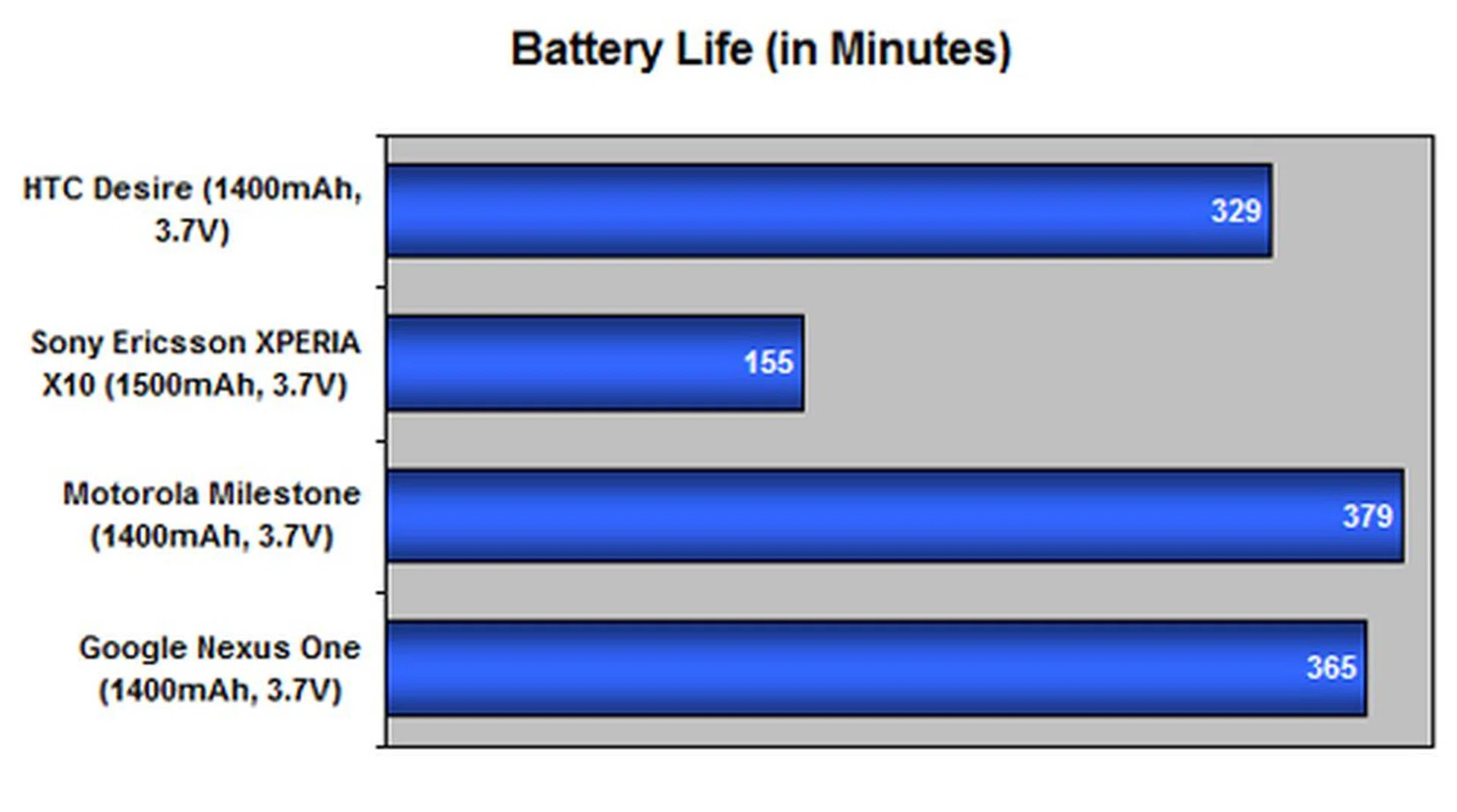
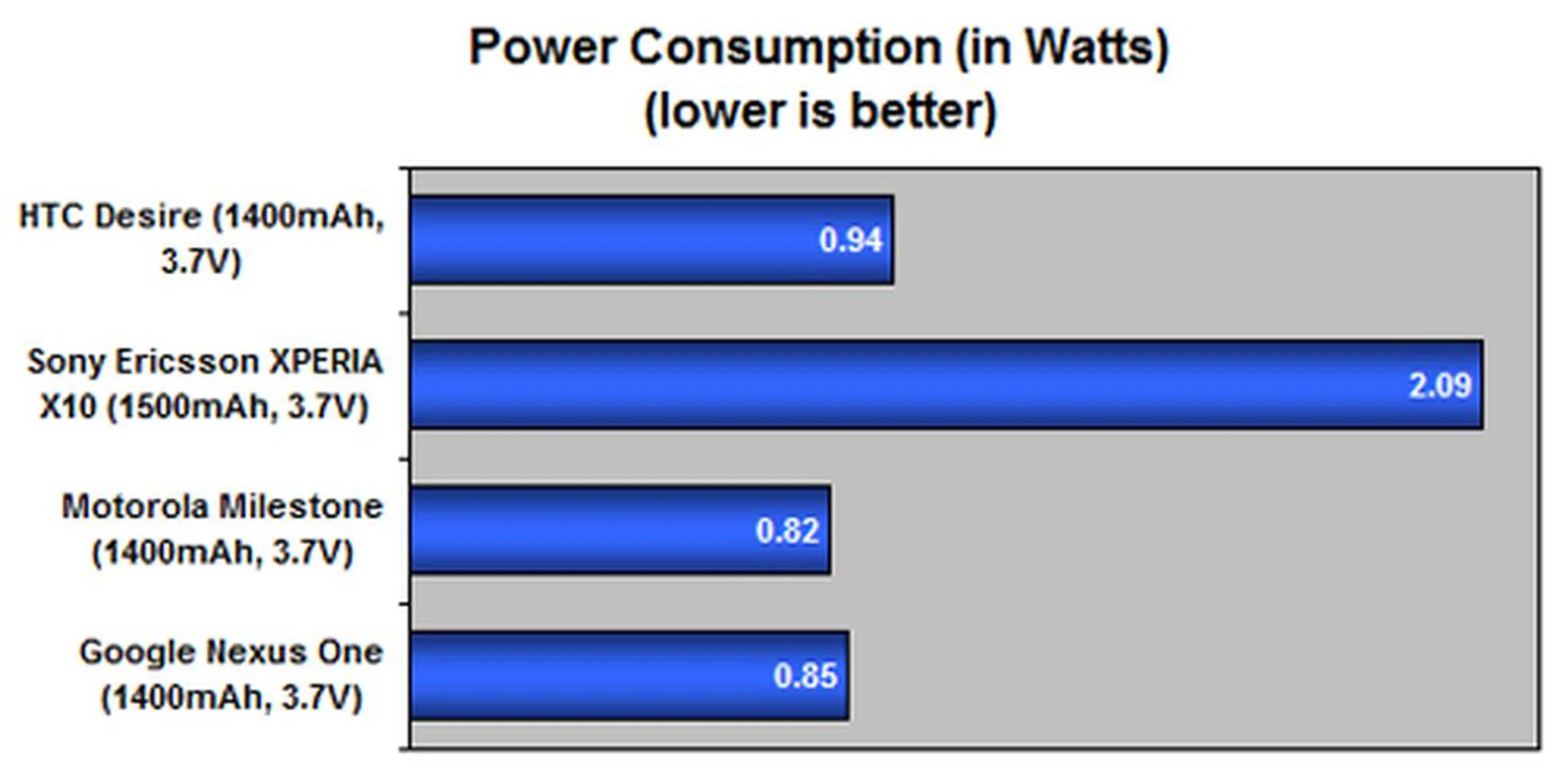
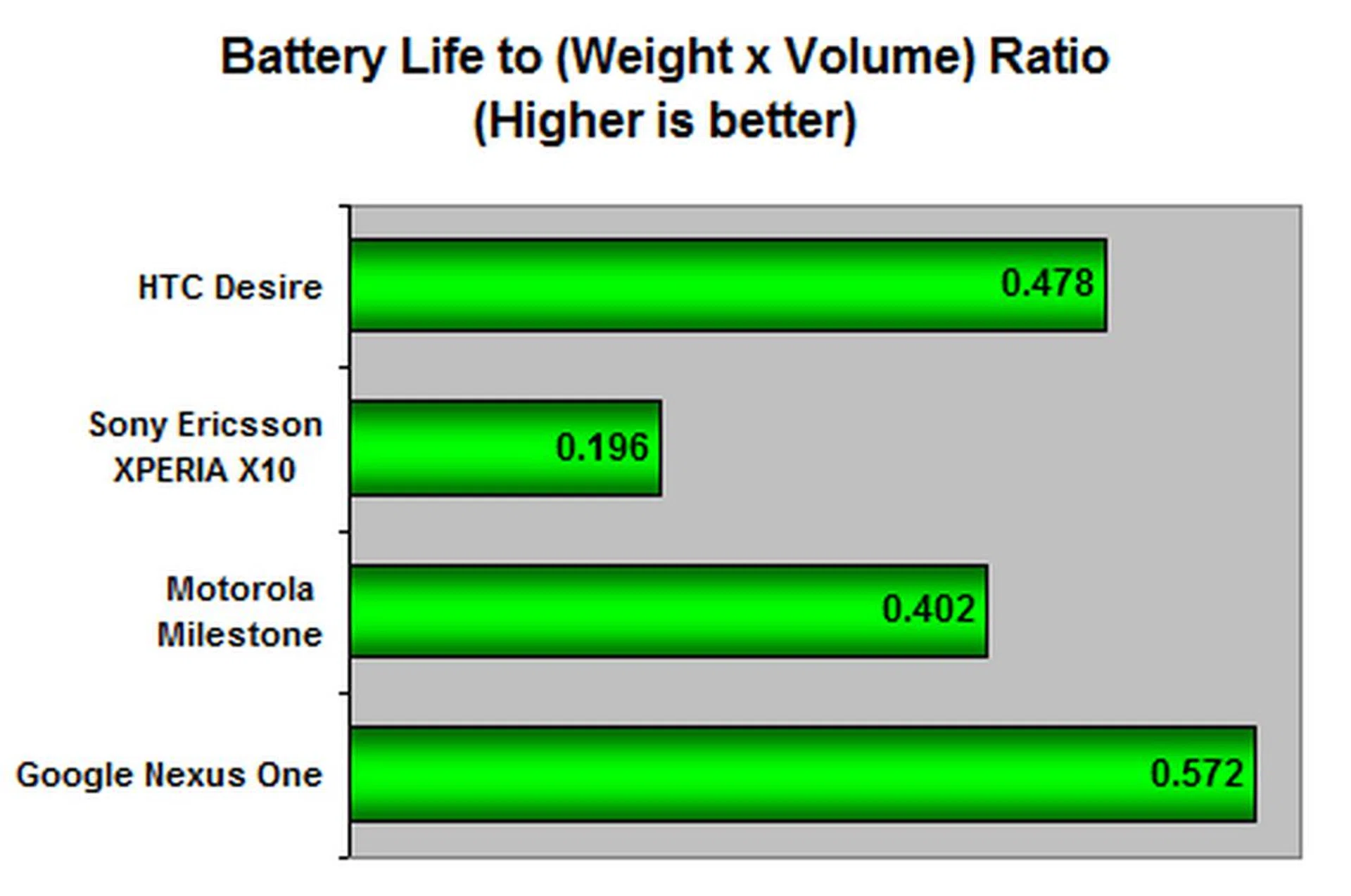
The two aspects we look out for in the battery life performance results are obviously the battery life (in minutes) and the device's portability index, which is calculated as a ratio of its battery life to the device's weight multiplied by its volume (i.e. battery life / (weight x volume). In both cases), with the outcome being a higher value preferred. In this situation, the Desire doesn't have the upper hand as compared to some of its other Android counterparts. Yet, we aren't discounting the fact that the unit managed to hold its ground for nearly 5.5 hours, which is an impressive figure for mobile devices for multimedia performance. Thanks to this battery mileage and its accompanying slim and lightweight form factor, the Desire managed to score quite well on the portability index too, second only to the Google Nexus One. Other than the intensive battery test, we also put the Desire to a more casual routine of calls, messages, multimedia playback and data activities, which saw the Desires lasting slightly less than a day - somewhat lower than our expectation of at least one full day.
Give in to the Desire
There are those who went ahead with the Nexus One and enjoyed the Android 2.1 experience almost six months earlier, and there are the patient few, keeping themselves available for HTC's own version, the Desire. We say, patience does have its reward. Over the past one year, the open-source Google Android platform has been grabbing a bigger piece of the mobile market pie, but that just isn't enough. Though the Nexus One did manage to impress us with its hardware offering, there seems to be something lacking that didn't bring out its full potential.
The Desire did so, in a most subtle way. Not through its hardware, given that both devices share similar aspects such as the Snapdragon 1GHz processor, the same 3.7-inch AMOLED display, and all the same wireless connectivity options such as a 7.2Mbps HSDPA connection with Wi-Fi and Bluetooth. But via its HTC Sense UI, it managed to impress us, along with a whole bunch of newly added features unseen on most other Android devices, or even its predecessors. This includes various social networks being integrated with the Desire, namely Facebook, Twitter, Flickr and even Plurk. But more importantly, it's how the Sense UI presents all these in a seamless experience via the Friend Stream app, a single channel that pulls data feeds from all three social networks.
Till now, the Achilles Heel for the Android platform is PC synchronization. While the intent was for Android users to adopt an over-the-air concept via the Google platform, HTC managed to add alternatives such as HTC Sync, effectively merging your PC and Android content together. Further to that, with the proliferation of the HSDPA network at higher speeds of up to 7.2Mbps, it makes sense to have internet tethering as an option on devices. Alas, therein lays another shortcoming for Android devices. One that HTC managed to address with its integrated tethering function without the need to root your Android phone or purchase third party apps to achieve the same purpose.
The Desire might be a great Android smartphone, but unfortunately it couldn't shake off two of the more notably sore points - its imaging quality is just borderline acceptable for a phone of its class and that its overall battery life for everyday usage is somewhat lower than expected. If you can overlook these aspects, this is one deliciously desirable phone that could only get better with future updates.
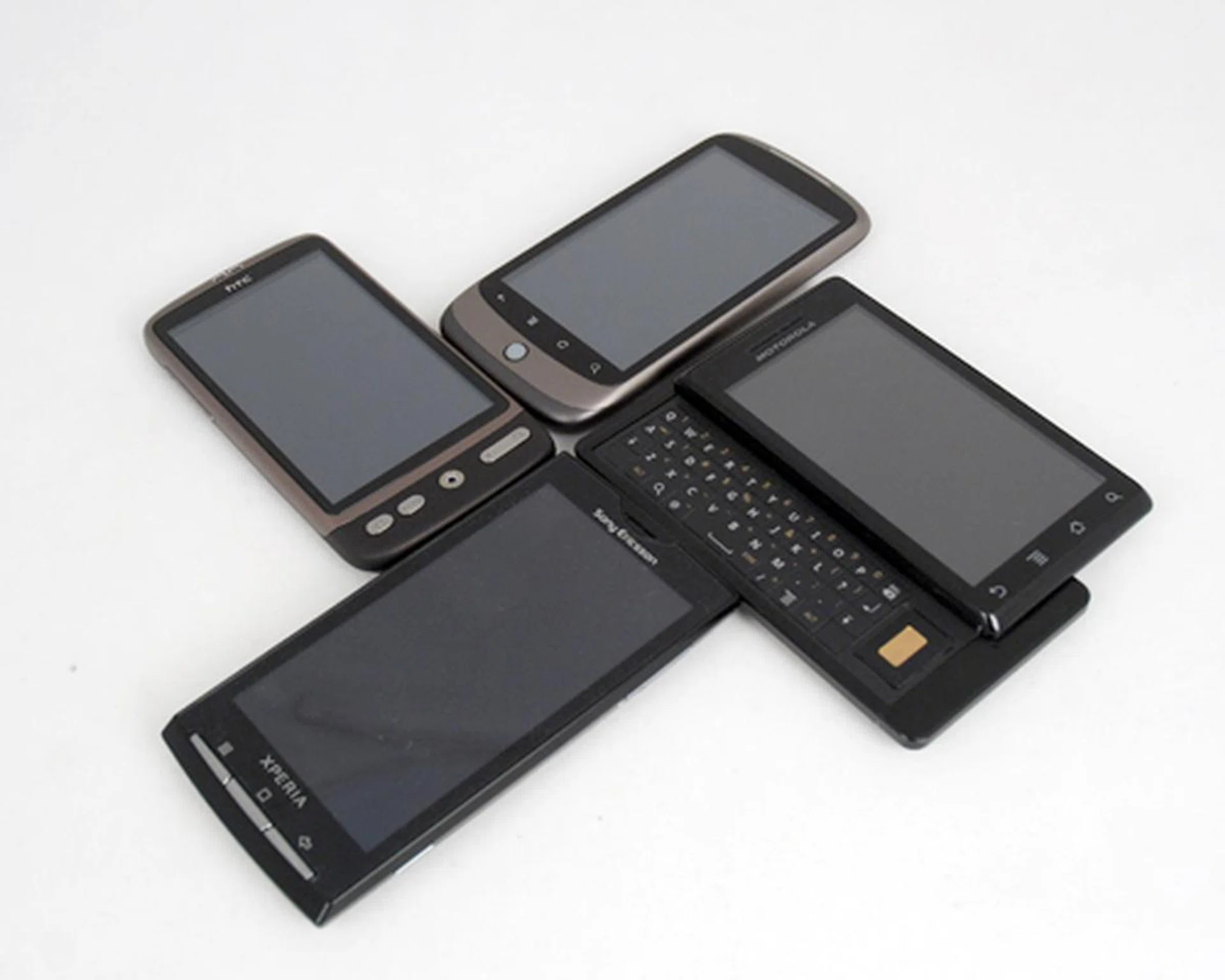
The choices are many, and if you're in the market for a new Android phone, we present the Android shootout in the June issue of HWM, with device such as the Google Nexus One, HTC Desire, Motorola Milestone and Sony Ericsson Xperia X10 being put to the test.
The Android platform is without its hits and misses. Looking back, it wasn't just HTC and Google that hogged all the limelight with its Android offering. The Motorola Milestone presented itself as a viable alternative, and thus a very real future for Android to fasten its pace. It might not have the experience and refined delivery of HTC's Sense UI, but one has to give it due credit for rejoining the mobile scene and holding its ground with its above average imaging quality and solid, refined build.
With the coming of faster processors, larger and better displays, the stage is set for Android devices to create a strong impression in the mobile market. HTC has made its first move with the Desire's array of offerings, from its Android 2.1 OS, to the innovative HTC Sense. And in the months to come, we're expecting more Android devices from Samsung, in particular, the Samsung Galaxy S, and the new Sony Ericsson Android phones under the Xperia X10 line, the X10 mini and X10 mini pro. For now, the Desire has the distinct advantage of being the most comprehensive Android 2.1 device. And more importantly, one of the most affordable high-end Android device to date at a mere S$898. With it, the ball's in its competitor's court to match the HTC Desire dollar for dollar, and performance for performance.
Our articles may contain affiliate links. If you buy through these links, we may earn a small commission.