
Giada Mini PC i51 – A Step Up From A Nettop (Updated)
The Giada Mini PC i51 sports a body of a nettop but has a hardware platform similar to that of some Ultrabook models powered by an energy-efficient second generation Intel Core mobile processor. To find out how it fares, we brought one to our lab, so read on for our assessment.

*** Updated on April 4, 2012 ***
Benchmark results are added with a conclusion, elevating the preview article to a full review.
Setting Sights On Further Expansion
Ever heard of the brand Giada? The label is actually an offspring of the company JEHE (Shenzhen Jiehe Technology Development Co., Ltd.) which is based in China. Established in 1999, JEHE has over 900 employees and owns facilities in China, Hong Kong, and the United States. After setting up a strong foothold in its native China, JEHE, through its label Giada, is setting sights on overseas expansion. We’re not sure if the company has a comprehensive plan for the market in this region, though we’ve been seeing some Giada products like graphics cards in some local stores (such as in the Philippines) for quite some time.
Giada offers a wide variety of products from across several product categories like PC components (graphics cards, motherboards, chassis) to finished computing products like AIO PCs, tablet PCs, and more. One category that has recently been gaining emphasis is their Mini PC series, of which we’ve even reviewed their A50 model that was one of the earliest AMD Fusion based systems to debut.
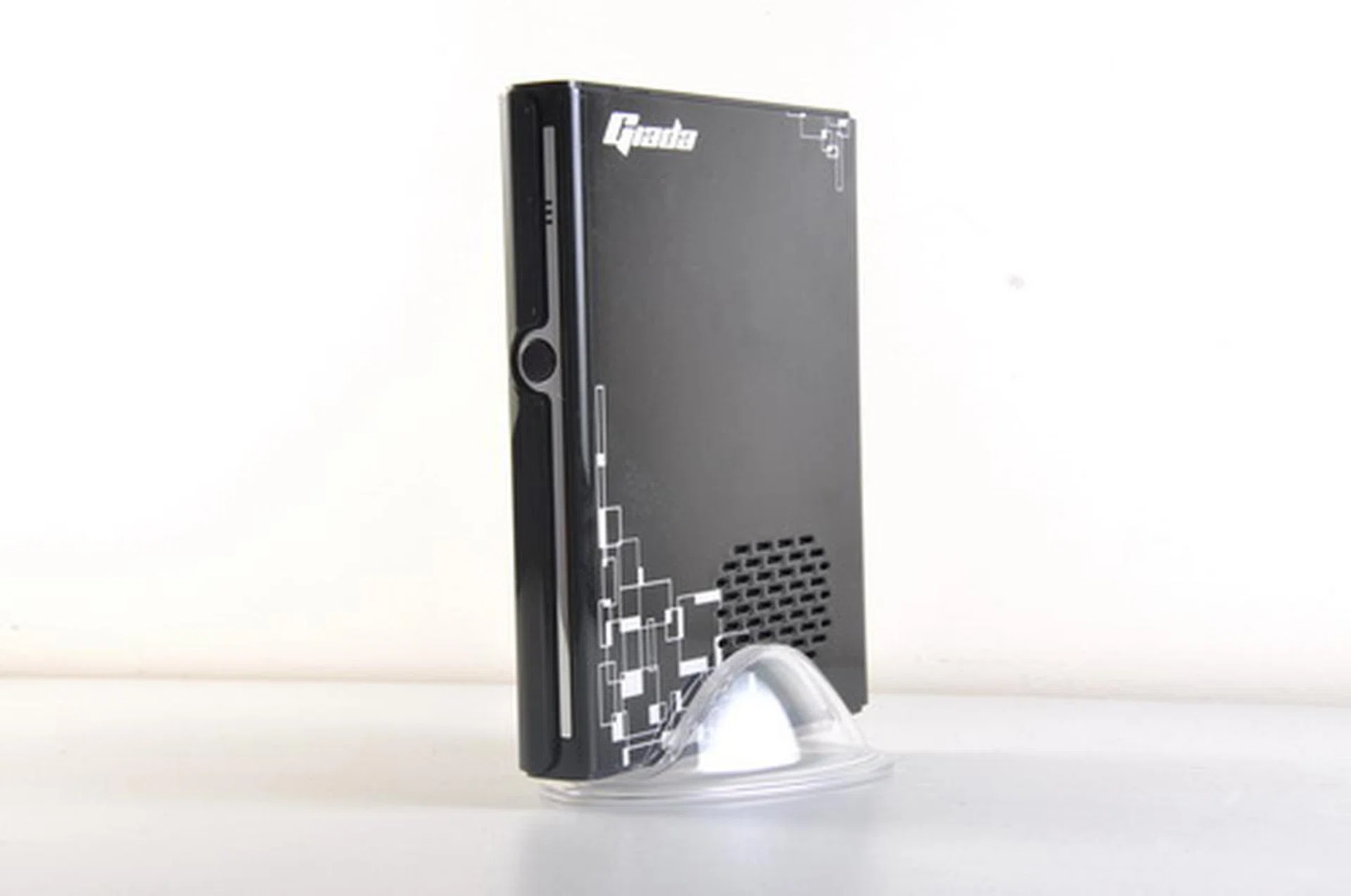
On the outside, Giada's Mini PC i51 espouses the form factor of a nettop. Giada bundles it with a simple plastic stand that is designed to support the entire unit upright.
This time around, we’re assessing their Mini PC i51. Like many of their Mini PC models, the i51’s physical form reminds us of nettops that we have encountered in the past (such as Lenovo’s Q110 and the ASUS Eee Box for example). The Giada Mini PC i51 may not be as small as the most petite nettop we’ve come across, but without its plastic stand, it’s still, is as small as a typical hardbound book. Because of its compact size, the i51 can be a discreet addition to any environment.
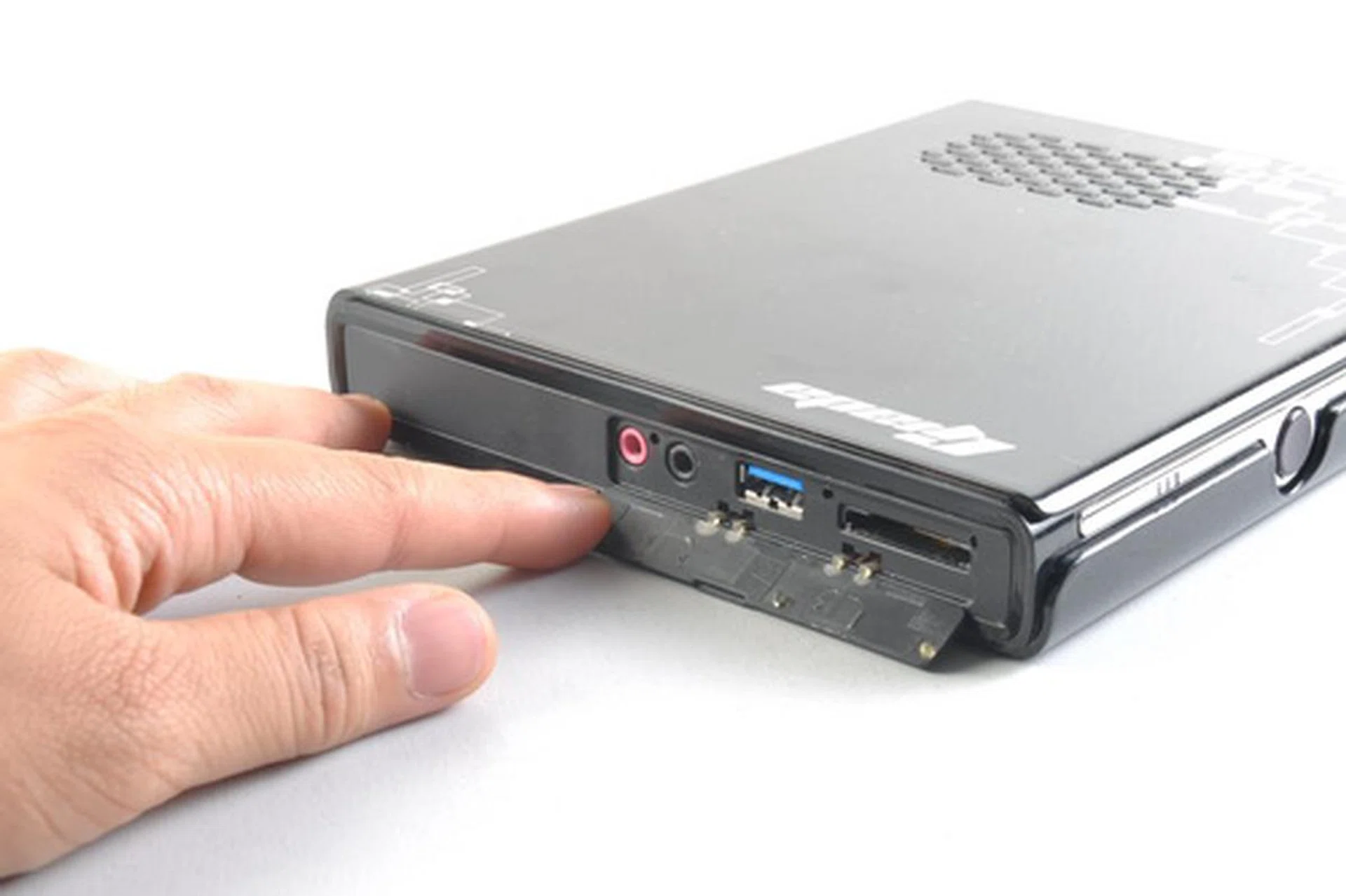
On the top panel, we find a memory card reader, a single USB 3.0 port, as well as audio jacks for a microphone and headphones/speakers. There’s a flap to hide these ports if they are not used.
However, unlike the Atom-powered nettops, the i51 unit that we got is actually packed with a 1.6GHz Intel Core i5-2476M mobile processor. This is the same CPU that is present on Ultrabook models like the Acer Aspire S3, ASUS Zenbook UX21, Dell XPS 13, and the HP Folio 13. This processor is leaps and bounds more powerful than any Atom processor, and consequently also produces more heat. To manage heat produced by the beefier processor, the Mini PC i51 has a fan that expels hot exhaust air through the rear.
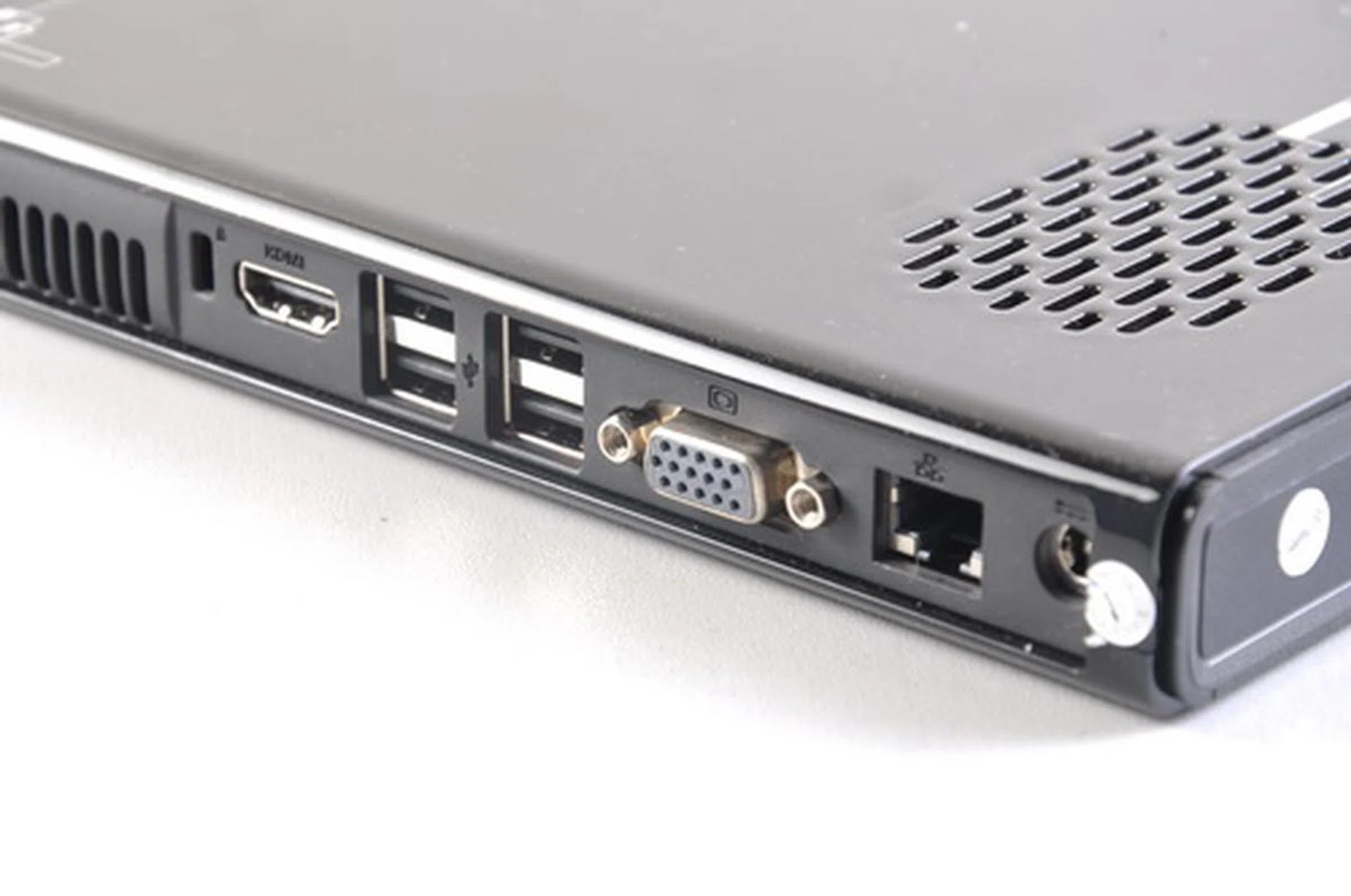
Seen from this angle are the connectors found on the rear side of the unit. For such a compact system, the i51 packs an impressive amount of connectors. Here are the single HDMI port, four USB 2.0 ports, RJ45 Gigabit LAN port, VGA port, and the DC-in connector.
The Mini PC i51 makes use of a platform based on the Intel HM65 Express chipset – again, this is similar to that found in the above mentioned Ultrabooks. Although this is not a compact notebook, the system does not employ a discrete graphics unit from AMD or NVIDIA, but it chose to use Intel’s very own HD Graphics 3000 found within the processor. While not capable to play any serious game, it is nevertheless seamlessly able to tackle playback of full HD videos (1080p). The configured unit that we have for testing comes with 4GB DDR3-1333 RAM and ample 500GB hard drive storage and has Windows 7 Home Premium pre-installed.
The Mini PC i51 is also available in other configurations. Customers can choose from a selection of Sandy Bridge-based Celerons, Core i3s, and Core i7s for the processor, and can also opt for lesser memory and a smaller hard drive - 2GB DDR3-1333 and 320GB. However in this day and age, 4GB with 500GB of storage is fast becoming the bare minimum.
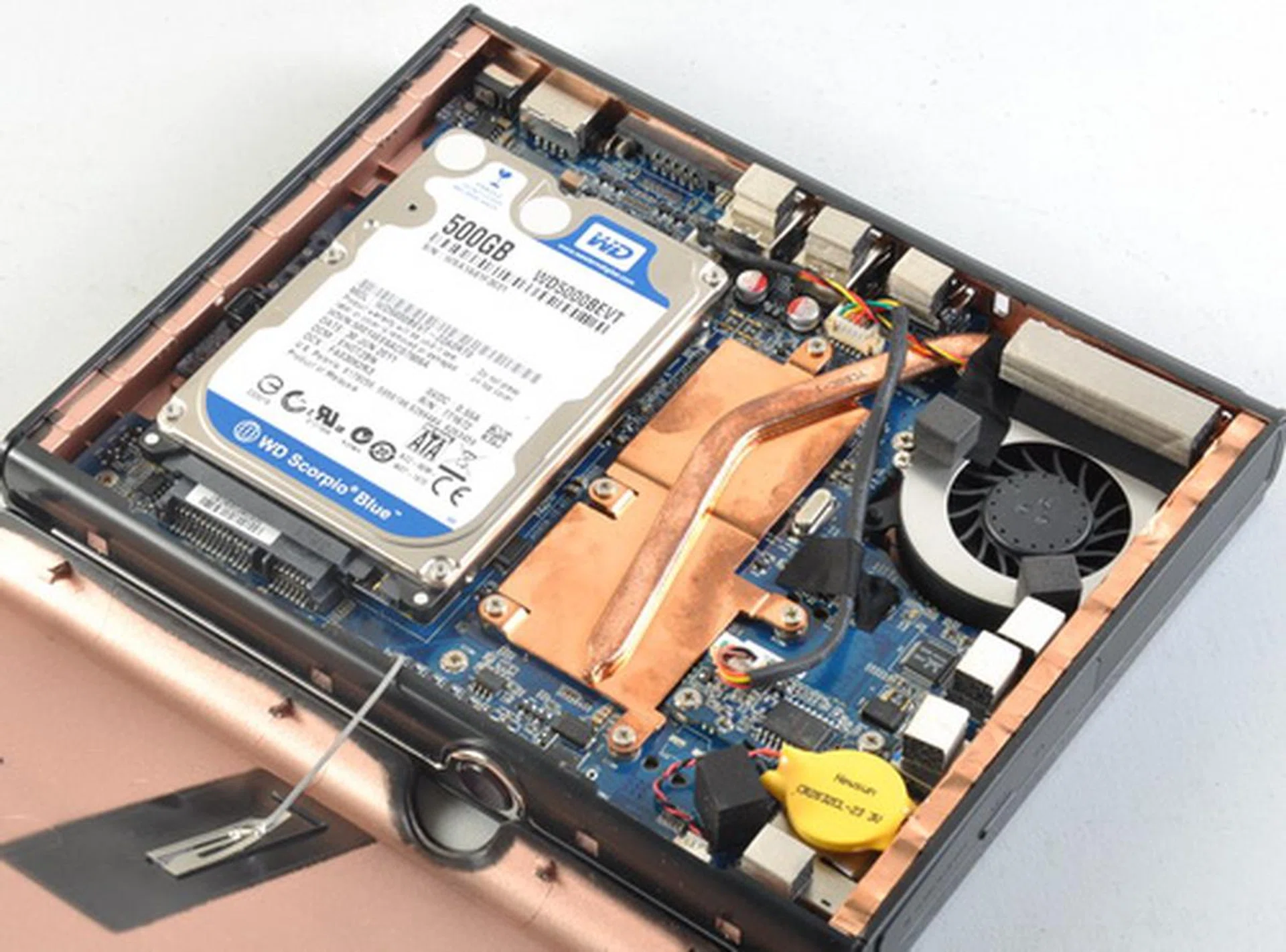
Obviously, the i51 is much smaller than a lunchbox. In this photo, we can see the Mini PC's 500GB hard drive and the heatsink that cools the board's CPU and chipset. Notice how almost every part of the system resembles those used for notebooks? That’s how the Giada system is so compact.
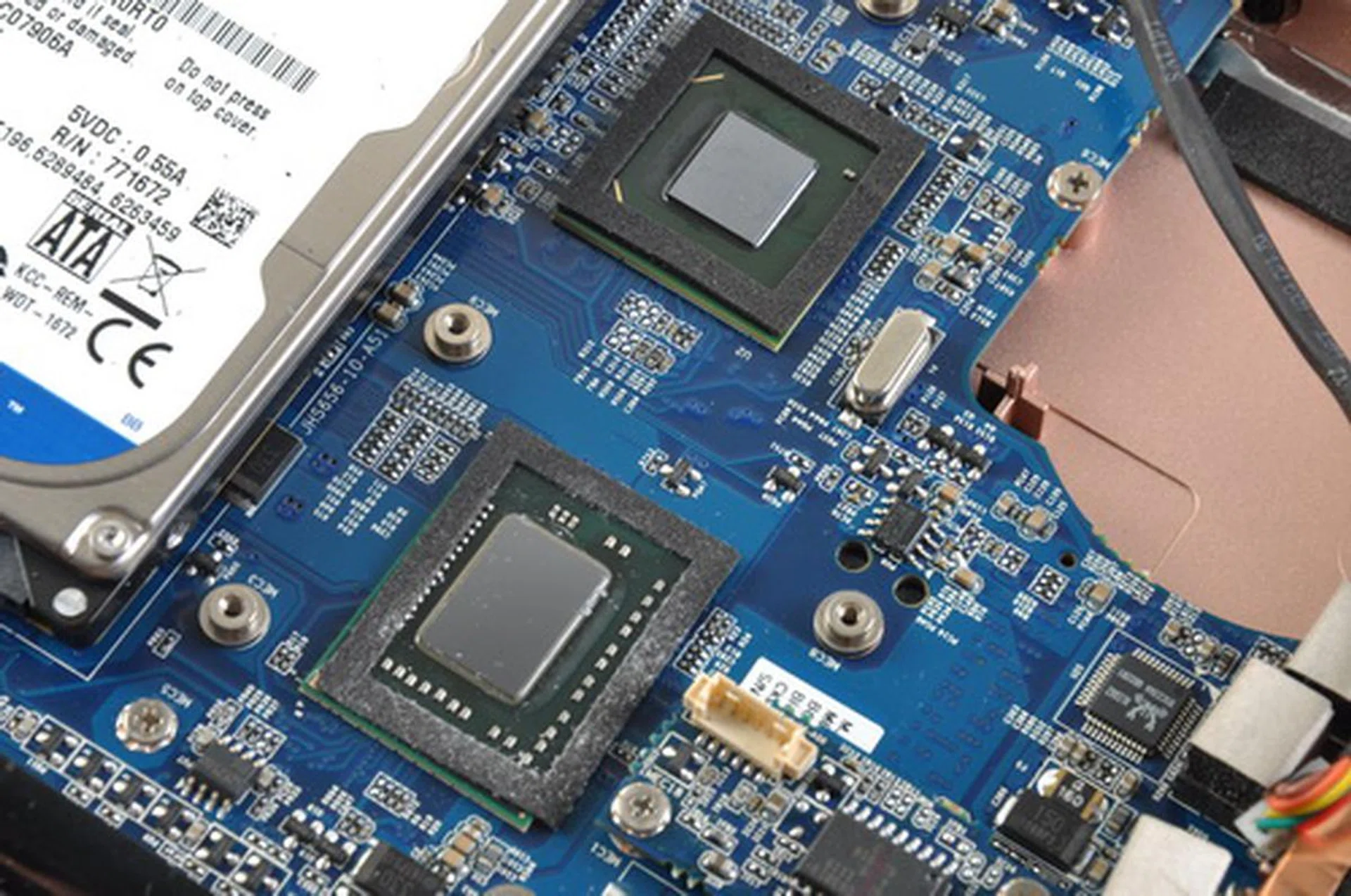
Removing the heatsink reveals the CPU, an Intel Core i5-2467M chip clocked at 1.6GHz (represented by the lower chip in this photo), and the Intel HM65 chipset (seen here as the upper chip in the photo). The processor used is the exact same model as those found on some Ultrabook models.
In terms of connectivity, the majority of the i51’s ports are concentrated at its rear which include an HDMI port, four USB ports, a VGA port, and an Ethernet port. There are also some ports that are placed discreetly on top of the system, which include a card reader, a single USB 3.0 port, and audio jacks for a microphone and headphones/speakers. For wireless connectivity, the i51 can connect via Bluetooth and Wi-Fi.
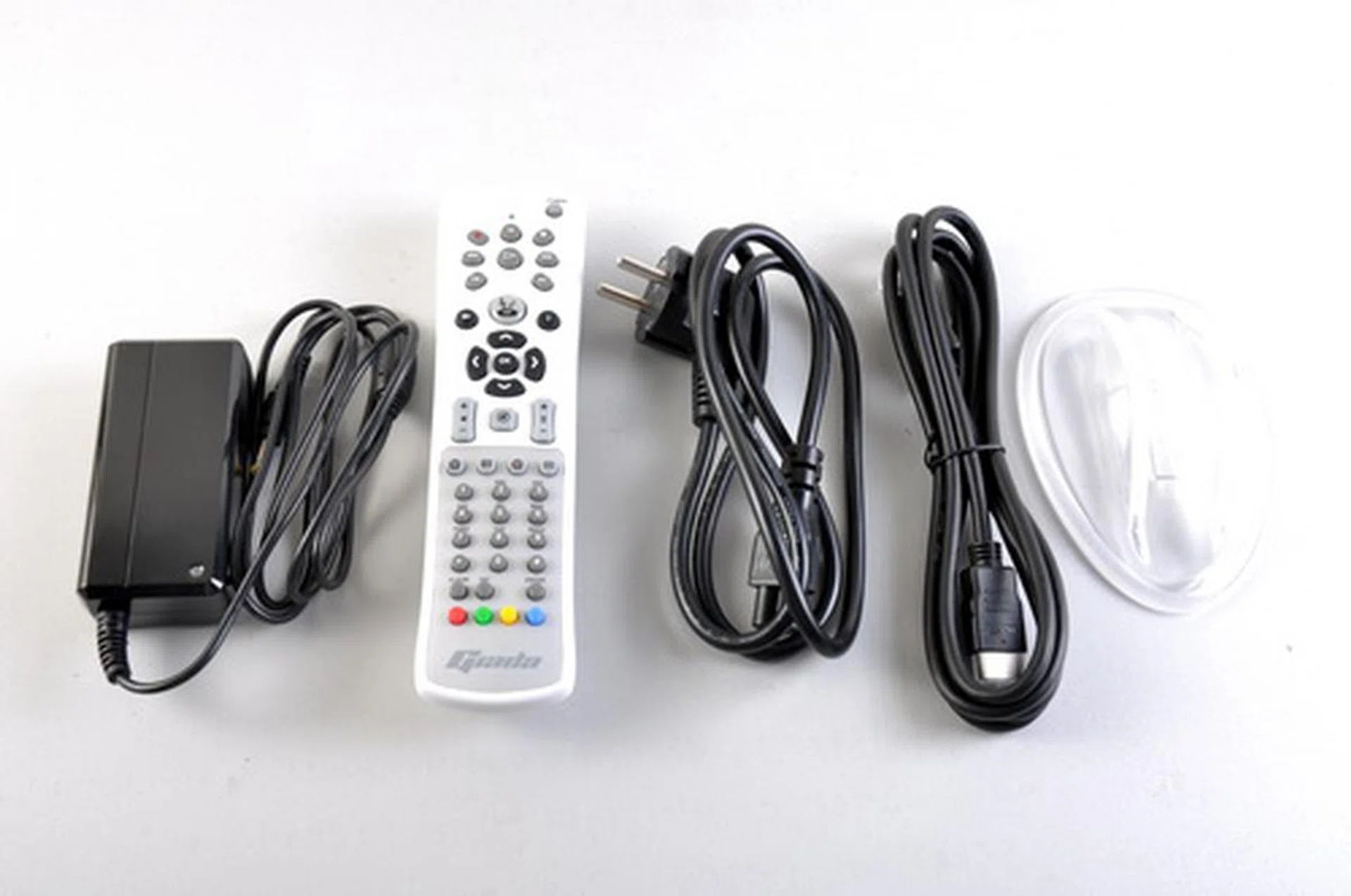
Besides the standard manual, driver disc, and power adapter, the i51 is also bundled with a remote control to aid its deployment as a home media gateway/server or simply as a HTPC
Relying on our initial observation, the Giada i51 boots quickly and operates silently, thanks to its use of a mobile processor from Intel. Performance-wise, we are anticipating that its scores will be similar to those of the Ultrabooks that mentioned. We’ll update this post with more objective insights as soon as we get benchmark results.
An Ultrabook in a Nettop's Body?
We pointed out earlier that the Mini PC i51 is powered by an Intel Core i5-2467M, which is the same processor that is used on some Ultrabook models. The CPU aside, the Mini PC i51 shares other similarities with other Ultrabooks in terms of hardware components, employing a motherboard with Intel’s HM65 Express chipset, 4GB of DDR3 memory, and making use of Intel's HD 3000 for graphics rendering. Because of the similarities in hardware, we chose to compare the i51 machine against Ultrabooks to ascertain the hardware capabilities of the machine. We’ve compiled the compared machines’ specs and put it up against the i51 in the table below.
Take note only the Acer Aspire S3 and the Giada machine use hard drives while the rest either use SSD or have an SSD cache. Even so, the Acer Aspire S3 will still have the upper hand because like the other Ultrabooks, it too supports Intel Rapid Start technology to boost start-up from sleep in a matter of seconds thanks to a dedicated SSD cache (which also comes in handy for normal use since it’s used to cache a state).
System | Giada Mini PC i51 | Acer Aspire S3 | Acer Aspire Timeline Ultra M3 | Dell XPS 13 | HP Folio 13 |
Processor | Intel Core i5-2467M (1.6GHz) | Intel Core i7-2637M (1.7GHz) | Intel Core i5-2467M (1.6GHz) | Intel Core i5-2467M (1.6GHz) | Intel Core i5-2467M (1.6GHz) |
Chipset | Intel HM65 Express | Intel UM67 Express | Intel HM77 Express | Intel HM65 Express | Intel HM65 Express |
Memory | 4GB DDR3 | 4GB DDR3 | 4GB DDR3 | 4GB DDR3 | 4GB DDR3 |
Storage | 500GB HDD | 320GB HDD | 500GB HDD with SSD cache | 128GB SSD | 128GB SSD |
Video | Intel HD 3000 | Intel HD 3000 | NVIDIA GeForce GT 640M | Intel HD 3000 | Intel HD 3000 |
Relying on the CPU, chipset, memory, and graphics subsystems alone, we could easily assume that the Mini PC i51 is as powerful as an Ultrabook. But to validate our hypothesis, we put to the test the Mini PC i51 by using Futuremark’s benchmark applications, namely PCMark 7 and 3DMark06. The following graphs show the results:
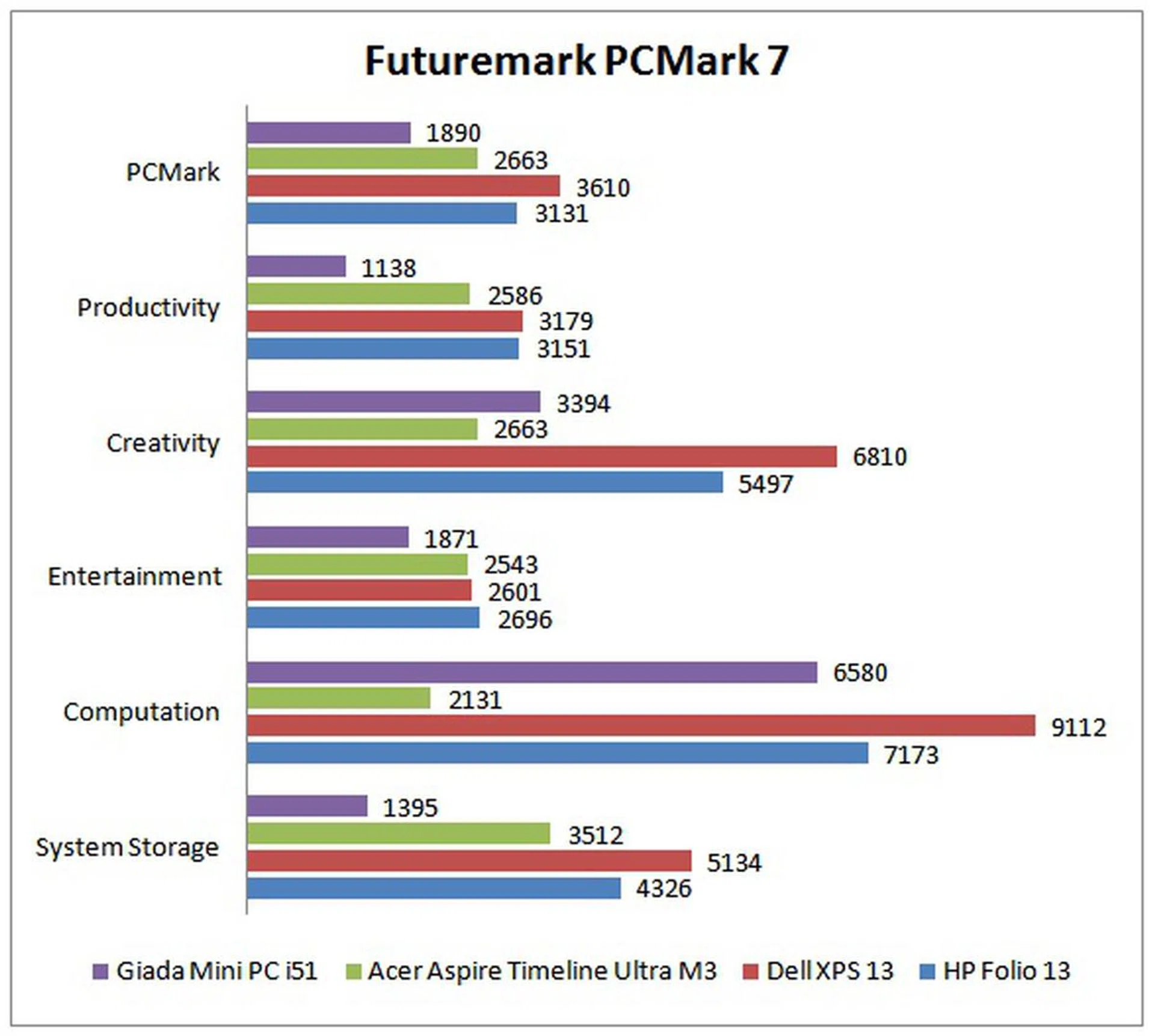
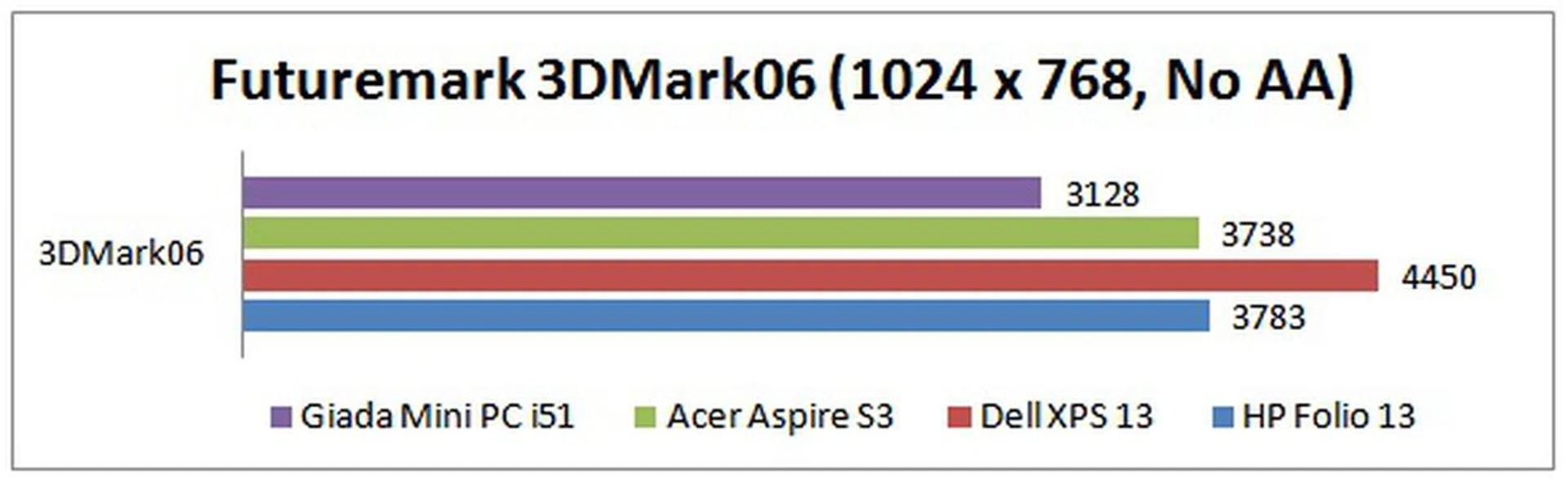
While it is certain that the Mini PC i51 can perform much better than Atom-powered nettops such as Astone’s NT435, our benchmark results reveal that Giada’s entrant is behind the curve when compared with similarly-specced Ultrabooks that we’ve encountered. The key factor that held down the Mini PC i51’s performance is its use of a slightly outdated hard drive, a 2.5-inch type that is based on the aging SATA 3Gbps interface. Furthermore, with no SSD cache to aid it, the storage scores took huge dive and thus affected many other sub-tests. The productivity suite is heavy on storage performance with a lot of data being written to the drive and thus the results are the worst of the comparison. All these naturally affected the overall scores. It goes without saying that the rest of the comparisons with SSD cache or a true SSD drive perform much better.
Don’t Judge a Mini PC by Its Size
At first, we thought that the Giada Mini PC i51 was just a typical Atom-powered nettop because of its petite, space-saving form factor. As we know, nettops these days are becoming less popular, if not totally forgotten, due to their limited capabilities and processing power. However, we were forced to change our assumptions when we discovered that it actually uses a more powerful Core i5 mobile processor (Core i5-2467M) from Intel. With the said chip, the Mini PC i51 is a capable diminutive desktop PC that can handle full HD video playback and other resource-intensive tasks that would otherwise overwhelm an Atom-powered system. It is also capable of handling many other day-to-day tasks much more swiftly with a platform mimicking Ultrabooks.
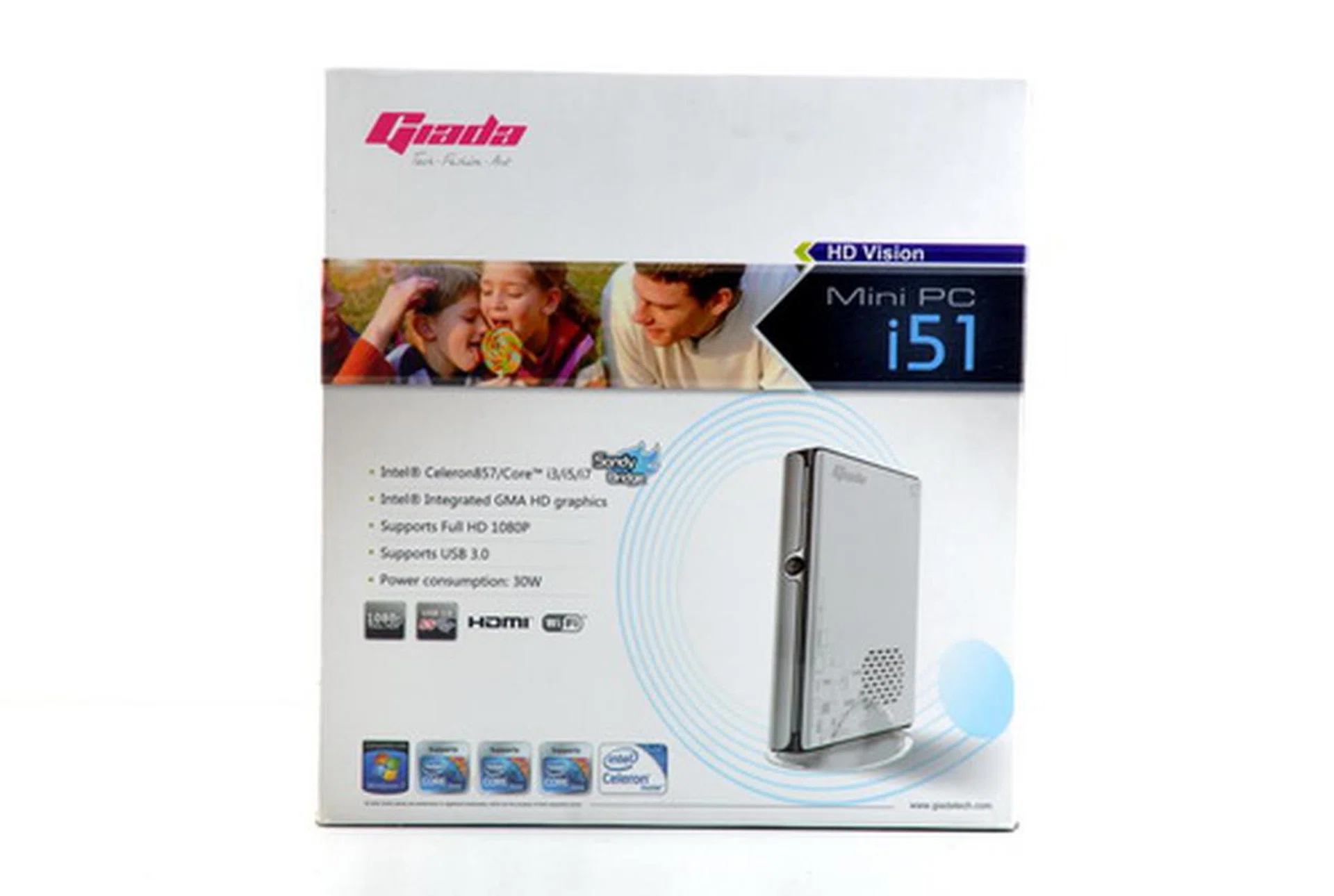
With a form factor that is as small as a nettop and a hardware platform similar to that of an Ultrabook, the Giada Mini PC i51 can be considered as a hybrid system, or an evolution of nettops. However, it's also much pricier than a regular nettop, with a retail price of US$639. Apart from the black themed Mini PC i51, it is also available in a white chassis if you're interested.
While the majority of the Mini PC i51’s hardware platform shares a lot of similarities with some Ultrabook models, one should not anticipate it to be on par with Ultrabooks in terms of performance, no thanks to its aged SATA 3Gbps notebook hard drive. If it only had used a SATA 6Gbps hard drive or an SSD, the Mini PC i51 could have performed much better in our benchmarks. Apart from raw benchmarks, the system is decent and is more than usable, minus the speedy reaction that an SSD-based system benefits.
So how should we look at the Mini PC i51? Perhaps the Giada Mini PC i51 can be best treated as a capable HTPC or as a desktop companion for non-demanding users. On the HTPC front, with its 500GB hard drive, it can certainly store a healthy amount of multimedia content; and thanks its beefy Core i5-2467M processor and integrated Intel HD 3000 graphics, it could crunch HD videos with ease. Otherwise, the Mini PC i51 can also easily handle mainstream computing tasks such as web browsing, word processing and simple image editing.
The Giada Mini PC i51 will be available starting from April this year for the price of US$639. Compared to systems of its caliber, it sounds like it’s priced reasonably. If only the storage drive used was more performance-oriented, the Giada system would be even more valuable.
Our articles may contain affiliate links. If you buy through these links, we may earn a small commission.