
Galaxy GeForce GTX 470 GC Version - Flippin' Blue Fans
The Galaxy GeForce GTX 470 GC Version is the first GeForce GTX 470 we've received that sports a customized cooler and is factory-overclocked. We put it through rounds of strenuous testing to see what it's made of.

First to the Fore
Sidekick to the supremely fast GeForce GTX 480, the GeForce GTX 470 has been positioned by NVIDIA as the 'value' option for anyone thinking of hopping on to the Fermi bandwagon.
Much like its bigger brother, the GeForce GTX 470 is a rapid graphics card, significantly quicker than the Radeon HD 5850 and quick enough on certain benchmarks to worry even the Radeon HD 5870. On the downside, it is costly, power hungry, extremely hot to run, and noisy.
Fortunately, help is on the way. Galaxy, no stranger to customized editions of NVIDIA graphics card, has recently released their GeForce GTX 470 GC version. Galaxy, if you remember, was our winner in the Hardware Zone Editor's Choice Tech Awards for Best NVIDIA Graphics card.
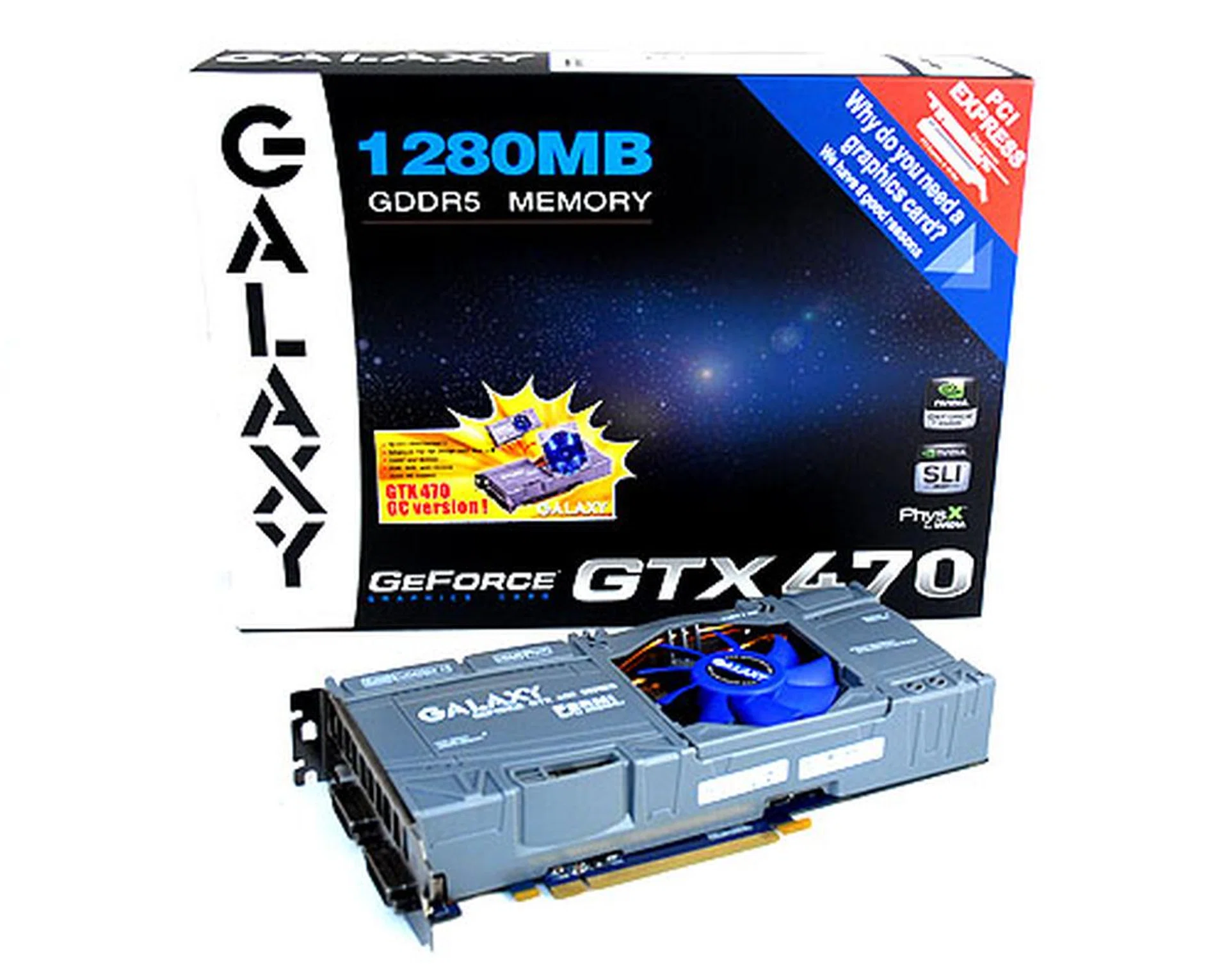
One of the world's first non-reference GeForce GTX 470 is in our labs! We must also say that the packaging is compact, clean and rather attractive.
As one of the world's first non-reference GeForce GTX 470, Galaxy's GeForce GTX 470 GC version sports a unique 'flip-fan' cooler and comes factory-overclocked. Hopefully the custom cooler will help lower the GeForce GTX 470's high operating temperatures and also make it less noisy to run. We'll be taking careful note if the card is able to deliver on these aspects and improve upon NVIDIA's reference card. That aside, Galaxy's custom edition GeForce GTX 470 also sports a shorter PCB and comes with its own overclocking utility. Below, we've put together a video highlight of the Galaxy card to give you a quick rundown of its various aspects, but read on for the complete detailed review.
The Galaxy GTX 470 GC Version
If you are wondering, the GC in the name stands for Graphics Clocked, and the card is indeed factory-overclocked, though not by a large margin. In stock form, the Galaxy GTX 470 GC version comes clocked at 625MHz at the core, 1250MHz at the shaders and 3348MHz DDR. In comparison, a reference GeForce GTX 470 is clocked 607MHz at the core, 1215MHz at the shaders and 3348MHz DDR at the memory. As you can see, the clock speeds aren't that much different from a reference card.
What's more interesting is the new cooler, which features what Galaxy calls a "flip fan" design. Basically, the fan on the cooler is detachable, allowing users to gain quick access to the fan for easy cleaning and maintenance. Galaxy also claims the cooler is quieter than NVIDIA's reference cooler and also keeps the card running cooler while at load.
Another unique thing about the card is its shortened PCB. While a reference GeForce GTX 470 measures at roughly 9.5-inches, Galaxy's GeForce GTX 470 GC version is a tad shorter at 9-inches. This should make it easier to fit into smaller mid-tower casings.
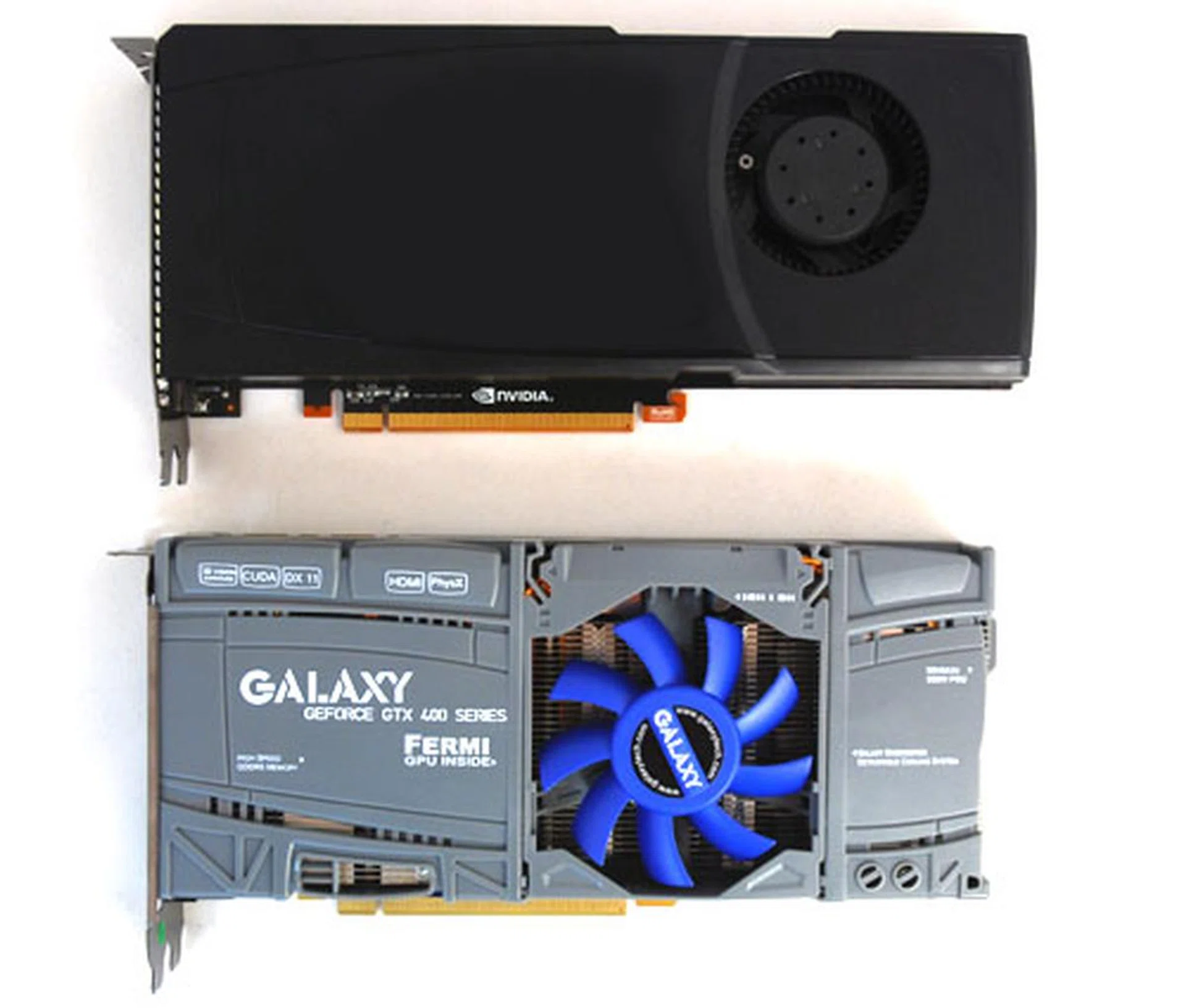
The Galaxy GeForce GTX 470 GC version is only a tiny bit shorter than a reference card.
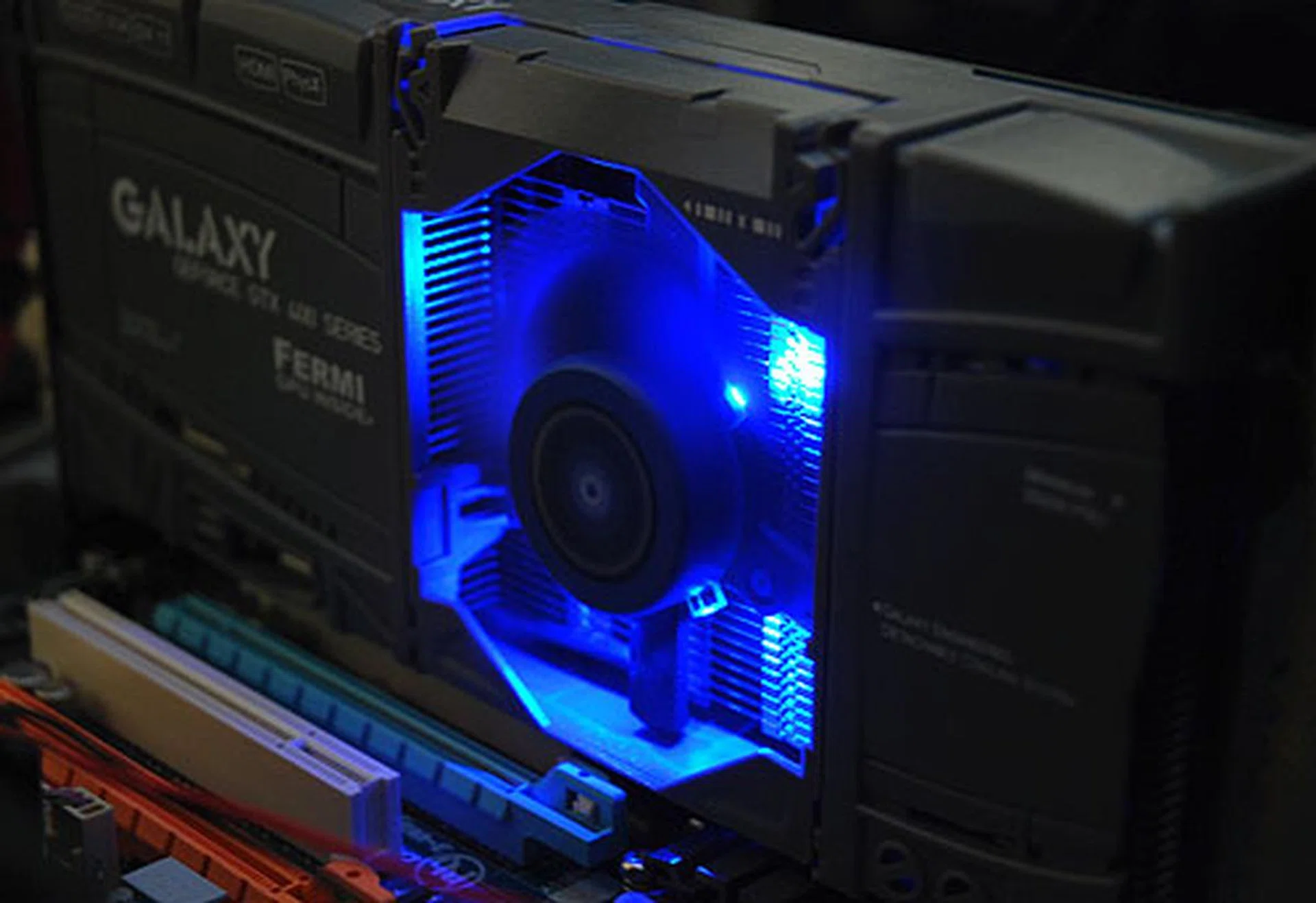
The cooler gives off a funky blue glow when in operation.
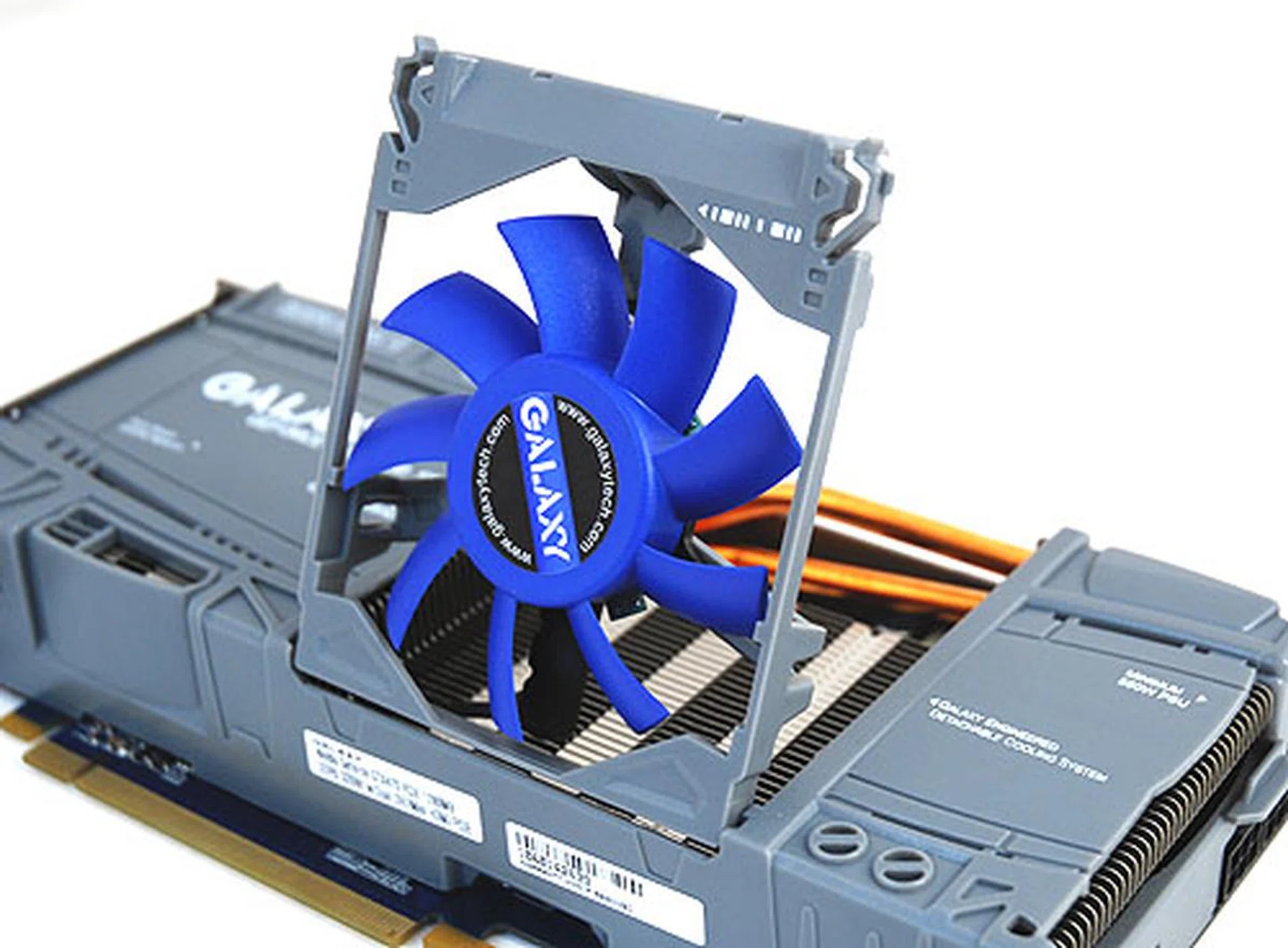
The fan is semi-detachable for easy cleaning and maintenance.
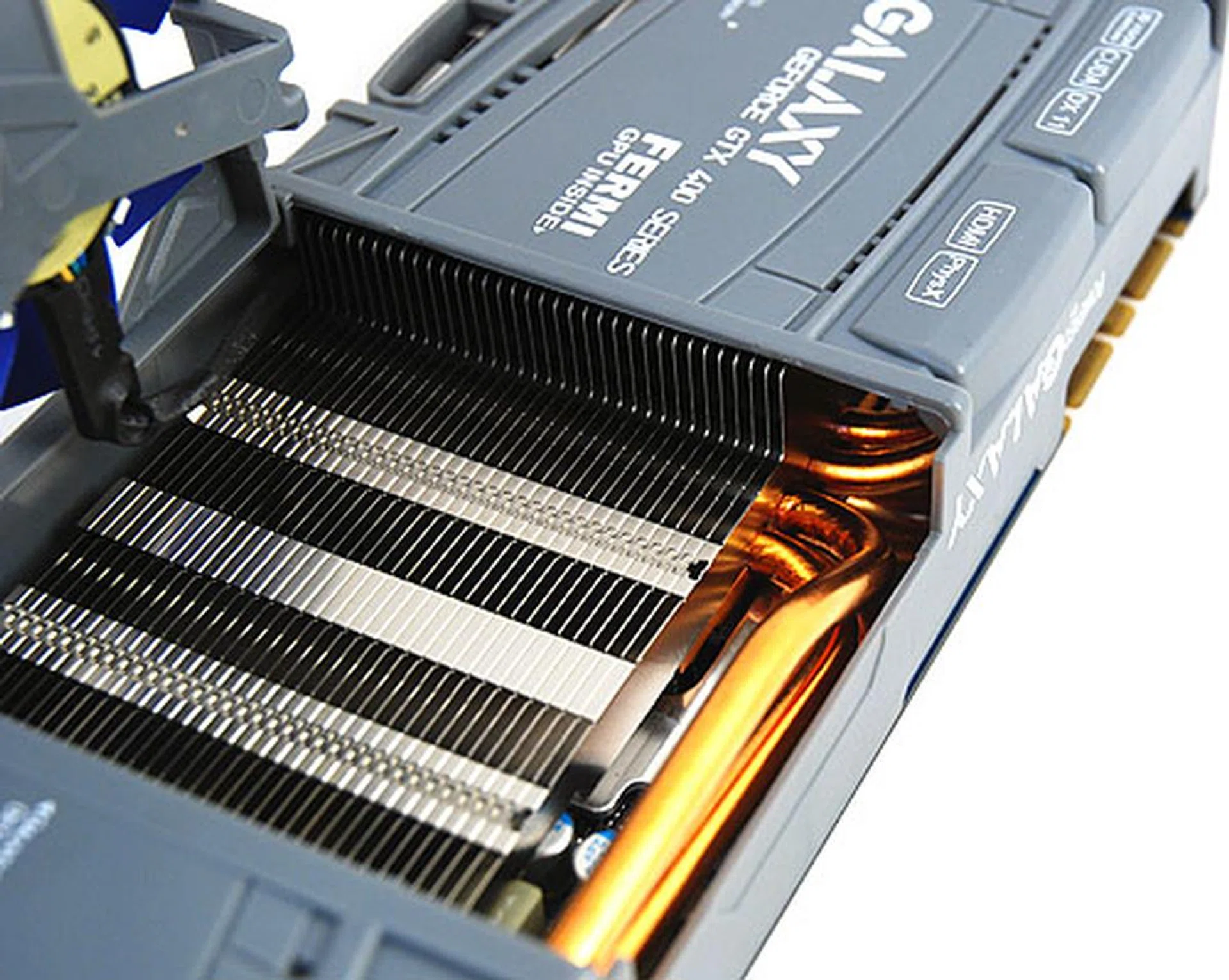
Lifting the fan reveals more of the cooler. Here we can see the multiple cooling fins and the four copper heat pipes.
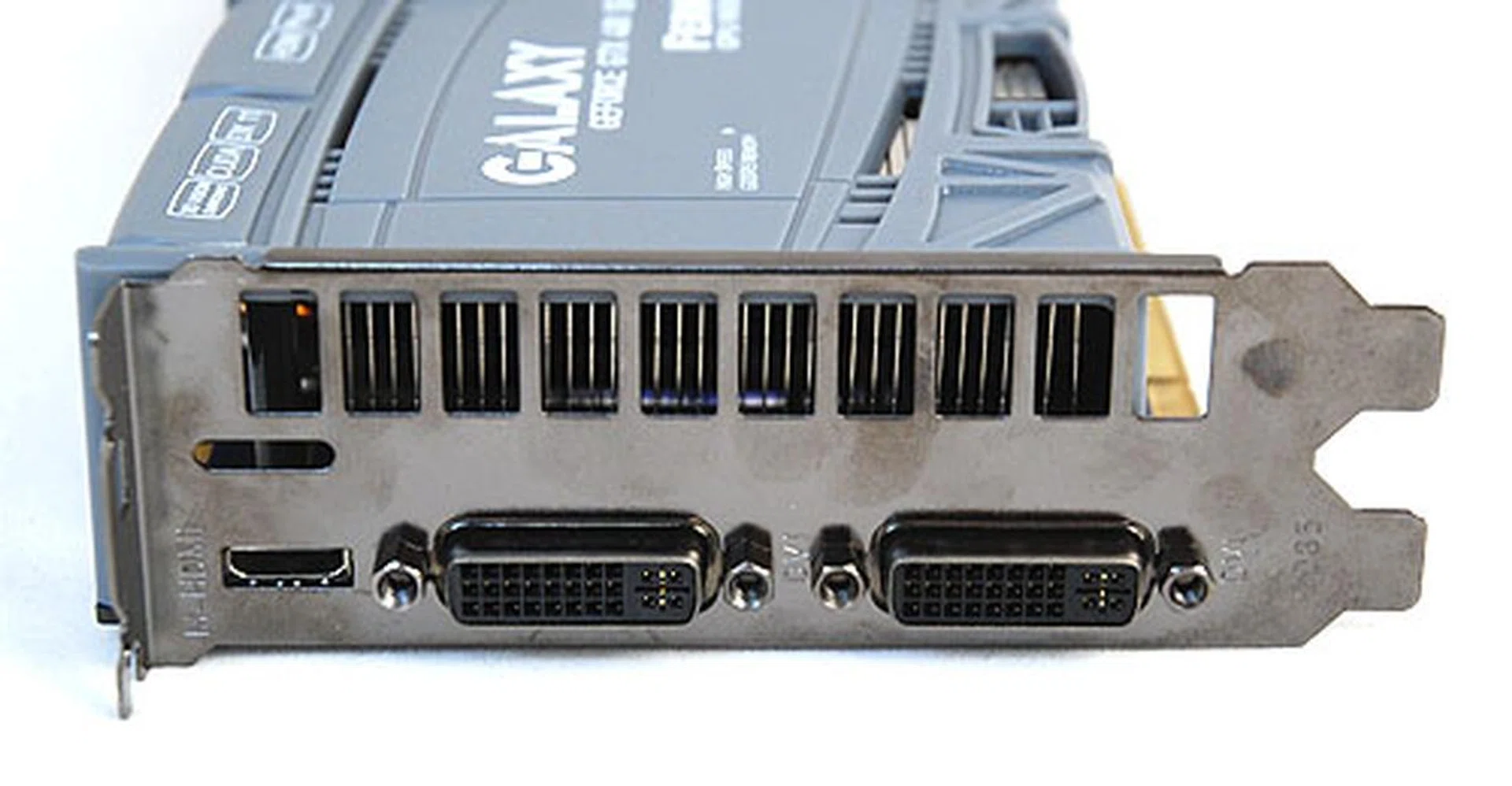
Nothing unusual here, the Galaxy card features two DVI ports and a single mini-HDMI port.
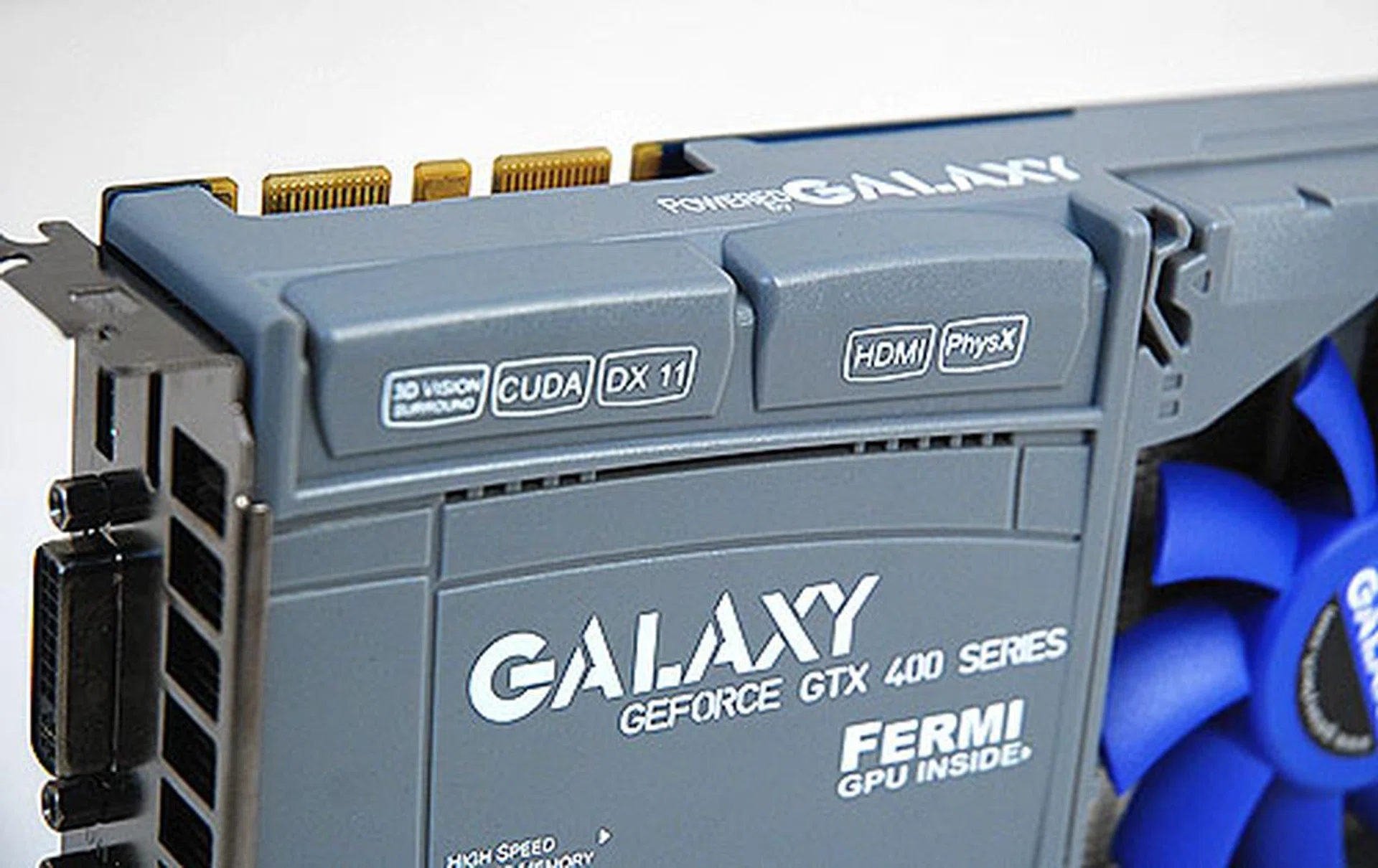
The cooler, though looking too much like a toy with all that plastic, is rather funky looking, with all the labels proclaiming the prowess of NVIDIA's latest Fermi GPU. Here, we can also see the two SLI connectors.
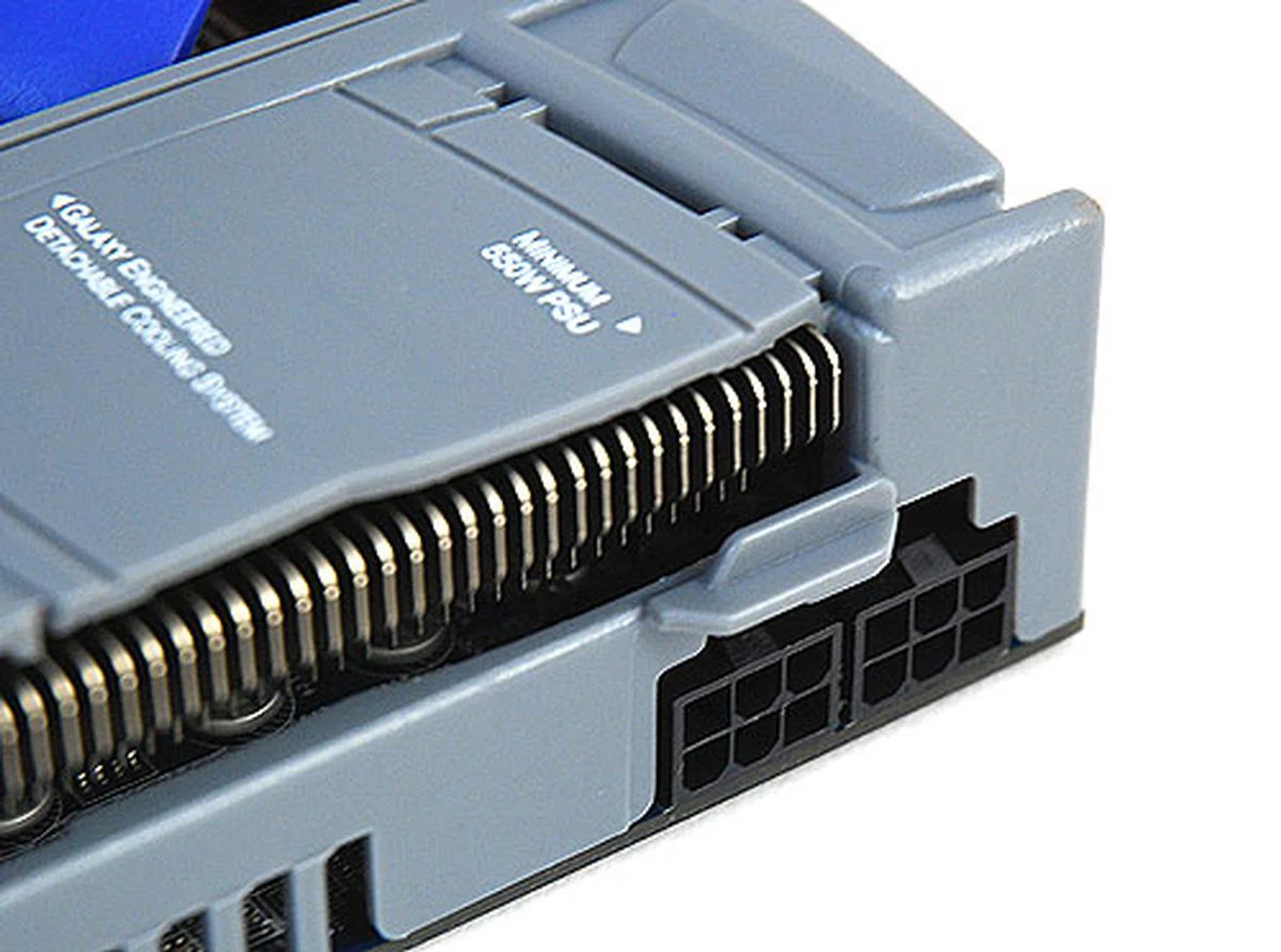
Power is supplied via two 6-pin PCIe graphics power connectors. And as the labeling states, a PSU rated for at least 550W is required.
Test Setup
We'll be testing the Galaxy GeForce GTX 470 GC version using our new X58 system:
- Intel Core i7-975 (3.33GHz)
- Gigabyte GA-EX58-UD4P motherboard
- 3 x 1GB DDR3-1333 OCZ memory in triple channel mode
- Seagate 7200.10 200GB SATA hard drive
- Windows 7 Ultimate
Obviously, key comparisons here will be between Galaxy's custom edition GeForce GTX 470 and NVIDIA's reference GeForce GTX 470. With its marginally high clock speeds, we are expecting the Galaxy card to be the faster card, though not by much. And if the cooler is really as effective as Galaxy claims, the Galaxy GeForce GTX 470 GC edition should also be cooler to run and less noisy. We'll also be paying close attention to how it'll perform against the ASUS EAH5850 DirectCU, one of the best customized Radeon HD 5850 cards that we have tested.
The full list of cards and their tested driver versions:
- Galaxy GeForce GTX 470 GC Version 1280MB GDDR5(ForceWare 197.41)
- NVIDIA GeForce GTX 470 (ForceWare 197.17 Beta)
- NVIDIA GeForce GTX 480 (ForceWare 197.17 Beta)
- ASUS EAH5850 TOP 1GB GDDR5 (Catalyst 10.3)
- ATI Radeon HD 5870 (Catalyst 10.2)
- ATI Radeon HD 5850 (Catalyst 10.2)
The list of benchmark used are as follows:
- Futuremark 3DMark Vantage
- Crysis Warhead
- Far Cry 2
- Warhammer: Dawn of War 2
- Battlefield Bad Company 2
- "Heaven" from Unigine
- S.T.A.L.K.E.R.: Call of Pripyat
3DMark Vantage Results
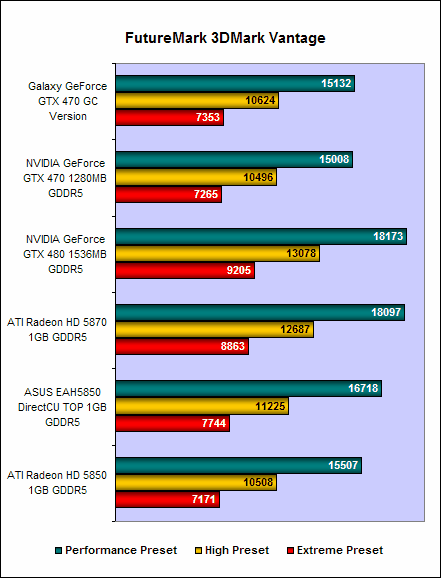
Seeing that the Galaxy GeForce GTX 470 GC version has only slightly higher clock speeds than a reference GeForce GTX 470, we weren't surprised to find that both cards managed comparable scores on 3DMark Vantage. The Galaxy card scored better, but the advantage was slight. We also noted that both the GeForce GTX 470 cards failed to outscore the Radeon HD 5850.
Crysis Warhead & Far Cry 2 Results
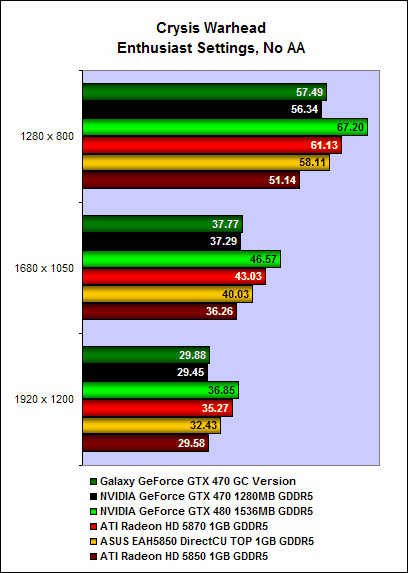
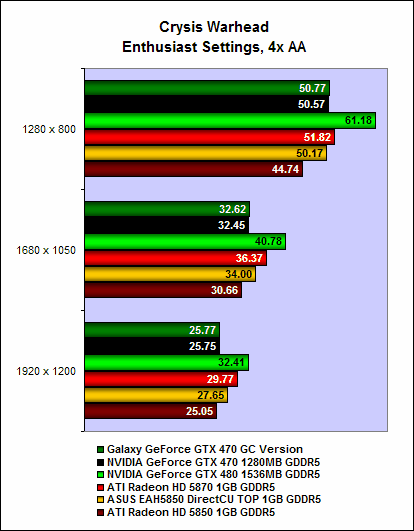
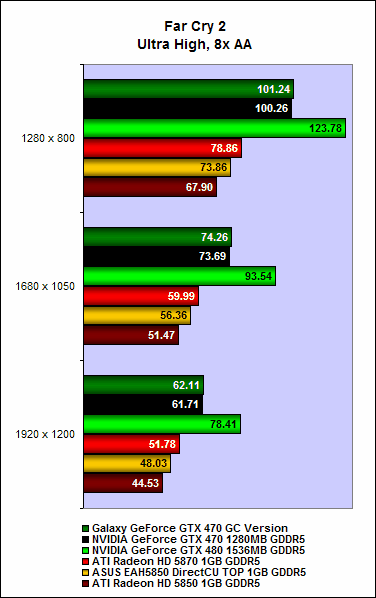
Again, the Galaxy GeForce GTX 470 GC version was quicker than the reference card, but only by the slimmest of margins. Practically speaking, the difference would be unnoticeable by the naked eye. And while the Galaxy card might be quicker than a reference Radeon HD 5850, it could not overcome a customized one such as the ASUS EAH5850 DirectCU.
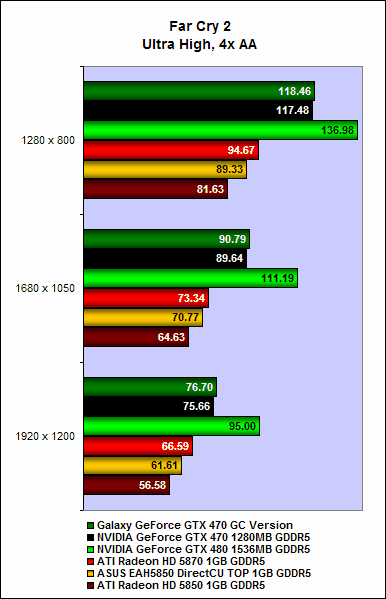
It was the same story on Far Cry 2, with the Galaxy GeForce GTX 470 GC version maintaining a modest lead over the reference GeForce GTX 470. The new Fermi-powered cards have performed well on Far Cry 2 and as we can see, the cards from NVIDIA absolutely blitzed competition.
Dawn of War 2 & Battlefield Bad Company 2 Results
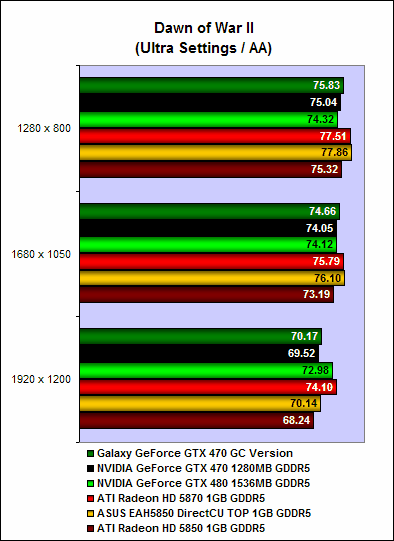
Dawn of War 2 has always been a tightly contested affair and it was the same here. However, we did notice that the Galaxy card was, once again, a tad quicker than a reference card.
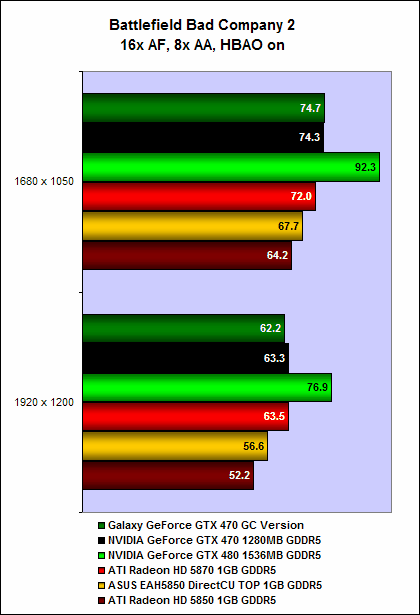
On Battlefield Bad Company 2, the Galaxy card was as predicted, comparable to a stock GeForce GTX 470. Honestly, the clock speeds of the Galaxy is far too conservative for our liking.
Unigine "Heaven" Results
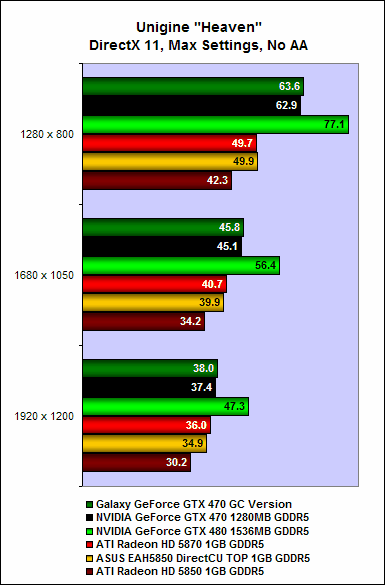
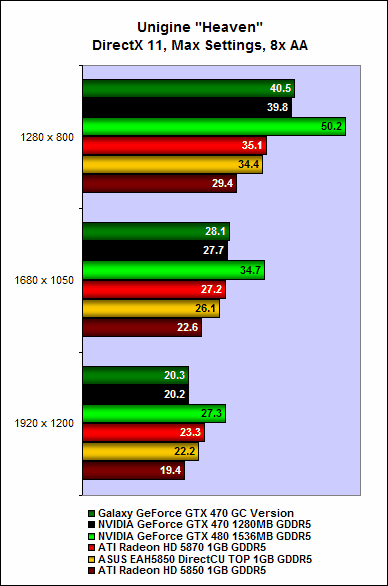
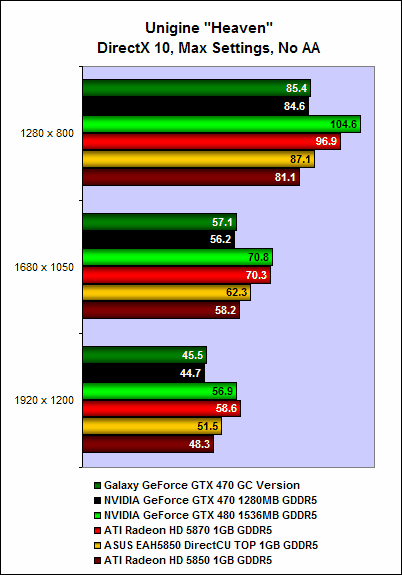
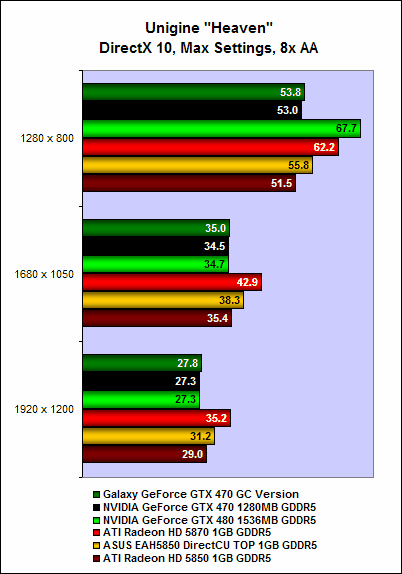
It's more of the same on Unigine as the Galaxy card, with its slightly higher clock speeds, managed to outscore a reference GeForce GTX 470. The difference is of course very slight, only about half a frame to a frame at most. We noticed that the two GeForce GTX 470 cards performed better with DirectX 11 and tessellation enabled. On DirectX 10, the two Radeon HD 5850 cards started flexing their might comfortably challenging and even surpassing the Galaxy card.
S.T.A.L.K.E.R.: Call of Pripyat Results
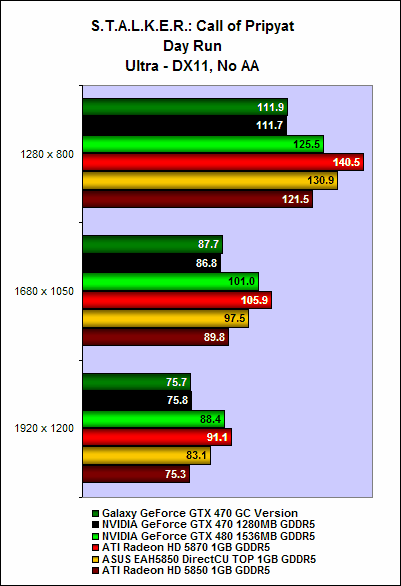
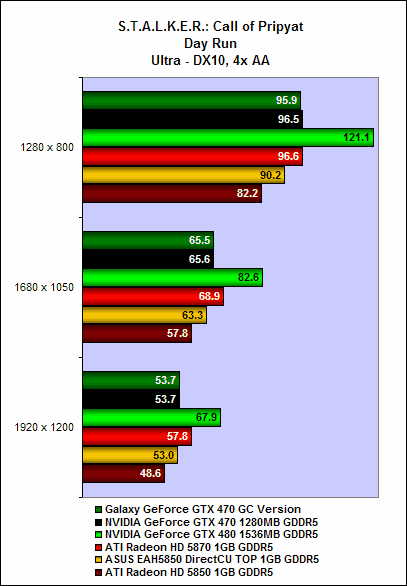
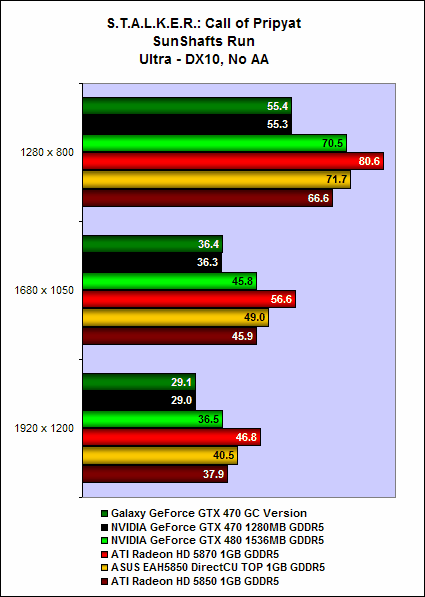
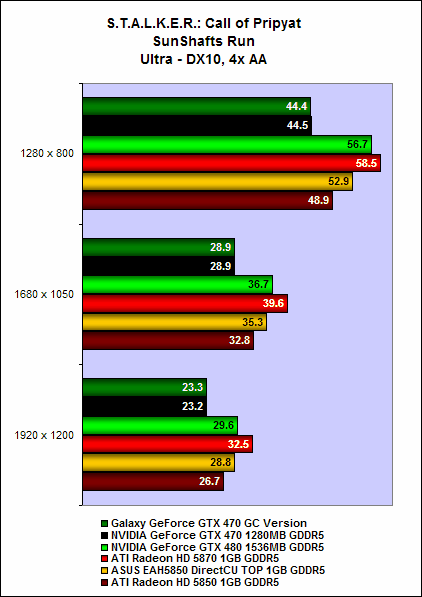
In our last benchmark, the Galaxy GeForce GTX 470 GC version continued to maintain its slight lead over a reference GeForce GTX 470, which is unsurprising. Here, the factory-overclocked ASUS EAH5850 DirectCU was very competitive, as it was able to match and in some less taxing cases, even outscore the Galaxy card by a large margin. However, from an overall perspective, as far as DX11 performance is concerned, the new NVIDIA cards have the upper hand. However in DX10, it's a different story, one that's shadowed in Unigine's "Heaven" benchmark results too.
DirectX 11 Results
 | 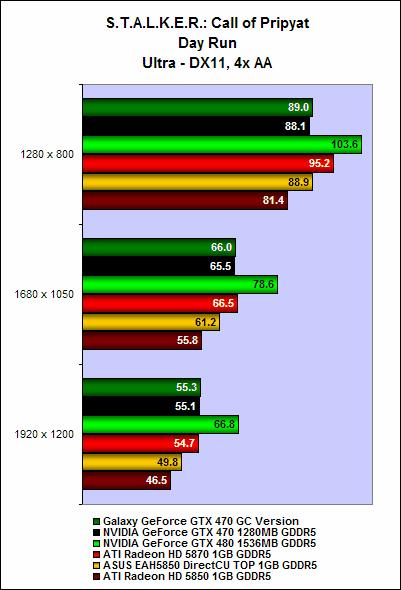 |
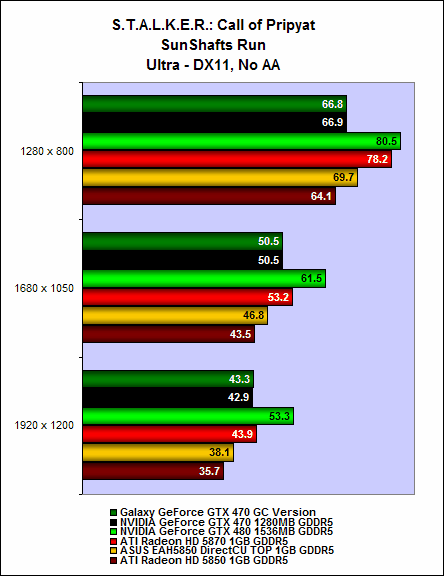 | 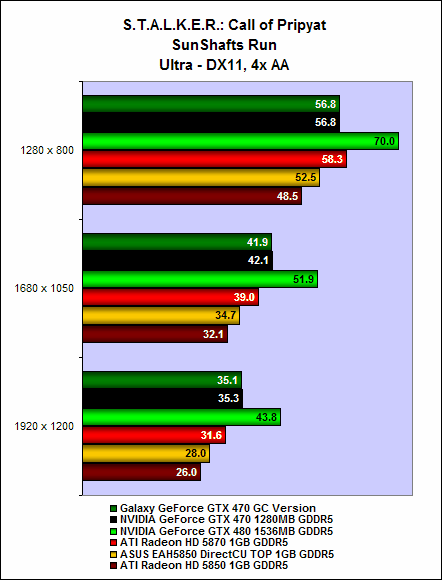 |
DirectX 10 Results
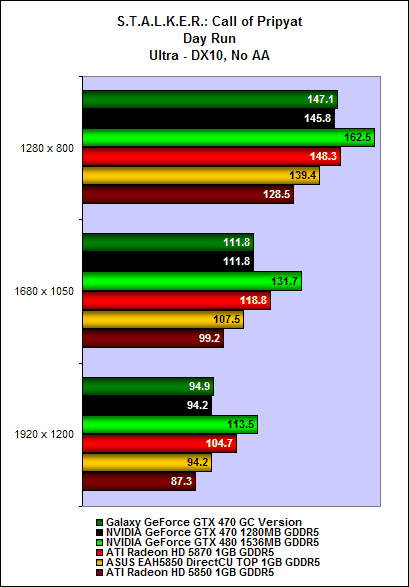 |  |
 |  |
Temperature
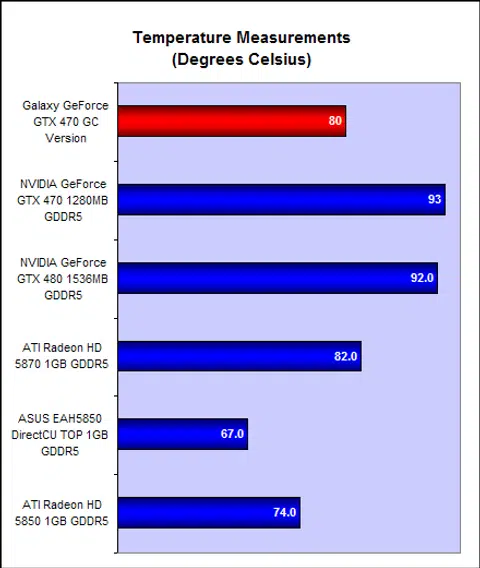
As we discovered in our original review, the reference GeForce GTX 470 can get really hot when taxed, so we were happy to find that the Galaxy card was running at a much cooler 80 degrees Celsius under heavy load. It's still fairly hot as compared to offerings from ATI, but its a massive improvement over the stock reference cooler. On the down side, we also noticed that the cooler was slightly noisier than that of a reference one at heavy loading. We guess it's a fair price to pay for the lower operating temperatures, especially one that's overclocked out of the box.
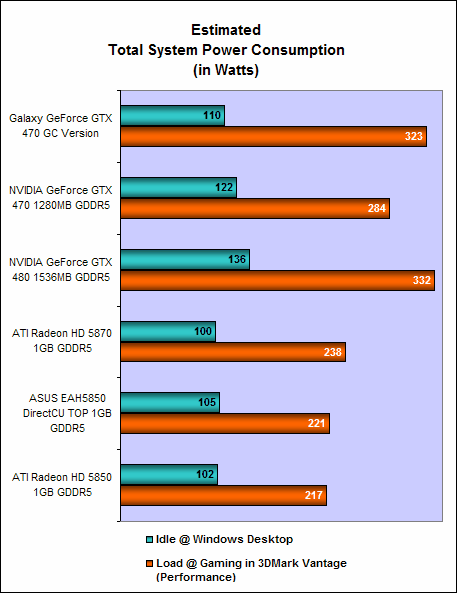
Power Consumption
Power draw was in line with our expectations though readings at load was a little on the high side. This could be attributed to the fact that the card comes factory overclocked and it sports a non-reference designed cooler.
Overclocking
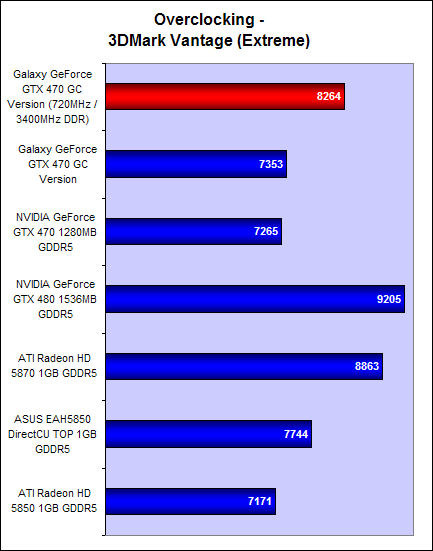
Using Galaxy's own XtremeTuner overclocking utility, we managed to bump the card's clock speed up a little to 670MHz at the core with the memory unchanged at 3348MHz DDR. Thereafter, we decided to take things up a notch and started tweaking with the voltage values. Stock voltage of the card was 1.05V and we bumped it up to 1.075V, which was near the maximum safe limit, and thereafter we managed to achieve 720MHz at the core and 3400MHz DDR at the memory. This was respectable and the resulting score on 3DMark Vantage was 8264, an improvement of 12%.
Conclusion
It's been barely two months since the launch of the GeForce GTX 470 and already Galaxy has put out a non-reference GeForce GTX 470 card, and this is certainly impressive. What's also commendable is the unorthodox design of the cooler. A detachable fan like this is the first we've seen in years and it makes the fan really easy to clean. What's more, we found that the cooler was effective in reducing operating temperatures as well, which is crucial since a reference GeForce GTX 470 runs really hot.
In terms of performance, the Galaxy GeForce GTX 470 GC version is a little disappointing seeing that its clock speeds are only a tad higher than a reference card. And as our benchmarks show, although the Galaxy card is faster on paper, in practical terms, the difference is going to be barely noticeable.
On the upside, the card is very attractively priced. The card retails in the States for US$380 (~S$523) and even if you factor in vendor overheads, to be conservative, it'll probably cost about S$570 if it ever reaches our shores. That's about what you'd be paying for regular reference GeForce GTX 470 cards. In that respect, the Galaxy GeForce GTX 470 GC version actually represents quite good value for money, because even if its performance isn't a whole lot better than a reference GeForce GTX 470, at least it runs much cooler.
Unfortunately, despite its reasonable price, the Galaxy GeForce GTX 470 GC version still faces stiff competition from the red camp. As we've seen, a decent factory overclocked Radeon HD 5850 like the ASUS EAH5850 DirectCU is capable of challenging it on some benchmarks and to be honest, if we are really talking about the “value proposition”, the advantage is still with ATI at the moment.
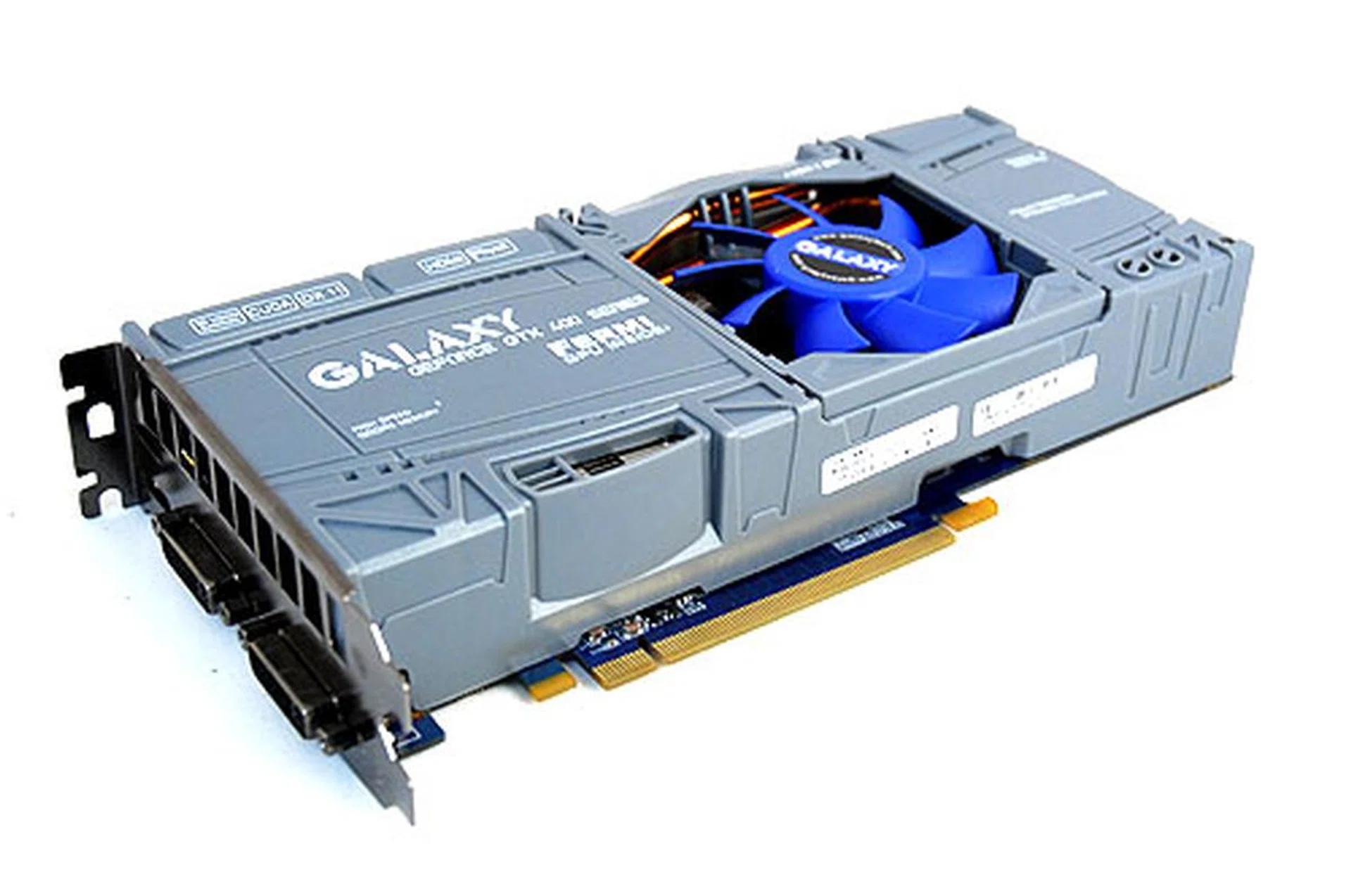
For value seekers, ATI is still the more attractive option, but the Galaxy GeForce GTX 470, for what it has, is good value for money if you are seeking a Fermi card.
All in all, the Galaxy GeForce GTX 470 GC version is a decent take on the GeForce GTX 470. It might not be a whole lot faster than a reference card, but it runs a whole lot cooler, which should bring about a peace of mind for users. On top of that, it is also attractively priced, though admittedly not as competitively as the Radeon cards from ATI. Hence, if you do intend to get a GeForce GTX 470, there's no reason why you shouldn't consider this card.
Our articles may contain affiliate links. If you buy through these links, we may earn a small commission.