
ATI Radeon X1950 XTX 512MB DDR4
ATI takes another stab at restoring parity in the high-end graphics segment with an improved version of the Radeon X1900 XTX. Reinforced with an enhanced R580+ core and DDR4 memory, the Radeon X1950 XTX 512MB promises a lot but can it deliver the win for ATI? Here's how it did in our benchmarks.

It Ain't Over Till the Fat Lady Sings
Today marks the release of three new ATI reinforcements spanning all three major price categories. These new cards represent ATI's hopes of getting the final say in the clash between its latest generation of Radeon X1K graphics processors with NVIDIA's GeForce 7 series. While the performance between the flagship processors from both sides were comparable, ATI has arguably emerged worse in the retail market due to the higher manufacturing cost of its larger and more complex architecture. This has allowed NVIDIA to seize the price performance advantage. However, ATI hasn't given up the fight yet by getting its engineers to work on improving existing cards. Besides developing the next generation R600 core, they've apparently had the time to revise its existing lineup and plan new products that are better placed to compete against NVIDIA in both technology and price. Here then are the newcomers:
Model | ATI Radeon X1950 XTX 512MB | ATI Radeon X1650 PRO | ATI Radeon X1300 XT |
Transistor Count | 384 million | 157 million | 157 million |
Manufacturing Process (microns) | 0.09 | 0.09 | 0.09 |
Core Clock | 650MHz | 600MHz | 500MHz |
Vertex Shaders | 8 | 5 | 5 |
Pixel Shader Processors | 48 | 12 | 12 |
Memory Clock | 2000MHz DDR4 | 1400MHz DDR/DDR2/DDR3 | 800MHz DDR/DDR2/DDR3 |
DDR Memory Bus | 256-bit | 128-bit | 128-bit |
Ring Bus Memory Controller | 512-bit (for memory reads only) | 256-bit (for memory reads only) | 256-bit (for memory reads only) |
Multi GPU Technology | Yes (CrossFire) | Yes (CrossFire) | Yes (CrossFire) |
DVI Output Support | 2 x Dual-Link | 1 x Single Link 1 x Dual-Link | 1 x Single Link 1 x Dual-Link |
Street Price | US$449 | USS$99 | US$89 |
Our main focus in this article is the Radeon X1950 XTX and its R580+ core, which is exactly the same as the original R580 in terms of architecture, features and specifications. However, the crucial difference performance-wise seems to be banking on support for GDDR4 memory type in the new flagship product with a staggering debut clock speed of 2.0GHz DDR. Thermal and noise output are also predicted to be lower as well, thanks to a newly redesigned cooler. Before we get to that, here's a look at its technical specifications compared to the rest of the high-end alumnus.
Model | ATI Radeon X1950 XTX 512MB | ATI Radeon X1900 XTX 512MB | ATI Radeon X1900 XT 512MB | NVIDIA GeForce 7950 GX2 1GB | NVIDIA GeForce 7900 GTX 256MB |
Core Code | R580+ | R580 | R580 | G71 | G71 |
Transistor Count | 384 million | 384 million | 384 million | 2 x 278 million | 278 million |
Manufacturing Process (microns) | 0.09 | 0.09 | 0.09 | 0.09 | 0.09 |
Core Clock | 650MHz | 650MHz | 625MHz | 500MHz | 650MHz |
Vertex Shaders | 8 | 8 | 8 | 2 x 8 | 8 |
Rendering (Pixel) Pipelines | 16 | 16 | 16 | 2 x 24 | 24 |
Pixel Shader Processors | 48 | 48 | 48 | 2 x 24 | 24 |
Texture Mapping Units (TMU) | 16 | 16 | 16 | 2 x 24 | 24 |
Raster Operator units (ROP) | 16 | 16 | 16 | 2 x 16 | 16 |
Memory Clock | 2000MHz DDR4 | 1550MHz DDR3 | 1450MHz DDR3 | 1200MHz DDR3 | 1600MHz DDR3 |
DDR Memory Bus | 256-bit | 256-bit | 256-bit | 2 x 256-bit | 256-bit |
Memory Bandwidth | 64.0GB/s | 49.6GB/s | 46.4GB/s | 76.8GB/s | 51.2GB/s |
Ring Bus Memory Controller | 512-bit (for memory reads only) | 512-bit (for memory reads only) | 512-bit (for memory reads only) | NIL | NIL |
PCI Express Interface | x16 | x16 | x16 | x16 | x16 |
Molex Power Connectors | Yes | Yes | Yes | Yes | Yes |
Multi GPU Technology | Yes (CrossFire) | Yes (CrossFire) | Yes (CrossFire) | Yes (SLI, Quad SLI) | Yes (SLI) |
DVI Output Support | 2 x Dual-Link | 2 x Dual-Link | 2 x Dual-Link | 2 x Dual-Link | 2 x Dual-Link |
Street Price | US$449 | ~ US$429 - 499 | ~ US$369 - 399 | ~ US$549 - 609 | ~ US$429 - 485 |
The ATI Radeon X1950 XTX 512MB DDR4
Kudos goes to ATI, for the newly redesigned cooler on the Radeon X1950 XTX looks like a winner. Although it seems even more massive than the older cooler, the generous use of memory heatsinks and heat-pipes mean that the fan has the luxury of spinning at a less frenetic pace. In fact, these characteristics reminded us of HIS' IceQ3 cooler. While they are not exactly the same, they both use a combination of RAM sinks and a heat-pipe based cooler to get the job done. The end result is that this is probably one of the quietest reference high-end Radeon X1K card to date. There were moments when we could tell that the fan has ramped up in intensity, especially during peak benchmarking but overall, it is still far better than the reference ones found on the older Radeon X1900 series. If not for your wallet, the Radeon X1950 XTX would definitely please your ears.
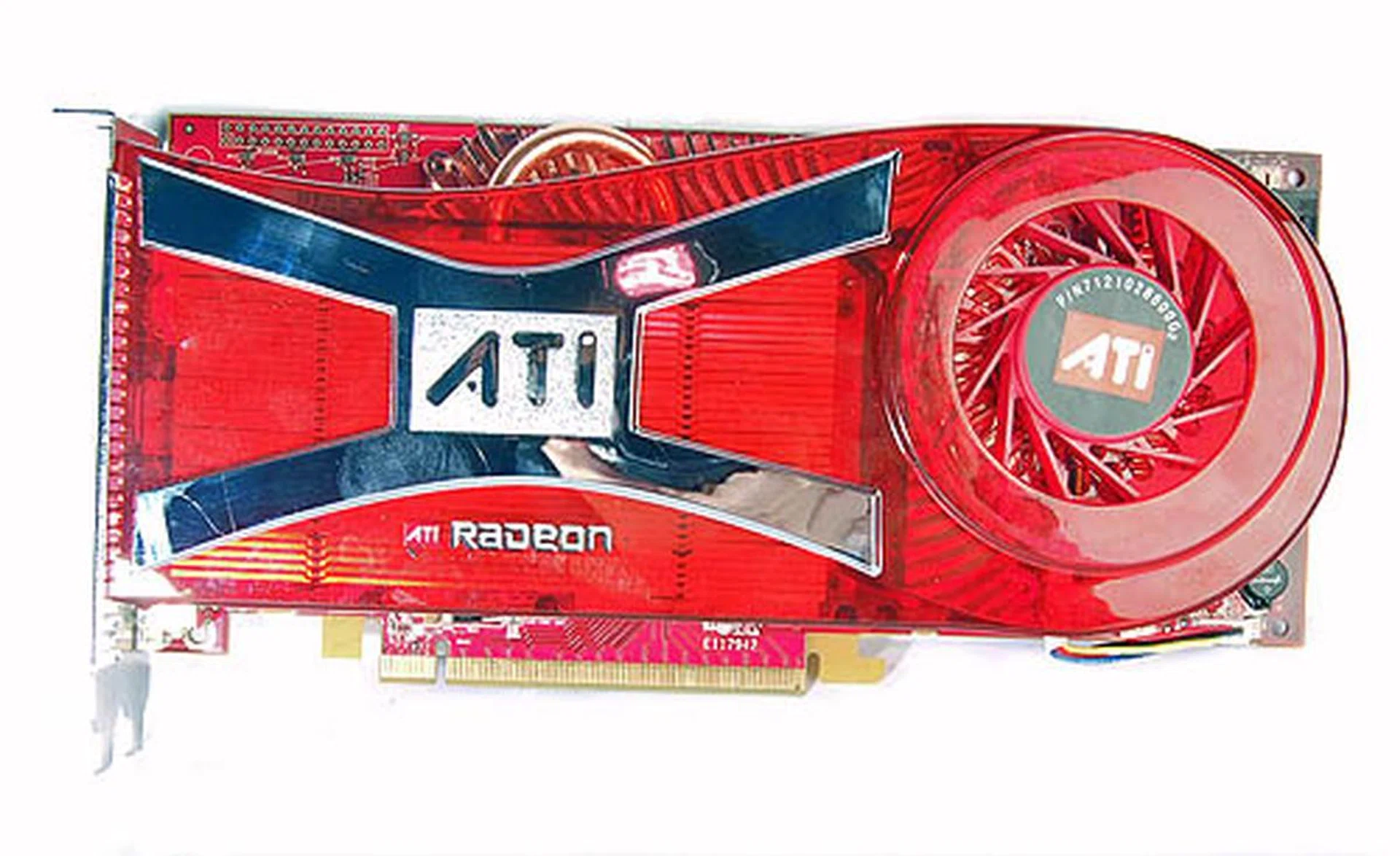
A brand new cooler for the Radeon X1950 XTX 512MB. From what we have heard, it's so much softer than the one on the Radeon X1900 XTX.
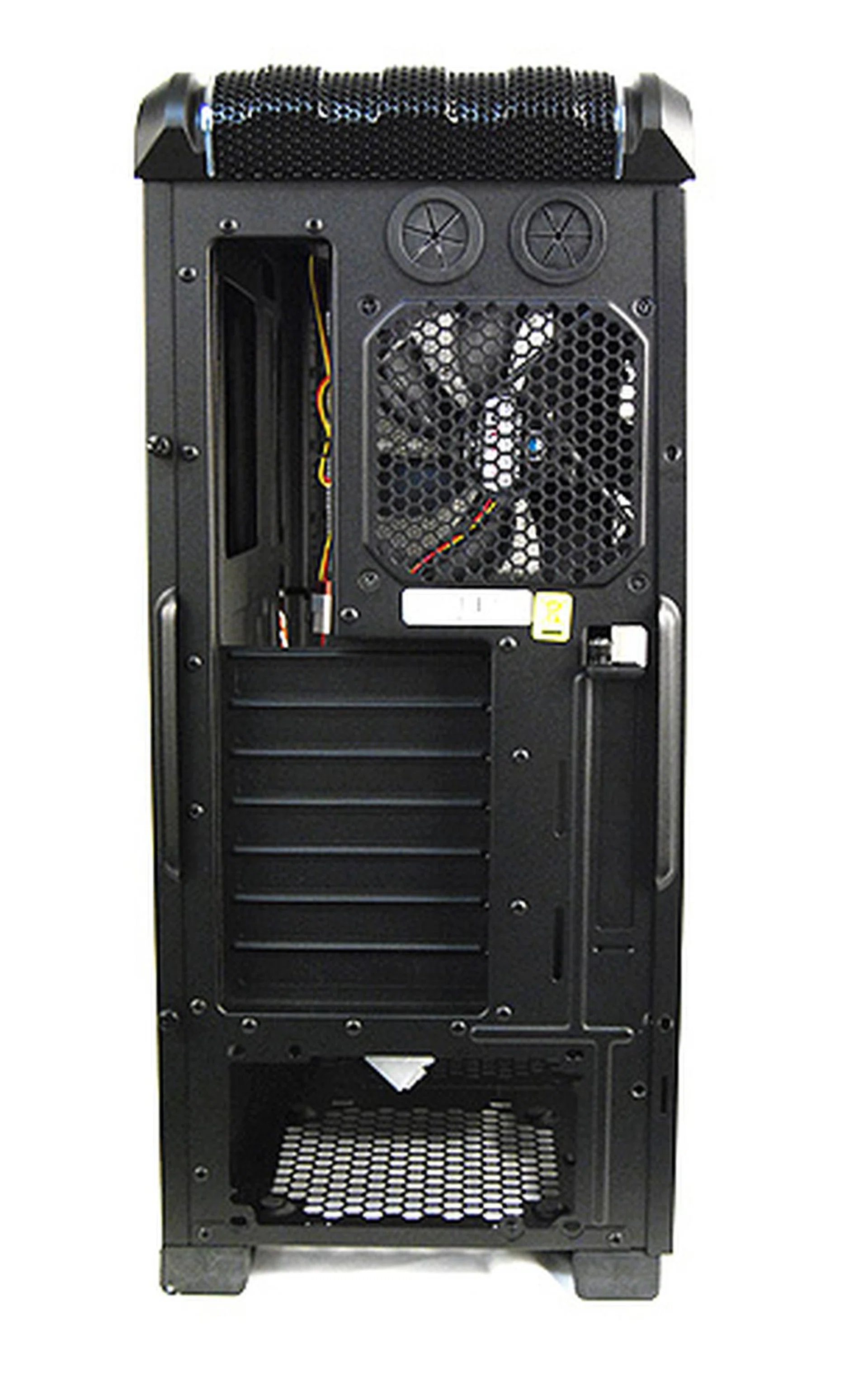
Simple backplate anchor.
Besides the cooler, the specifications of the X1950 XTX are quite similar to the existing top of the line Radeon X1900 XTX 512MB. The exception of course is the new DDR4 memory support, which seems to have required sufficient internal tweaks to justify the addition of a '+' in the name of the new core. Architecturally, the RD580+ core is exactly the same as the old, including the same number (48) of pixel processors. Even the core clock remains the same at 650MHz. The spectacular increase has been in the memory clock and type, which gets bumped up from the old 1550MHz GDDR3 to a milestone 2.0GHz GDDR4. Memory bandwidth is probably not the most urgent concern for ATI's Radeon X1K architecture so we understand if you're skeptical on how much of a performance boost would result from the faster memory clocks.
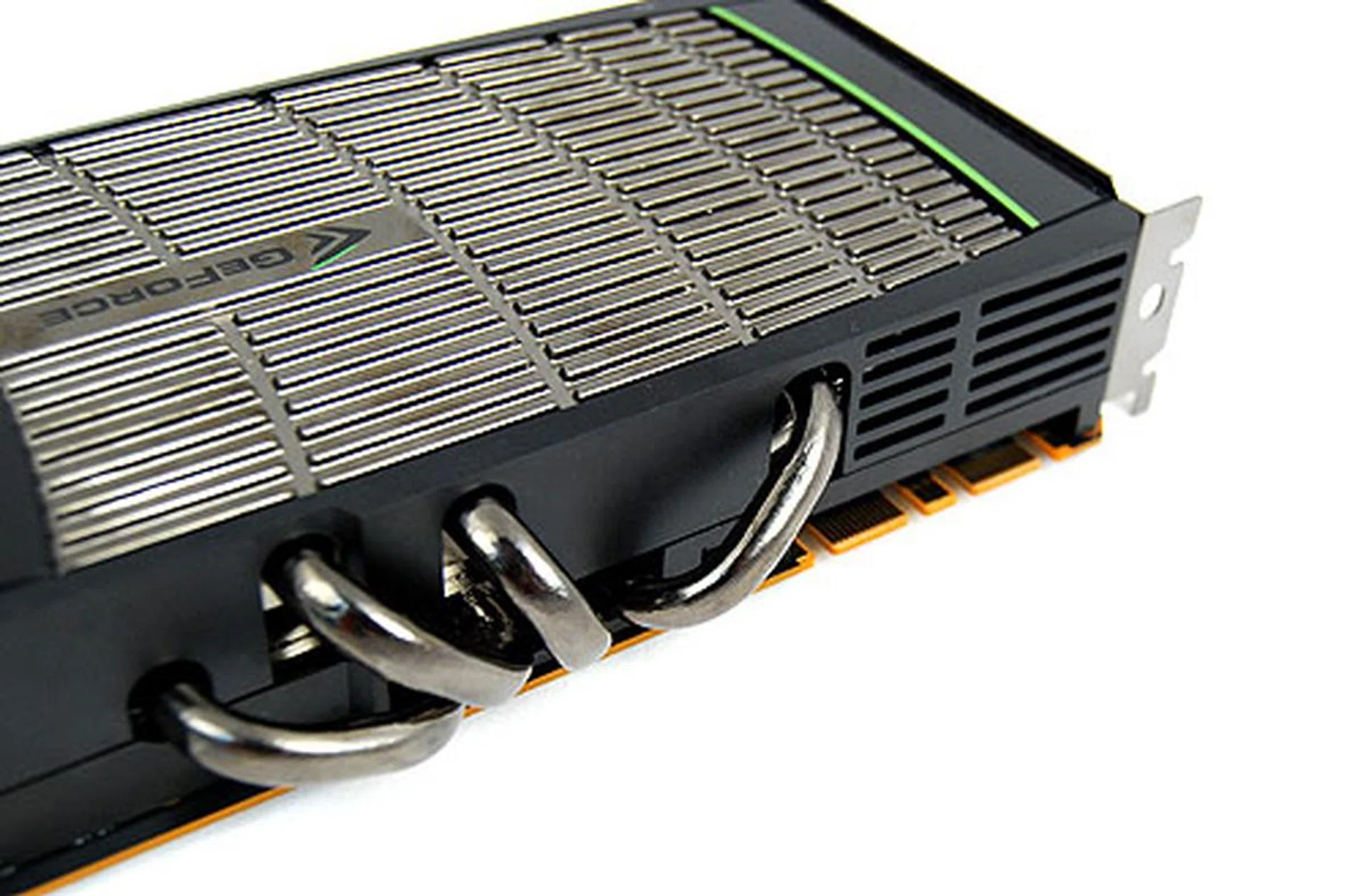
A heat pipe based cooler.
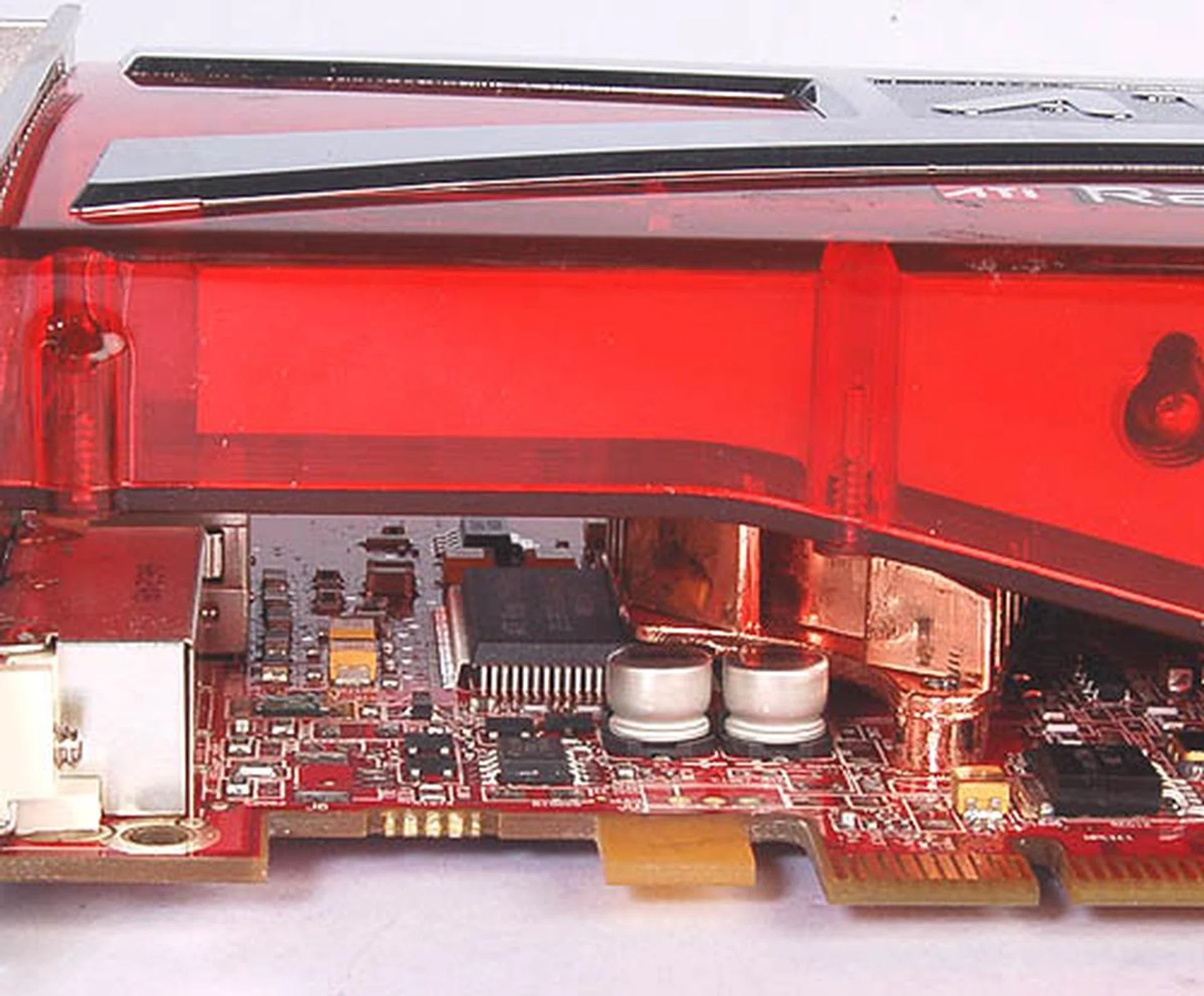
Is that a Rage Theater chip that we see?
Finally, the other trademark features of a high-end Radeon X1K card are present. The Rage Theater ASIC for video capturing and the whole Avivo works will naturally be supported. With the trend nowadays, HDCP support is inevitable on such a high-end graphics card and as expected, this is true. According to ATI, the Radeon X1950 XTX is fully HDCP compliant with the required hardware keys for decoding. For those who have the cash to burn, there's also a CrossFire edition version of the Radeon X1950 XTX for a dual GPU setup.
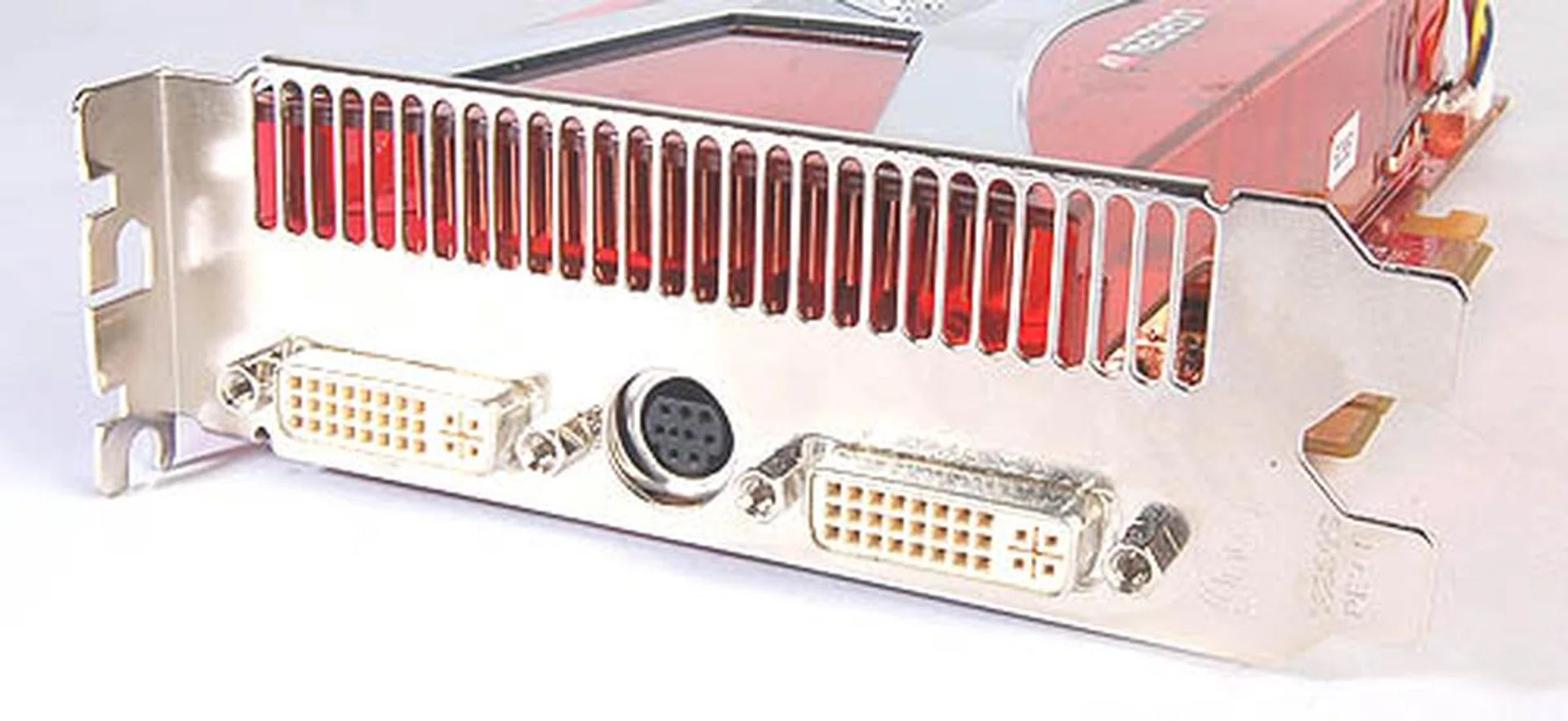
Standard dual DVI ports for CrossFire if you so desire.
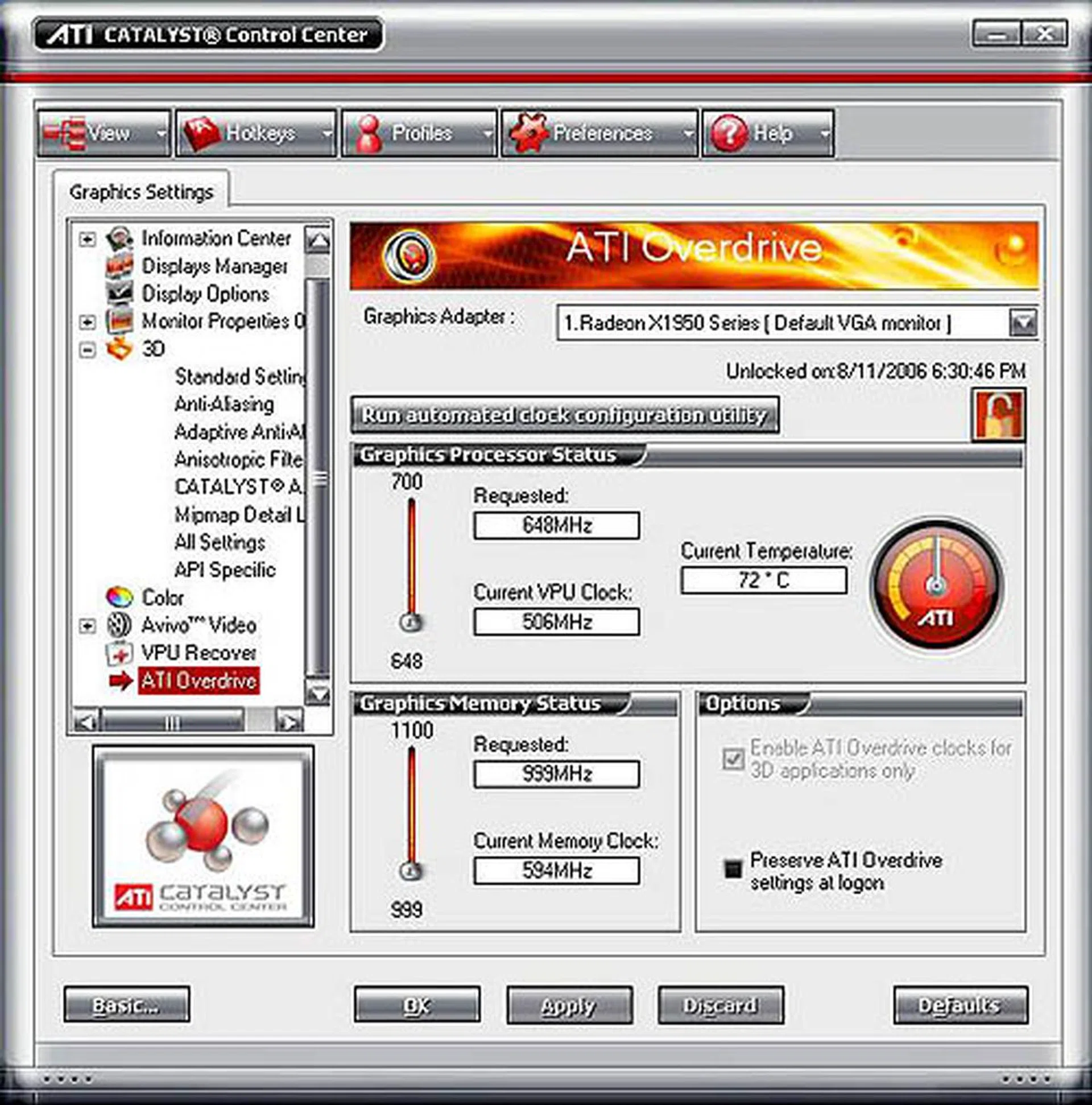
There's a fair amount of overclocking options for this card, which we'll be able to test on as more of these cards roll in.
Test Setup
We brought out our usual graphics rig for the all-important benchmark testing. This consisted of an AMD Athlon 64 FX-55 (2.6GHz) processor on a MSI K8N Diamond Plus motherboard. We added 1GB of low latency DDR400 RAM from Kingston, running in dual channel mode while the storage department was taken care by a 80GB Seagate 7200.7 SATA hard drive. Windows XP Professional with Service Pack 2 was installed along with the newest version of DirectX 9.0c.
The new Radeon X1950 XTX came with its specific set of beta drivers, which looked to be based on Catalyst 6.7. Since we didn't have the time to rerun all our older ATI cards with these new drivers, we recycled our Catalyst 6.5 results. These scores should be a reasonably close approximation of what these cards are capable of, especially since there hasn't been much performance tweaks from ATI recently; the changes seem to be mostly bug fixes. Besides the reference cards from ATI, we also threw in probably the fastest Radeon X1900 XTX in retail now, the HIS Radeon X1900 XTX 512MB IceQ3 to see if the new challenger is up to it. We've also tried out a new modified Catalyst 6.8 driver set to support the Radeon X1950 XTX just before publishing this article, but unfortunately, there were no gains to be seen (and no losses thankfully).
For the NVIDIA cards, we had the champion albeit tag team combo of the GeForce 7950 GX2 running on ForceWare 91.29 drivers. Again, these are not the newest available but should be close enough to suit our purposes. We have added a GeForce 7900 GTX as a reference but it was on 84.21 drivers. The following benchmarks were tested:
- Futuremark 3DMark05 Pro (version 120)
- Futuremark 3DMark06 Pro (version 102)
- F.E.A.R
- Tom Clancy's Splinter Cell 3: Chaos Theory (version 1.3)
- Chronicles of Riddick: Escape from Butcher Bay (version 1.1)
- Quake 4
Results - 3DMark05 Pro & 3DMark06 Pro
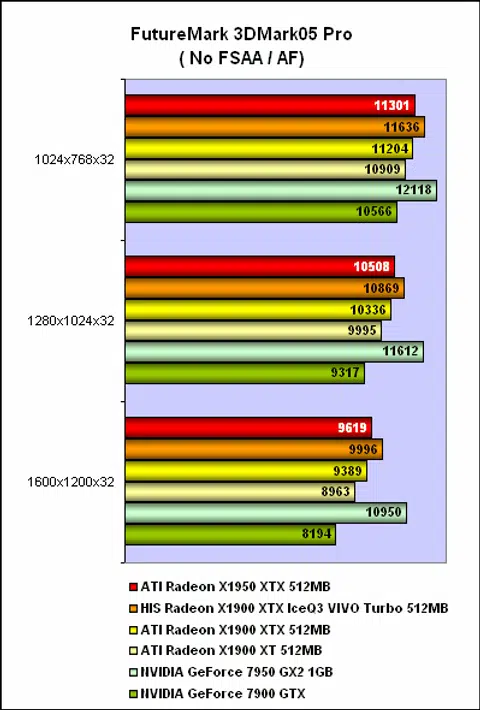
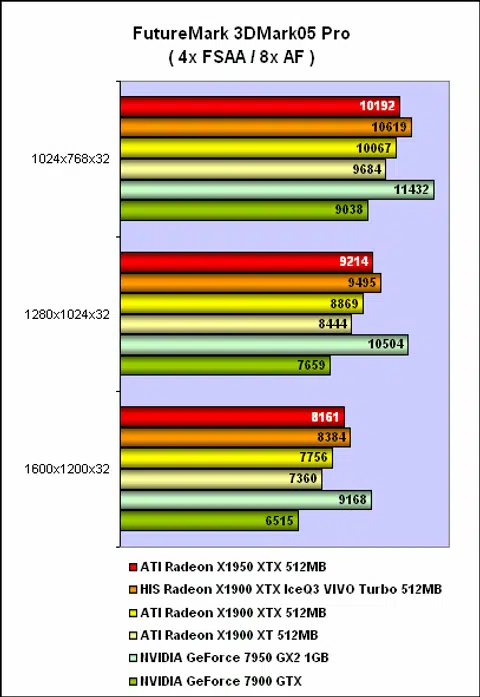
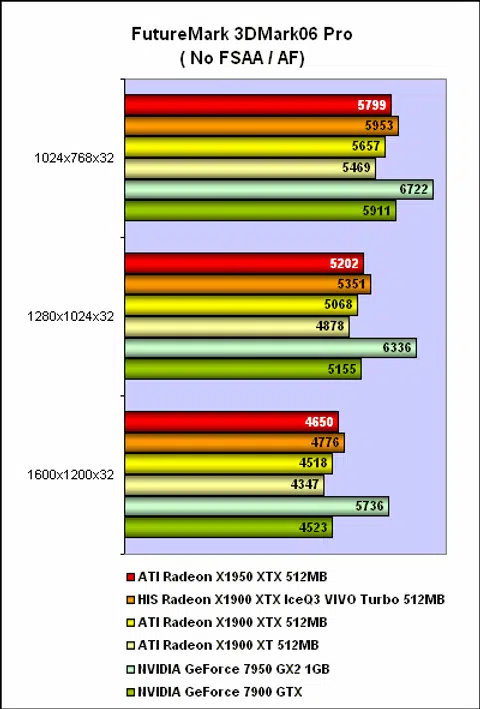
We were a bit disappointed at the 3DMark scores as the overclocked HIS managed to put one over the new arrival. This result was probably due to the 650MHz core of the Radeon X1950 XTX, which is unchanged from the standard Radeon X1900 XTX. Hence, the 700MHz core of the HIS easily overtook the Radeon X1950 XTX. If you already have a Radeon X1900 XTX, don't expect to find too much of an improvement here.
Results - Splinter Cell: Chaos Theory & F.E.A.R (DirectX 9 Benchmarks)
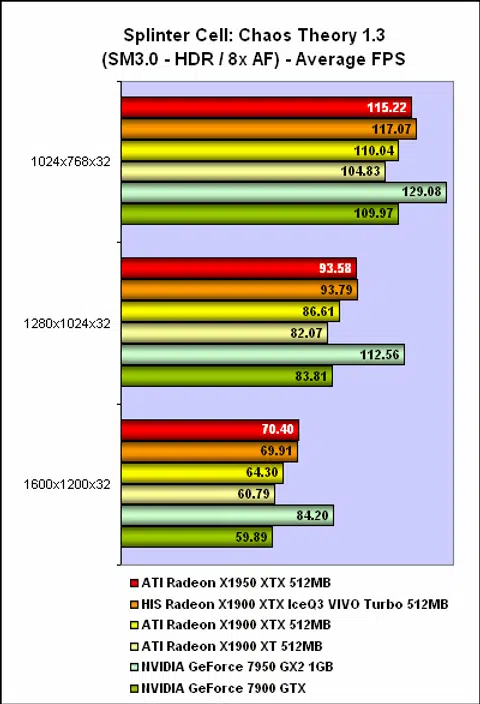
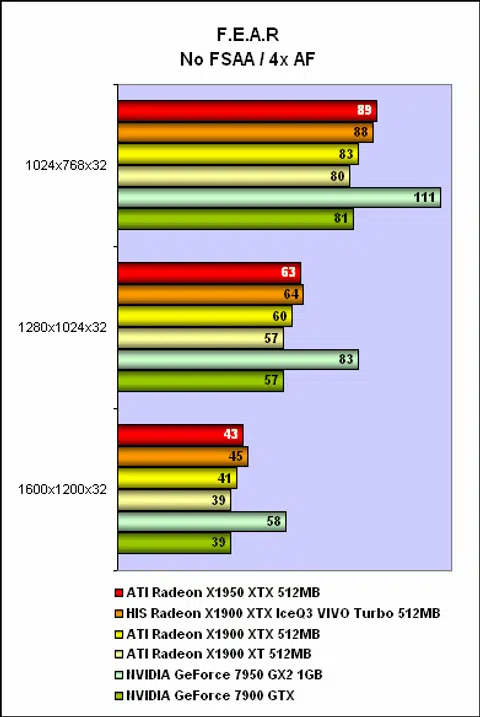
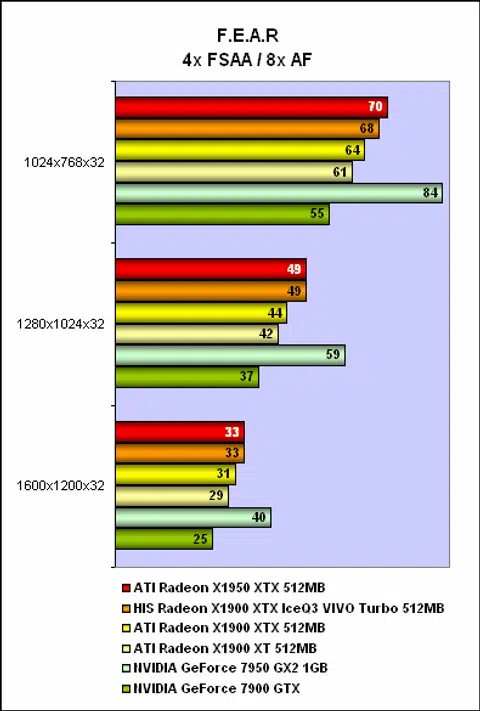
Unlike the synthetic 3DMark tests before, the ATI Radeon X1950 XTX was very competitive with the overclocked HIS here and by that extension, obviously an improvement over the older Radeon X1900 XTX. Unfortunately for it, the GeForce 7950 GX2 still retains the performance advantage and by a significant margin too. However when comparing dollar-to-dollar, the GeForce 7900 GTX is the more appropriate comparison and in this case, the Radeon X1950 XTX has a clear lead.
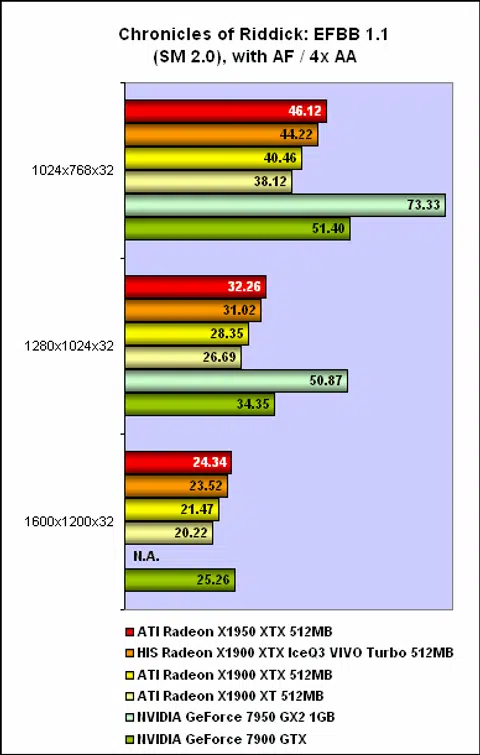
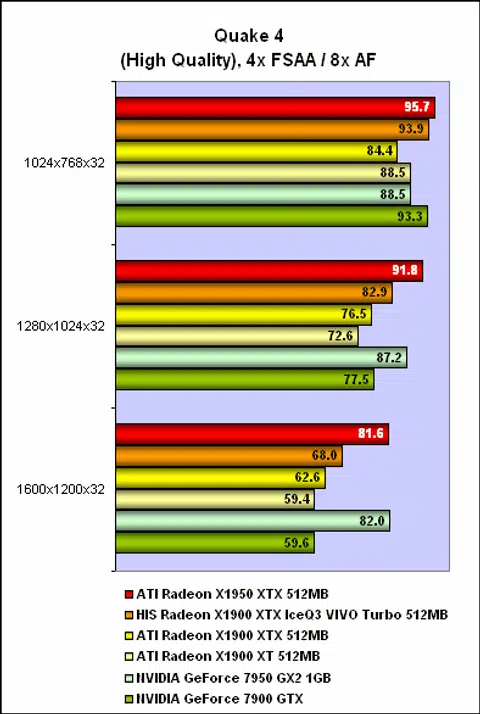
Results - Chronicles of Riddick: EFBB & Quake 4 (OpenGL SM2.0+ Benchmarks)
In both these OpenGL games, the ATI Radeon X1950 XTX edged out the HIS, though predictably, the NVIDIA contingent was very strong. Similarly for Quake 4, we saw the DDR4 memory starting to make its point by achieving a substantial improvement over the overclocked HIS despite the latter's faster core clock and even more so over the standard Radeon X1900 XTX.
Temperature Testing
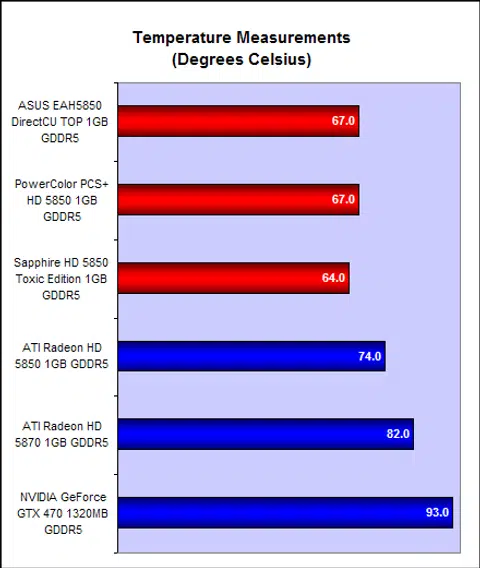
With a much improved cooler, ATI has managed to make the Radeon X1950 XTX stand out even in the custom crowd. As mentioned earlier, the new design bears similarities with the IceQ3 cooler on the HIS and the close temperatures between the two cards seem to justify it. Going by the readings we've gathered, the new ATI boy should perform quite a bit cooler than the typical Radeon X1900 XTX.
Conclusion
Just when we had thought that the battle for high-end graphics supremacy has reached an unofficial ceasefire with NVIDIA seemingly winning over the enthusiasts with both performance (the 'SLI-on-a-card' GeForce 7950 GX2) and mostly better value, ATI has revived its challenge with a late rally. While work continues from both sides on their respective next generation processors, the competition has intensified with ATI's plans to release new products aimed squarely at NVIDIA's best performers.
At the high-end segment, expect the Radeon X1950 XTX to be reinforced with the Radeon X1950 Pro as they take on the GeForce 7900 GTX and the GeForce 7900 GT. The mid-range Radeon X1650 PRO goes for the jugular of the GeForce 7600 GT. Already, there's talk in the grapevine that NVIDIA has plans to preempt ATI's roadmap with a possible cut-down version of the GeForce 7900 GT, to be called predictably, the GeForce 7900 GS. Price cuts for the GeForce 7600 GT are also said to be forthcoming and more to be expected when they transition to the 80nm process. The next few months promise to be exciting for enthusiasts, as new products will need to be ranked and judged with their peers. Not to mention the potential price cuts. Already, the 256MB version of the X1900 XT comes at a stripped down price of US$279.

The new kid is fast, but the best of all is its US$449 introductory price tag.
Like we predicted, a mere increase in memory clock speeds, DDR4 or not, doesn't really help the Radeon X1950 XTX too much in performance. As the overclocked HIS Radeon X1900 XTX showed, the best Radeon X1900 XTX could still pose a threat to this new product. At the moment, it seems like present owners of a Radeon X1900 XTX or the XT version can forget about making a minor upgrade to the X1950 XTX, as there is no significant performance advantage from doing so. We only saw a minor, incremental improvement for the benchmarks that we ran. Only if you are keen on playing all your games in full glory, with HDR and anti-aliasing, can we imagine the faster memory clocks paying off. ATI's own benchmarks (which naturally showed the Radeon X1950 XTX as king of the hill) reflected this advantage, with all the games running at resolutions of up to 2560 x 1600.
Given the excellent cooler, one could probably overclock the core to the level of the HIS Radeon X1900 XTX IceQ3 and then perhaps we will find a more convincing score, but we'll reserve our overclocking conclusion for a later date with real retail products. There is also the consideration to take that the improved memory performance and bandwidth will probably be much more of a boost when the Radeon X1950 XTX is used in a CrossFire configuration and with ATI pushing their triple card setup for GPU physics, it is too early to write off the benefits of GDDR4.
The good news is that just like AMD, ATI seems to be more competitive with better price propositions. Initial rumors put the X1950 XTX at a US$399 price, which was a little over-deflated. As the launch of the card approaches, ATI has confirmed that the actual price tag would be around US$449, which thankfully still puts the X9150 XTX in direct competition against the GeForce 7900 GTX. With NVIDIA's dual GPU GeForce 7950 GX2 not really threatened by the newcomer performance-wise, the Radeon X1950 XTX is probably banking on taking down its single core rival with a superior price/performance ratio at reduced thermal output. In the end, consumers should be the ones rubbing their hands in glee but they will still have to wait till September 14th before these cards are available in retail.
Our articles may contain affiliate links. If you buy through these links, we may earn a small commission.