
ATI Radeon HD 4870 512MB GDDR5 - Inching for the Apex
The Radeon HD 4800 series is shaking up the desktop graphics scene and we're here to bring you more exciting benchmarks results from this hot new GPU, including CrossFireX scores that match and exceed anything from NVIDIA at similar price bandings. Ready your wallets!

DAMMIT, They Are Back!
Grabbing the headlines this month with a flurry of product launches and announcements on all fronts, AMD looks to be back in the thick of the action. It's still early to give the verdict about some of these developments but they certainly give substance to the that AMD was singing to the media recently. Following our , we return again today to graphics with the first GDDR5 equipped graphics card, the Radeon HD 4870.
As you would have known from our , the new Radeon HD 4800 series has restored the balance to the Force, we mean graphics scene, and NVIDIA has been forced to get more competitive (and realistic) about its prices. Having a smaller die at a 55nm manufacturing process allows ATI to price its GPUs at such competitive prices, while its strategy of relying on multi-GPU configurations to combat NVIDIA's more powerful single GPUs look quite feasible, at least from the CrossFireX performance benchmarks.
Since we have already looked at the architecture of the Radeon HD 4800 series previously, we won't be covering that here and instead, go right to the card itself and the benchmarks. Of course, before that, here's what you can expect to find on the Radeon HD 4870. Essentially, it is a higher clocked 4850 that uses GDDR5 memory. This new memory format has a higher overall data transfer rate; it's about four times the memory clock so 900MHz on the Radeon HD 4870 works out to be 3600MHz effectively, giving it the most bandwidth of any single ATI card past or present. (While 3600MHz is not exactly accurate, it's a fair way of stating the 'clock speed' such that we can compare ATI and NVIDIA using the same measurement scale.)
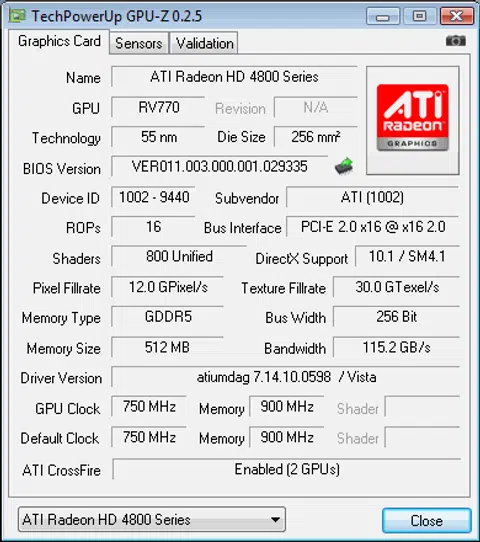
You'll need GPU-Z 0.2.5 to display the memory bandwidth of the Radeon HD 4870 correctly, due to its debut use of GDDR5 memory.
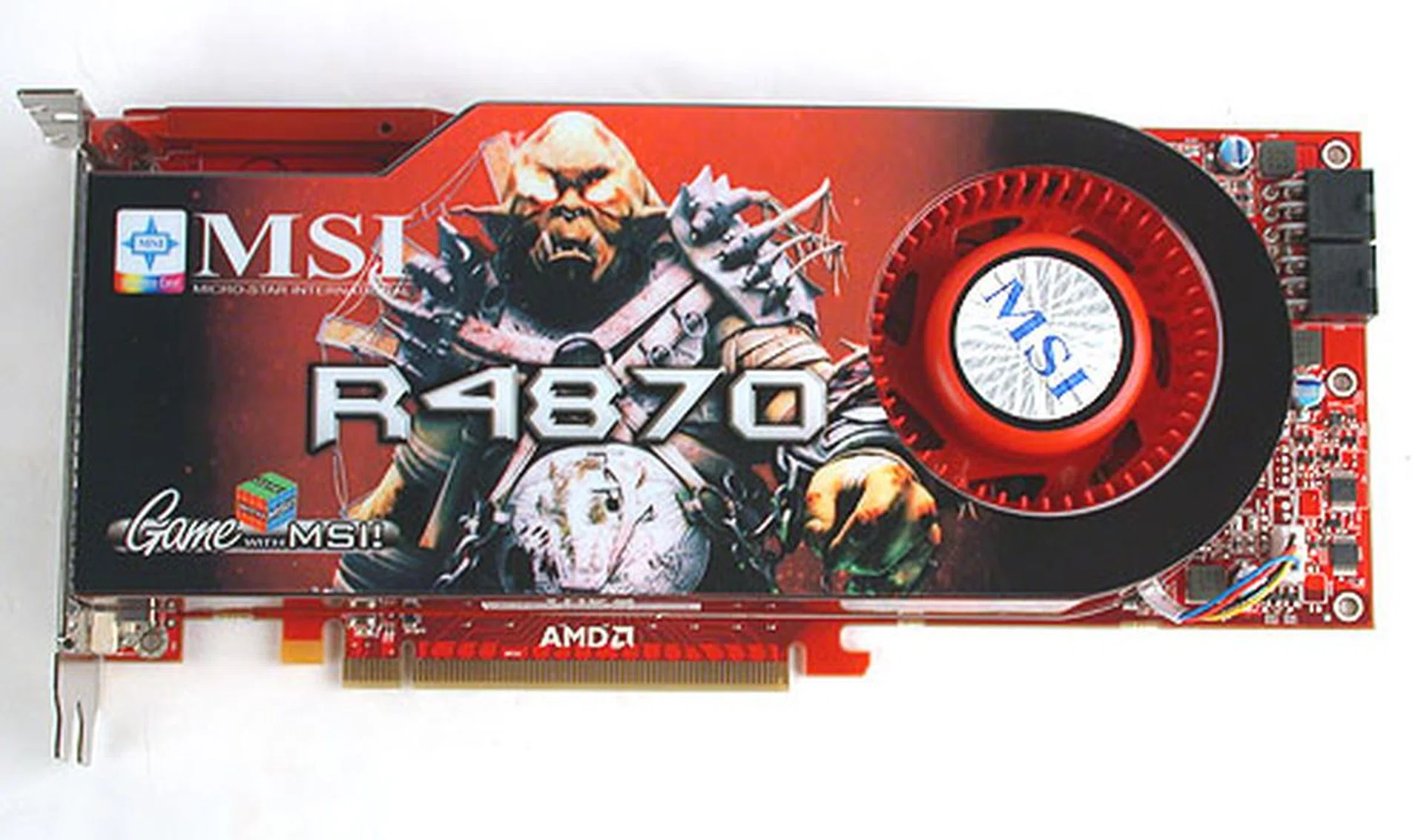
The MSI Radeon HD 4870 512MB
We got a pair of these Radeon HD 4870 cards in our labs, just perfect for a CrossFireX setup. Results for that and all the rest are in our benchmark section but before that, let's see what the bigger sibling (literally) of the Radeon HD 4800 series bring to the table.
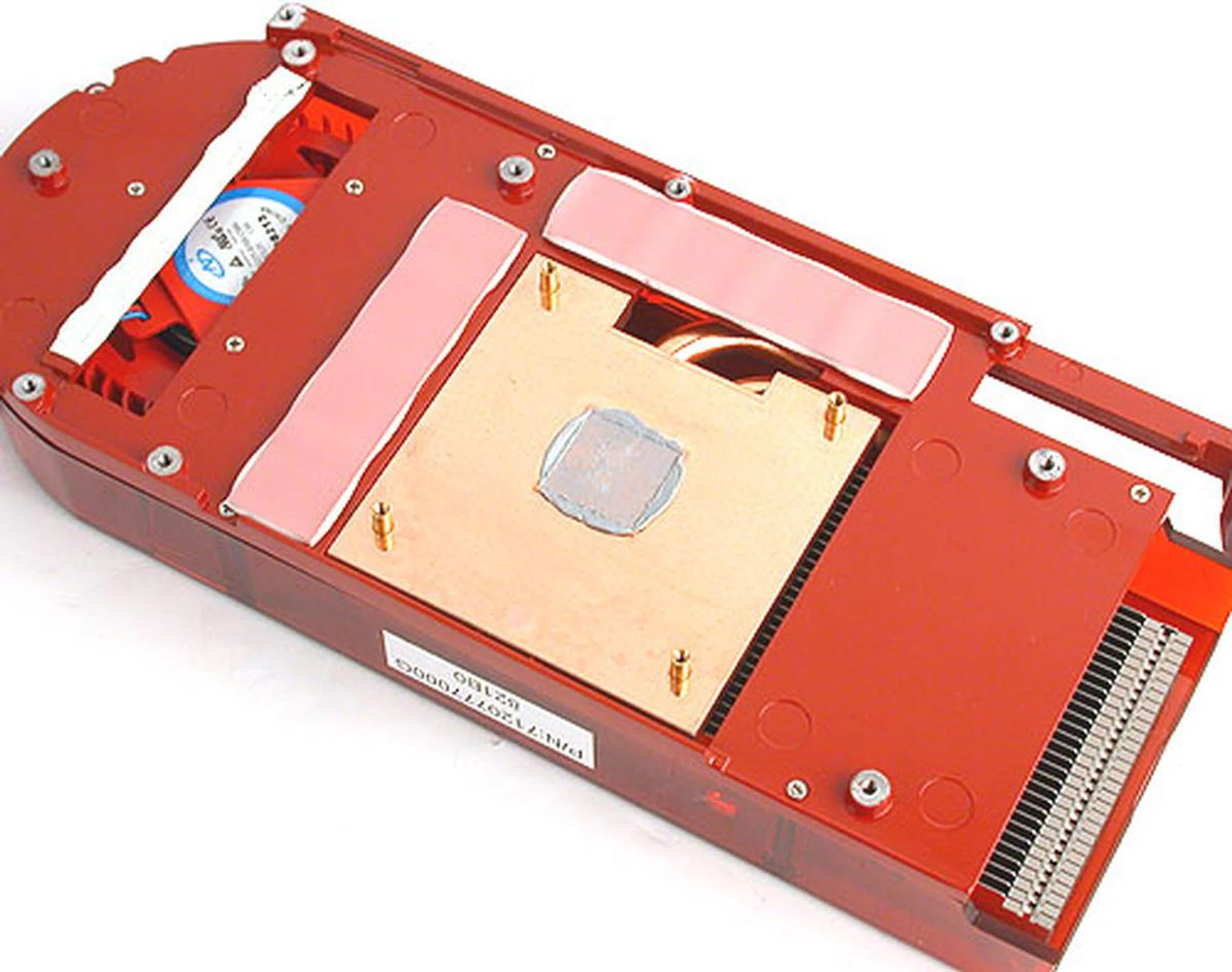
Removing the cooler from the card, you can see that it has two heat pipes, connecting the aluminum radiator to the copper base. A 80mm fan sucks cool air from outside and forces that over the heatsink.
The single slot cooler on the Radeon HD 4850 was good for just one thing: saving you an expansion slot if you're in the CrossFire mood. The 4850 itself was running much warmer than we had expected and though one could always point the finger at the cooler, ATI probably felt that it was worth the trade-off. So how about the dual-slot and beefier cooler on the 4870?
Well, it's slightly better. The fan will spin at 100% like quite a few other high-end graphics cards at boot up but the noise wasn't too bad once you get pass that stage. It's definitely audible and the temperatures too were quite high. It's not as high as the 4850 but it will still scorch your fingers if you touch certain parts. Consisting of two heatpipes with a solid chunk of copper for the base, it's quite a hefty heatsink and hence not exactly a card you can toss around easily.
Clock speeds on the Radeon HD 4870 are naturally higher, with the RV770 core at 750MHz, compared to 625MHz on the Radeon HD 4850. Memory differs the most of course, with the GDDR5 (from Qimonda) on the 4870 giving it an effective 3.6GHz clock speed and with ATI claiming that the new memory format can go up to 5GHz in the near future. Most of the Radeon HD 4870 boards you'll find now are likely to be reference designs and will look similar to the ones we have shown here, though overclocked ones have been announced by BFG and Diamond Multimedia.
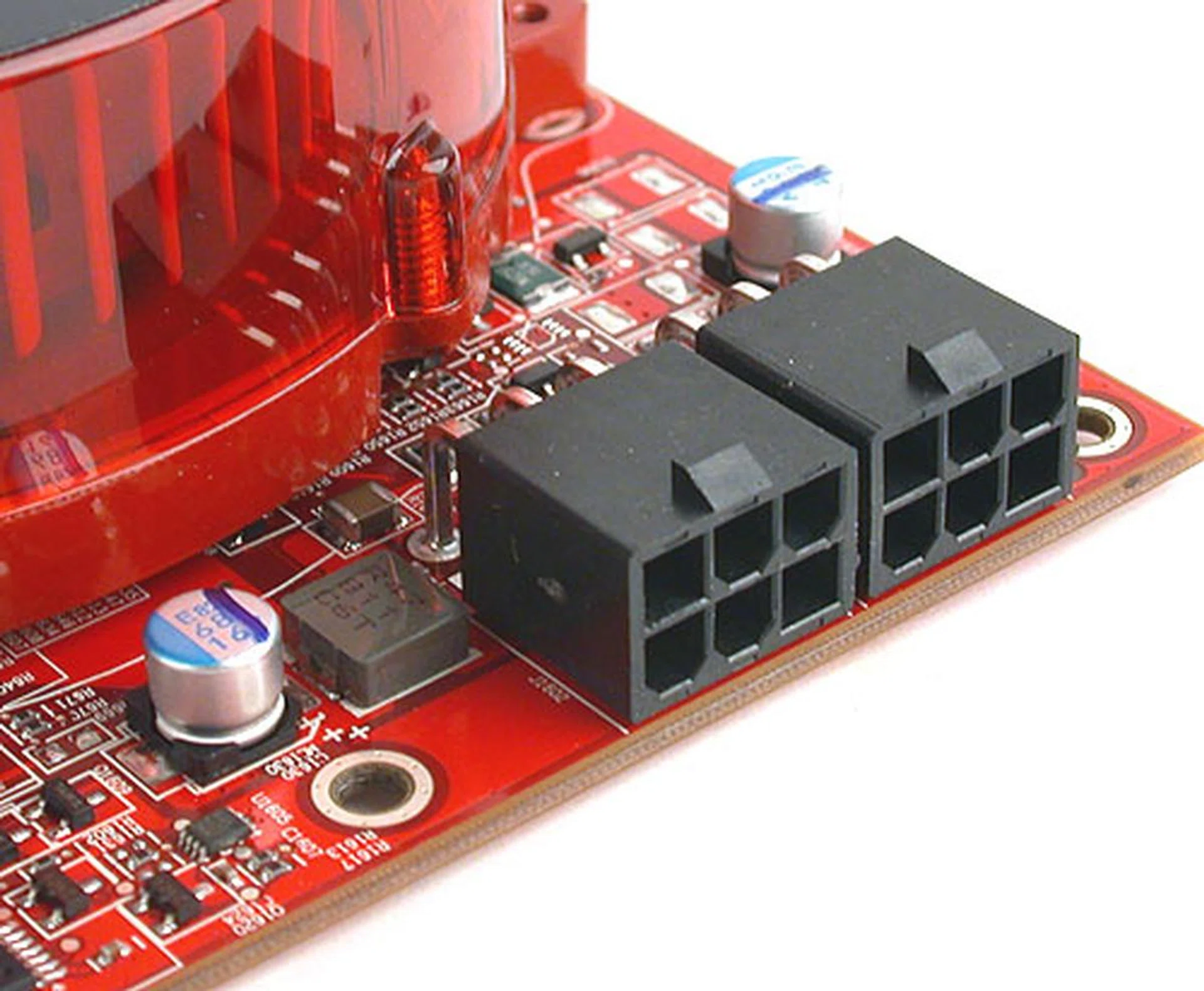
The Radeon HD 4870 comes with two 6-pin power connectors and requires a decent PSU of at least 500W. If you're planning CrossFire two of these GPUs, a minimum PSU rating of 600W is recommended.
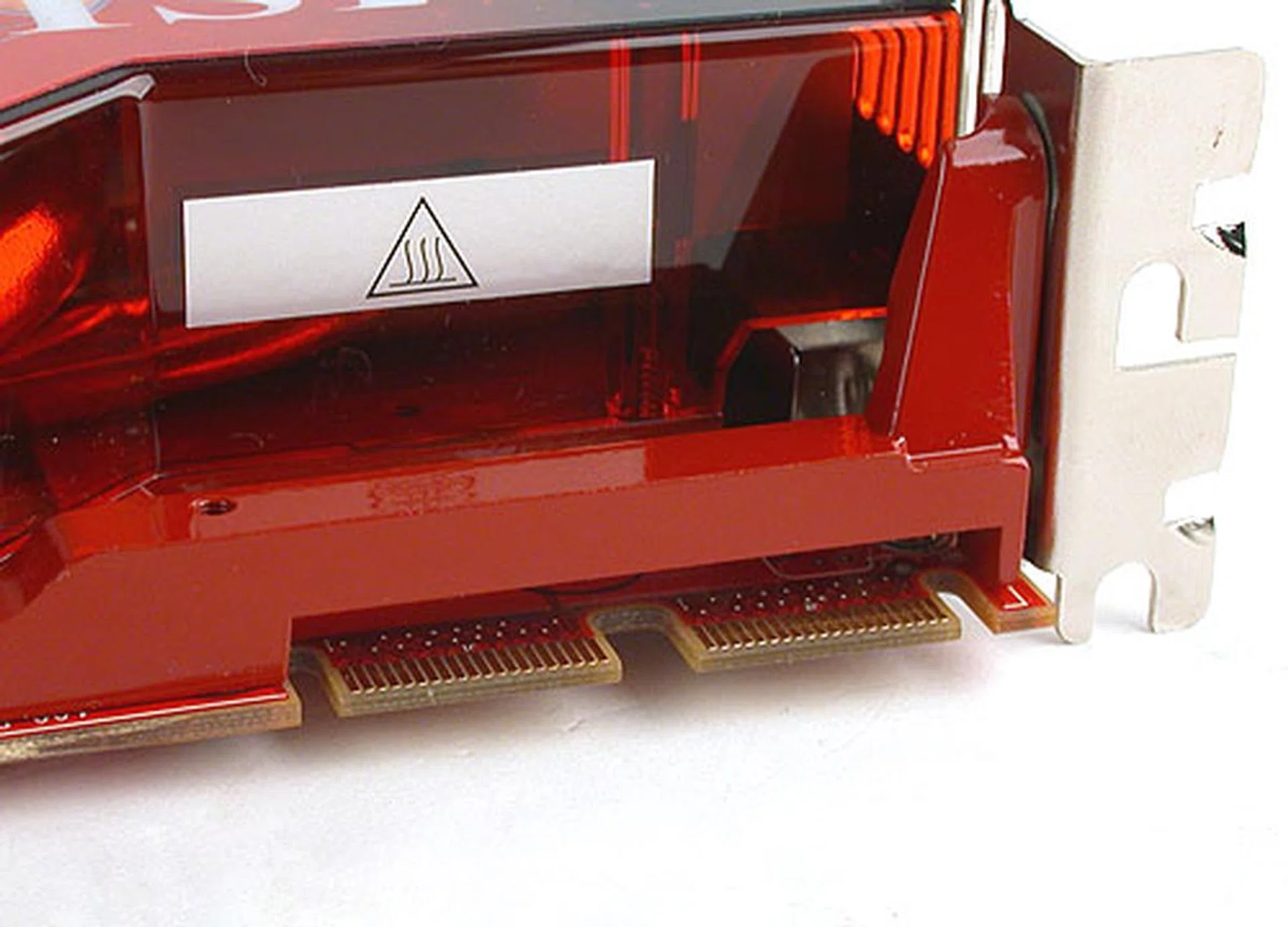
Two CrossFire connectors mean that up to four 4870 cards can be linked but that would require a very high-end system.
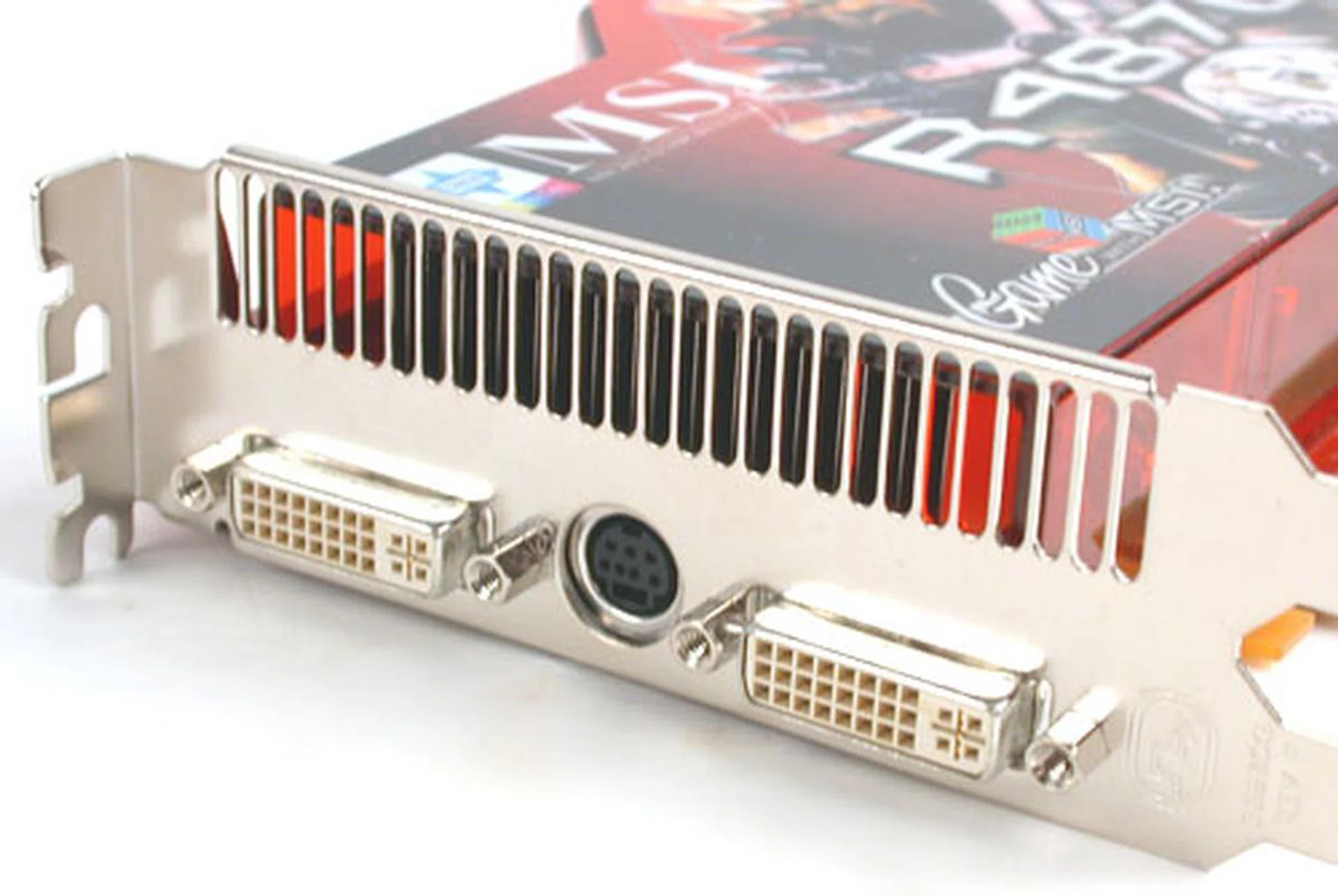
The rear I/O outputs on the Radeon HD 4870 are the usual ones, a pair of HDCP compliant DVI outputs and a mini-DIN. There's also the exhaust vent for the warm air passing from the heatsink.
Test Setup
We have been testing on two different Windows Operating Systems for the past few reviews and for the moment, we are keeping to these two system configurations listed below:
Windows XP SP2 Test System
- Intel Core 2 Duo E6700 (2.66GHz)
- Intel D975XBX 'Bad Axe' motherboard
- 2 x 1GB DDR2-800 Kingston HyperX memory in dual channel mode
- Seagate 7200.7 80GB SATA hard drive
- Windows XP Professional with Service Pack 2 and DirectX 9.0c
Windows Vista SP1 Test System
- Intel Core 2 Extreme QX6850 (3.00GHz)
- Gigabyte X38T-DQ6 motherboard
- 2 x 1GB DDR3-1333 Aenneon memory in dual channel mode
- Seagate 7200.10 200GB SATA hard drive
- Windows Vista Ultimate with SP1
With the dual-GPU R700 still held in reserve, the Radeon HD 4870 is the current kingpin from ATI and hence despite its US$399 price, we have compared it against NVIDIA's best, like its new GTX 200 GPUs. Of course, things are not as lopsided as you may think, due to our CrossFireX configurations for both the 4850 and the 4870 contingent. We also included some of the older dual-GPU models like the Radeon HD 3870 X2 and the GeForce 9800 GX2 for comparison. Here's the list of cards and the tested driver versions used for both the Windows XP and Vista setups:-
- ATI Radeon HD 4870 512MB (Catalyst 8.6, Series-5)
- ATI Radeon HD 4870 512MB (CrossFireX) (Catalyst 8.6, Series-5)
- ATI Radeon HD 4850 512MB (Catalyst 8.6)
- ATI Radeon HD 4850 512MB (CrossFireX) (Catalyst 8.6)
- ATI Radeon HD 3870 X2 1GB (Catalyst 8.5)
- NVIDIA GeForce GTX 280 1GB (ForceWare 177.34)
- NVIDIA GeForce GTX 260 896MB (ForceWare 177.34)
- NVIDIA GeForce 9800 GX2 512MB (ForceWare 175.16)
The following benchmarks were tested using their built-in time demo or benchmarking tools:
For Windows XP
- Futuremark 3DMark06 (ver 110)
- Company of Heroes (ver 1.3)
- F.E.A.R (ver 1.0)
- Crysis (ver 1.1)
- Unreal Tournament 3 (ver 1.1)
For Windows Vista
- Futuremark 3DMark Vantage (ver 101)
- Crysis (ver 1.21)
Win XP Results - 3DMark06 (ver 110)
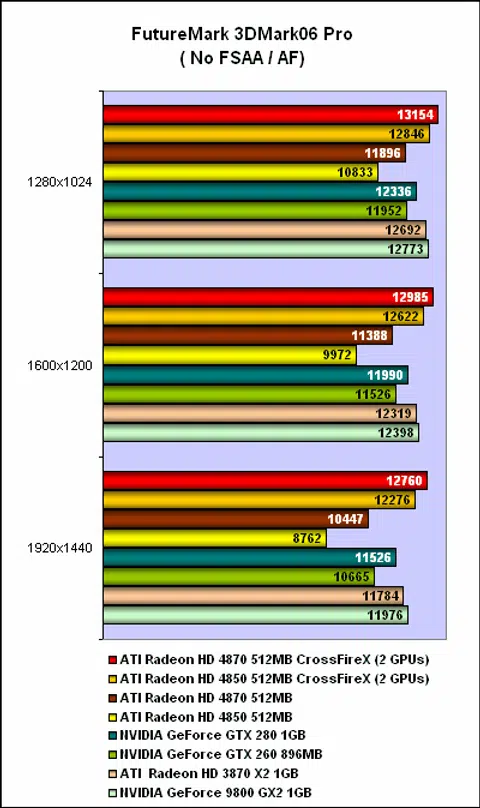
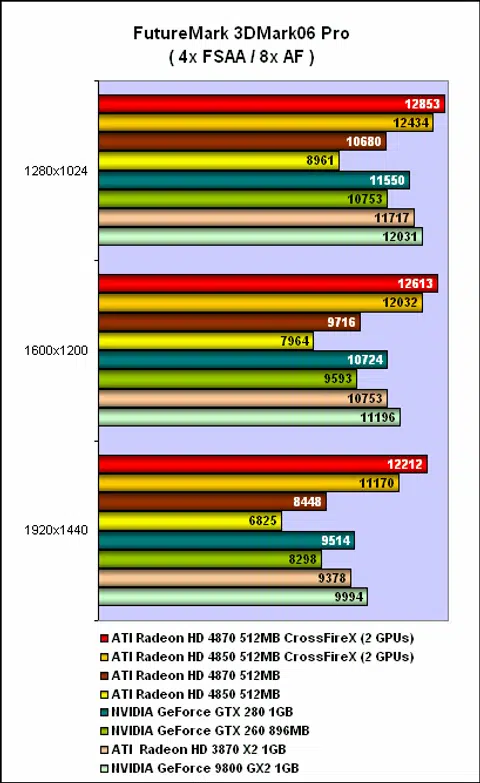
We start off with 3DMark06, a synthetic benchmark that users like to use (or bash) and predictably the CrossFireX setups ruled the roost. The single Radeon HD 4870 managed to impress us with its margin over the Radeon HD 4850, which ranged from 14% to 23%. Although this was insufficient to compete with NVIDIA's GeForce GTX 280, the 4870 matched the GTX 260's performance here and of course as ATI would like you to think, and which this benchmark affirmed, two 4870 cards are better than one GTX 280. Or for that matter, one GeForce 9800 GX2 was good enough to beat a GTX 280.
Win XP Results - Company of Heroes & F.E.A.R
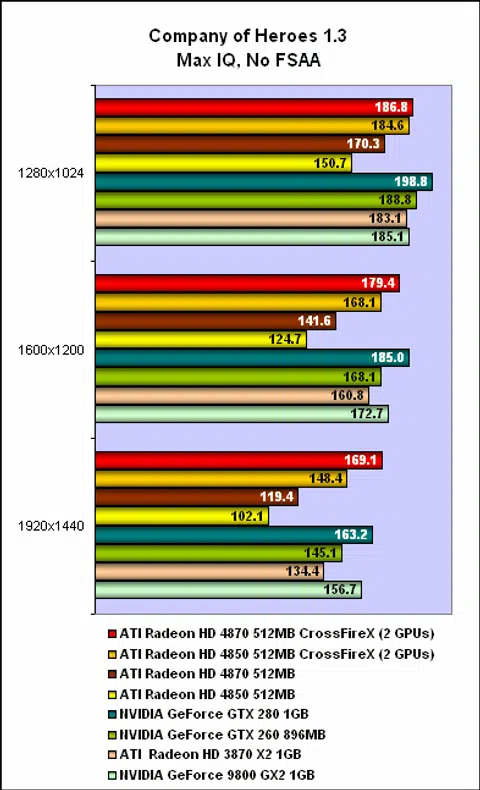
Moving onto a proper game, it seemed that the critics were right about not relying solely on 3DMark06 as a performance indicator. That's due to the performance of the GTX 200 GPUs in Company of Heroes, where they reversed their disappointing showing in 3DMark to put ATI back in its place. The difference however between the CrossFireX setups and the GTX 200 GPUs were not that far apart though and at 1920 x 1440, the 4870 CrossFireX actually overtook the GTX 280 for the first time. And of course, two 4870 cards add up to less than US$600, while a single GTX 280 is already US$649.
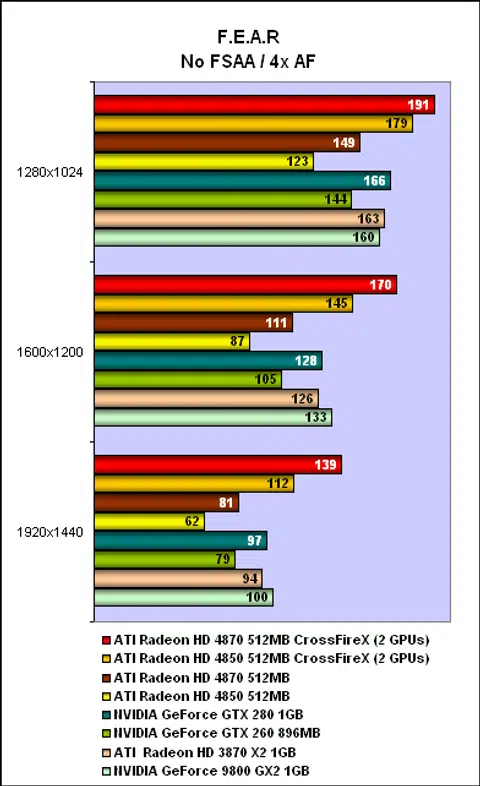
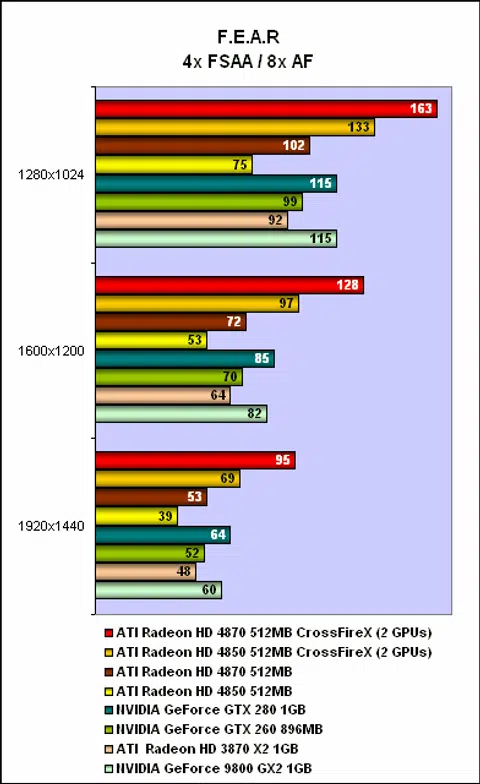
F.E.A.R meanwhile showed the ATI contingent in excellent form, as the Radeon HD 4870 was equal to a GTX 260, which at $399 is a good hundred bucks more expensive. Once you start linking two RV770 GPUs however, NVIDIA's latest GPUs had no answer.
Win XP Results - Crysis & Unreal Tournament 3
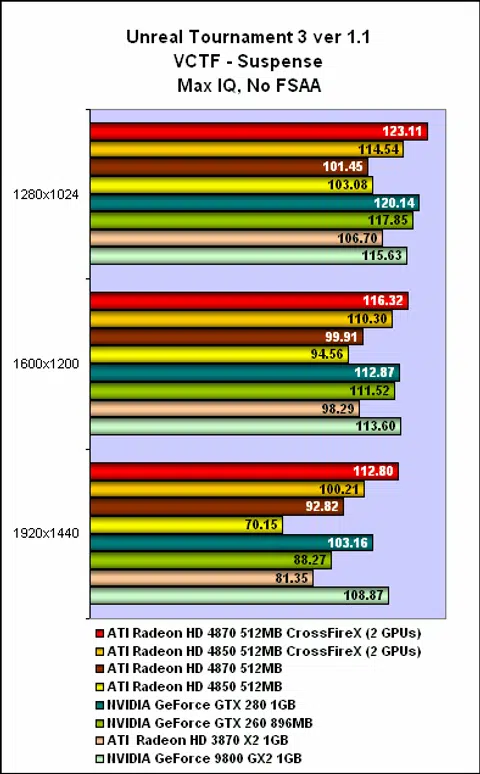
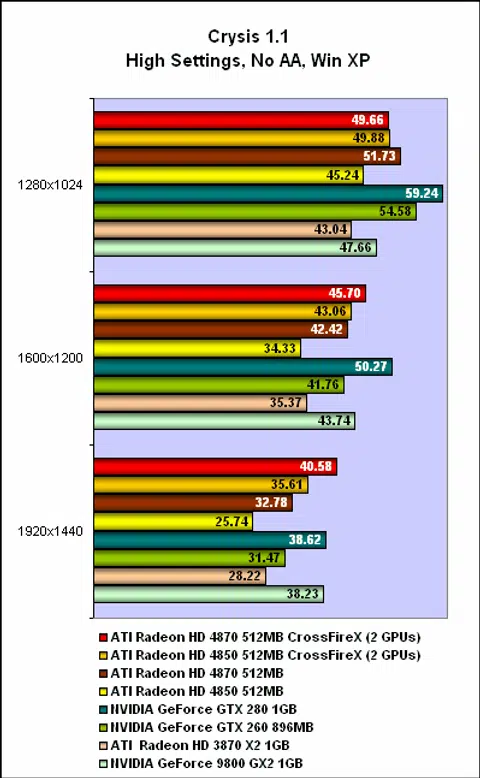
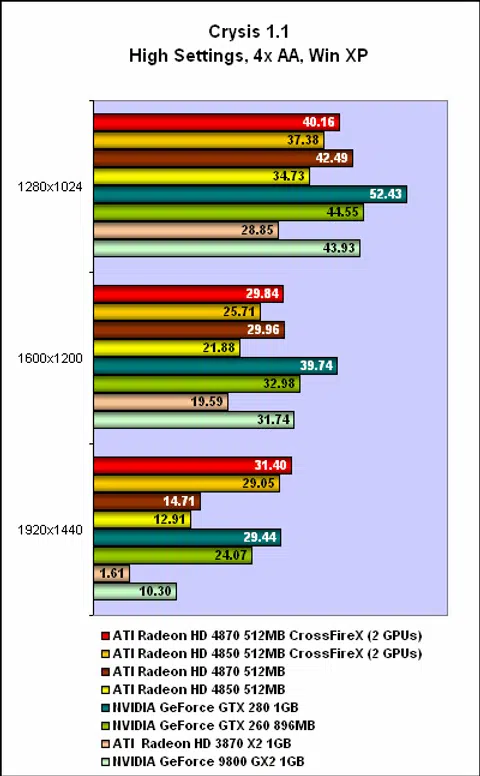
In Crysis, we saw the GTX 200 GPUs once again off to a decent start at the lower resolutions. The ATI cards however soon caught up, with the CrossFireX setups first then even a single 4870 was returning results around that of a GTX 260. NVIDIA's GeForce 9800 GX2 also showed that it was more capable of matching the newer cards. While ATI's anti-aliasing performance for the 4800 series has generally improved from the 3800 series, we still saw the scores go down by half once that was enabled at 1920 x 1440. This performance penalty was less obvious for the CrossFireX systems.
Win Vista Results - 3DMark Vantage (ver 101)
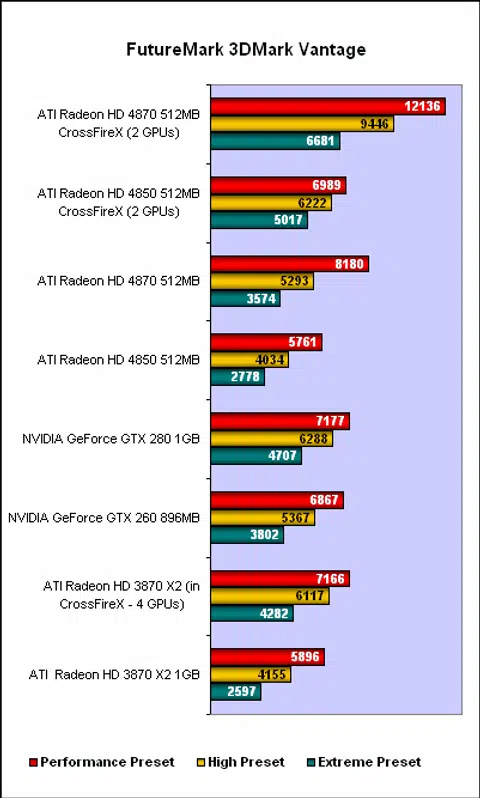
Futuremark has gone Vista with its new Vantage benchmark, with different presets for the user. The Radeon HD 4800 series continued to impress, with the 4870 model surprisingly ahead of the GTX 280 using the Performance preset though the NVIDIA GPU had the edge at High and Extreme presets. However, it showed once again that the Radeon HD 4870 is of a similar caliber to the GTX 260, which naturally poses a serious threat for NVIDIA. Once we get into CrossFireX territory, it's a clean sweep for ATI's newest GPUs (both in performance and cost wise).
Win Vista Results - Crysis (ver 1.21)
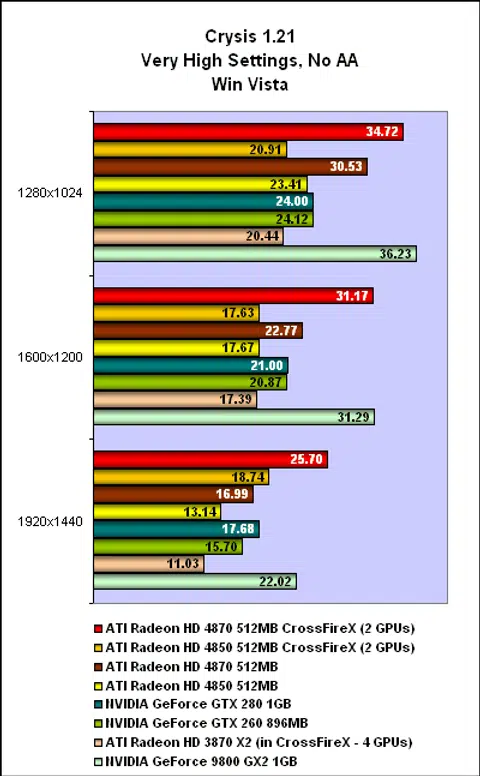
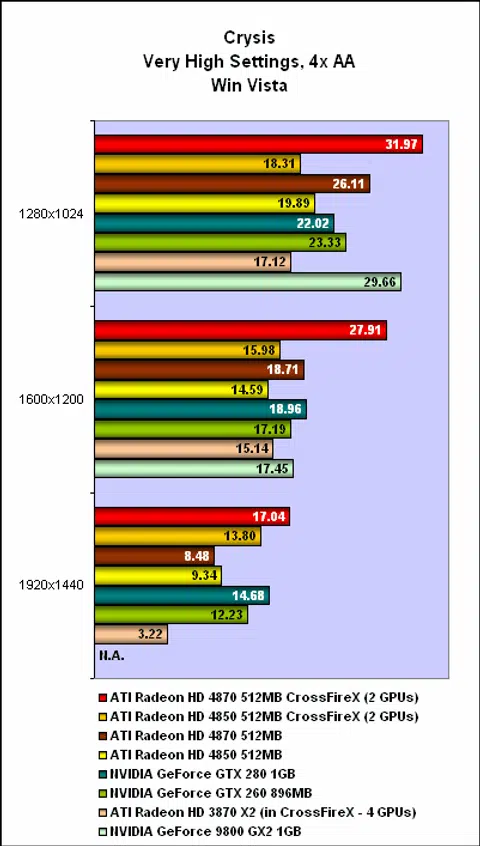
We also tried Crysis at its highest possible settings in Windows Vista and it apparently showed what CrossFire is capable of, provided that ATI continues to improve it. You see, we had tested the Radeon HD 4850 in CrossFire previously using a slightly older Catalyst driver and the results were not very good. In fact, it didn't seem to be working till the higher resolutions.
This changed with the newer Series-5 Catalyst drivers that we got from ATI recently. The Radeon HD 4870 CrossFire was definitely running faster than a single 4870 and it does seem like the new drivers have done the trick. Of course, without updating the Radeon HD 4850 CrossFire results with the newer drivers, there's no way to know for sure, but it looks quite persuasive to us. As for the performance of a single Radeon HD 4870, it was equal to the GTX 200 GPUs for most of the settings and resolutions and only with anti-aliasing at 1920 x 1440 did the GTX 280 get in front.
Temperature
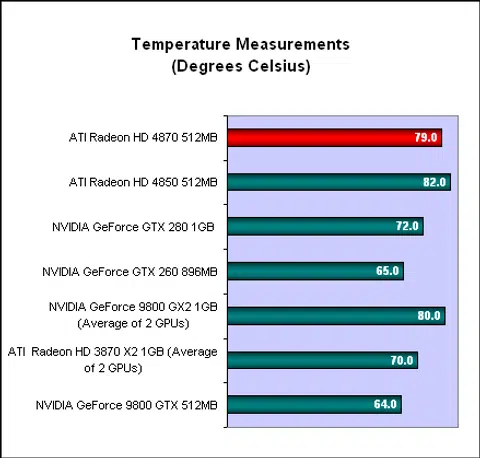
Even with a dual-slot cooler, the Radeon HD 4870 was only a couple of degrees Celsius cooler than the single slot Radeon HD 4850. The much higher clock speeds on the 4870 card probably contributed to this and temperatures look like the dampener on the Radeon HD 4800 series excitement. Of course, one could argue that third party coolers could solve this and there are already some announcements, including the Arctic Cooling Accelero Twin Turbo which can support the new and warm Radeons.
Power Consumption
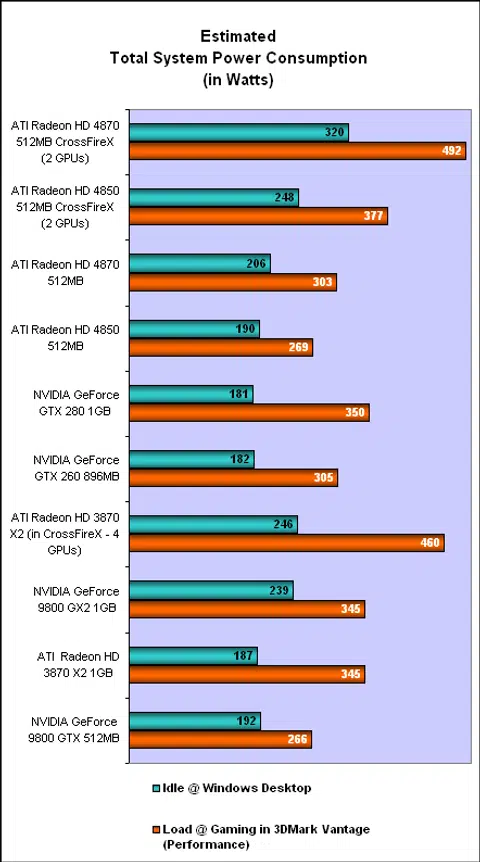
Like what we found out before on the Radeon HD 4850, the idle power consumption of the new Radeon HD 4800 series turned out to be higher than that on the GTX 200 GPUs. The Radeon HD 4870 is in the same situation and has an even higher TDP of 160W compared to 110W on the Radeon HD 4850. And once you get a CrossFireX setup, the power consumption will increase obviously.
According to ATI, you'll get substantial savings over the Radeon HD 3800 series with the new cards but from the graph, it looks like the gap between idle and maximum power could be further widened (improved) for even greater power savings. (Do remember that we are measuring total power draw for the entire system in this test so you should take the relative differences between GPUs).
The Best is Yet to Come
As our title suggests, the top 'single' GPU from ATI is yet to make its debut. The R700 technically consists of two RV770 GPUs in CrossFireX mode, so one can already take a rough estimate of its performance from our CrossFire results here. Of course, having two cores on a single PCB will no doubt save users an expansion slot and for the novice, it's probably easier to install and setup, not to mention it does not require a CrossFire compatible board. So those on NVIDIA motherboards may 'defect' without needing to get a new motherboard too. With the number of Intel motherboards in the market, there's hardly a lack of choices if you go the dual card route.
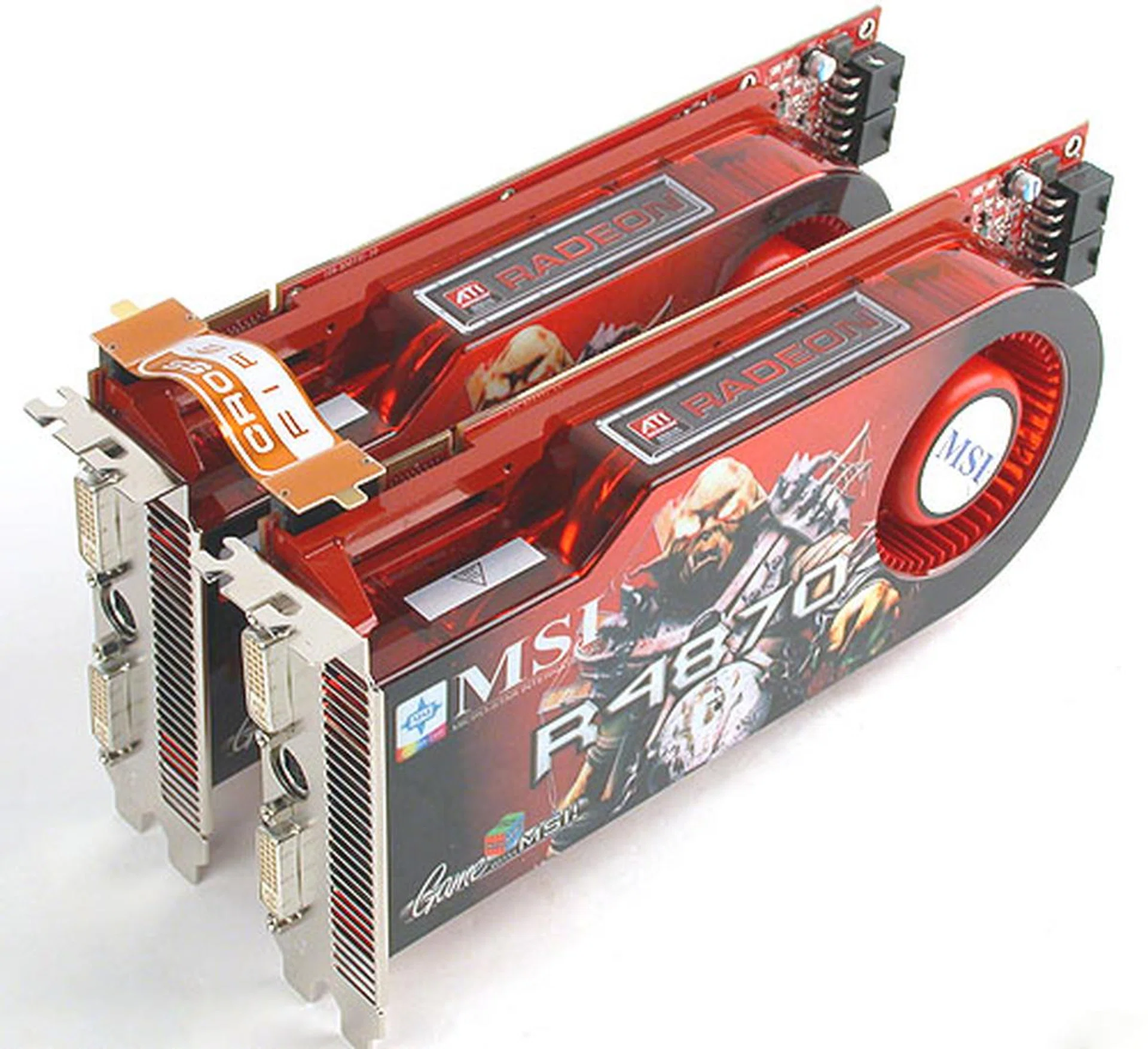
Power and heat considerations come into play when CrossFireX is used to link two Radeon HD 4870s. But when it's works, there's no doubting its performance and potential.
Our benchmark results showed the reason why reviewers and users have been crowing about the new Radeon HD 4800 series. We have already seen the capabilities of the Radeon HD 4850 earlier but the 4870 model is certainly a notch higher and you'll find significant improvements, sufficient to justify the roughly US$100 premium going from the 4850 to the 4870. CrossFire performance also seemed to have improved with the newer drivers we tested and with ATI committed to releasing drivers regularly, this is good news for enthusiasts.
The closest GPU from rivals NVIDIA in terms of performance is in most cases, the GeForce GTX 260 and at its listed retail price of US$399, it may find the US$299 Radeon HD 4870 too aggressive in pricing and performance. The GTX 200 GPUs does appear to have rather impressively low idle power consumption for their size, though their peak consumption is higher than ATI. In the end, it's the relatively warm core temperature readings that we got for the Radeon HD 4800 series that's stopping us from giving them a perfect score. The results too in a few cases still favor the NVIDIA equivalent, but for the most part, ATI has managed a strong showing of performance blended with a great price tag.
NVIDIA has led the industry with performance and price competitiveness for a couple of generations now, while ATI relied on supporting new standards and features that have generally being underused by developers (tessellation and DirectX 10.1 comes to mind on this generation) along with the excellent Avivo HD features to distinguish its products. Finally, the red team has produced a GPU worthy of competing and looks to reap the benefits of lower manufacturing costs with its smaller die. For consumers, what matters is the bottom line and with prices like these (and dropping too for the Radeon HD 4850), it is good times ahead.
Our articles may contain affiliate links. If you buy through these links, we may earn a small commission.