
ASUS P5N-T Deluxe (NVIDIA nForce 780i SLI)
With NVIDIA still being the only place to go to get your SLI fix, we take the ASUS P5N-T Deluxe out for a spin to see where the new NVIDIA nForce 780i SLI stands in today's chipset market. If 3-Way SLI is high on your to-do list, you might want to see what ASUS has to offer.

nForce Rehash and 3-Way SLI
The PC component scene over the past year was mostly dominated with Intel news, Intel processors, Intel chipsets and Intel technology. However, if you would have remembered back in 2006, the Intel desktop scene was shared with NVIDIA. The nForce 680i SLI chipset was perhaps the most technology-packed core logic chipset to hit the market for the Intel platform. The nForce 680i SLI brought firsts in dual full speed x16 graphics lanes, built-in Gigabit network teaming/packet prioritization and NVIDIA's SLI Memory technology. It also packed support for 1333MHz FSB and DDR2 speeds up to 1200MHz (with SLI Memory). By all means, NVIDIA had a chipset on their hands that was more advanced than its time. But it was also the most expensive chipset to implement.
In the year that has passed though, the market has caught up with NVIDIA. On one hand, NVIDIA may have been content that the nForce 680i SLI was weathering the processor changes that have come its way, but with DDR3 and PCI Express 2.0 making their debut, it was clear indicator that the market has moved on. In what has seemed like an eternity in the lifespan of a chipset, NVIDIA launched the nForce 700i series of chipsets late last year, with the nForce 780i SLI as the successor to the nForce 680i SLI. This however, isn't as exciting as it seems, because the nForce 780i SLI is really an old friend in disguise. While it does have a new bag of tricks up its sleeve, the real successor to the nForce 680i SLI is the nForce 790i SLI, which is still in the making.
So, for those that require their nForce fix, you'll have to be content with the nForce 780i SLI for now. So, let us take a very quick look at the nForce 780i SLI chipset. On paper, the major improvements of the nForce 780i SLI over the nForce 680i SLI include: More PCI Express lanes, PCI Express 2.0, 3-Way SLI and NVIDIA ESA. You might have read that the nForce 780i SLI also adds Penryn support. However, the nForce 680i SLI technically supports these CPUs, but the difference in motherboard circuitry requirements would have meant compatibility issues with older motherboards, regardless of core logic level support. Penryn aside, the older nForce 680i SLI had compatibility problems with quad-core processors in general. So in a way, it's about time the nForce 780i SLI arrived to offer an updated platform.
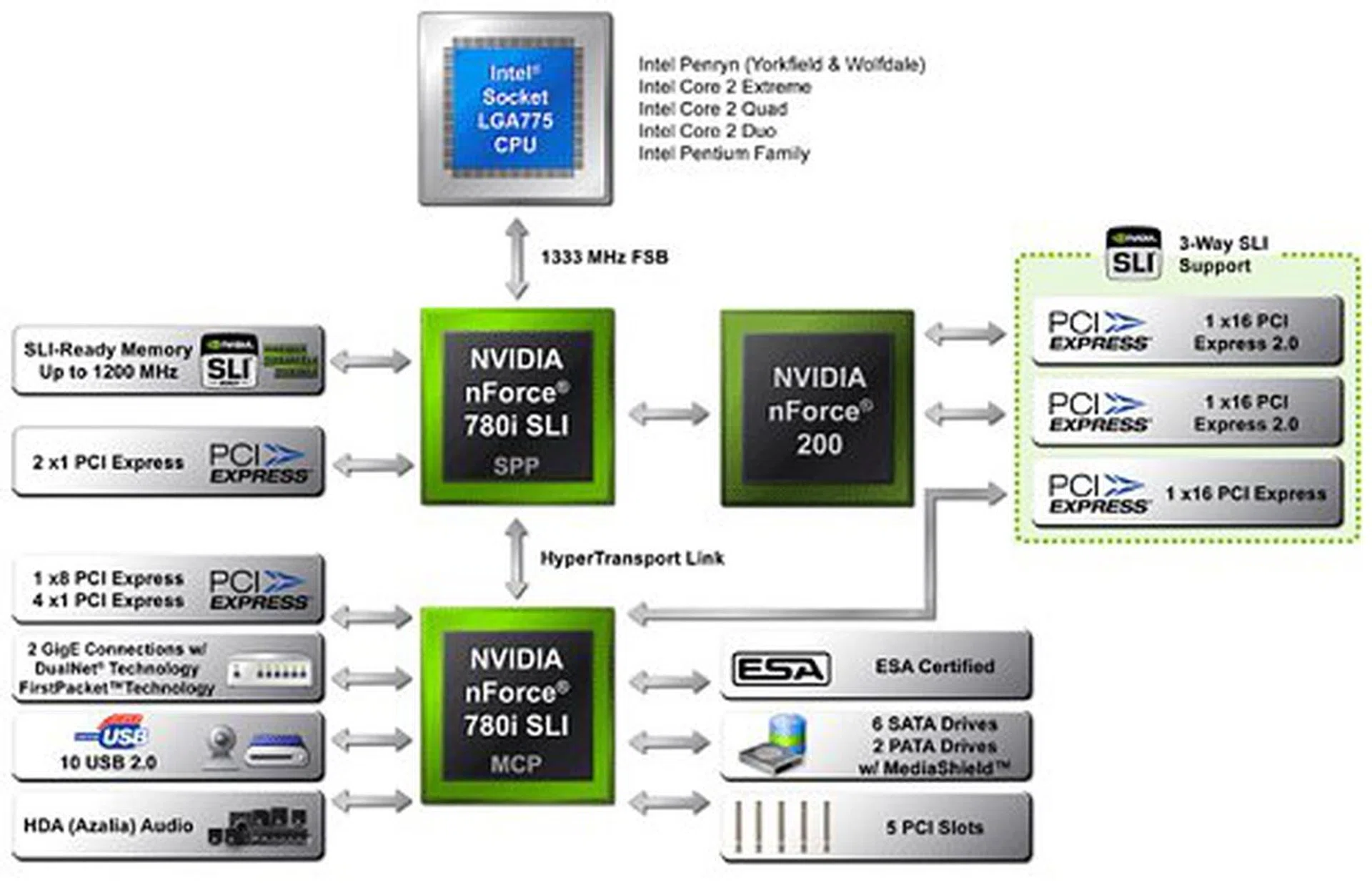
NVIDIA nForce 780i SLI chipset block diagram. Source: NVIDIA.
In reality, the nForce 780i SLI is nothing more than a re-branded nForce 680i SLI; That being the SPP and MCP chips are essentially the same ones used for the nForce 680i SLI. However, if you look at the block diagram above, you'll notice the real difference. Instead of a traditional Northbridge-Southbridge link, there is a third chip in the picture connected to the SPP. This third chip is the nForce 200, which is the real reason the nForce 780i SLI has PCI Express 2.0 support.
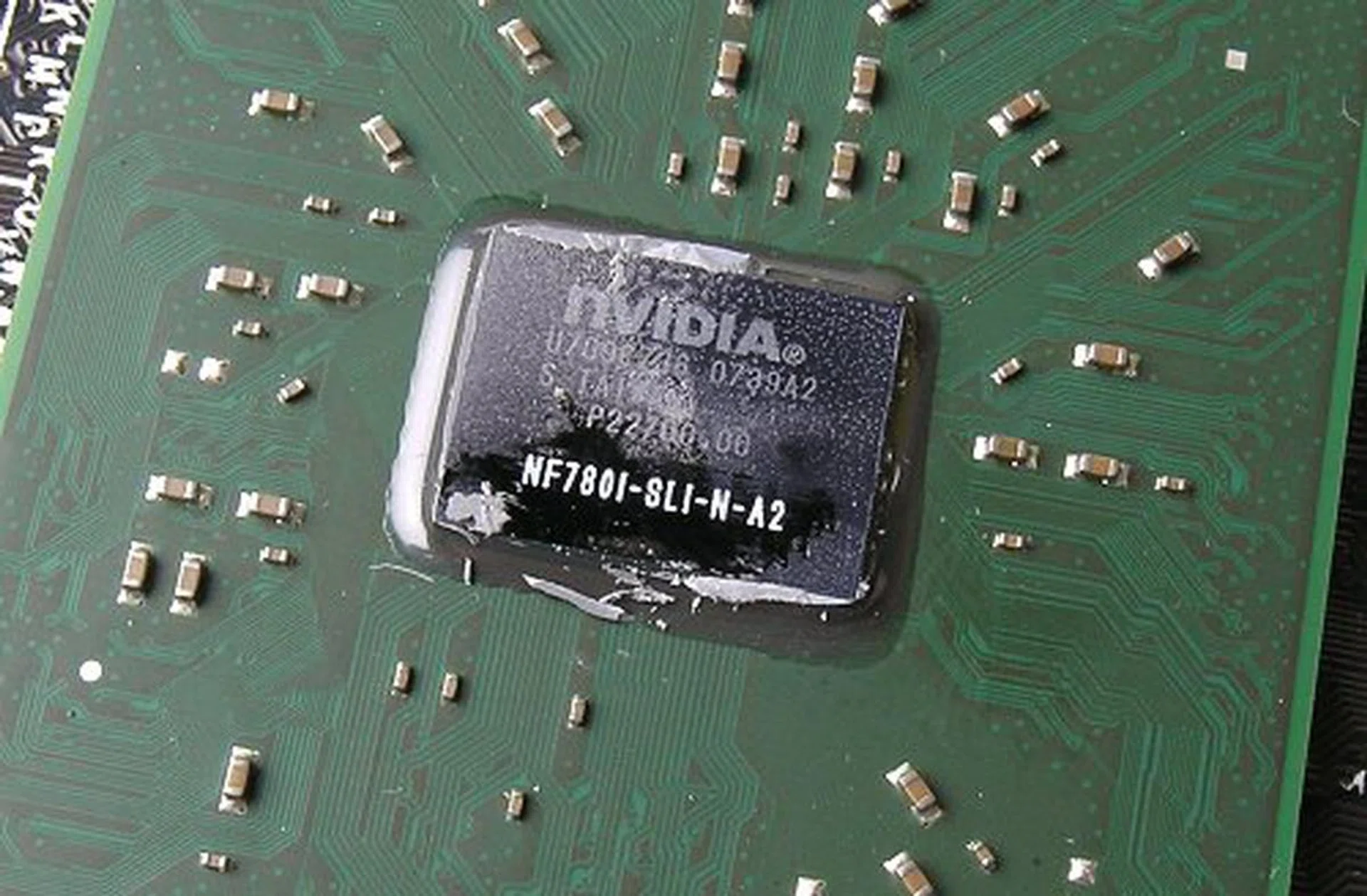
The nForce 780i SLI SPP is essentially the same as the nForce 680i SLI with a tweaked PCIe x16 link.
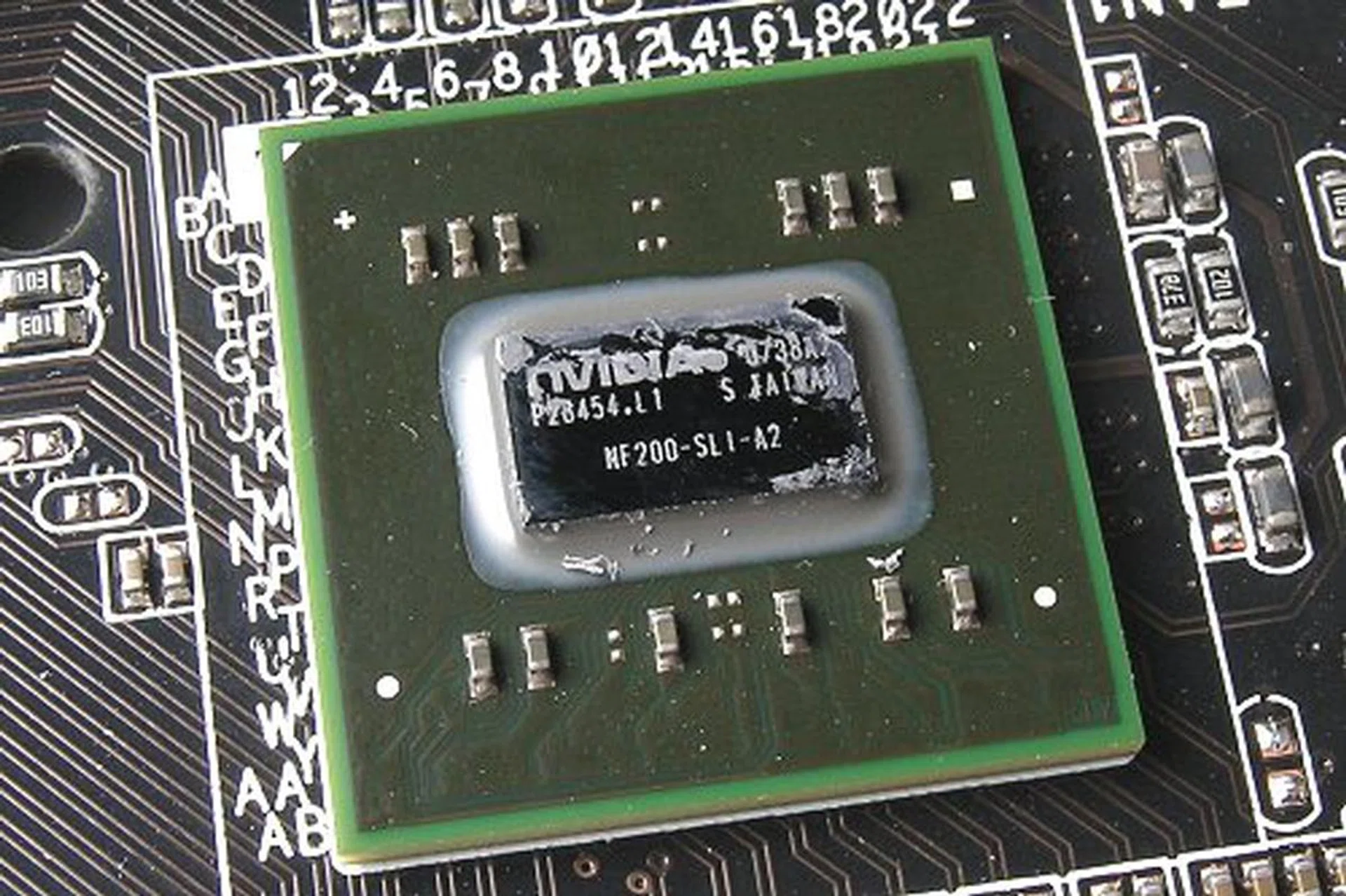
nForce 570 SLI chip reused for the MCP...again.
The nForce 200 offers up 32 PCI Express 2.0 lanes, which is used to provide dual x16 PCIe 2.0 SLI support on nForce 780i SLI motherboards. The chip itself is linked to the SPP through a proprietary interconnect. This is not detailed in the block diagram above, but if you recall, the nForce 680i SLI SPP has (or had) support for one PCI Express 1.0 x16 link. This link has now been tweaked (in other words overclocked) to provide the interconnect between the nForce 780i SLI SPP and the nForce 200. However, if you do the math, the nForce 200 is able to provide up to 32GB/s of graphics bandwidth to two PCIe 2.0 graphics cards. The SPP<->nForce 200 link however, is a mere 14.4GB/s. Not really an ideal, nor optimal situation when it comes to crunch time, but luckily for us, today's GPUs and applications haven't yet to bottleneck PCI Express bandwidth. Also, data in SLI mode is mostly transported between cards via the SLI Bridge cable, and not much of it goes through the chipset. Because of this, NVIDIA claims that there is no compromise in performance between the nForce 780i SLI solution and its current competitors.
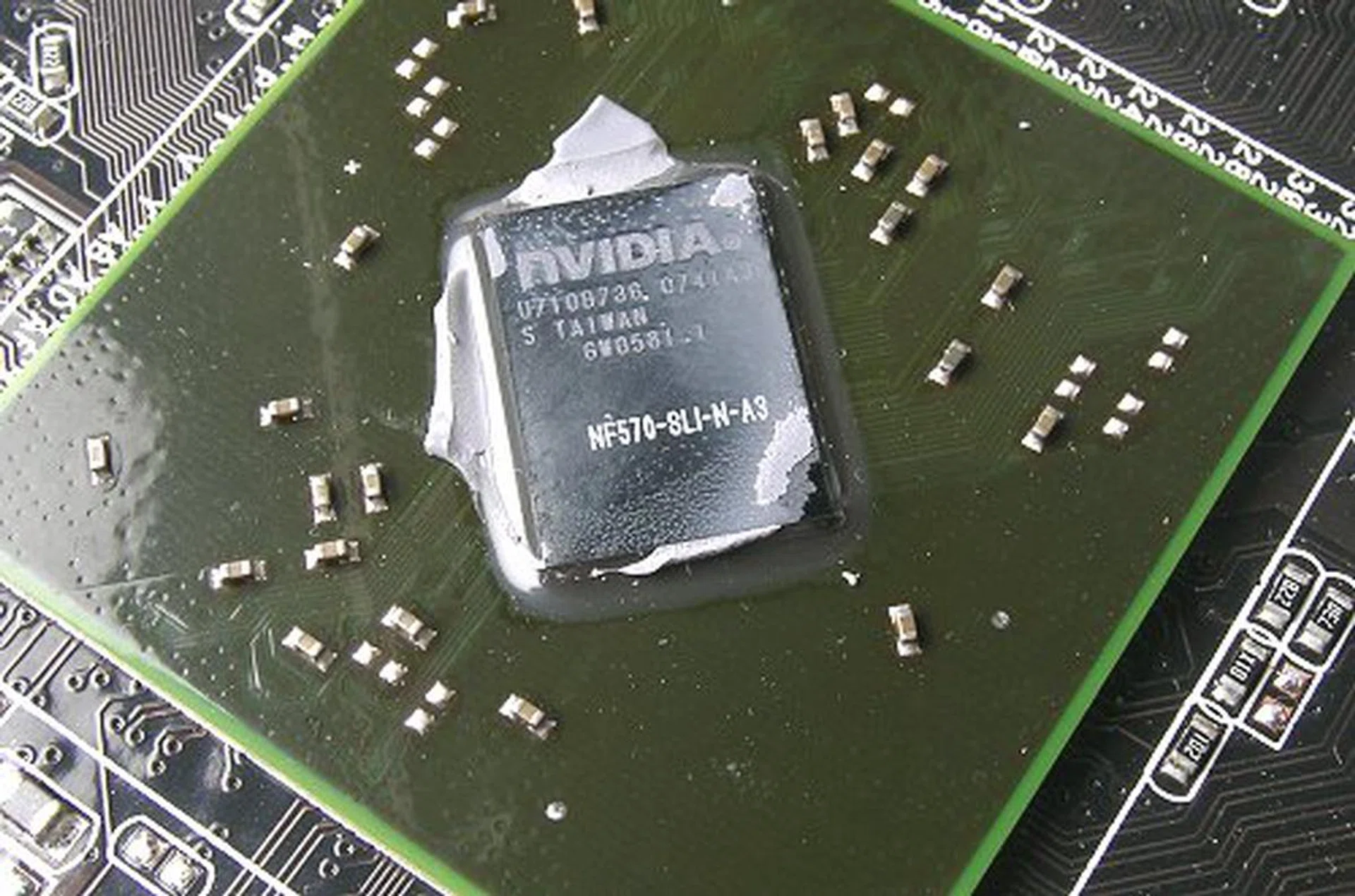
The nForce 200 is the new member to the chipset providing 32 lanes of PCI Express 2.0.
3-Way SLI is also supported on the nForce 780i SLI, but while the third slot is a full speed PCIe x16 slot, it is provided by the MCP chip, which is only PCI Express 1.0 compliant.
So as you can see, the nForce 780i SLI is really a band-aid solution by NVIDIA to update their current offering with a product that can support PCIe 2.0 and their 3-Way SLI configuration before the nForce 790i SLI arrives, which will be the true chipset successor with native 1600MHz FSB, PCI Express 2.0 and DDR3 support on the SPP itself. While that's definitely a story for another time (perhaps late next month), today we bring you a review of a mainstream nForce 780i SLI motherboard from ASUS. So read on to find out our thoughts.
Technical Specifications
CPU Support |
|
Chipset |
|
Memory |
|
Storage |
|
Audio |
|
Networking |
|
IEEE 1394 (FireWire) |
|
I/O Interface |
|
Expansion Slots |
|
Special Features |
|
PCB |
|
Features
The premium pricing of the nForce 680i SLI made it impossible to have mid-range motherboards back in its day, but with the nForce 780i SLI, we're not only seeing the usual high-end models, but more mainstream boards, even from the likes of ASUS, who offers both the gamer class Striker II Formula and the more generic P5N-T Deluxe, which is the focus of this review.
One of the best things we loved about the nForce 680i SLI was that no matter what configuration you find it in, even if a motherboard was totally bare with just the chipset alone, it would already be considered packed with features. Since the nForce 780i SLI is basically the same thing, we found ourselves looking at a mid-range board that isn't so mid-range after all. In terms of features and technology, expect everything that you know from the nForce 780i SLI to be available here. This includes 3-Way SLI, SLI Memory, 10 USB 2.0 ports and MediaShield storage support. Unlike newer Intel chipsets, the nForce 780i SLI comes with six SATA 3.0Gbps ports and still has native support for IDE drives. In addition, the board features a Marvell 88SE6111 controller for its eSATA port.
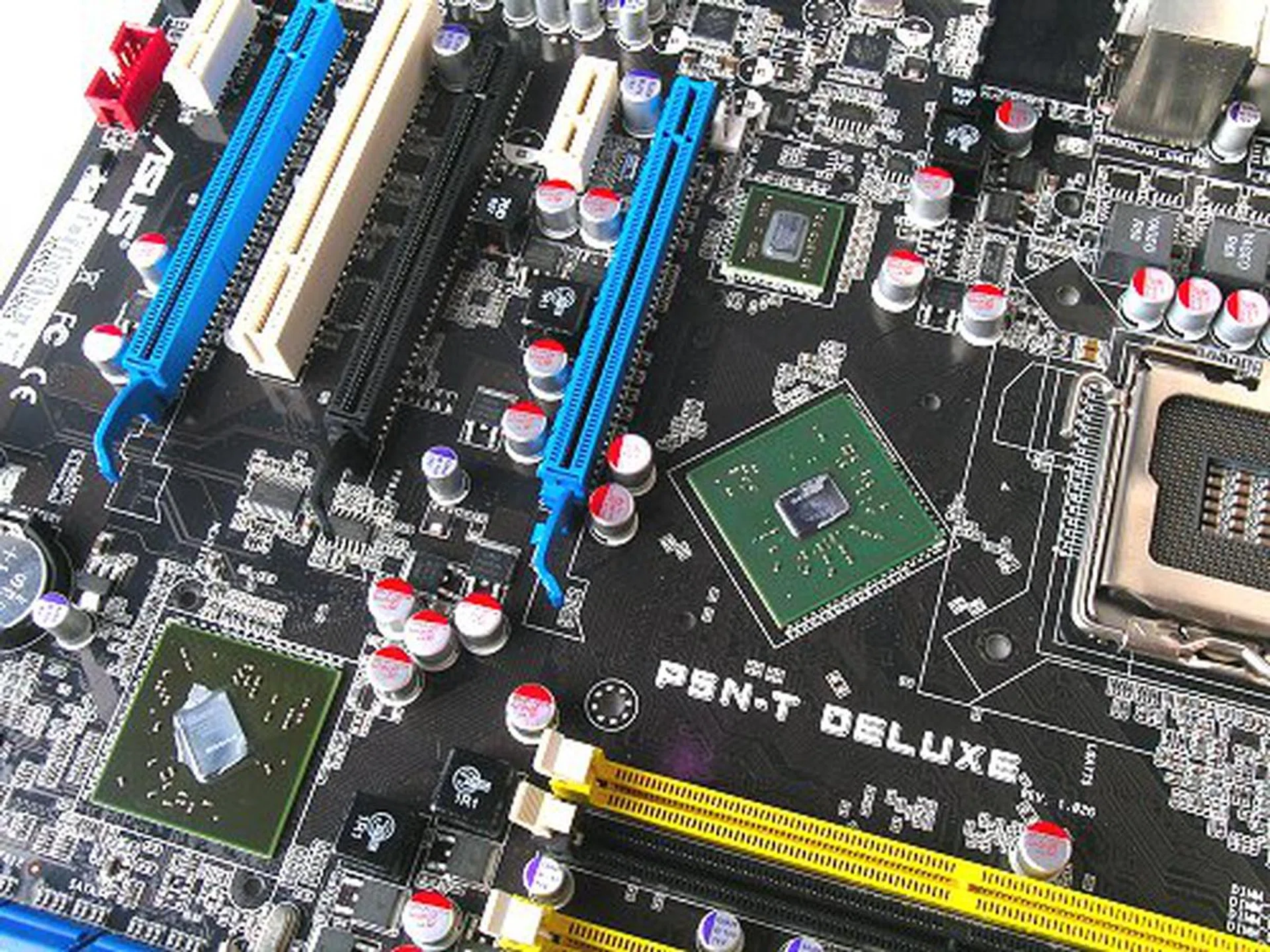
3-chip formula.
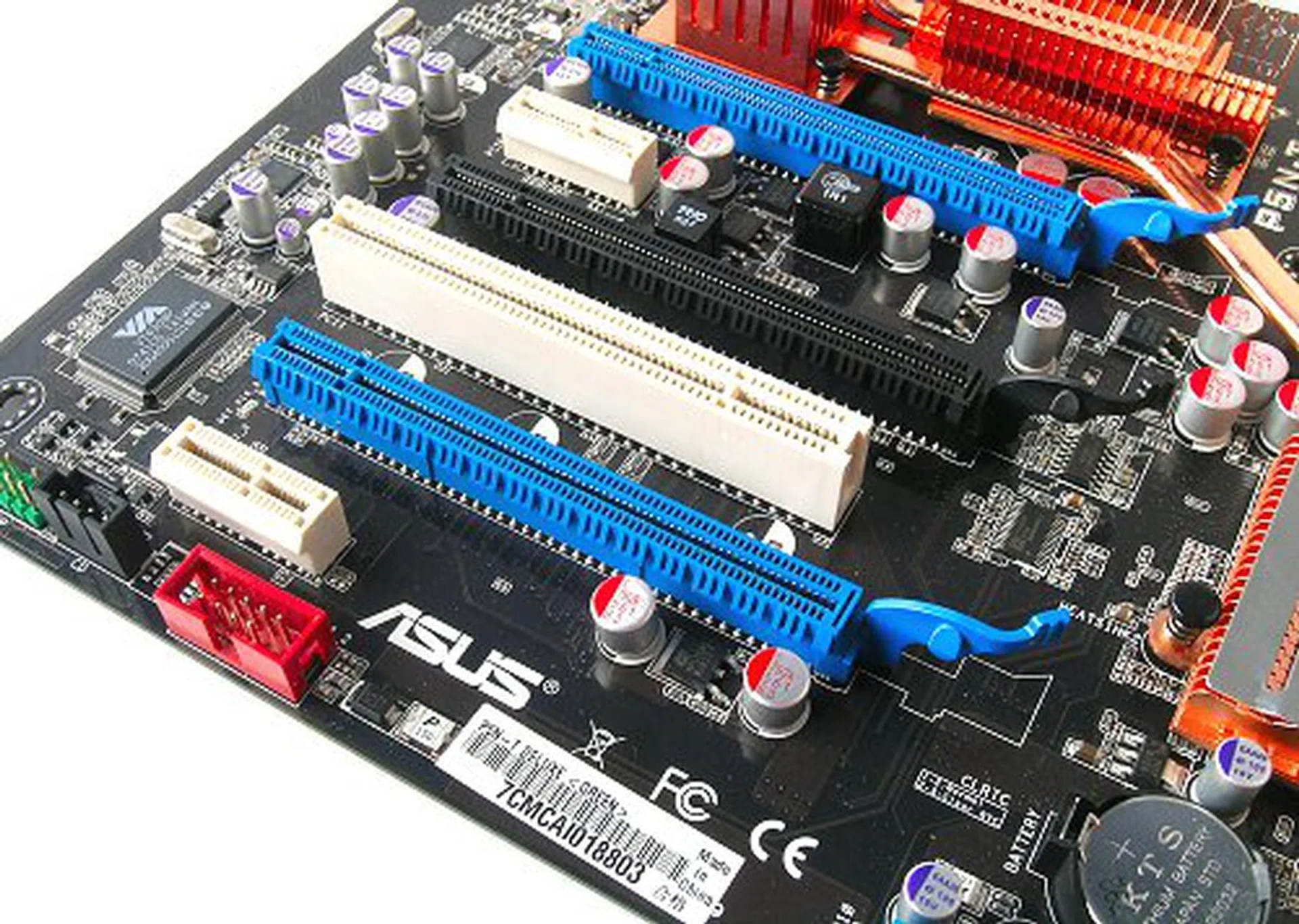
With 3-Way SLI, you've got to compromise on available expansion slots. For those that swear by a discrete sound card, you've got only one PCI slot, so use it wisely.
Like all current ASUS motherboards, the P5N-T Deluxe utilizes an AD1988B HD Audio CODEC, with analog surround and S/PDIF output connectivity. FireWire-400 is a standard feature here and is controlled by a VIA VIA6308P chipset.
The P5N-T Deluxe also features ASUS' new EPU (Energy Processing Unit) functionality that was introduced with the ASUS P5E3 Deluxe (Intel X38) . As a short recap, the EPU is really an ASUS designed Vcore regulator with more hardware level control and functionality when used with its bundled software. The board is also supposed to feature a third generation ASUS PWM design, which by its description, looks like they're also using Ferrite chokes and Low RDS(on) MOSFETs in addition to full solid capacitors. These are all high-end features that usually don't filter down to mainstream motherboard models.
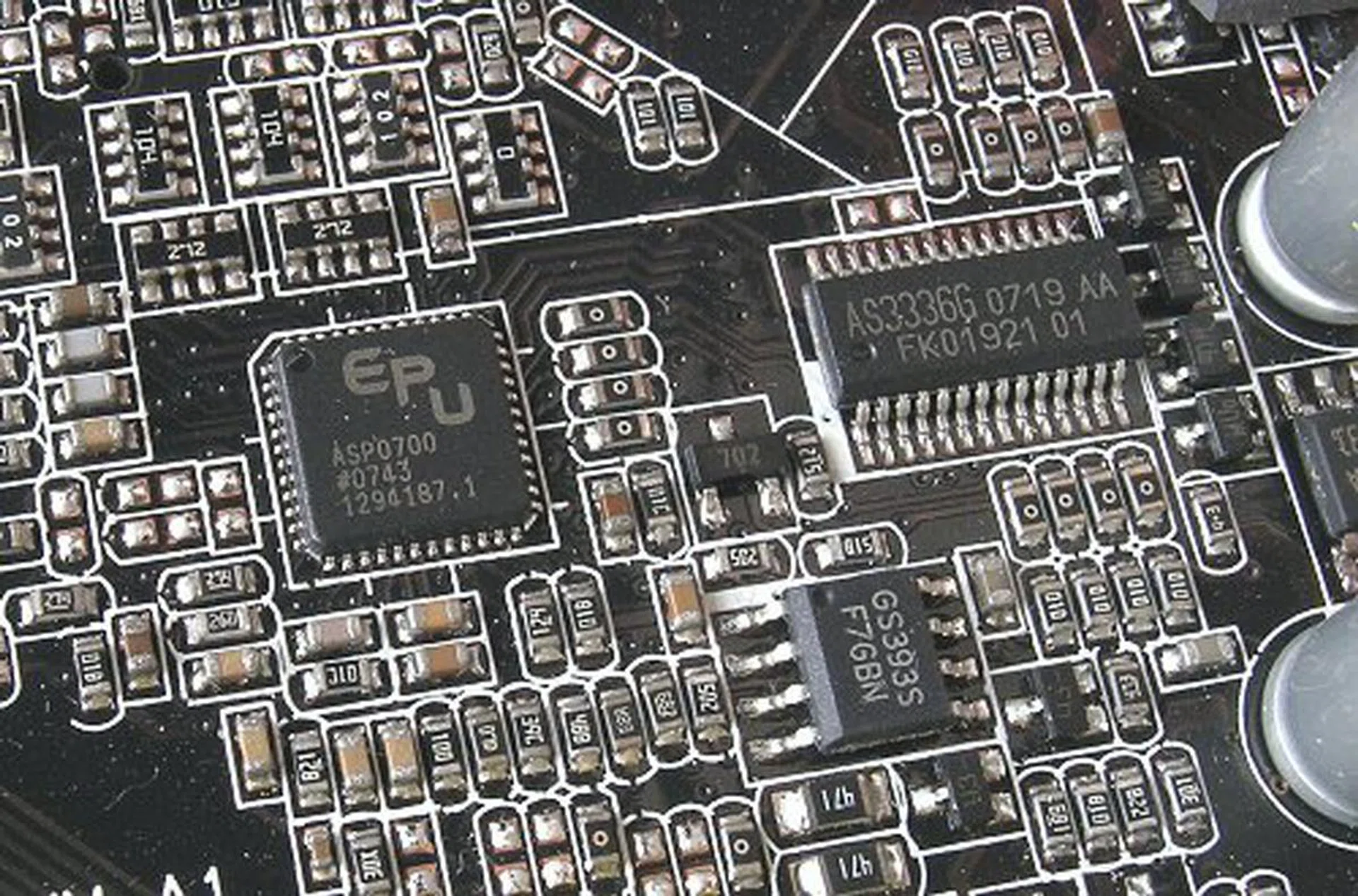
the ASP0700 is ASUS' own Vcore regulator that powers their EPU engine. The AS3336G is also an ASUS IC to augment its 8-phase PWM.
The only evidence that the board is meant for a 'lower end' segment is its support for only one Gigabit LAN port (Marvell 88E1116) instead of two the chipset is capable of. This means that the board will not feature any of the advanced DualNET network functionality of the chipset.
Layout
As usual for an ASUS motherboard, the layout for the P5N-T Deluxe is pretty optimal. Connectors are easily accessible, though the front portion of the board near the DIMM slots are a little too busy with connectors. In general, the heat-pipe cooling on this board isn't any more elaborate than other ASUS boards, and the new nForce 200 chip does not hog any more space. What you'd have to keep a note of however, is the close proximity of the rear heat-pipe fins (the one cooling the MOSFETs) to the CPU socket. We've managed to nick our fingers more than once taking off the CPU heatsink because of it.
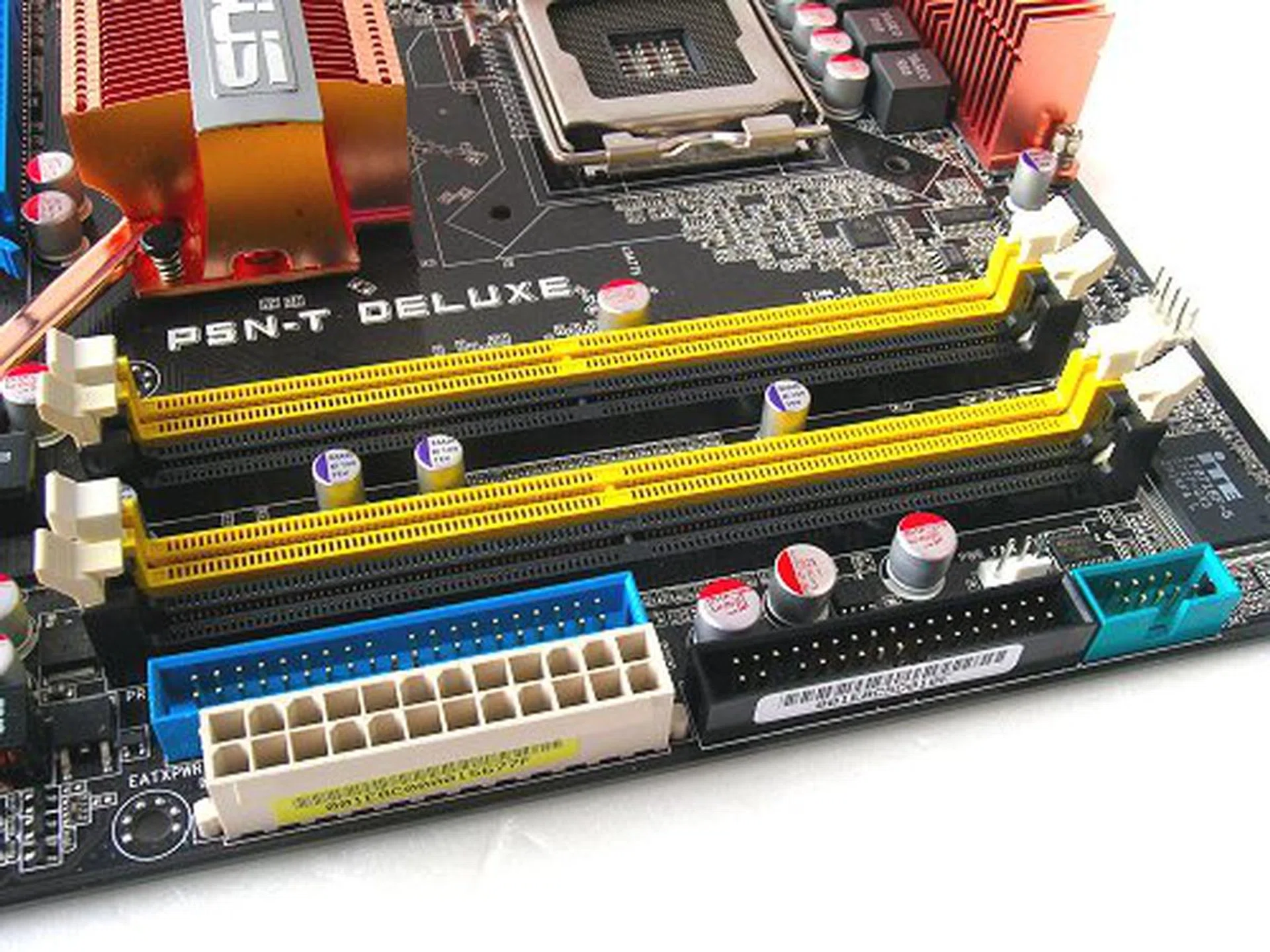
Busy array of connectors. Weidly enough, ASUS put the COM1 port header here as well.
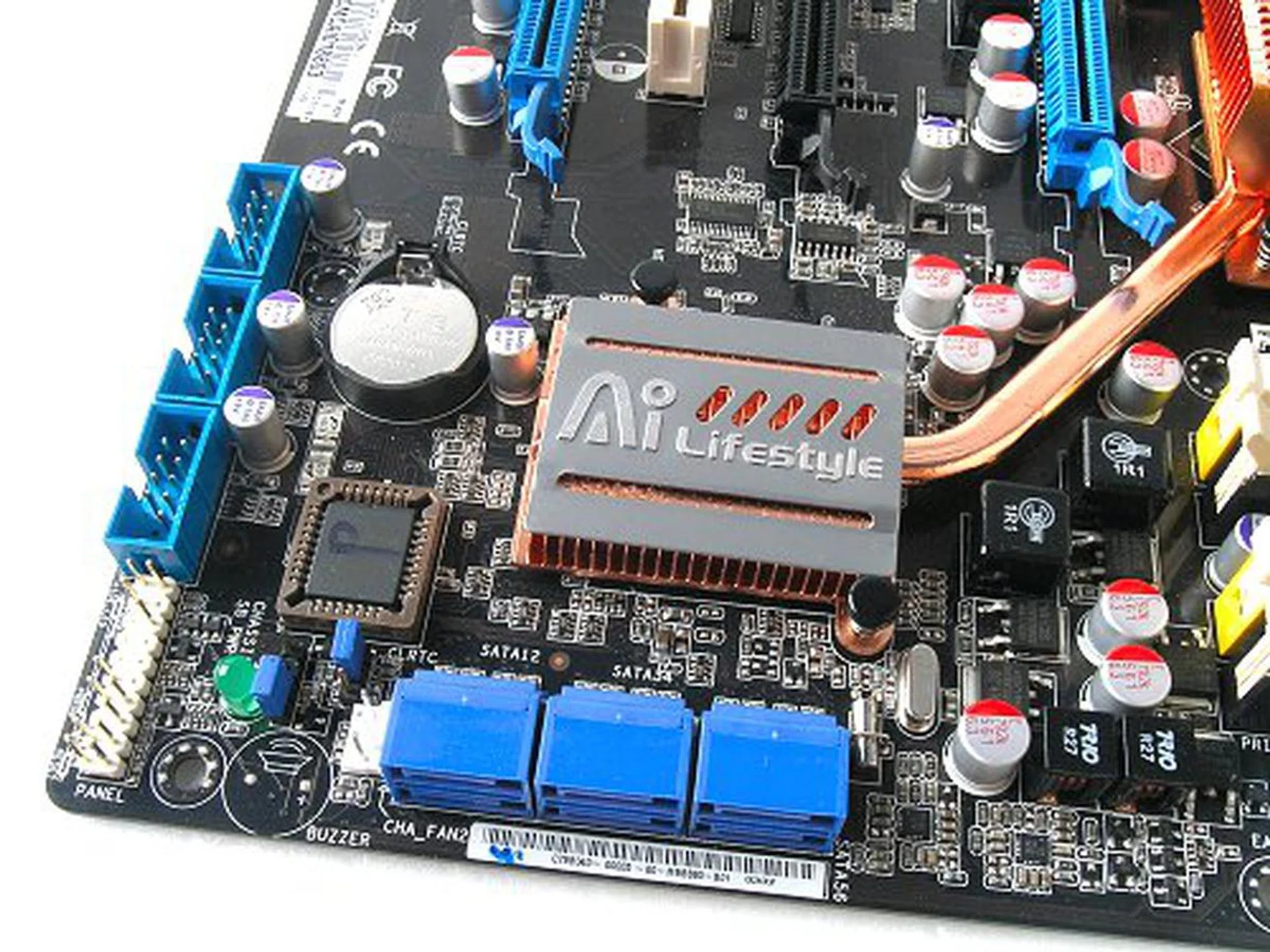
Other than the SATA ports here, the area is relatively clean.
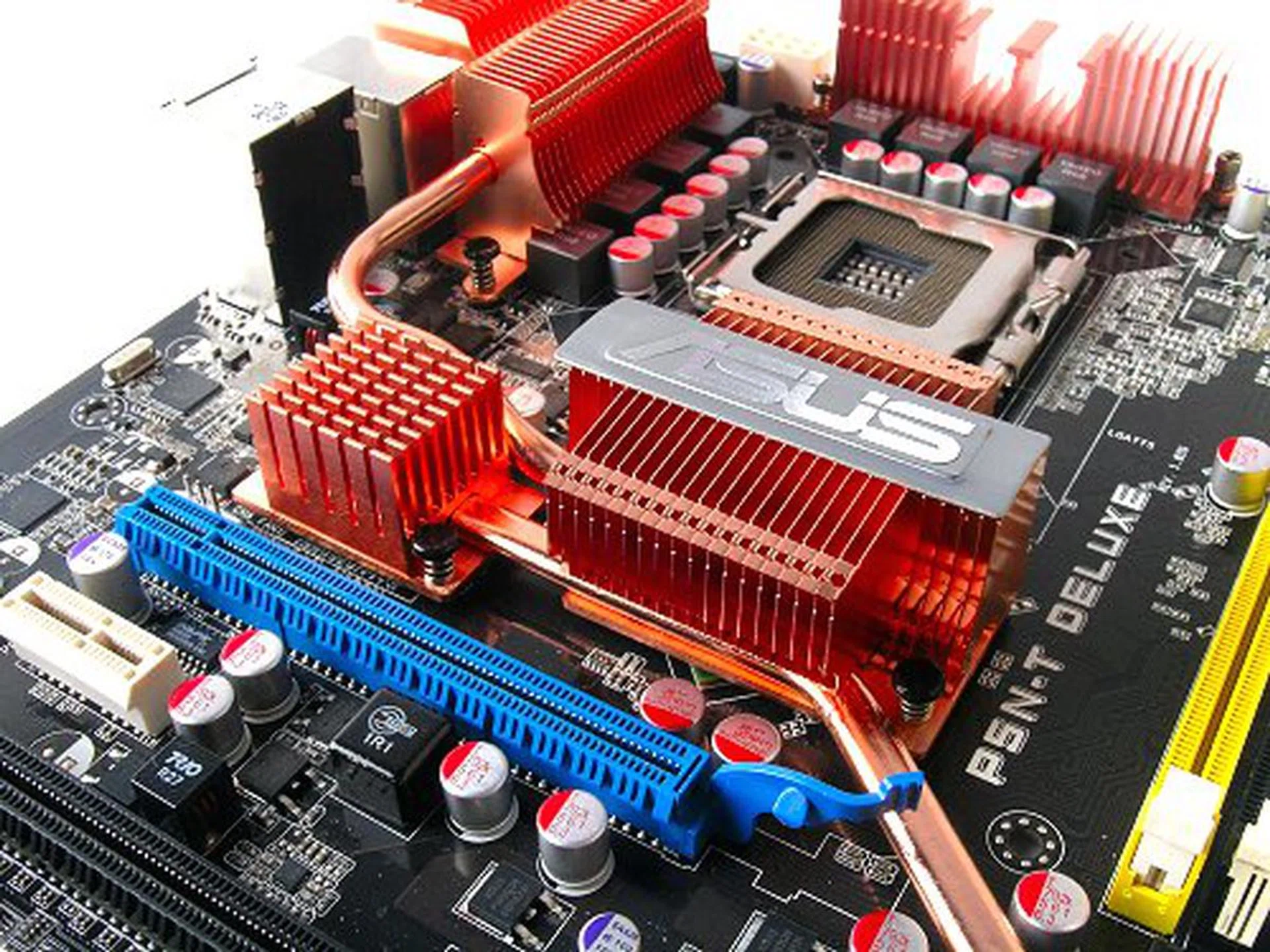
Even with an additional chip, ASUS keeps the cooling compact.
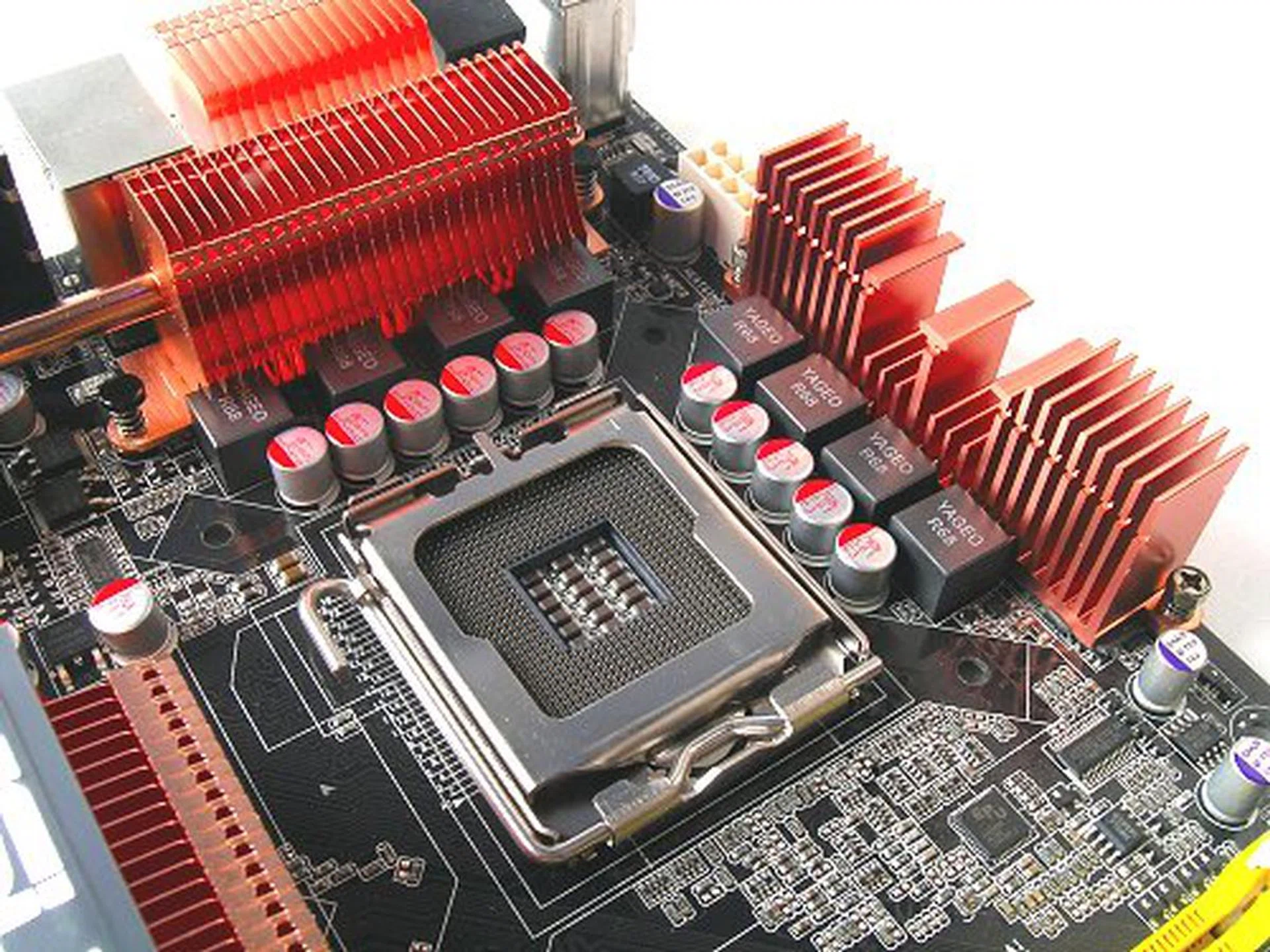
Just be careful of the sharp ridges on the fins of the top heat-pipe cooler, whch is very close to the retention holes.
Overclocking
- FSB Settings: 533MHz to 3000MHz (QDR)
- DDR2 Settings: 400MHz to 2600MHz (DDR)
- PCIe Settings: 100MHz to 200MHz
- HT SPP-MCP Settings: 200-500MHz
- LDT Frequency Settings: 1x to 8x (Default: 5x)
- CPU Voltage: 0.83125V to 1.9000V (in 0.00625V steps)
- Memory Voltage: 1.85V to 3.11V (in 0.02V steps)
- CPU VTT Voltage: 1.20V to 1.55V (0.05V steps)
- GTLVREF Voltage: 0.569x VTT to 0.680x VTT
- NB BR04 Chip Voltage: 1.20V to 1.35V (0.05V steps)
- NB Voltage: 1.20V to 2.46V (in 0.02V steps)
- SB Voltage: 1.55V, 1.85V (in 0.02V steps)
- 1.2V HT Voltage: 1.20V to 2.00V (in 0.02V steps)
- Multiplier Selection: Yes (unlocked CPUs only)
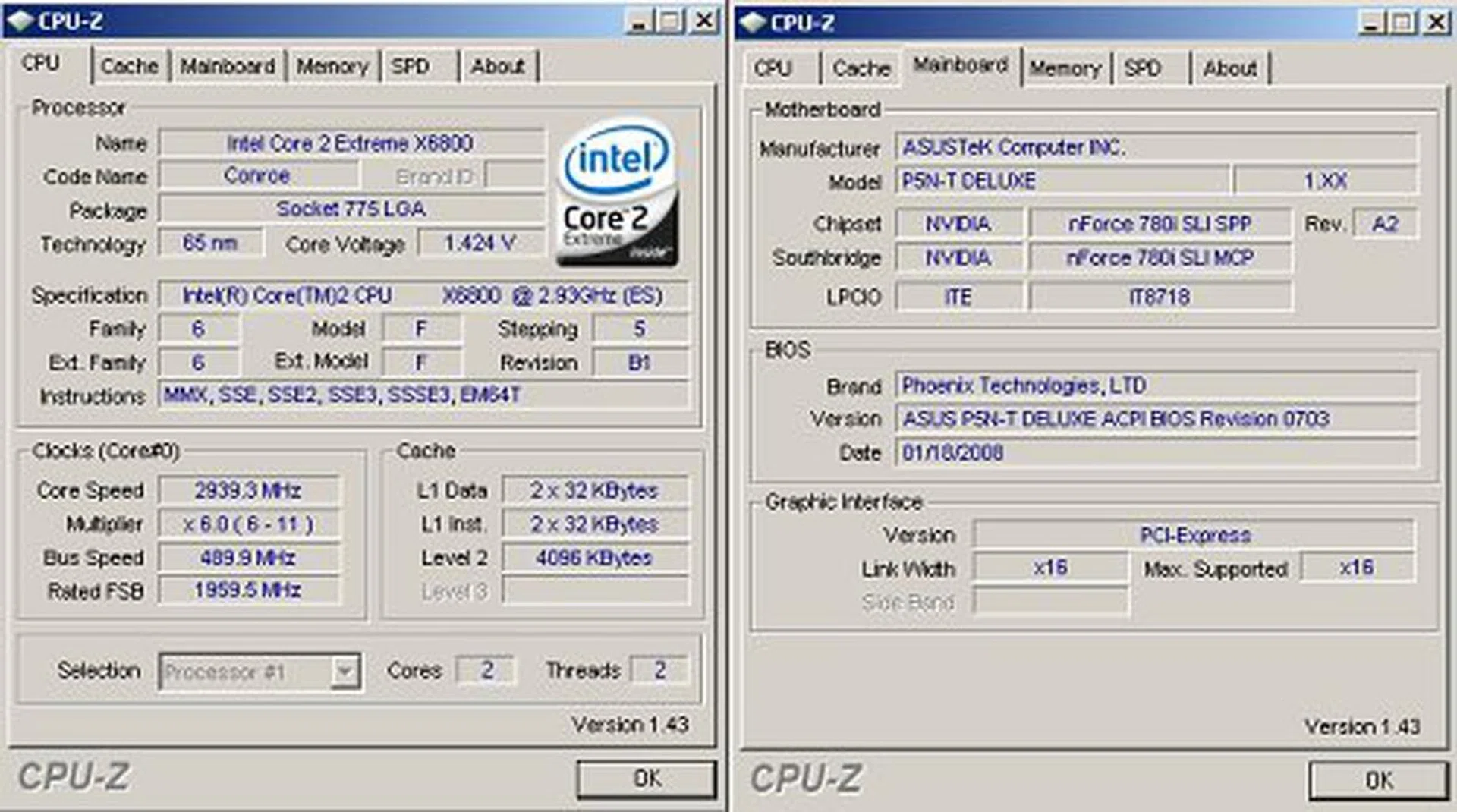
As we've mentioned earlier in this review, the nForce 780i SLI is a re-hashed nForce 680i SLI primarily to support the latest Intel processors and PCI Express 2.0. The chipset itself has already established its capabilities as a great Core 2 overclocker in all our past reviews of the nForce 680i SLI and the ASUS P5N-T Deluxe makes its mark with an excellent FSB overclock to 490MHz with no problems at all.
However, there is a catch. The board works remarkably well with standard dual-core Core 2 processors , but it does have some compatibility issues with quad-core CPUs. And we're talking about 65nm Kentsfields here, not even Penryns. On our test with a QX6850, we only managed to scale up to 390MHz FSB before we encountered problems with POST and stability. ASUS seems to be aware of this and we've recently seen a spate of BIOS updates addressing compatibility, so we hope that it would smoothen out in the coming months. Readers need to note that these issues only pertain to the overclockability of the board, and not general compatibility, which we've not had any issues with at all.
Test Setup
As the latest chipset from NVIDIA, we just had to benchmark the P5N-T Deluxe against the current set of Intel 3-Series motherboards. From ASUS, we'll be using the P5K3 Deluxe (P35) and P5E3 Deluxe (X38), both DDR3 motherboards respectively as a comparison in the high-end segment which the nForce 780i SLI is aiming to compete. Since the P5N-T Deluxe is only a DDR2 board, it would be great to see how the chipset stacks up to Intel's DDR3-equipped 3-Series chipset. We will also include DDR2 variants of both the Intel P35 and X38 as additional performance comparisons. These boards are the Foxconn X38A and MSI P35 Platinum.
The ASUS P5N-T Deluxe itself would be benchmarked with standard DDR2-800 as well as with DDR2-1066. Like the nForce 680i SLI, the nForce 780i SLI has support for up to DDR2-1200 speeds, and we wanted to see how well it scales compared to the latest DDR3 developments.
The following test bed setup will be used throughout this review:-
- Intel Core 2 Extreme QX6850 processor (3.00GHz)
- 2 x 1GB Kingston HyperX DDR2-800 @ 4-4-12 CAS 4.0 (For DDR2 boards)
- 2 x 1GB Kingston HyperX DDR2-1066 @ 5-5-16 CAS 5.0 (ASUS P5N-T Deluxe DDR2-1066 testing only)
- 2 x 1GB Kingston HyperX DDR3-1333 @ 7-7-20 CAS 7.0 (For DDR3 boards)
- Seagate Barracuda 7200.10 200GB SATA hard disk drive (one single NTFS partition)
- MSI GeForce 8600 GTS 256MB - with ForceWare 162.18 drivers
- Intel INF 8.3.1.1013 and AHCI 7.5.0.1017 driver set
- Microsoft Windows XP Professional with Service Pack 2 (and DirectX 9.0c)
Benchmarks
The following benchmarks will be used to determine the performance of the ASUS P5N-T Deluxe:-
- BAPco SYSmark 2004
- Futuremark PCMark05
- SPECviewperf 9.0
- AquaMark3
Results - BAPco SYSmark 2004
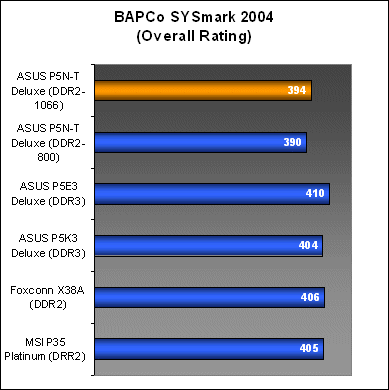
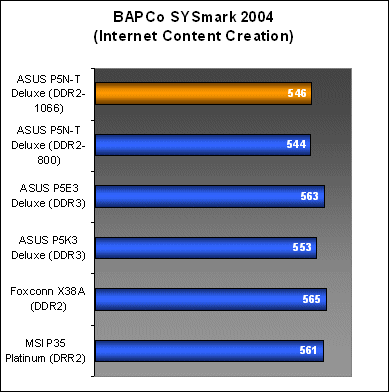
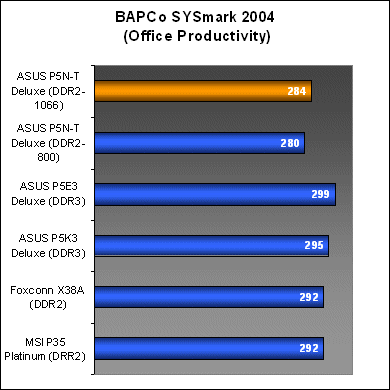
SYSmark 2004 results for the ASUS P5N-T Deluxe seemed quite weak against its Intel-based DDR3 cousins, the P5K3 Deluxe and P5E3 Deluxe. However, it still didn't quite match up to the performance of the Foxconn and MSI boards, which were configured with DDR2 memory. With DDR2-1066 installed, the P5N-T Deluxe managed to close to gap a little, but the 4% performance gap still seems a little out of character for this board.
Results - Futuremark PCMark05
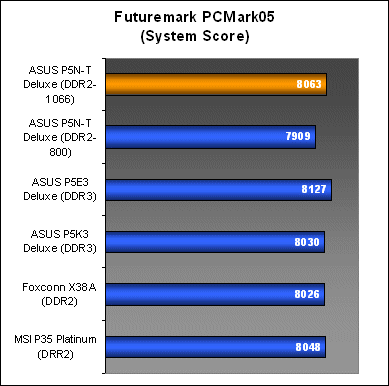
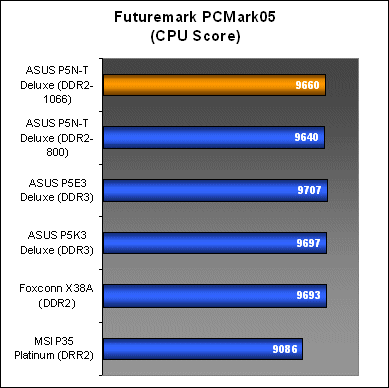
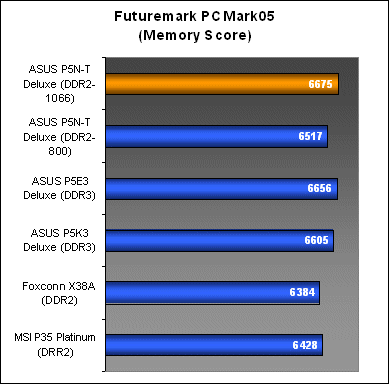
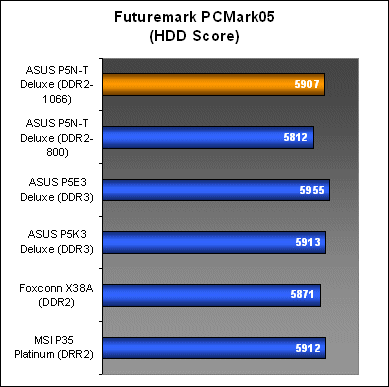
Surprisingly, PCMark05 results were very favorable for the P5N-T Deluxe. The board managed to perform head-to-head in its CPU tests as well as coming off as having the best memory performance at DDR2-1066, and even its DDR2-800 results were nearly on par with the two DDR3 boards. Still, we noticed that it was trailing slightly in the System workloads, which upon further inspection, probably pinpoints to a weaker graphics subsystem.
Results - SPECviewperf 9.0
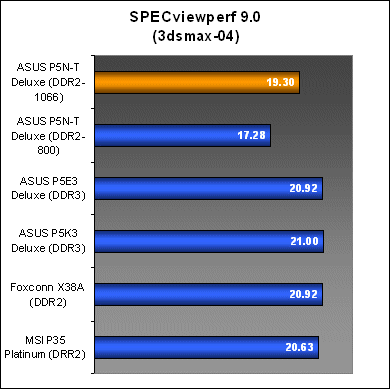
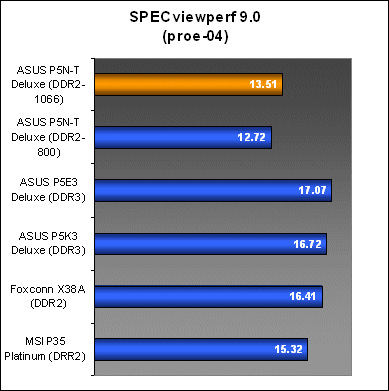
Based on SPECviewperf 9.0 scores, the nForce 780i SLI has some trouble keeping up with the Intel chipsets in terms of graphics performance. If you look at the results, memory plays a role in the pro/Engineer workloads, which sees the most difference in performance between the various Intel-based boards. But less so in 3dsmax, which is more graphics intensive, hence the similar performance across the boards.
The nForce 780i SLI based P5N-T Deluxe however, struggled to keep up in both workload situations, and actually saw a larger bump in performance with DDR2-1066 memory than would have expected.
Results - AquaMark3
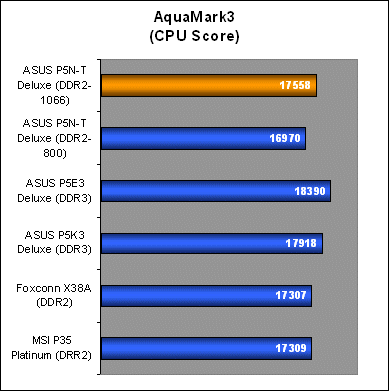
CPU subsystem results for the ASUS P5N-T Deluxe was more normalized in AquaMark3. While its DDR2-800 scores were still below that of the Foxconn and MSI based on the Intel 3-series, its results can be considered to be inside the ballpark at least. Bump up to DDR2-1066, and it saw an immediate and expected improvement, putting the board just below the Intel P35 based P5K3 Deluxe running DDR3-1333.
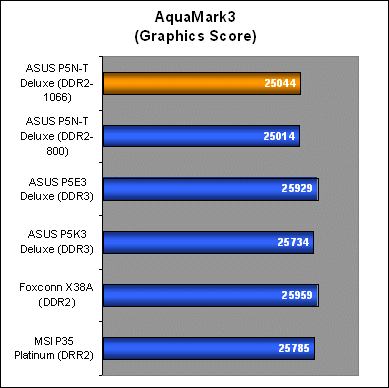
Graphics performance on the other hand was a point of concern as the board again showed low graphics subsystem performance as compared to all the Intel boards in this review.
Conclusion
Despite the unorthodox method of getting PCI Express 2.0 into a chipset refresh, the nForce 780i SLI is still a powerful chipset in today's market, sans DDR3 support. ASUS did a very good job configuring the motherboard and the usual ASUS quality can be seen throughout, from its design, layout and finish. Besides chipset features, ASUS has also been piling on proprietary technology onto their motherboards and the P5N-T Deluxe is one of the next wave of boards to feature ASUS' own EPU voltage regulator as well as a PWM design upgrade to match Gigabyte's offerings. This puts the two motherboard giants on a similar footing when it comes to PWM component use.
In terms of experience however, we've mixed reactions. The P5N-T Deluxe is a solid and stable motherboard if you're the 'install-and-forget' kind of user. However, overclockers need to be aware that there are still some lingering CPU compatibility issues with the board. The good news is that ASUS seems to be on the ball about this, as they've been coming up with new BIOS updates over the past weeks to address this. The bad news is that it's still not perfect. In our case, overclocking with a dual-core processor went flawlessly, achieving the expected overclocking headroom from the chipset with a high maximum of 490MHz (1960MHz QDR). However, the board would hardly overclock with a quad-core Kentsfield processor, hitting a ceiling at 390MHz.
Benchmark results on the P5N-T Deluxe were erratic as well. Clearly, it would seem that the larger part of the problem for the P5N-T Deluxe was its graphics subsystem, which was pulling down the overall results in every benchmark, with SPECviewperf 9.0 being the most impacted. At this point in time, it seems like this is the fault of the nForce 780i SLI not living up to expectations rather than a board issue. However, we can't confirm if this is a problem with the way graphics is routed through the nForce 200 or other chipset implementation. As we get more nForce 700i series boards in for testing, the situation should become clearer. Hopefully, it's not a conflict of proper PCIe generation one compatibility.
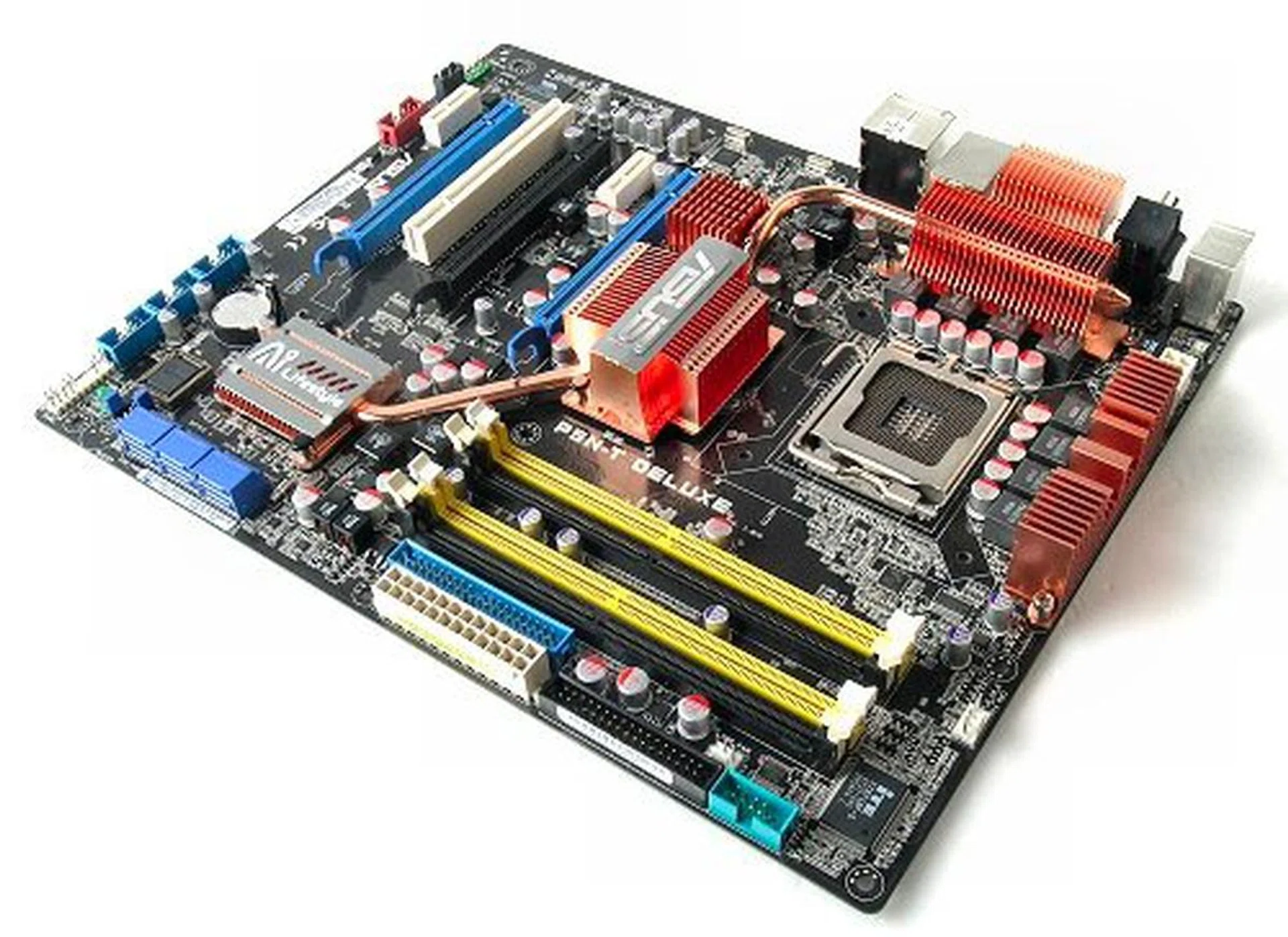
If SLI is something you absolutely require, the P5N-T Deluxe can probably be considered, but for everything else, any of the mentioned ASUS Intel 3-Series boards would probably do a better job.
With the graphics wars heating up again, NVIDIA basically forced themselves into a situation where they needed to support their own 3-way SLI configuration. And since their own chipset was the only official means to run SLI (besides using Intel workstation motherboards), NVIDIA's nForce 780i SLI is really just a stop gap to keep NVIDIA's brand relevant in the chipset market while they work to get the nForce 790i SLI out in earnest.
While the Striker II Formula (the other ASUS SKU using the nForce 780i SLI chipset) has a valid gaming angle to it; the only segment that would probably benefit from 3-Way SLI, we cannot find any real reason to recommend the P5N-T Deluxe over ASUS' range of Intel 3-Series motherboards. Price-wise, the nForce 780i SLI isn't the most expensive in the market anymore, probably because of its DDR2 heritage as well. The P5N-T Deluxe (US$280) sits between the P5K3 Deluxe (US$230) and P5E3 Deluxe (US$330), but the chipset value just isn't there when you look at its positioning and performance.
Our articles may contain affiliate links. If you buy through these links, we may earn a small commission.