
ASRock 939Dual-SATA2 (ULi M1695)
ASRock delivers a motherboard with features that shouldn't be available at its price range. The 939Dual-SATA2 is just the thing for anyone with an upgrade fetish but finding it hard to choose between keeping their AGP graphics card or moving to a new CPU. More on this one-of-a-kind board inside.

Introduction
When we last looked at the ULi M1695 chipset, what we found was a very attractive technology that allowed board manufacturers a great level of flexibility in solutions configuration. In our tests, the ULi M1695 reference motherboard was also a surprising performer going head to head with NVIDIA's nForce4 Ultra. At the time, we speculated ULi becoming a strong contender to NVIDIA, but of course we all know what happened after. Just before the year was out, NVIDIA announced its acquisition plans for ULi Electronics and in a few short months, ULi and NVIDIA has become one.
No doubt NVIDIA will want to position ULi-based products as entry-level, putting pressure on its competitors in both the performance and mainstream markets, but do not write off ULi chipsets just yet. From what we've seen, ULi is capable of delivering a stable platform and performs well enough for enthusiasts to take interest in. The M1695 in particular has unique capabilities which ASRock has taken to design the very interesting 939Dual-SATA2 motherboard. Since we've talked at length about the M1695 chipset before (you can view the full article ), we'll skip the details and focus on what ASRock has to offer with this motherboard.
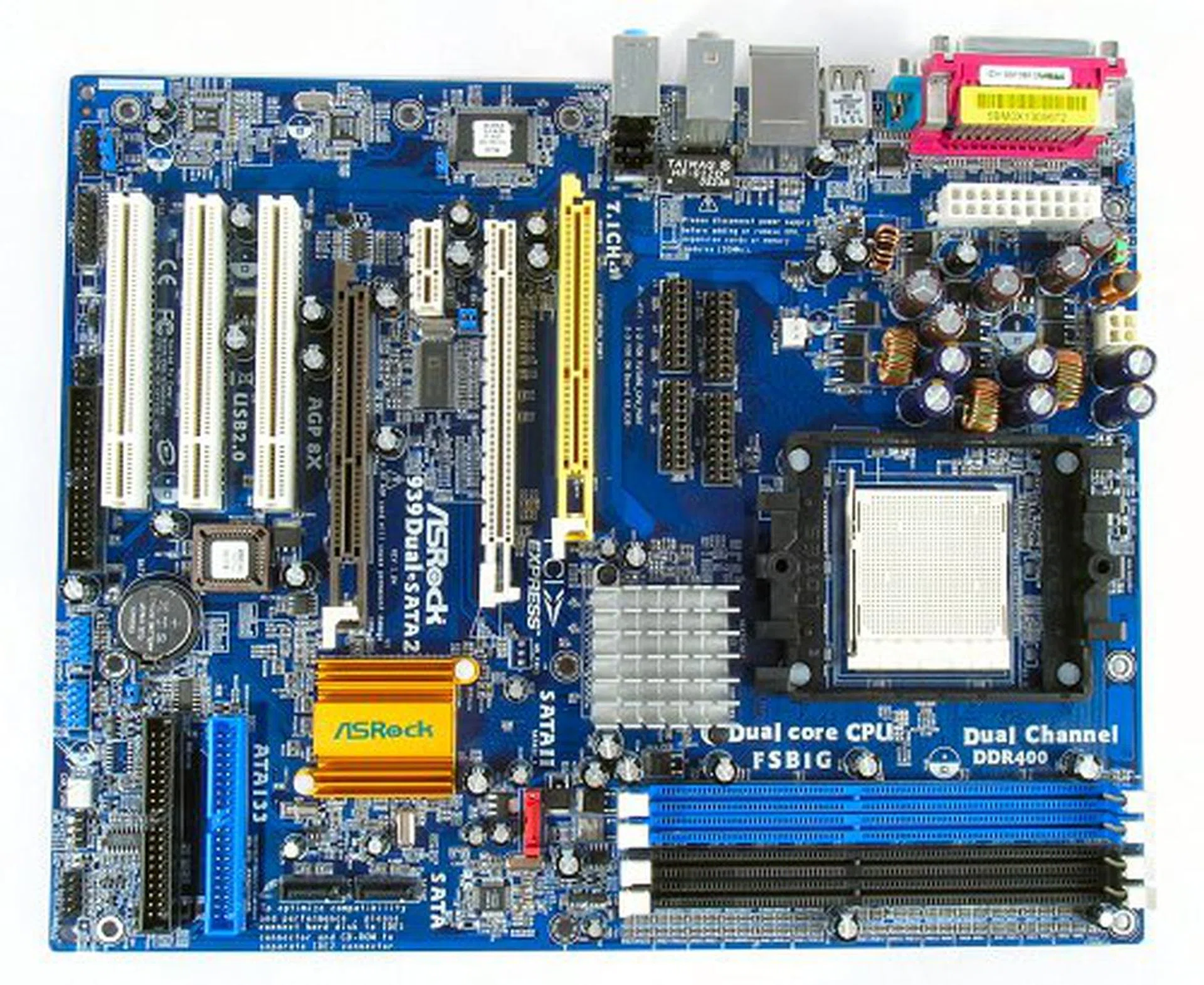
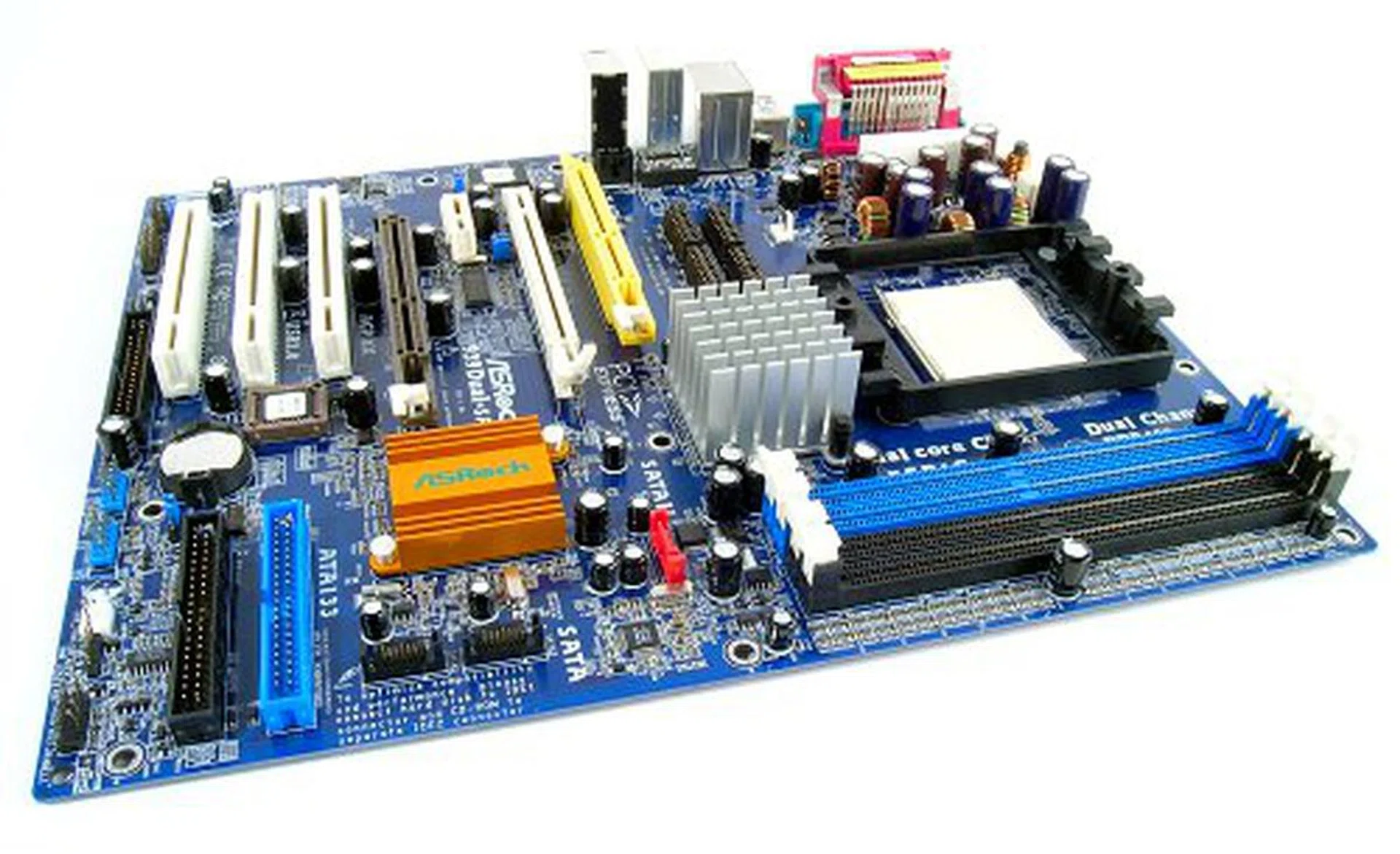
The ASRock 939Dual-SATA2 motherboard.
Within the ASRock939Dual-SATA2 motherboard package, though you won't find a plethora of accessories to unleash the full potential of the platform, ASrock has provided the bare necessities to get you up and running soonest possible:-
- 1 x SATA data cable
- 1 x SATA power converter cable
- 1 x 80-conductor Ultra ATA data cable
- 1 x floppy drive data cable
- I/O shield
- Driver CD
- User's manual
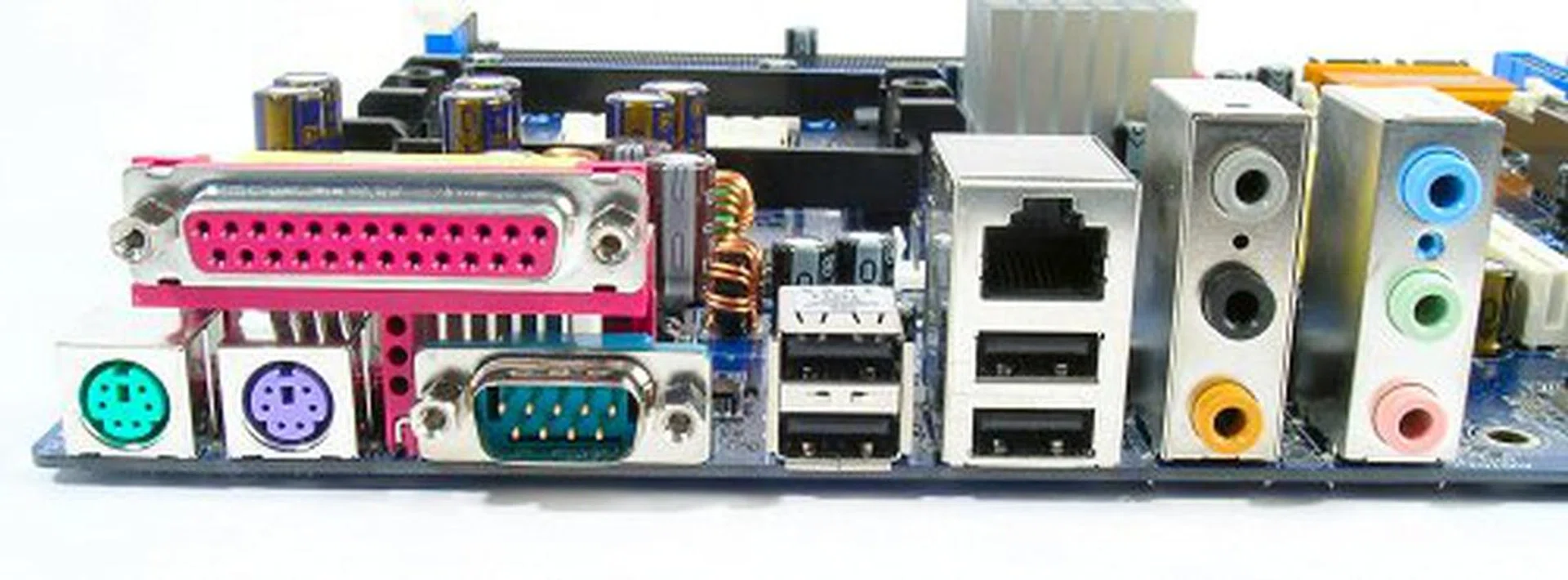
One look reveals a full-featured rear I/O panel, but the 939Dual-SATA2 lacks S/PDIF ports and FireWire capabilities.
Features
The ASRock 939Dual-SATA2 is a hybrid motherboard based on the ULi M1695/M1567 chipset combination, what ULi terms as their TGi (Triple Graphics Interface) chipset that allows a flexibility of using graphics cards in all three PCI, AGP and PCI Express buses. The 939Dual-SATA2 is definitely not the first motherboard to feature hybrid graphics support, but it can certainly boast to being a true hybrid. The M1695 is a full PCI Express chipset with 20 PCIe lanes available and the M1567 Southbridge comes with native PCI and AGP 8x features. Combined, the ASRock 939Dual-SATA2 supports full PCIe x16, AGP 8x and PCI graphics either independently or simultaneously up to six displays. This would possibly be a dream for users with high-end AGP graphics cards and be able to upgrade to newer AMD processor platforms. For users who have jumped onto the PCIe bandwagon, you can now fully make use of your AGP card again too. Of course, then comes the question of how many people have six monitors lying around to make full use of an ideal TGi setup; let alone four monitors that are easily supported on many modern motherboards.
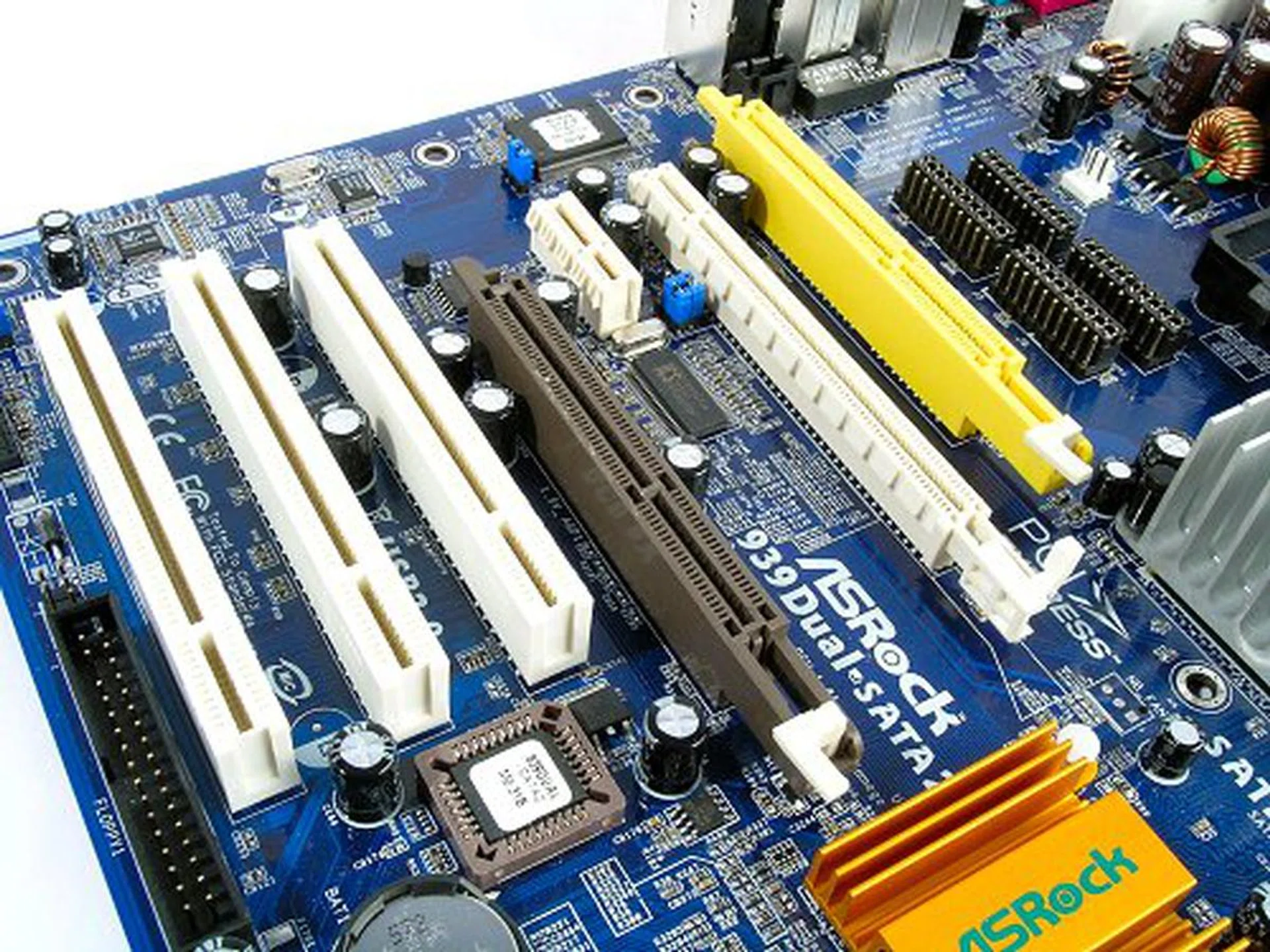
The 939Dual-SATA2 comes with a fair share of expansion capabilities.
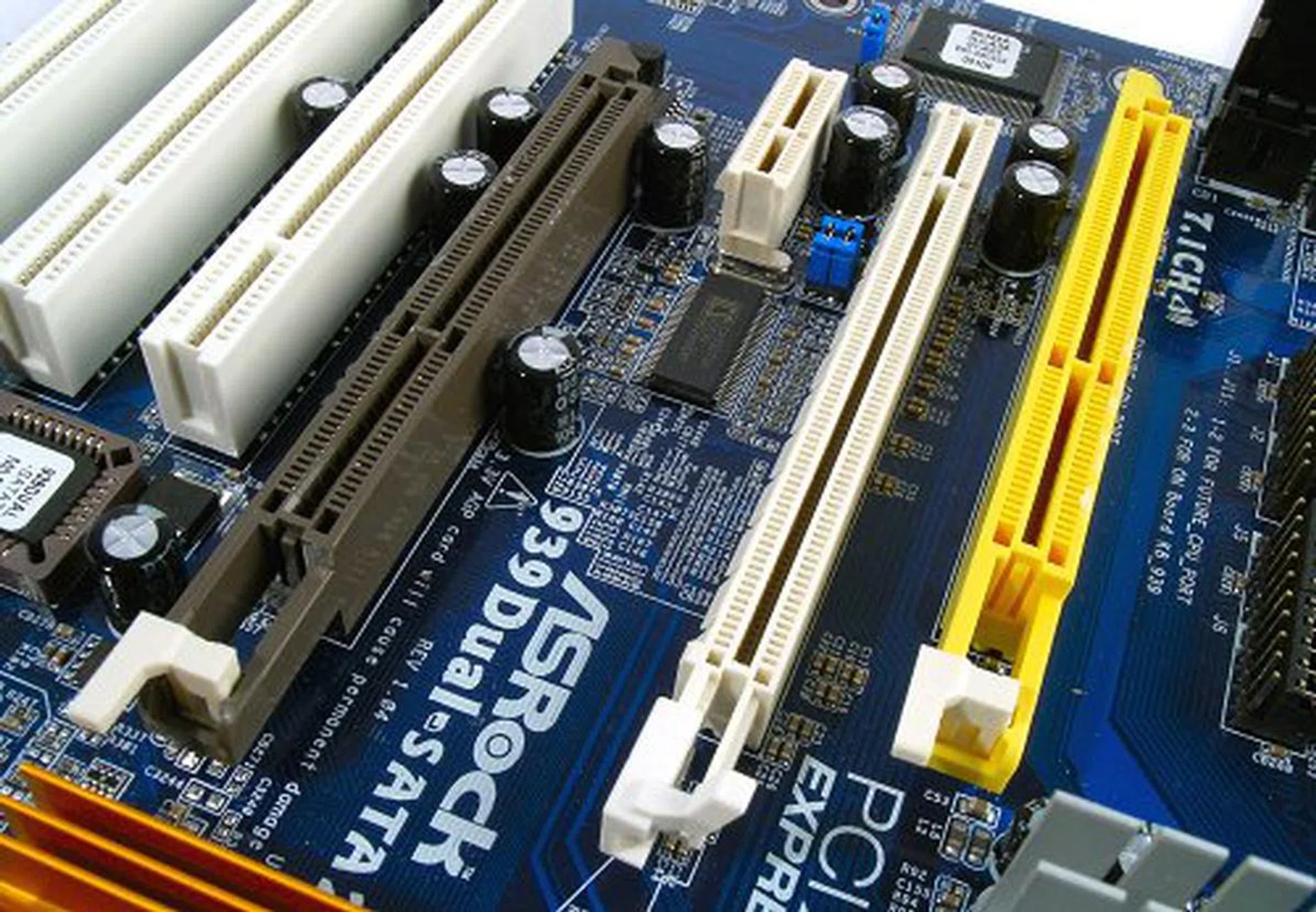
Full speed AGP 8X slot, one PCIe x16 as well as a mystery yellow slot. AGP SLI? Not likely!
As we talk about the board's nifty graphics acrobatics, you may have noticed a bright yellow slot on the board that looks suspiciously like a second AGP slot, but it isn't. ASRock has a long-standing tradition to offer motherboards with platform upgrade capabilities. In the past we've seen bridge cards for upgrading Socket A to Socket 754 and then Socket 754 to Socket 939, thus it isn't surprising to find that the 939Dual-SATA2 features a 'Future CPU Port' that makes it possible for the board to support AMD's upcoming Socket M2 processors and DDR2 memory.
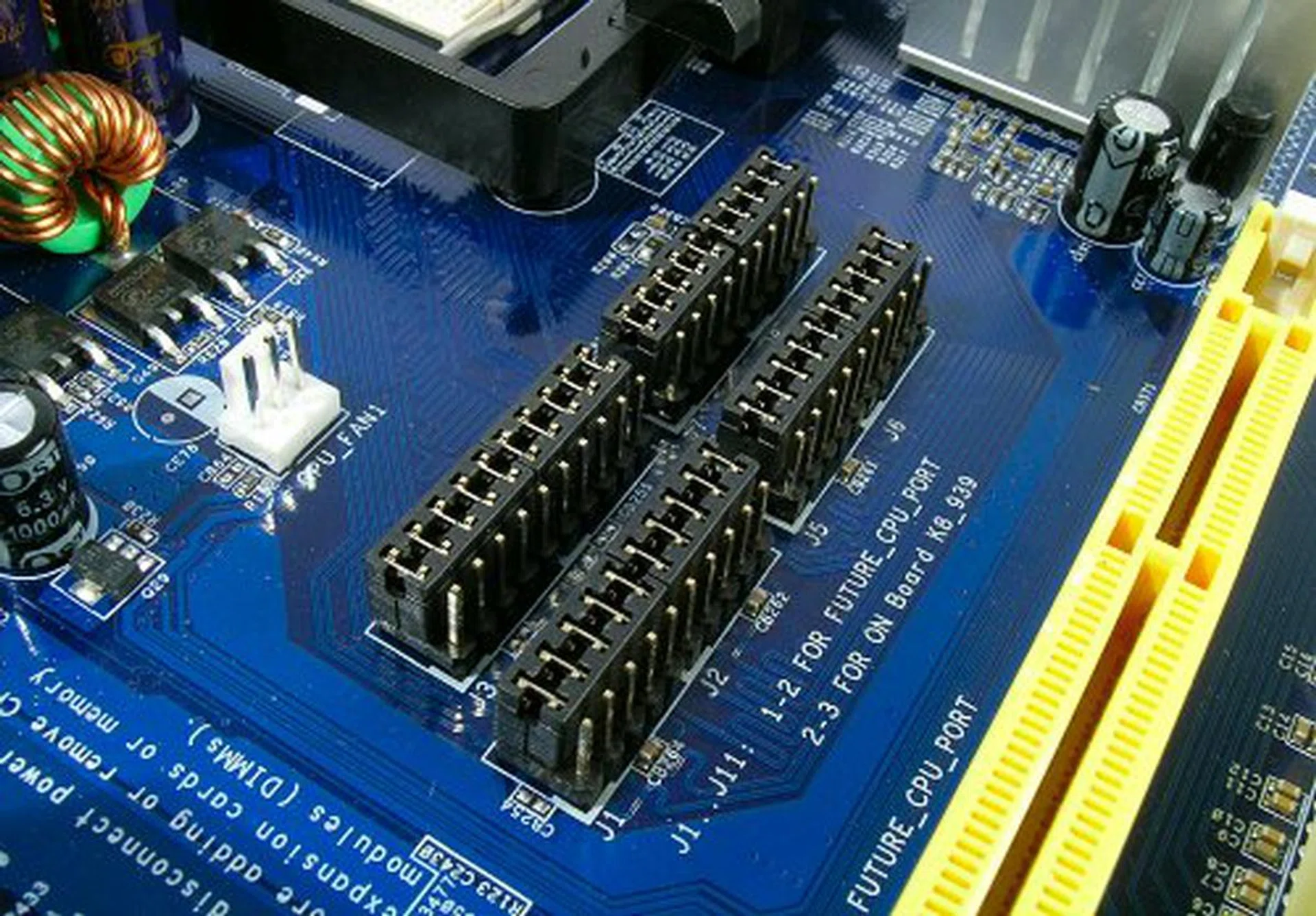
A row of 4 sets of jumpers that need to be switched in order to activate the Future CPU Port.
While TGi and Future CPU Port features alone are enough to make the 939Dual-SATA2 a very desirable board, it does come with the basic necessities. Like the last few mainstream motherboards we've reviewed from ASRock, the 939Dual-SATA2 only comes with a single Fast Ethernet port powered by Realtek's RTL8201CL PHY. While the M1567 Southbridge does feature two SATA ports, it doesn't support the SATA 3Gbps interface. So in order for ASRock to market the board such, they included the very minimalist JMicron JMB360 controller, which provides one extra SATA 3Gbps port to the board for compatibility sake. Audio-wise, the board comes with a Realtek ALC850 CODEC, a common AC'97 onboard solution seen on numerous AMD-based motherboards due to their lack of HD Audio support. Although the board comes with full 8-channel analog ports, it lacks S/PDIF connectivity.
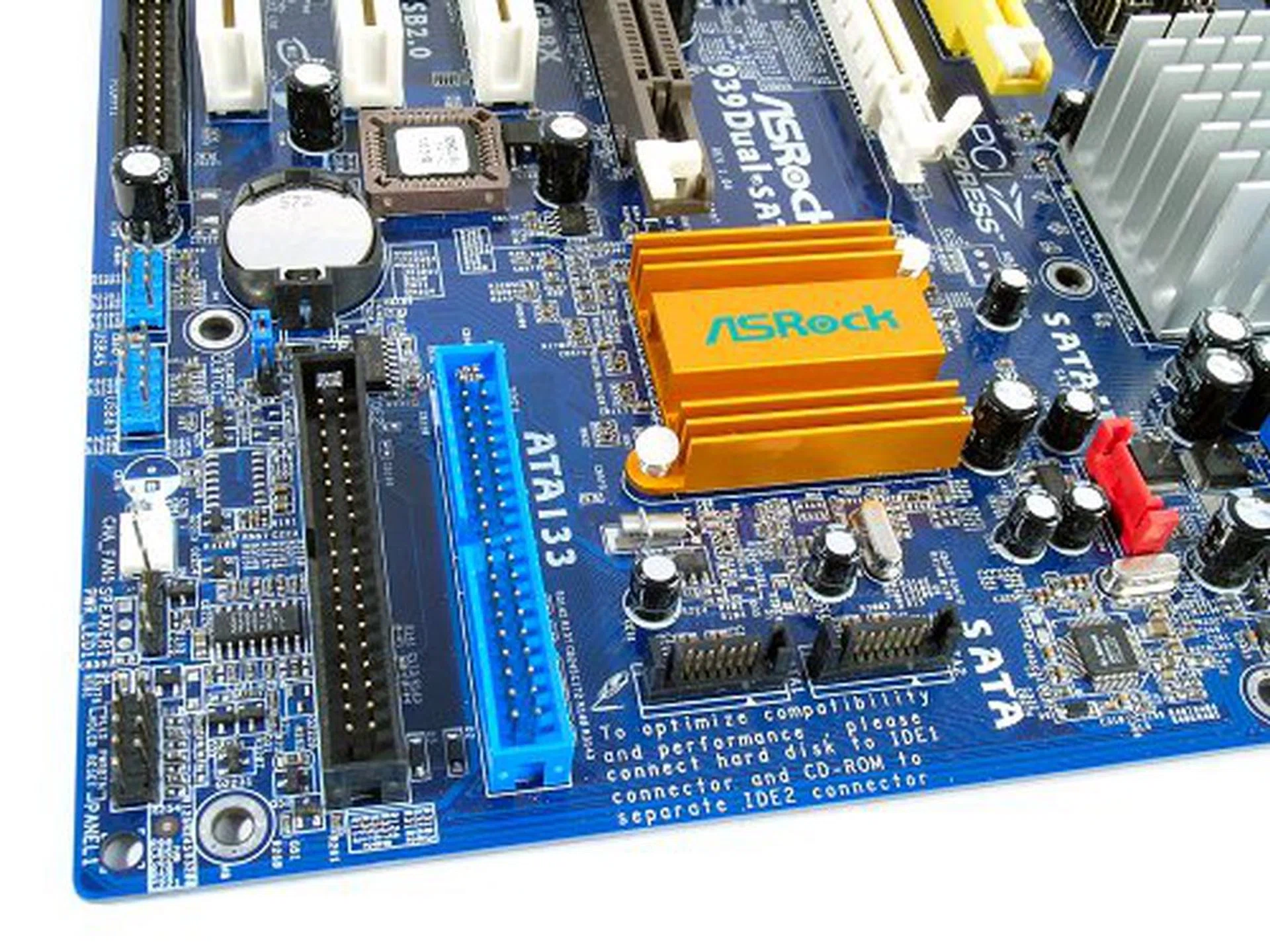
Two black SATA ports are RAID capable, but if you need single drive performance, there is a single SATA II port with NCQ support available.
Layout
While the motherboard doesn't sport a plethora of functions, its two main features basically dictated its design layout. ASRock had to design a motherboard capable of at least dual graphics and still have sufficient space for a slotted bridge card for CPU and memory upgrade. Because of this, the board is a little tight for space, especially on to top half. Both the CPU slot and Northbridge have been moved closer towards the front side of the board, literally squeezing the DIMM slots to the corners. This is required to make space around the area for the future and eventual AM2 socket upgrade.
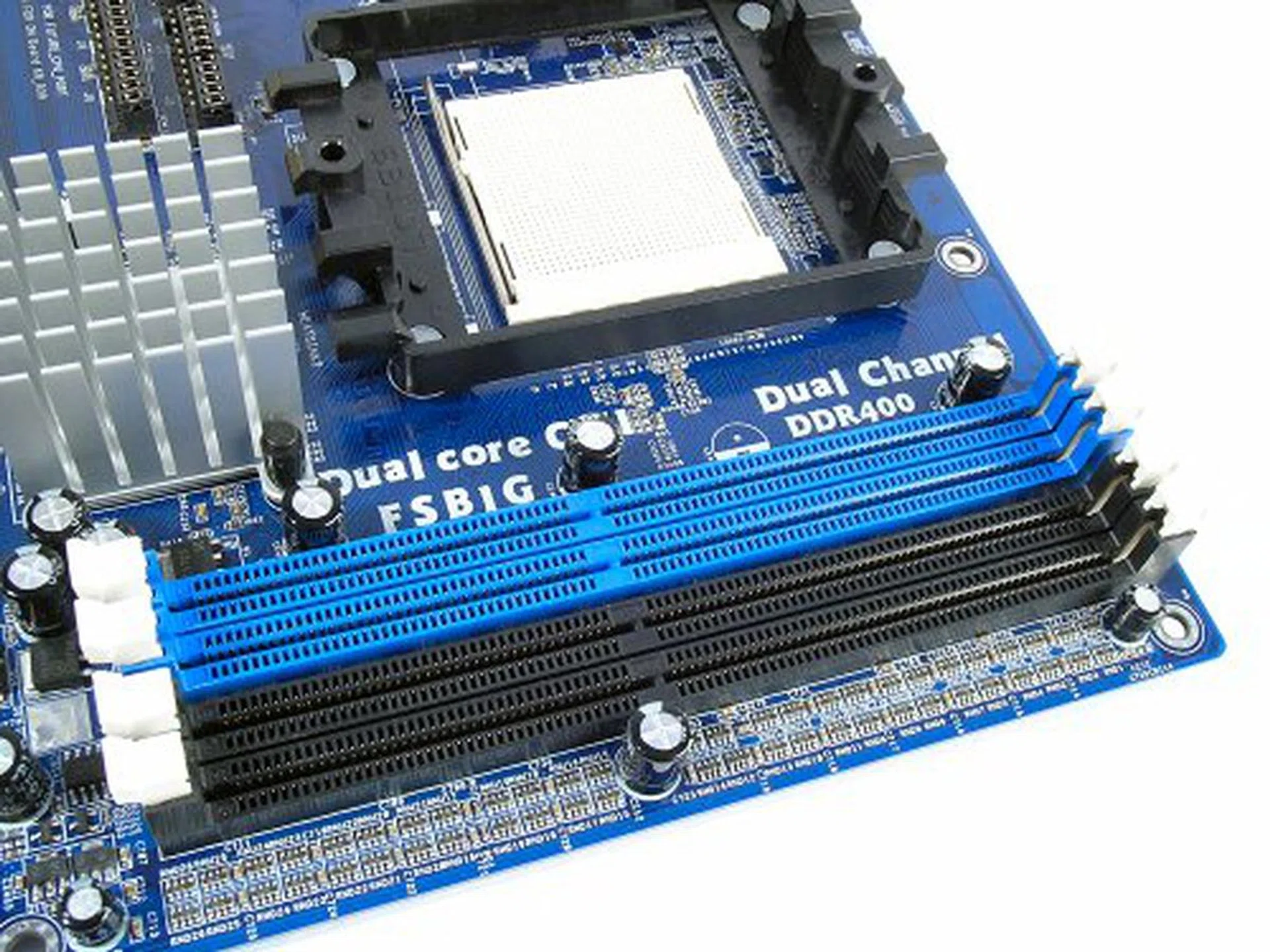
DIMM slots packed together and located right at the edge of the board.
Because the CPU socket, DIMM slots and Northbridge components have been moved close to the edge, there is little space for component placement. IDE and Floppy connectors are located towards the bottom of the board, while the ATX power connectors are along the rear I/O panel. What is most perplexing about the board however, is the standard 20-pin ATX power supply. From our tests, the 939Dual-SATA2 holds up well with a standard setup, but considering the use of the board with multiple graphics and future AMD processor requirements, a 24-pin compatible connector would have been prefered. Still, this shouldn't pose much of an issue (other than needing converter plugs) as the underlying fact is to ensure that you have a power supply that can handle more than your expected needs.
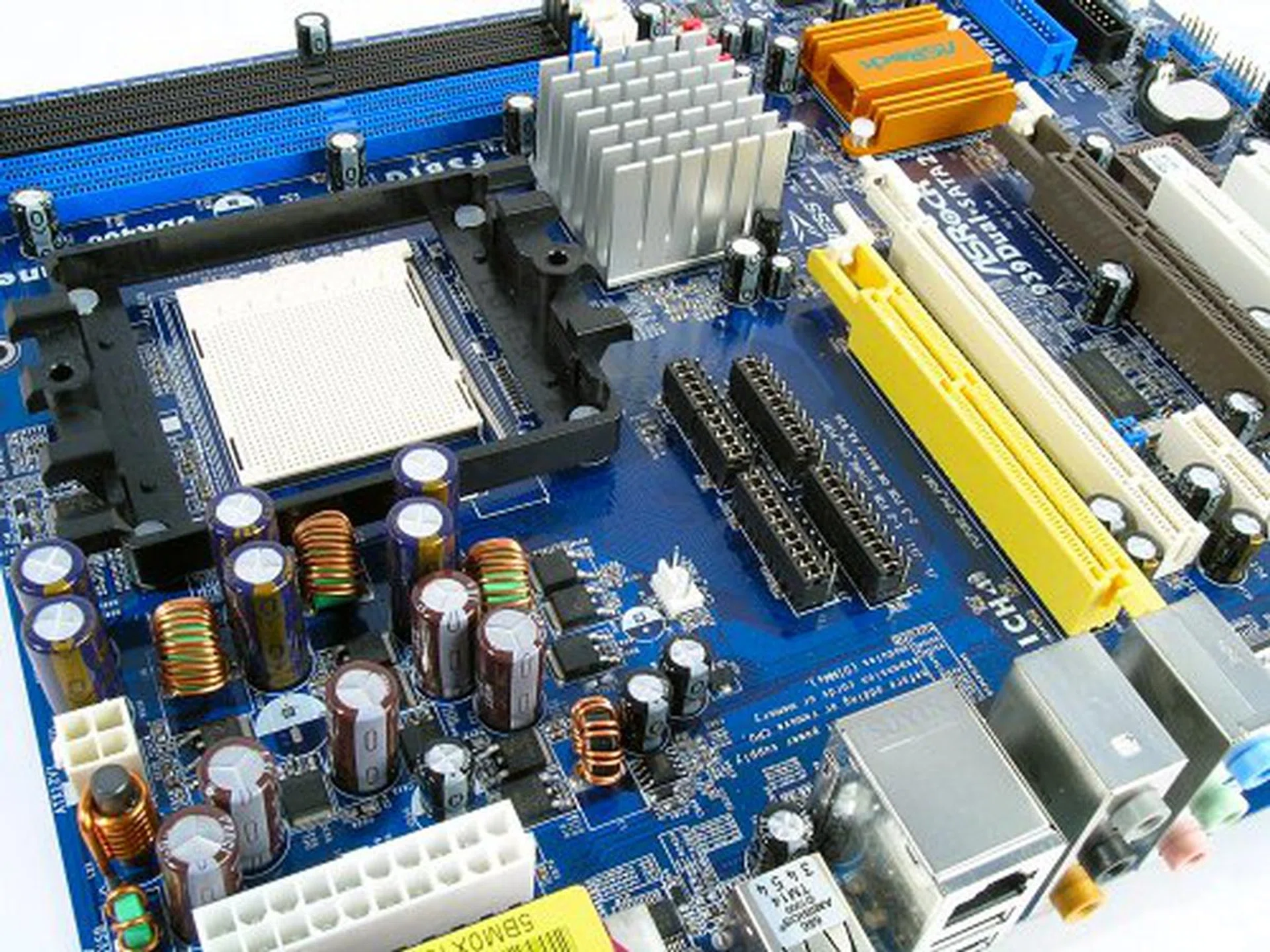
CPU socket and power component clusters moved back to clear room for future CPU daughterboard upgrade.
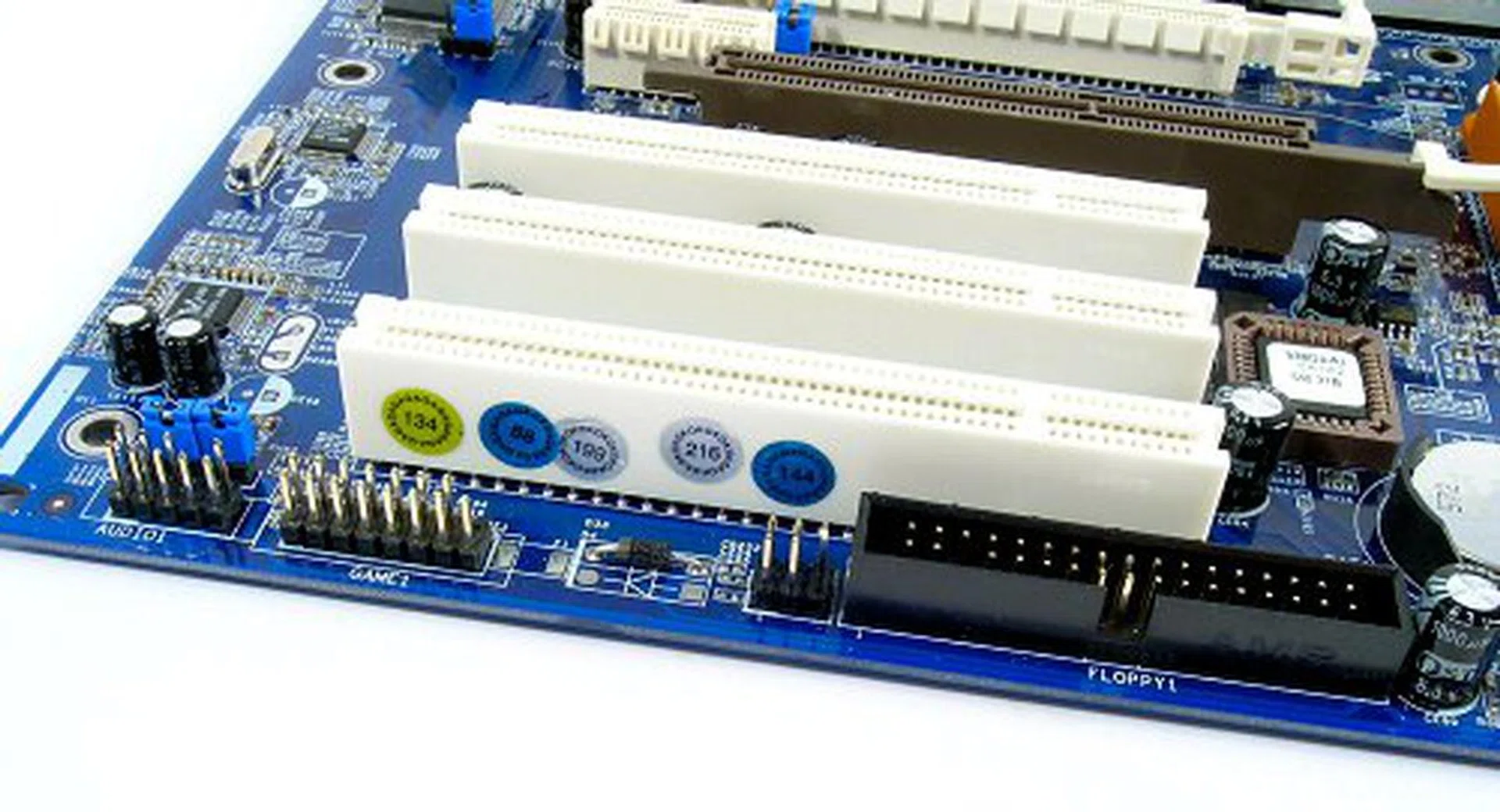
Floppy and the rest of the board's additional headers line the bottom of the board.
Overclocking
The following overclocking options are available to the ASRock 939Dual-SATA2:-
- FSB Settings: 140MHz to 300MHz
- RAM Frequency: DDR-266, DDR-333, DDR-400
- PCIe Frequency: 70MHz to 150MHz
- CPU Voltage Settings: 0.800V to 1.550V (in 0.025V steps)
- DIMM Voltage Settings: Normal, High, Auto
- Multiplier Selection: Yes (unlocked CPUs only)
Overclocking doesn't seem to be one of the strong points of the 939Dual-SATA2. The board features the basic overclocking options, including a healthy FSB overhead selection and PCIe bus locking. What it lacked though was enough voltage options. The board doesn't come with chipset voltage controls and memory voltage is limited to a simple Normal/High toggle control.
Although we were able to play around with both the CPU and Southbridge HyperTransport link settings, our maximum FSB overclock was a mere 225MHz up from 200MHz. This number may seem awfully low, but our review of the reference ULi M1695 motherboard also yielded low overclocking headroom. At the time of writing, tests were conducted on ASRock's latest public BIOS v1.60.
Test Setup
Since we last reviewed the ULi M1695 chipset on a reference board, we've updated our testbed settings to reflect a more contemporary system today for a mid-range mainstream PC. For this review, we'll compare the ASRock 939Dual-SATA2 with a similarly configured Chaintech VNF4 Ultra, one of the better budget nForce4 Ultra boards around. The system configuration of both boards are listed below:-
- ASRock 939Dual-SATA2
- AMD Athlon 64 3500+ (2.2GHz 512KB L2 cache)
- 2 x 512MB Kingston DDR400 @ 6-3-3 CAS 2.5 CMD 1T
- Seagate Barracuda 7200.7 80GB SATA hard disk drive (one single NTFS partition)
- Leadtek PX6600GT TDH Extreme 128MB - with NVIDIA Detonator XP 71.89 driver
- ULi Integated Drivers 2.13
- Microsoft Windows XP Professional with Service Pack 1 (with DirectX 9.0c)
- Chaintech VNF4 Ultra
- AMD Athlon 64 3500+ (2.2GHz 512KB L2 cache)
- 2 x 512MB Kingston DDR400 @ 6-3-3 CAS 2.5 CMD 1T
- Seagate Barracuda 7200.7 80GB SATA hard disk drive (one single NTFS partition)
- Leadtek PX6600GT TDH Extreme 128MB - with NVIDIA Detonator XP 71.89 driver
- NVIDIA nForce4 package 6.53
- Microsoft Windows XP Professional with Service Pack 1 (with DirectX 9.0c)
Additional Notes
The ASRock 939Dual-SATA2 encountered a minor compatibility issue with the SYSmark 2004 benchmark suite, which required it to be run with a more relaxed CMD 2T memory timing in order to complete the benchmark. The board remained completely stable throughout the rest of our benchmarking session with the regular 1T timing and to be sure, we even ran it through newer benchmarks like 3DMark05 without problems.
Benchmarks
Below are the benchmarks we will use to measure the platform performance of the ASRock 939Dual-SATA2 motherboard:-
BAPCo SYSmark 2004
Futuremark PCMark04
SPECviewperf 8.01
Futuremark 3DMark03
AquaMark03
Results - BAPCo SYSmark 2004
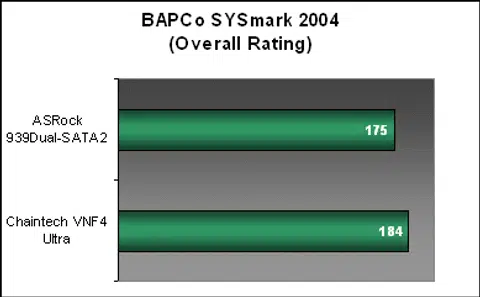
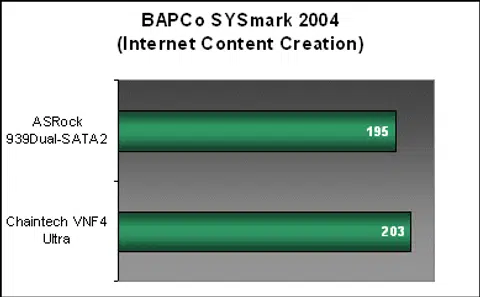
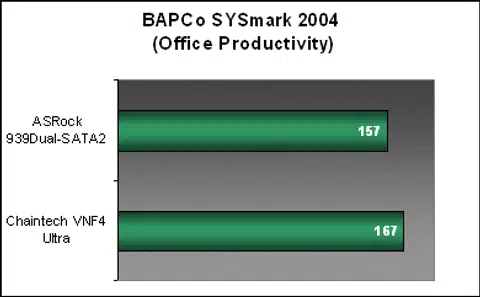
As we mentioned before, SYSmark 2004 was the one benchmark where the 939Dual-SATA2 board failed to complete initially due to our default aggressive 1T CMD timings. Lowering it to 2T managed to stabilize the board, but this took a toll on its results when compared to the VNF4 Ultra.
Thankfully, this was an isolated incident with this benchmark. The board managed to complete all our other tests under a 1T timing without problems.
Results - Futuremark PCMark04
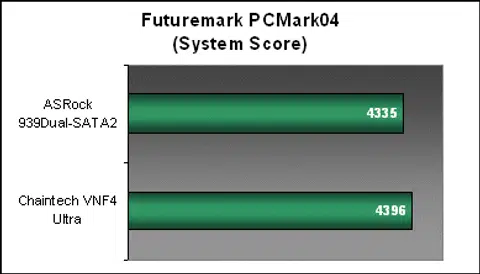
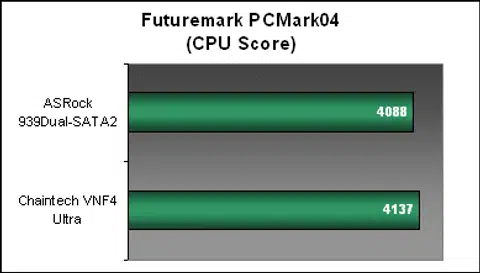
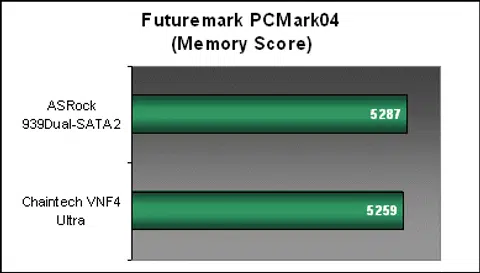
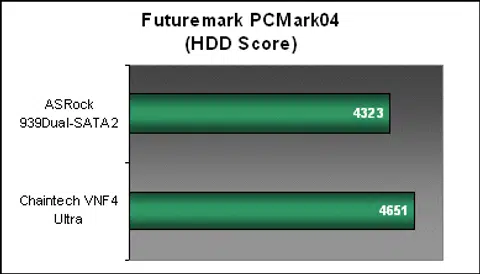
In PCMark04, the 939Dual-SATA2 posted results that were slightly lower than the Chaintech VNF4 ultra, but barely scratching a 1-2% difference. In contrast, the board performed better in memory workloads, but suffered most in the HDD test due to the lack of NCQ (Native Command Queuing) support on the M1567 Southbridge.
That being said, if you want better storage performance, the motherboard does feature a JMicron SATA 3Gbps controller onboard, which supports NCQ. However, there is only one port available.
Results - SPECviewperf 8.01
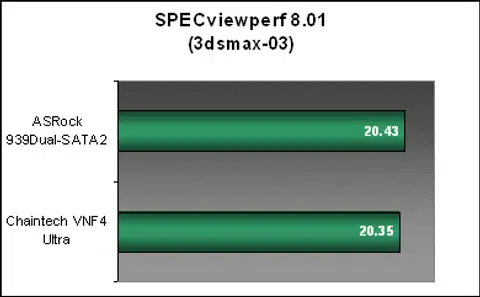
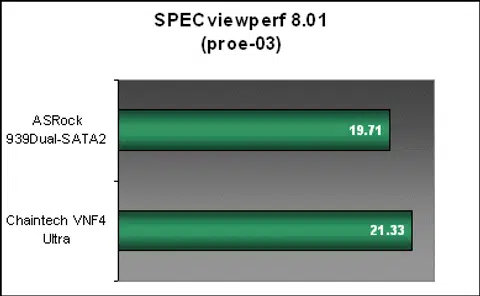
The ASRock 939Dual-SATA2 results in SPECviewperf 8.01 was a little mixed as it managed to better the nForce 4 Ultra in OpenGL for the 3dsmax-03 tests but lost out in the more memory subsystem intensive proe-03 workload (which sort of contradicts PCMark04's findings).
Results - Futuremark 3DMark03
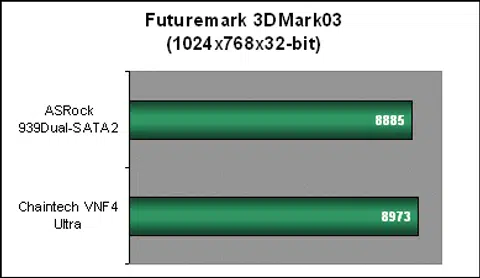
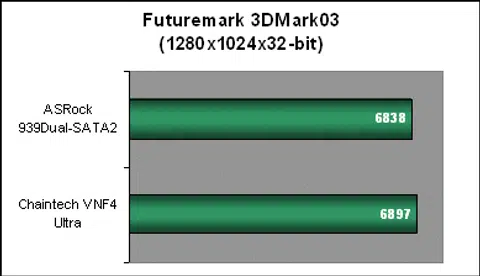
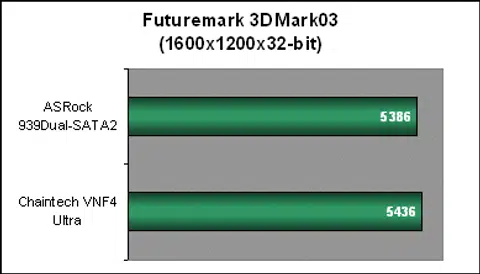
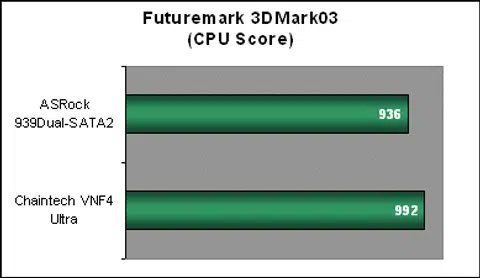
While the 939Dual-SATA2 played second fiddle to the VNF4 Ultra again in every resolution, you won't really be able to tell a difference in real world performance as you can see the scores do not even differ by 100 3DMarks for any test. The board seems to have a strong graphics subsystem to balance out its weaker CPU performance in games.
Results - AquaMark03
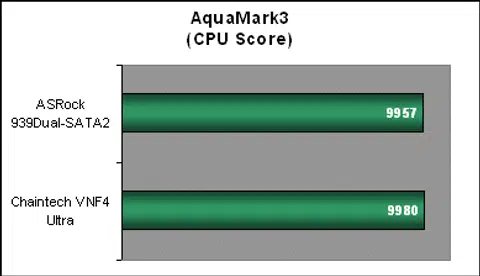
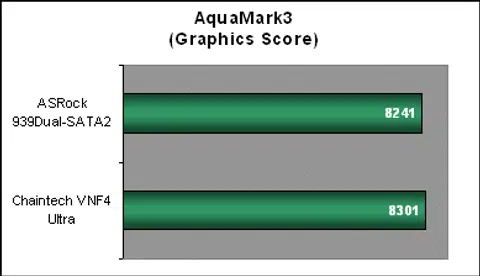
Again the ASRock 939Dual-SATA2 loses out to the VNF4 Ultra, but if you look at the charts and result numbers, you'll agree that the difference seen here and in 3DMark03 is negligible. When we charted the actual average FPS differences, both motherboards were on par.
Conclusion
The ASRock 939Dual-SATA2 comes at a very opportune moment in the PC market where we are on the verge of another major shift towards a new socket platform for AMD processors. Do you have a relatively high-end AGP graphics card (like a GeForce 6800 ultra) and are unwilling to make it obsolete just to move on to the newer Athlon 64 processors? Or maybe you're looking at purchasing a brand new system today, but holding back because of the imminent release of Socket AM2 in a few short months. This may sound like a marketing line, but in the case of the 939Dual-SATA2, it's the absolute truth. Users who are contemplating on an upgrade should find the 939Dual-SATA2 a compelling reason not to hold back on their purchase.
With a combination of ULi's M1695 chipset and ASRock's own Future CPU Port feature, the 939Dual-SATA2 is a unique motherboard with unprecedented flexibility in terms of the technology it can use and we're not talking about compatibility mode here. You will get true AGP 8x and PCI Express support in one board and protect your investment in the future with a daughterboard upgrade (available from ASRock) to AMD's next generation Socket AM2 processors and DDR2 technology.
However, there is always a catch for anything that sounds too good to be true. Firstly, the 939Dual-SATA2 isn't built as an enthusiast motherboard. Sure, it has great technology support, but the board is severely lacking in onboard features. Minimal network and storage support, no FireWire, no S/PDIF and a 20-pin main ATX power connector all seem to scream of an entry-level motherboard. However for those who don't fancy anything but the bare necessities, the board's out-of-the-box capabilities would suit them just fine. We also encountered minor compatibility issues from running the memory timings aggressively and overclocking was a bust.
ASRock's 939Dual-SATA2 fully supports two generations of PC technology without breaking your bank.
Performance-wise, the M1695 chipset comes close enough to the nForce4 Ultra to become a serious competitor, especially considering its price. However, since NVIDIA owns ULi, it is basically a win-win situation for them. The only variable about the ASRock 939Dual-SATA2 that is still a mystery is how it will perform with the Socket AM2 upgrade, but that is something that can only be answered in the future. Judging by what we know about the forthcoming AM2 processors, we have a hunch that it would work fine on this ASRock board as long as the daughter card is designed robust enough. So today, we have a US$70 motherboard that boasts true support for past, present and future technologies and gets two thumbs up in our book.
Our articles may contain affiliate links. If you buy through these links, we may earn a small commission.