
AENEON XTUNE AXT760UD00-19D 2GB Kit (DDR2-1066)
The new AENEON XTUNE AXT760UD00-19D is the world's first low latency DDR2-1066 memory module that is guaranteed to operate at the DDR2 JEDEC standard voltage of 1.8V. To top it off, the XTUNE also supports NVIDIA's EPP specifications for SLI-Ready Memory. Check out the full review here.

Memory Preamble
In September 2003, the JEDEC Solid State Technology Association officially published the DDR2 memory standard and the first consumer use of DDR2 memory starting with DDR2-533 began in 2004 with Intel's introduction of the LGA 775 platform. DDR2 quickly gained traction as the next generation memory and speeds were soon ramped up to 667 and 800MHz. In 2005, a little less than a year from DDR2's debut, the overclocking and enthusiast segment began showing prominence in the performance PC market and ultra high-speed DDR2 memory pushing 1GHz started to appear. Since then however, there hasn't been anything really exciting happening in the DDR2 world. The memory has already matured into a slow simmer and has now become an industry staple for the PC platform.
The biggest news in memory over the past year has been the steady downward price trend of DDR2 memory, making it extremely affordable and not too uncommon to see mid-range systems and OEM PCs carrying DDR2-800 and even performance DDR2-1000 memory is not out of reach of the average consumer.
Today, the enthusiast angle is still a strong driver for DDR2 development, but manufacturers are basically trying to achieve better performance through radical cooling designs (such as OCZ's Flex-XLC hybrid cooling memory) and hand picking chips to ensure overclocking capacity. You can find enthusiast DDR2 memory in the speeds of 1200MHz, but the last real DDR2 specification to meet the JEDEC standards was DDR2-800. Every other high-speed DDR2 memory you see today above DDR2-800 can be considered custom factory-overclocked memory. Their speeds, timings and voltage requirements can vary from manufacturer to manufacturer. For example, the JEDEC standard for DDR2 specifies operating voltage of 1.8V. However, all DDR2-1000 and above memory modules run outside of the specifications anywhere between 2.1V to 2.35V in order to function properly.
Then in May this year, Micron announced sampling and production of the first DDR2-1066 chips that are actually able to run at a stock voltage of 1.8V through their 78nm fabrication process. This is the first big announcement for DDR2 memory as it could possibly see the setting of a new official JEDEC standard for DDR2 memory and running into favor with AMD, which will not be moving to DDR3 till 2008 at the very earliest. Micron's new DDR2-1066 chips operate with a CAS Latency of 7.0 however, which may very well cripple its performance advantage seeing that standard DDR2-800 memory have dropped to CAS 4.0 and even 3.0, while regular enthusiast DDR2-1066 in the market run at CAS 5.0.
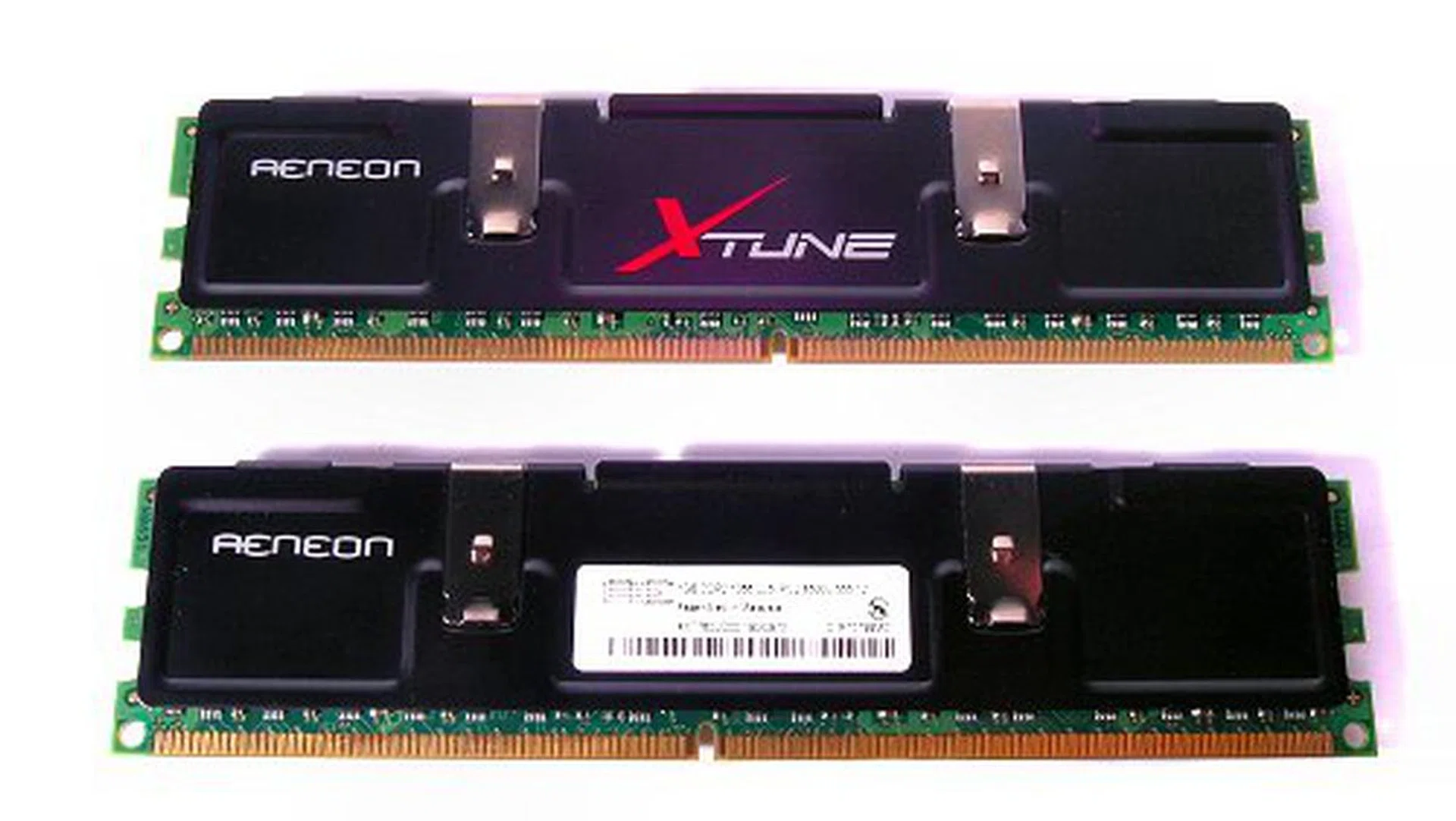
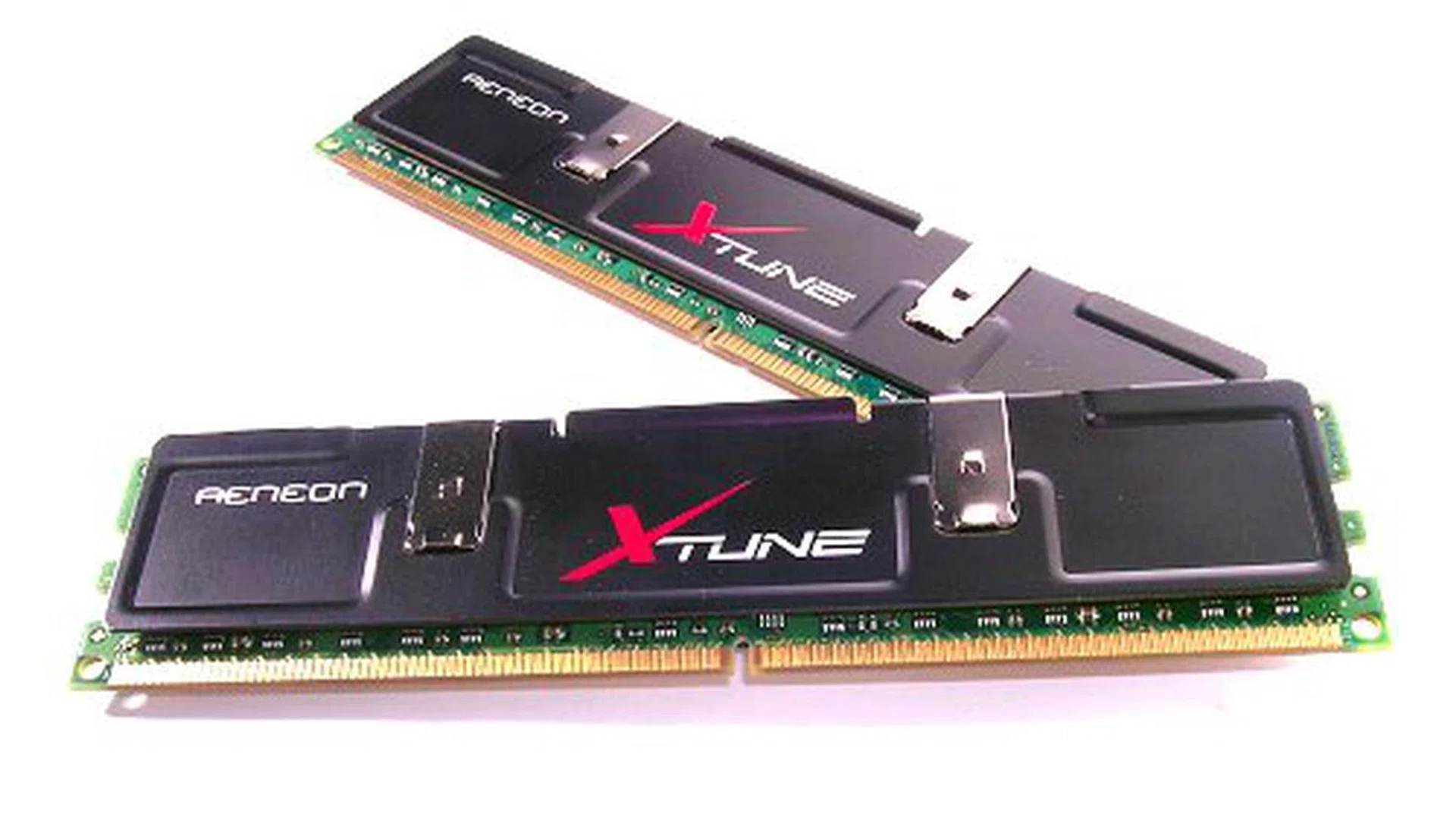
The AENEON XTUNE AXT760UD00-19D 2GB kit comes with two matched 1GB DDR2-1066 CL5 DIMMS.
In Comes XTUNE
This is where Micron's German rival Qimonda AG comes into play. Through their AENEON brand, Qimonda has essentially beat everyone to the punch by launching their new AENEON XTUNE DDR2-1066 memory into the retail channels. The XTUNE is the performance model of AENEON's memory lineup and this DDR2-1066 memory is not only guaranteed to operate at a stock 1.8V at 1066MHz, it also runs at CAS 5.0 latency and carries NVIDIA's Enhanced Performance Profile (EPP) timings. That's a triple bonus in a single stick of RAM and we intend to put the AENEON XTUNE DDR2-1066 through its paces to find out just how well Qimonda's newest DDR2 wonder-RAM will fare. In this review, we will be testing the AENEON XTUNE DDR2-1066 2GB dual channel kit (AXT760UD00-19D).
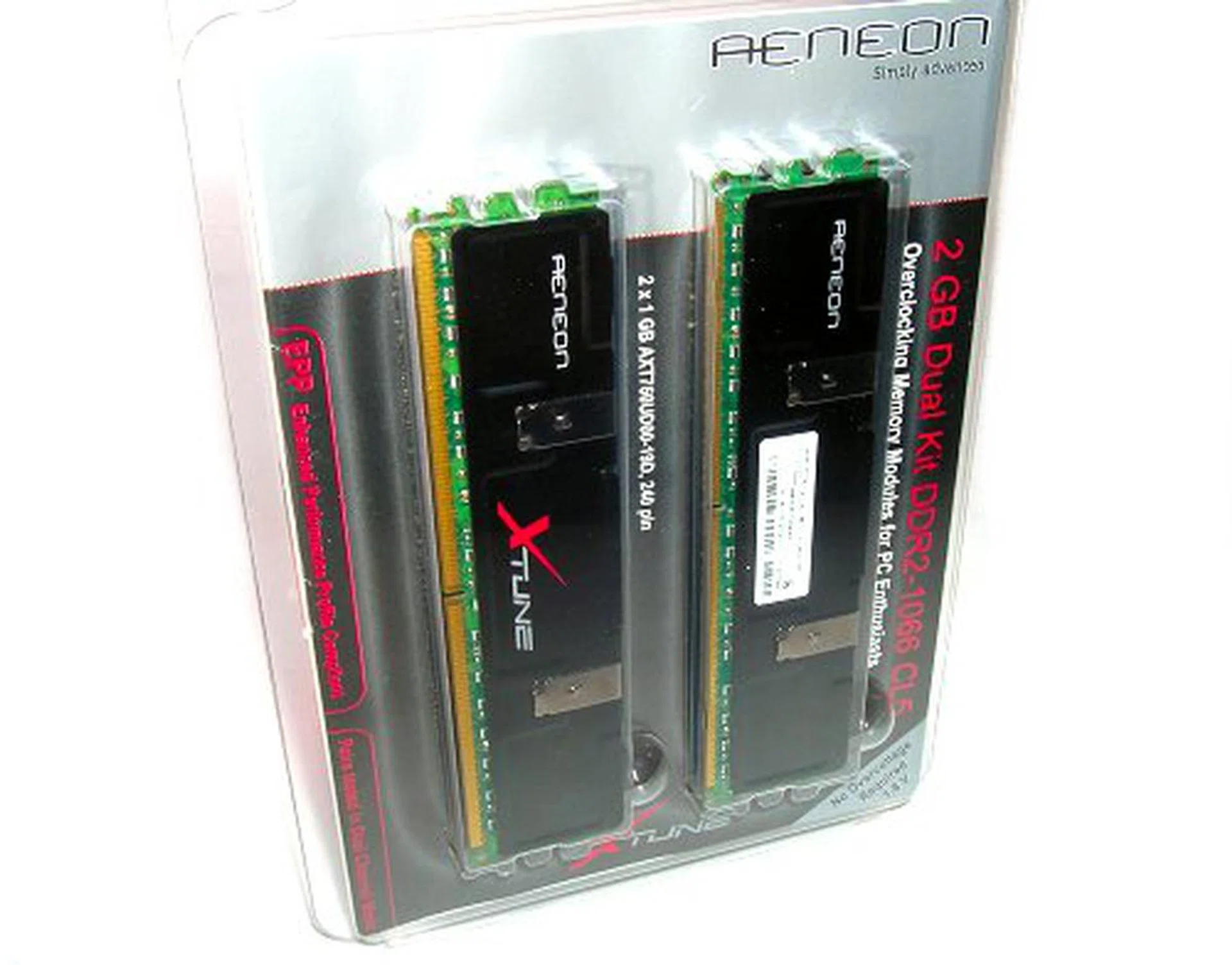
The AENEON XTUNE AXT760UD00-19D DDR2-1066 2GB kit.
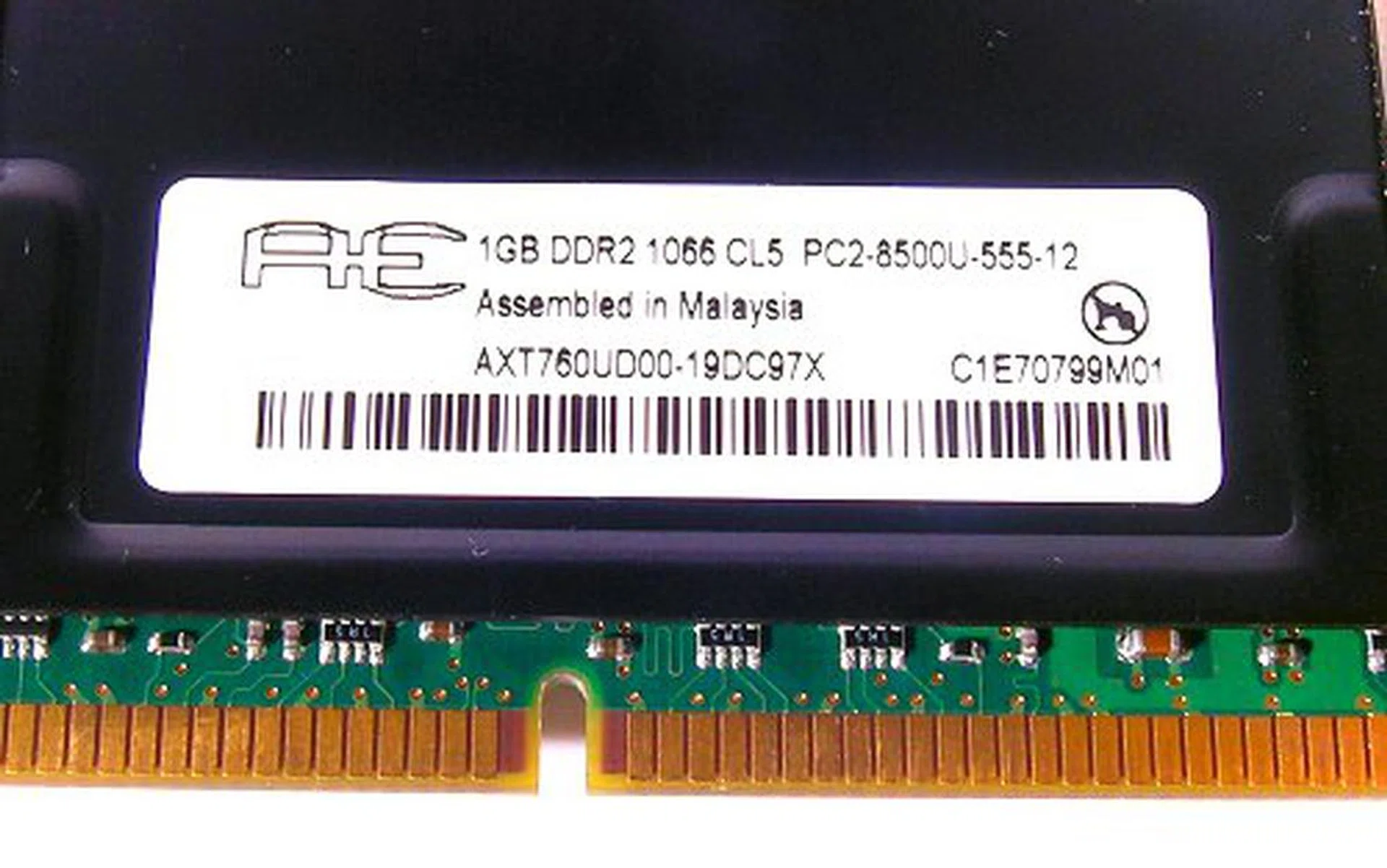
Close up clearly shows these are CL5 DIMMs.
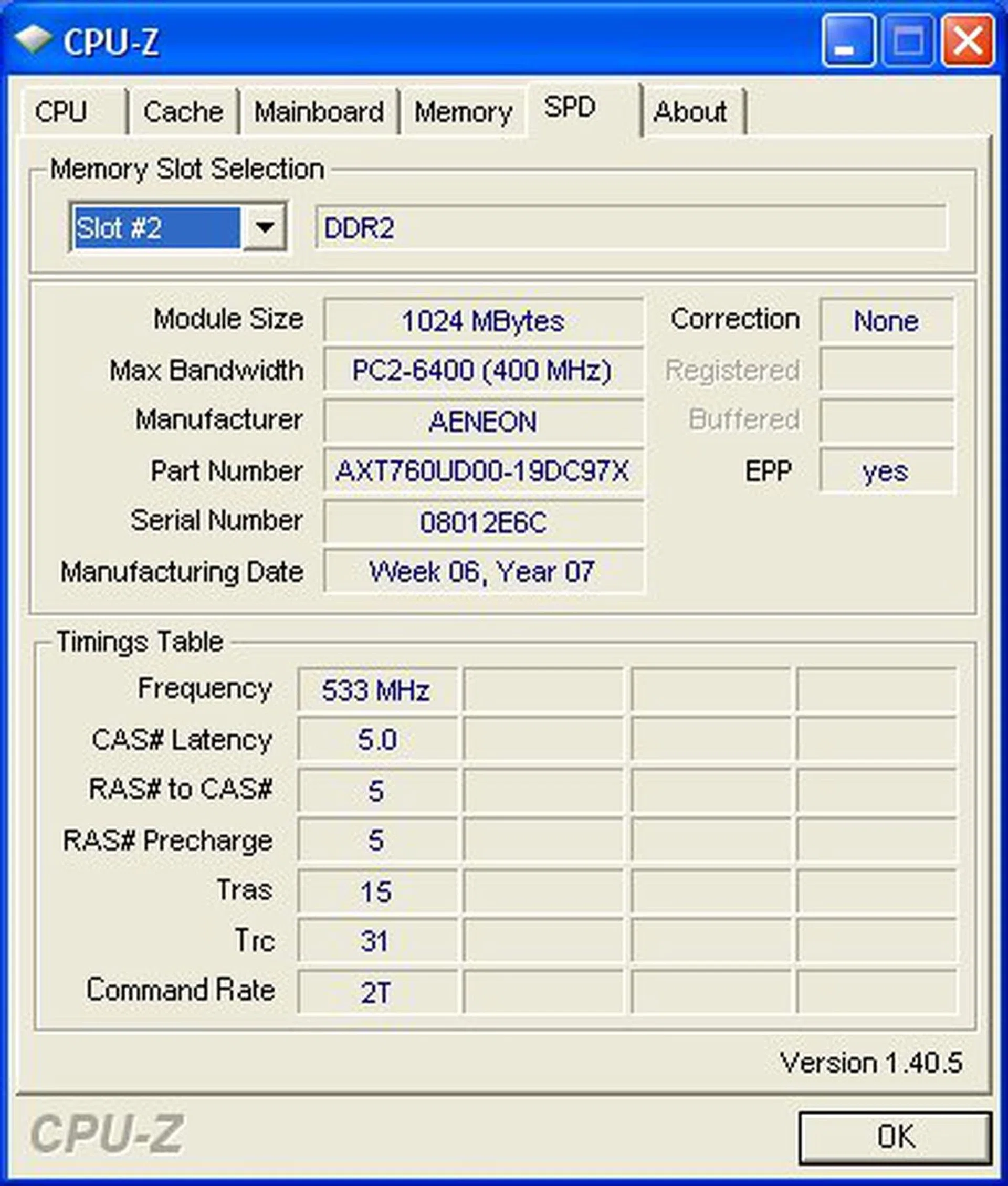
CPU-Z SPD information shows detailed information on the DIMM module. Notice it has EPP information. Chips used also seem to be standard DDR2-800 memory, which is probably hand picked to run at 1066MHz.
Test Setup
As it has been a while since we've last reviewed DDR2 memory, we will be using a brand new test bed configuration to benchmark the AENEON XTUNE DDR2-1066. The platform of choice is the NVIDIA nForce 680i SLI due to the fact that NVIDIA's memory controller can be unlinked from the FSB with a 1MHz granularity, allowing for much greater control of memory settings. We will also be able to test out the XTUNE's EPP settings through the nForce 680i SLI as well, making it an obvious selection. The rest of the system configuration is listed below and will be used as our standard test bed for throughout the rest of this article.
Putting the AENEON XTUNE DDR2-1066 to the test.
- Intel Core 2 Extreme X6800 processor
- ASUS P5N32-E SLI Plus (NVIDIA nForce 680i SLI)
- 2 x 1GB AENEON XTUNE DDR2-1066 @ 5-5-15 CAS 5.0 (SPD)
- 2 x 1GB AENEON XTUNE DDR2-1066 @ 5-5-15 CAS 5.0 (EPP)
- 2 x 1GB AENEON XTUNE DDR2-1066 @ 4-4-9 CAS 5.0 (OC)
- 2 x 1GB Kingston HyperX DDR2-1066 @ 5-5-15 CAS 5.0
- 2 x 1GB Kingston HyperX DDR2-800 @ 4-4-12 CAS 4.0
- Seagate Barracuda 7200.10 200GB SATA hard disk drive (one single NTFS partition)
- MSI GeForce 8600 GTS 256MB - with ForceWare 162.18 drivers
- NVIDIA nForce 9.53 driver set
- Microsoft Windows XP Professional with Service Pack 2 (and DirectX 9.0c)
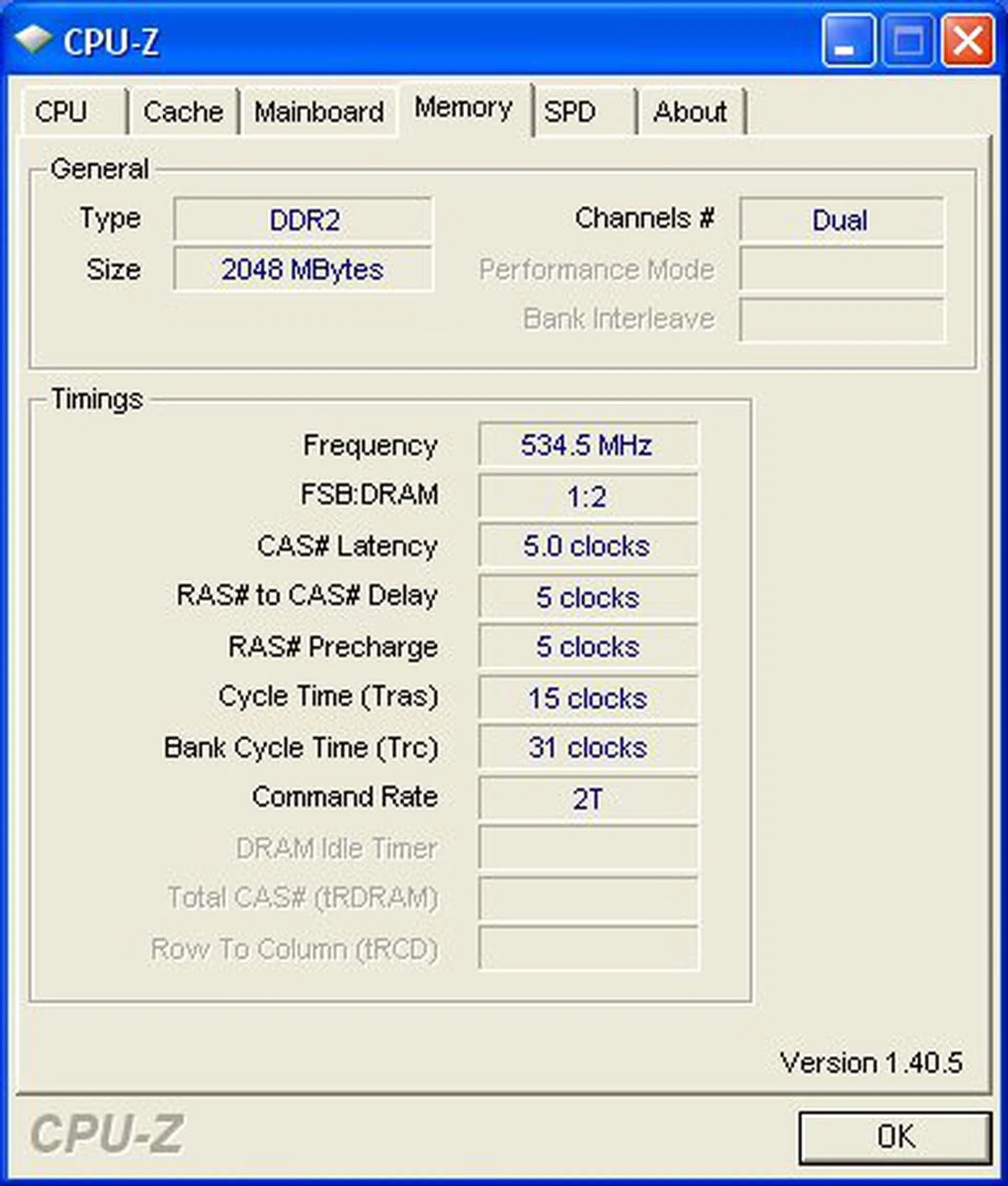
SPD timings for the AENEON XTUNE DDR2-1066 running in dual channel mode.
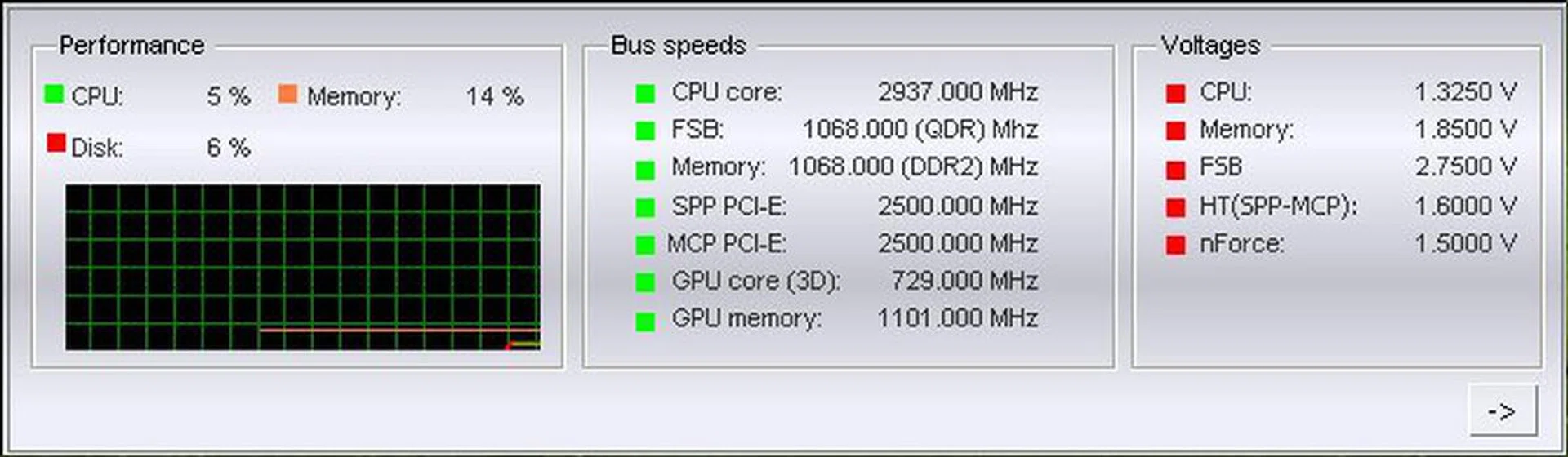
nTune's monitoring tool showing memory voltage to be 1.85V, which is standard for most nForce 680i SLI boards when set to Auto.
To benchmark the AENEON XTUNE DDR2-1066 memory, we will be comparing it with a pair of Kingston HyperX DDR2 -1066 as the baseline for DDR2-1066 performance. The Kingston HyperX memory will be benchmarked with the same settings as the XTUNE, which is 5-5-5-15 (and the default recommended settings for both memory pairs). We will also throw in standard DDR2-800 memory performance scores to act as a guideline on the improvements of DDR2-1066 memory above the current industry standard. For the XTUNE itself, we will run three benchmark scenarios as follows:-
- Benchmark using stock voltage and SPD timings.
- Benchmark using stock voltage and SPD timings with EPP profile enabled (no system or CPU overclocking as we just want to test memory performance).
- Benchmark using stock voltage at fastest memory timings.
The first two scenarios pretty much speak for themselves, but the last scenario might warrant some explanation. The XTUNE DDR2-1066 memory is rated at 5-5-5-15, which is pretty normal for DDR2-1066 memory. However, we wanted to know if it could operate at tighter timings without needing to increase its voltage. After much fiddling around, we managed to get the XTUNE DDR2-1066 to run stable at 5-4-4-9 and this is the timing that will be used for extended benchmarking. Incidentally, these timings are exactly what Corsair's first DDR2-1000 low latency memory modules debuted back in 2005, but have now been discontinued.
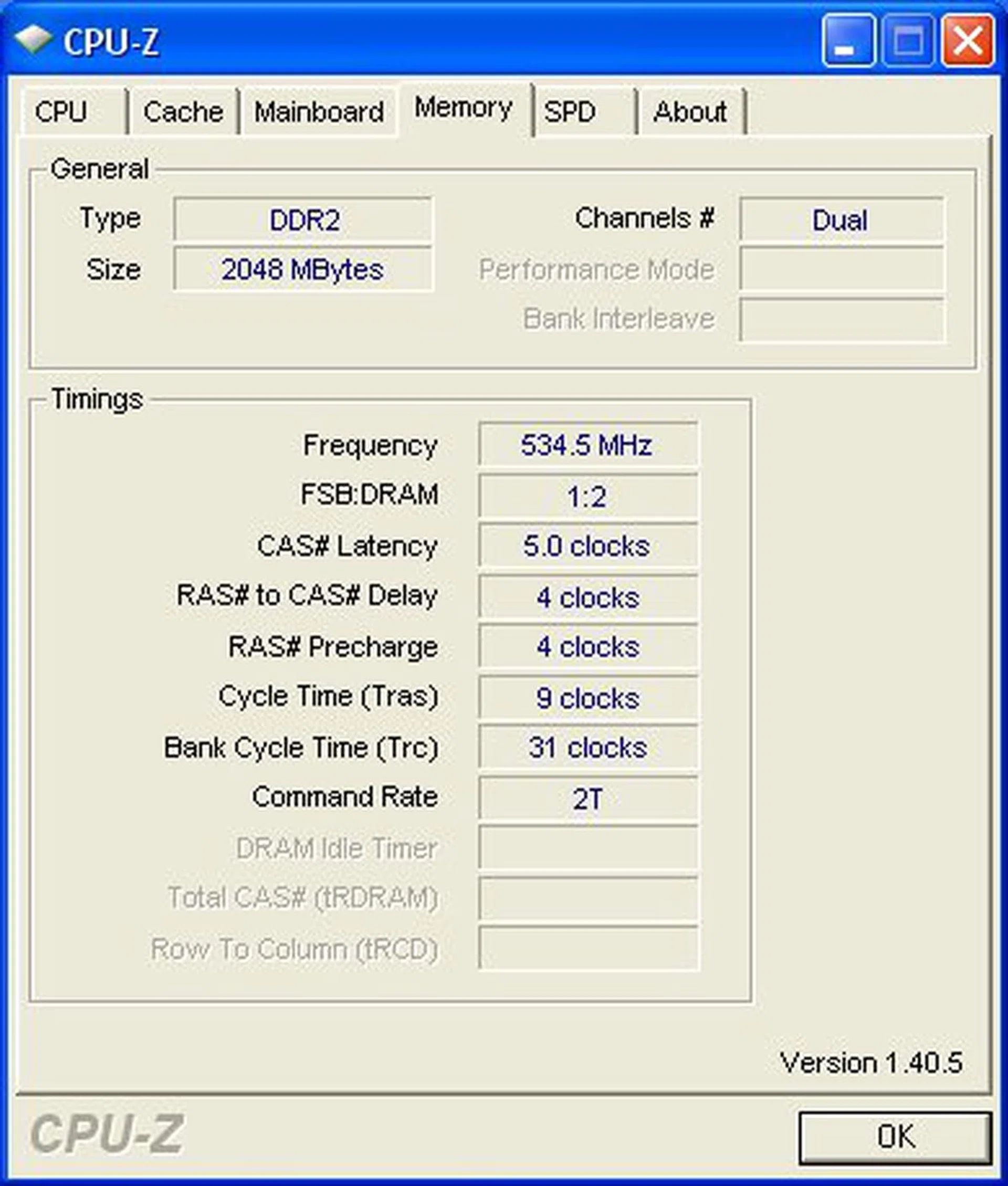
Low latency timings for XTUNE benchmarking.
Benchmarks
The following benchmarks are used in this article to gauge the performance of the AENEON XTUNE DDR2-1066 memory:-
- BAPco SYSmark 2004
- Futuremark PCMark05
- SPECviewperf 10.0
- Futuremark 3DMark06
- F.E.A.R.
- Unreal Tournament 2004
- AquaMark3
Results - Futuremark PCMark05
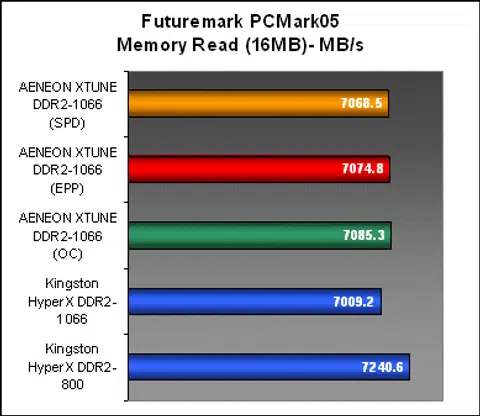
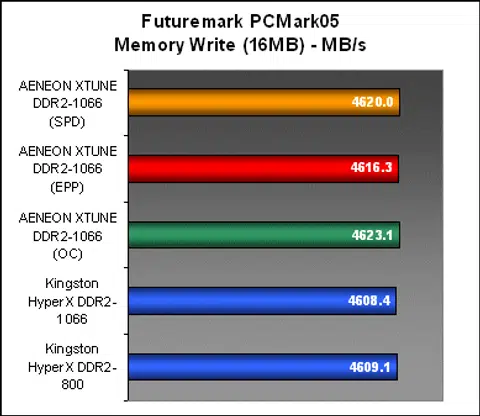
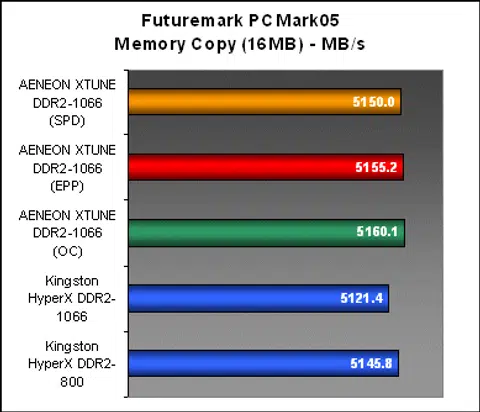
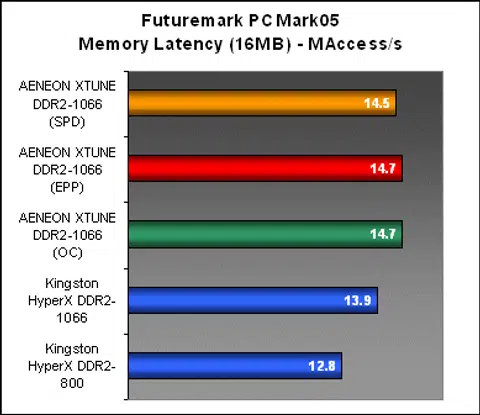
We started off our tests with PCMark05's Memory workloads to get an overall feel on just how well the AENEON XTUNE compares with the Kingston HyperX. Taking the larger 16MB test block numbers, the XTUNE was able to outperform the equally configured Kingston HyperX DDR2-1066 memory in all Read, Write, Copy and Latency access tests by a slight amount. Interestingly, the lower bandwidth DDR2-800 memory with tighter timings scored the highest in the Read tests, though the overall performance favors the XTUNE.
The clearest identifier on performance happened to be the memory latency access tests. This particular test measures memory latency performance by counting millions of access per second (MAccess/s). Here, the DDR2-1066 memory outperformed DDR2-800, while the XTUNE showed very competitive performance against the Kingston HyperX DDR2-1066.
If you look at the graphs below, there is a visible, if very minute difference between the three test scenarios run on the XTUNE. Both EPP enabled and low latency (OC) tests show better performance over the stock settings, though not by much.
Results - BAPco SYSmark 2004
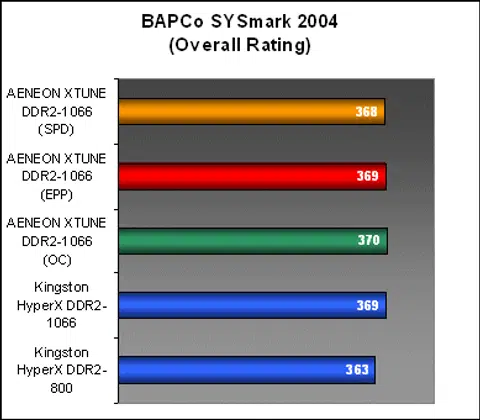
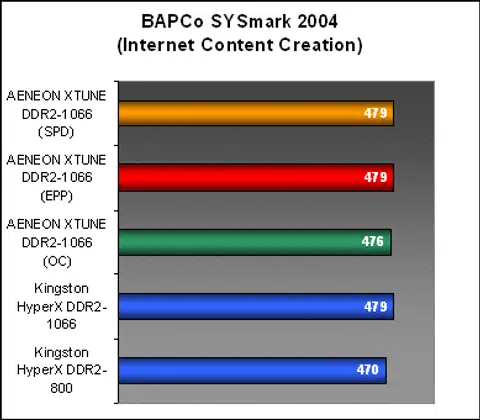
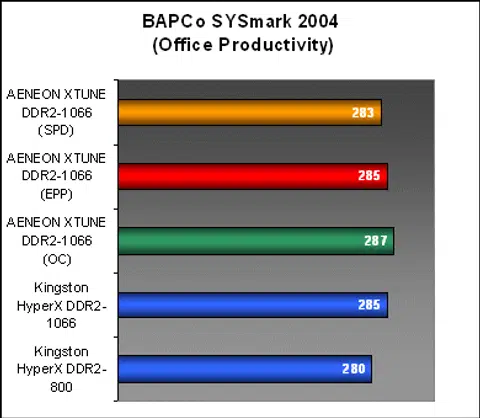
SYSmark numbers show that the AENEON XTUNE DDR2-1066 can perform just as well in synthetic benchmarks as it can with real world applications and scenarios. Overall, both the Kingston HyperX and AENEON XTUNE DDR2-1066 memory performed on par with each other, with DDR2-800 numbers trailing behind as expected. The biggest difference in this benchmark lies with the Office Productivity workloads, where memory subsystem performance and latency is taxed more.
In this benchmark, you can see again a visible upward trend in performance from the SPD timing to the low latency 5-4-4-9 timing used. While EPP manages to help improve overall performance slightly, manual tweaking will still give you better results in the long run.
Results - SPECviewperf 10.0
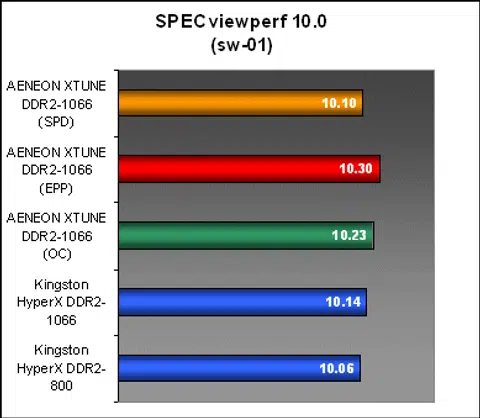
The latest SPECviewperf, like all its predecessors is primarily a professional OpenGL benchmark tool that uses various rendering workloads and viewsets from established workstation class applications. However, as many of these workloads involve heavy state changes, their memory usage can be quite strenuous, some more than others, but we've found this benchmark to be a good indicator of memory performance as well as graphical.
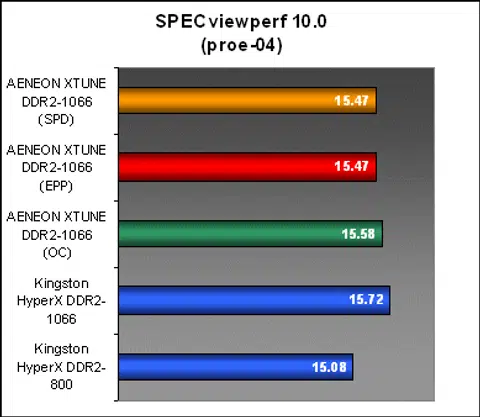
As with our motherboard reviews, one of the more memory intensive workloads in this benchmark is the Pro/ENGINEER workload. As you can see from the results, DDR2-1066 with its higher bandwidth clearly has the upper hand over DDR2-800. However, the Kingston HyperX DDR2-1066 was able to outperform even the low latency AENEON XTUNE in this test.
SolidWorks (SW-02) results on the other hand, show the AENEON XTUNE having the better performance, though this time, EPP enabled results came out on top. In all fairness, the results from all the tests are within a single point of each other and should not impact real world performance by much.
Results - AquaMark3 and 3DMark06
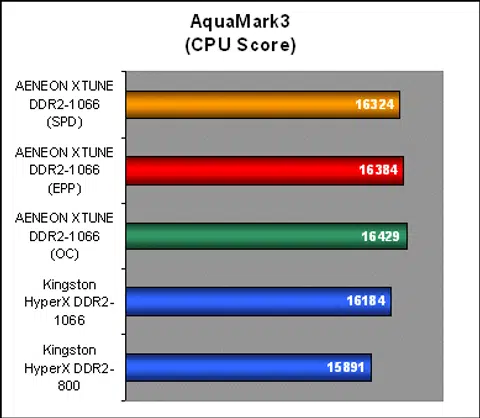
System level performance for AquaMark3 did register improved performance for the AENEON XTUNE DDR2-1066 memory over the Kingston HyperX DDR2-1066. Similarly, you can see a small, but linear performance improvement going from SPD to EPP to low latency settings for the XTUNE.
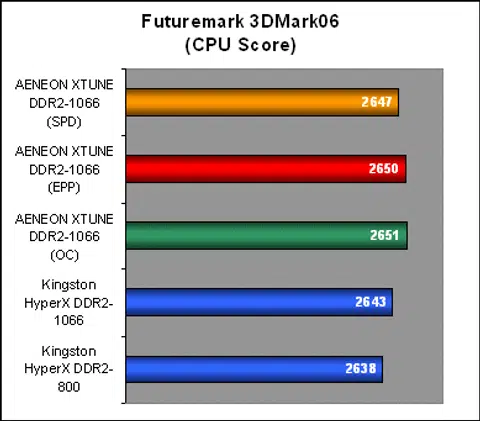
3DMark06 results mirror AquaMark in the performance trend between the tested memory. Once again, the AENEON XTUNE managed to outperform Kingston's HyperX DDR2-1066 and show consistent scores for the different timings used.
Results - Gaming Benchmarks
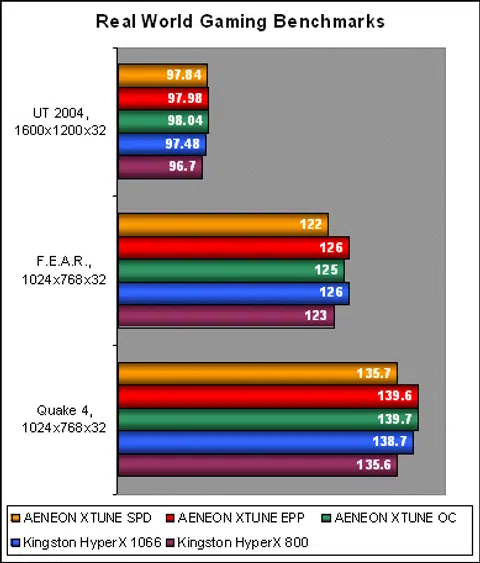
Our last set of benchmarks involve using actual games to measure real world performance difference in frames-per-second (fps) stemming from the memory subsystem. In older games like Unreal Tournament 2004, the impact on performance seemed to be minimal, even if UT2004 has been known to scale well with system performance. However, with our current system setup, the performance gap between DDR2-800 and the low latency timing for the ANEON XTUNE DDR2-1066 was less than 2fps.
For F.EA.R. and Quake 4, we set system performance to High for both, but turned off shadows to free up the GPU from bottlenecking performance. In both games, the stock XTUNE DDR2-1066 performance was a little lackluster as it seemed to perform below our expectations and against the trend set in previous benchmarks. Here, the XTUNE's stock performance was in the same range as the DDR2-800 Kingston HyperX and it took the EPP and low latency timings for the XTUNE to rival Kingston's scores in these games.
Overclocking
We know that DDR2 has nearly reached its peak in terms of frequency scaling and even the best enthusiast RAM today tops out at 1300MHz, most struggling between 1100MHz and 1200MHz. In this light, DDR2-1066 memory itself, even under stock frequency is at the upper limits.
The AENEON XTUNE DDR2-1066 memory is labeled as overclocking RAM, and with stock voltages of 1.8V and its capability for running at low latency timings, we believed that it would actually be ideally suited to push the clocks. This considering most DDR2-1066 memory already have an operational voltage of 2.2-2.3V, the XTUNE should in theory have much room to play, but this was not the case.
It seems that Qimonda has optimized the AENEON XTUNE specifically to run at 1066MHz and 1.8V. With these settings, and even at low latency 5-4-4-9 timings, we find the memory to be incredibly stable. However, all our attempts to overclock the memory above its rated speed have failed so far. We've tested the XTUNE on various chipsets from the nForce 680i SLI to Intel's latest P35, and while the memory would work flawlessly within its specifications, the bandwidth for overclocking beyond 1100MHz as well as voltage tolerance above 2.2V is extremely limited. In most cases, our test systems would either fail POST or run into BSODs in Windows.
Conclusion
It is pretty clear that the selling point of the AENEON XTUNE DDR2-1066 memory isn't extreme performance. Yes, this is a pair of high-speed, low-latency, enthusiast grade DDR2-1066 memory and users should expect it to perform as such. However, DDR2-1066 memory modules have been around for more than a year and besides the recent crashing DRAM prices, nothing much is new about another pair of DDR2-1066 memory in the market.
As you can see from our benchmarks, the AENEON XTUNE DDR2-1066 performs pretty much in the same range as the Kingston HyperX DDR2-1066. In almost all the benchmarks, the XTUNE consistently had the slight lead, which proves that Qimonda has optimized the memory very well. This is however true only when EPP is enabled unless otherwise you further tweak it manually. This also means that for those who want to plug-and-forget, this memory pair performs best only on an nForce 680i SLI or nForce 590 SLI based motherboard since only these support the EPP function (and these are all premium boards). Overclockability of the memory was a slight disappointment though. We had thought that it would be possible to get it to run at 1200MHz with ease. However, in hindsight, losing its tight timings to get another 50-100MHz out of it may not be worthwhile.
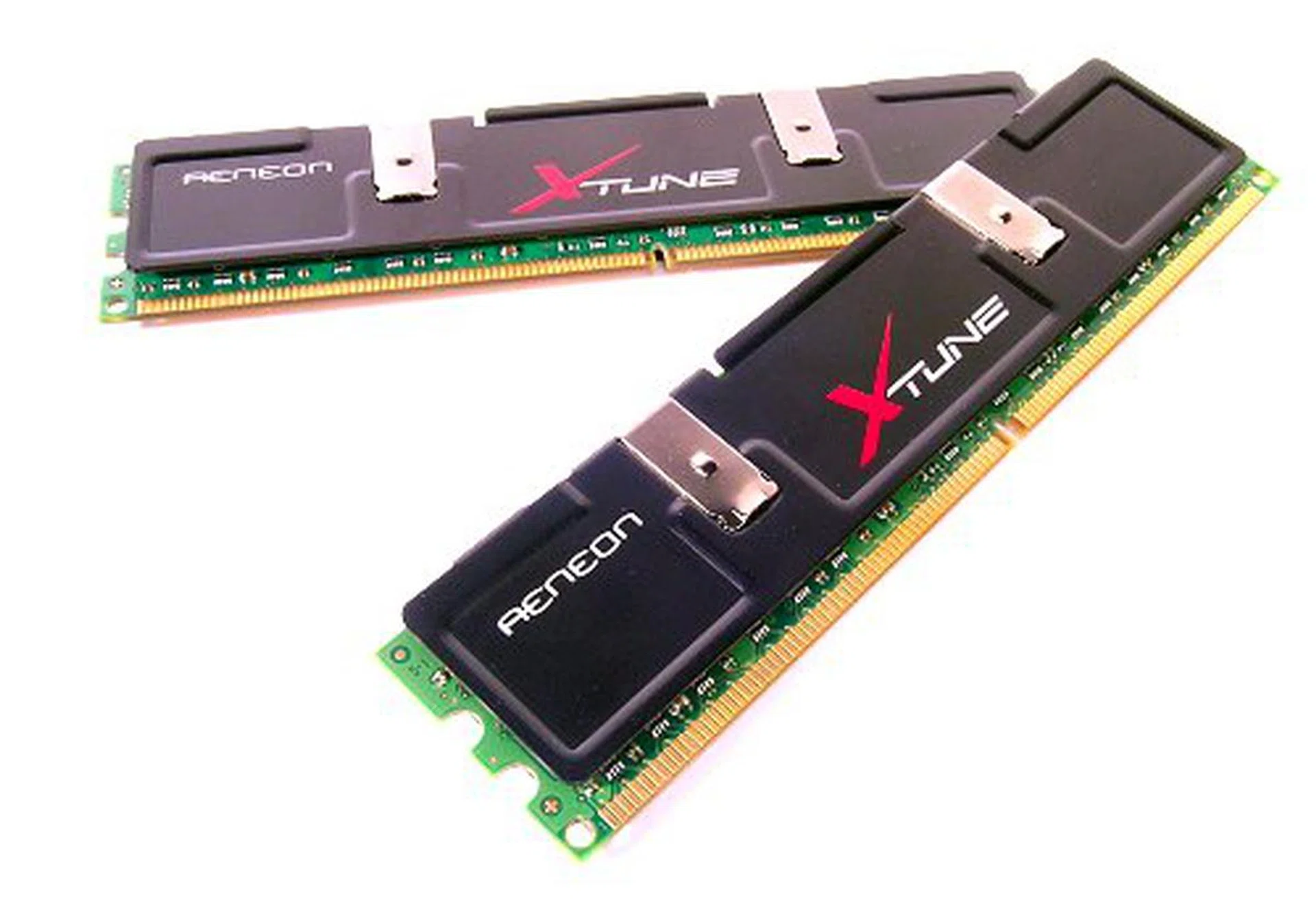
The AENEON XTUNE AXT760UD00-19D DDR2-1066 is damn fine memory.
Being able to run DDR2 at 1066MHz with 5-4-4-9 timings rock solid at 1.8V is the real kicker. This is one of the more significant milestones for DDR2 memory in the past 5 years. Although Intel is trying to muscle DDR3 into the scene, speed, latency and pricing issues do not yet give users a significant reason to embrace the new standard yet. AENEON's standard voltage DDR2-1066 memory represents a lifeline to DDR2 memory for the remainder of 2007, which will work out favorably for some parties, like AMD, who are not yet ready to transition to DDR3.
The funniest thing about the XTUNE is that it carries a 25-year warranty, not lifetime like most memory today, but specifically 25 years. The AENEON XTUNE DDR2-1066 comes in 1GB (2 x 512MB) and 2GB (2 x 1GB) kits, and has an RRP of around US$144 (S$220) and US$242 (S$369) respectively.
Addendum
22 August 2007 - We have just gotten word from Qimonda that the 25-year warranty period mentioned in the review is only meant for the European (EU) market. AENEON memory sold in Asia Pacific (AP) will carry a 'Lifetime Warranty', which is in line with most memory products in this region.
Our articles may contain affiliate links. If you buy through these links, we may earn a small commission.