
Panasonic VIERA Regional Launch
The wait for Panasonic's new fleet of VIERA Plasma and LCD TVs announced at CES this year is finally over! Panasonic is ready to let loose these panels in the Asian market with a slew of enhanced features, brighter panels and slimmer proportions. Check them out in our coverage of Panasonic's VIERA regional launch.
Are You Ready?
Till Ultra High Definition becomes a commonplace theme in our homes, you can be sure that HDTV manufacturers will continue to jazz up their tunes in order to stay on top of the competition.
Perceptibly, Panasonic's latest rejuvenation of their VIERA PDP (Plasma Display Panels) and LCD line-up attests to that observation. We were at Kuala Lumpur recently to grace the company's regional launch, a media event that showcased an ambitious breakout of 11 new Full-HD and 12 HD-Ready TVs. Totaling up to 23 new displays in all, it's an anticipated augmentation to last year's lineup of 15 VIERA TVs.
Consumers in Asia can look forward to possessing these new toys for their living spaces real soon, since the new VIERAs are expected to flood the Asian scene from April 2009 henceforth. If you want to know what the Panasonic engineers have been busy with all winter, read on to find out.

The stage is set and the lights are ready. We'll bring you a rundown on the latest VIERAs in the following pages, including the new PDPs and LCD factions you can expect for 2009.
Big Guns Talking
Mr Hiroyoshi Suga, Director for Panasonic Marketing Asia, kicked off the event with a friendly discourse. Noting a few key points, he spoke of the rapid growth rate of flat panel displays adoption in the Asian market and how Panasonic is expecting their figures to rise to 29% this year, although CRTs still snag the lion's share in consumer homes, currently at two-third's of the numbers.
Continuing on, he also spilled the beans on Panasonic's business strategy, like the organization's current focus on the quality of their NeoPDP and IPS Alpha panels, while effectively buffing up the numbers for their product lineup along the way. On the marketing end, Panasonic will also be looking at enhancing strategic Asia Pacific investments as well as taking a proactive approach to Panasonic CRT users, mainly by educating them on the perks of flat panels.

Mr Hiroyoshi Suga, Director of Panasonic Marketing Asia, telling us why Panasonic is still kicking-butt after all these years. He's also optimistic that Panasonic will remain as the dominant PDP leader in six Asian countries.
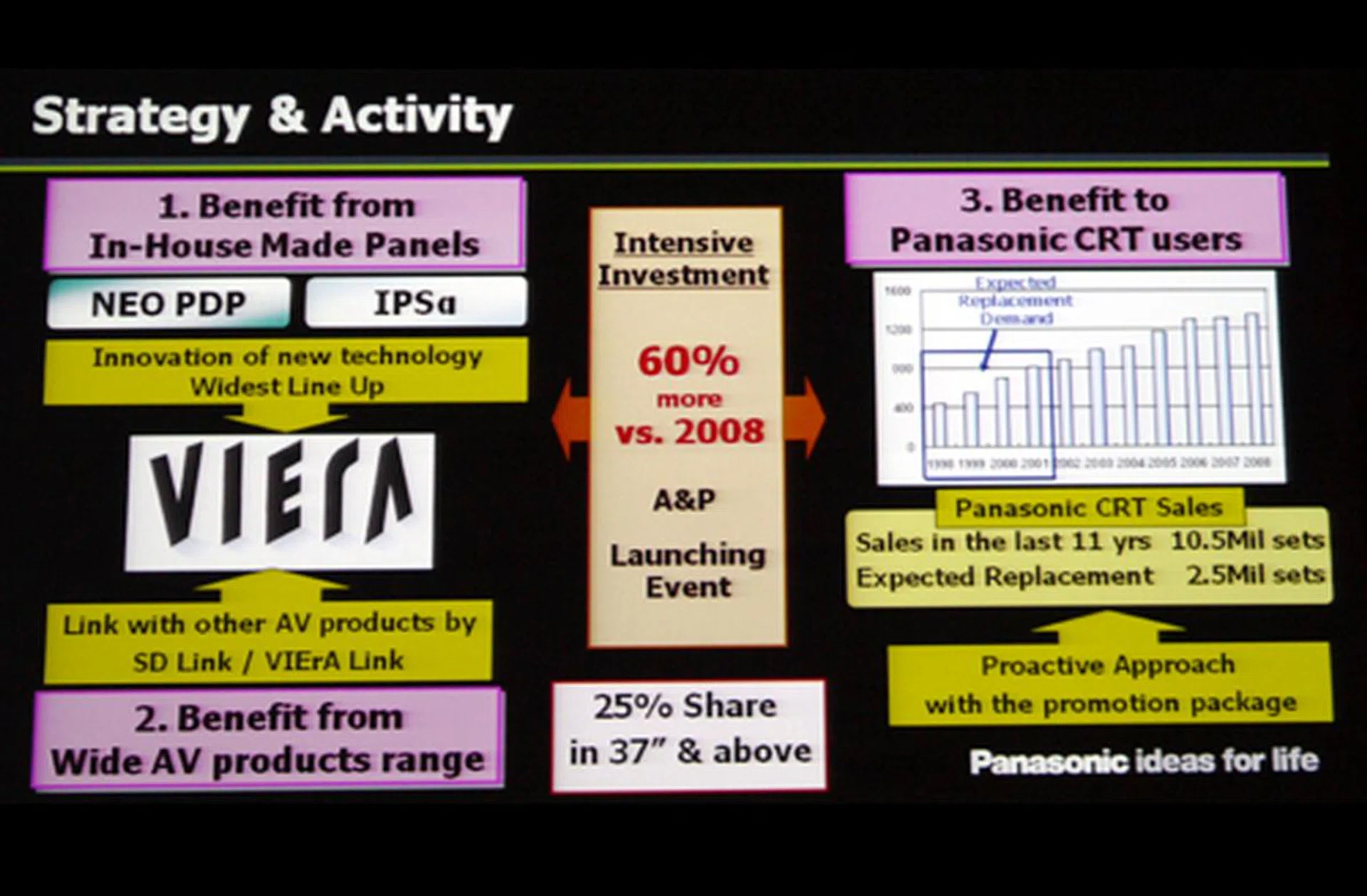
A summary of Panasonic's marketing strategy. They're expecting a replacement of 2.5 million CRT sets this year, versus a total of 11.5 million units for the past 11 years.
Mr Hirofumi Wada, General Manager for Panasonic AVC Japan, next talked about Panasonic's evolving technologies on the VIERA front. In the name of the Japanese company's great ambitions, Panasonic will focus on improving certain vital factors for their TVs. In a nutshell, their R&D teams would be looking at boosting their panel's contrast ratios, and reducing the panels' girth as well as energy consumption. Citing the new 42-inch PDP as an example, he spoke of how the new NeoPDP panels are expected to consume a power equivalent of just two light bulbs annually (150kWh/year). Now, isn't that neat?
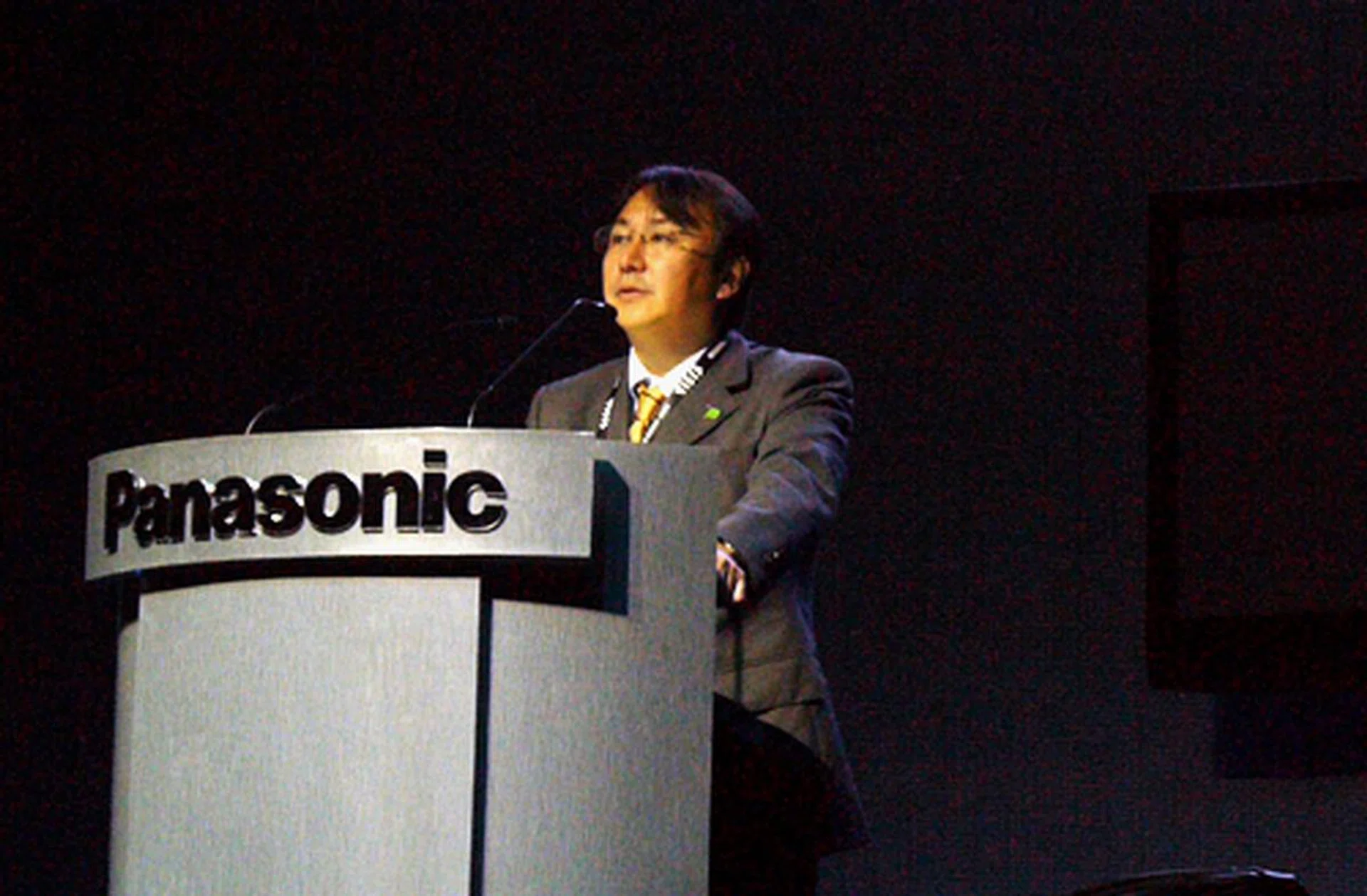
Mr Hirofumi Wada covering the essentials of Panasonic's NeoPDP evolution during his talk. This emphasis is hardly surprising since the plasma arm happens to be Panasonic's life blood after all.
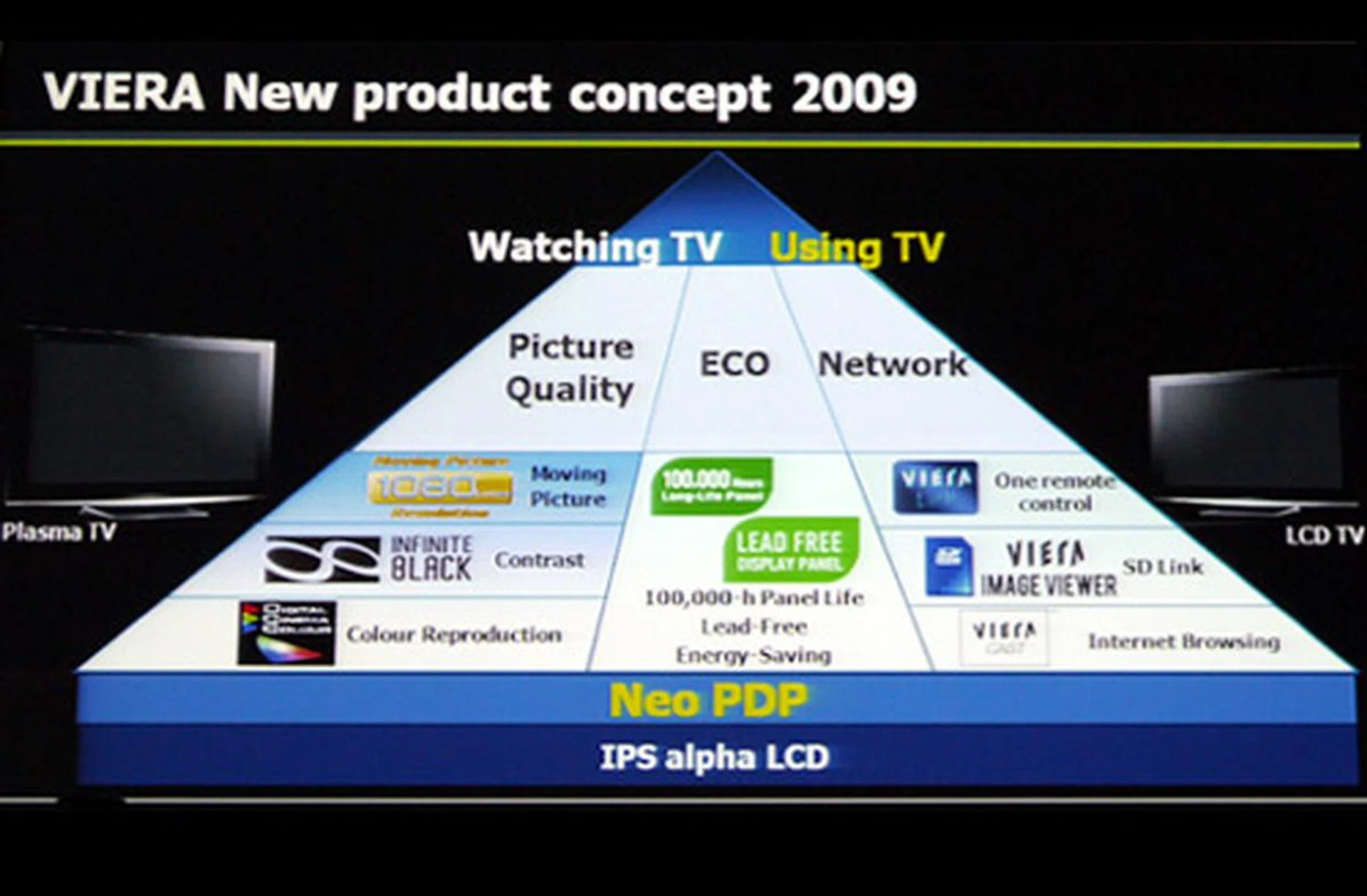
Here's what you can expect from the new VIERA lineup for 2009. As shown, picture quality, eco-friendliness, and networking features act as key selling points for Panasonic on their latest salvo.

Mr Motoki Nakahara, General Manager for Panasonic Marketing Asia, tackling some questions from the media. We know that the Z-series released in the States possess Wireless HD features. However, Singaporeans won't be seeing that feature anytime soon since the frequency used by Panasonic runs in conflict with our military standards here.
Much Ado About The New VIERA Series
Consumers here will witness a significant update in seven major VIERA product lines, namely the Z, V, G, S, X, C and A series, along with an introduction of new Panasonic display technologies. Aesthetically, these new-age televisions are delightfully slimmer than before and notably sexier.
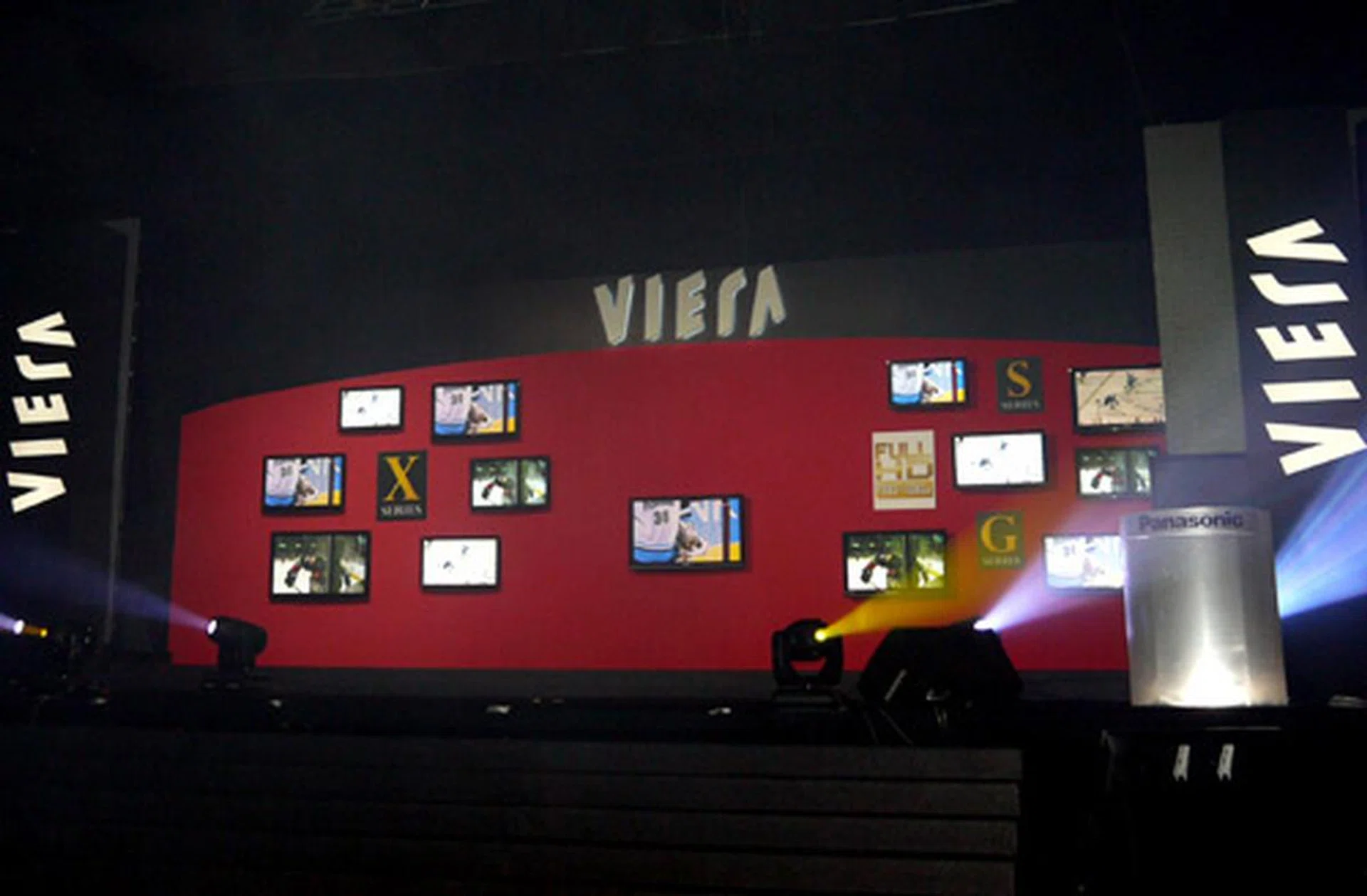
Unveiled in a rather grandiose fashion, here's a glimpse of the new VIERA X, S and G series. While the prices of these babies aren't given to us just yet, you can expect to find them in your local electronic stores real soon.
With varied screen sizes spanning from 19 to 54 inches, Panasonic is intent on tending to the wants of an Asian consumer market. The TH-P54Z1 flagship model will be the first 54-inch model to make its maiden entry into the region for Panasonic. Furthermore, all upcoming PDP and LCD models will also support VIERA Link, Panasonic's one-remote policy which unites other Panasonic HDMI-CEC compatible devices. If you're an auditory aficionado, you'd be pleased to know that the PDP Z and V series are both THX-certified displays.
With this launch, Panasonic has christened their SD-card reading functions with a new name, now known as the VIERA Image Viewer (formerly known as the Photo Viewer). Users aren't restricted to viewing JPEG images alone since it supports H.264/AVCHD video files as well. Similarly, they can also append their own background music to spice up the slideshows, a new feature which Photo Viewer didnt offer previously. However, do note that the Image Viewer is only applicable to specific models, and not all of them have video playback capabilities, like the LCD X10-series for example.
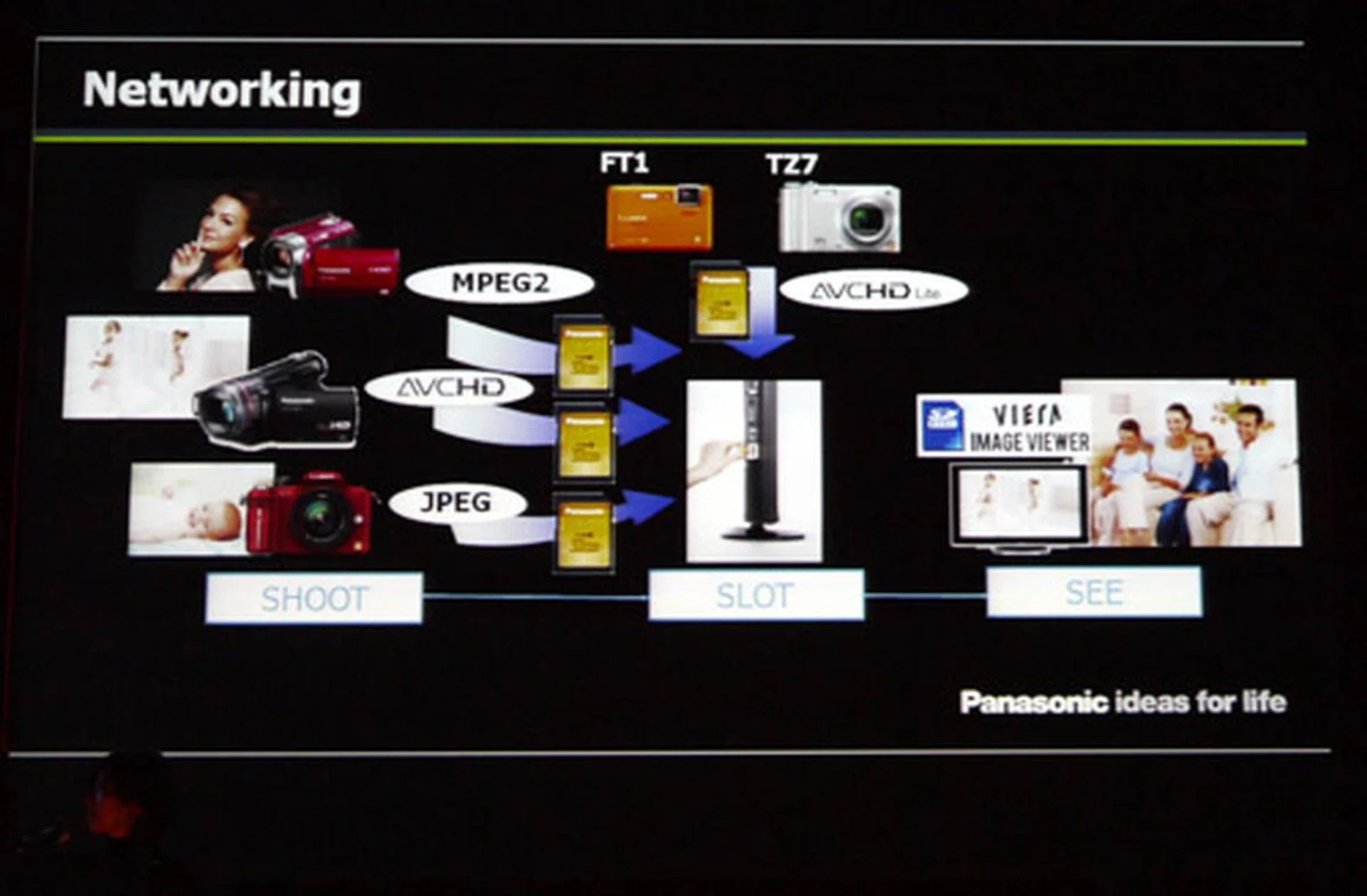
Still not quite sure what Image Viewer is all about? Here's an illustration to enlighten you further. Models like those from the PDP X-series would be able to tackle MPEG2/JPEG/AVCHD files without batting an eyelid.
Environmental concerns prevail with the Japanese organization. Notably, all PDP and LCD panels will incorporate the Eco Mode feature which reduces power consumption by adjusting the screen's luminance depending on external lighting conditions. As for their PDPs, they will continue their mercury and lead-free legacy with a advertised 100,000-hour lifespan. Compared to their 2008 predecessors, the new HDTVs are more energy efficient and lovingly crafted with the earth's carbon footprint in mind.
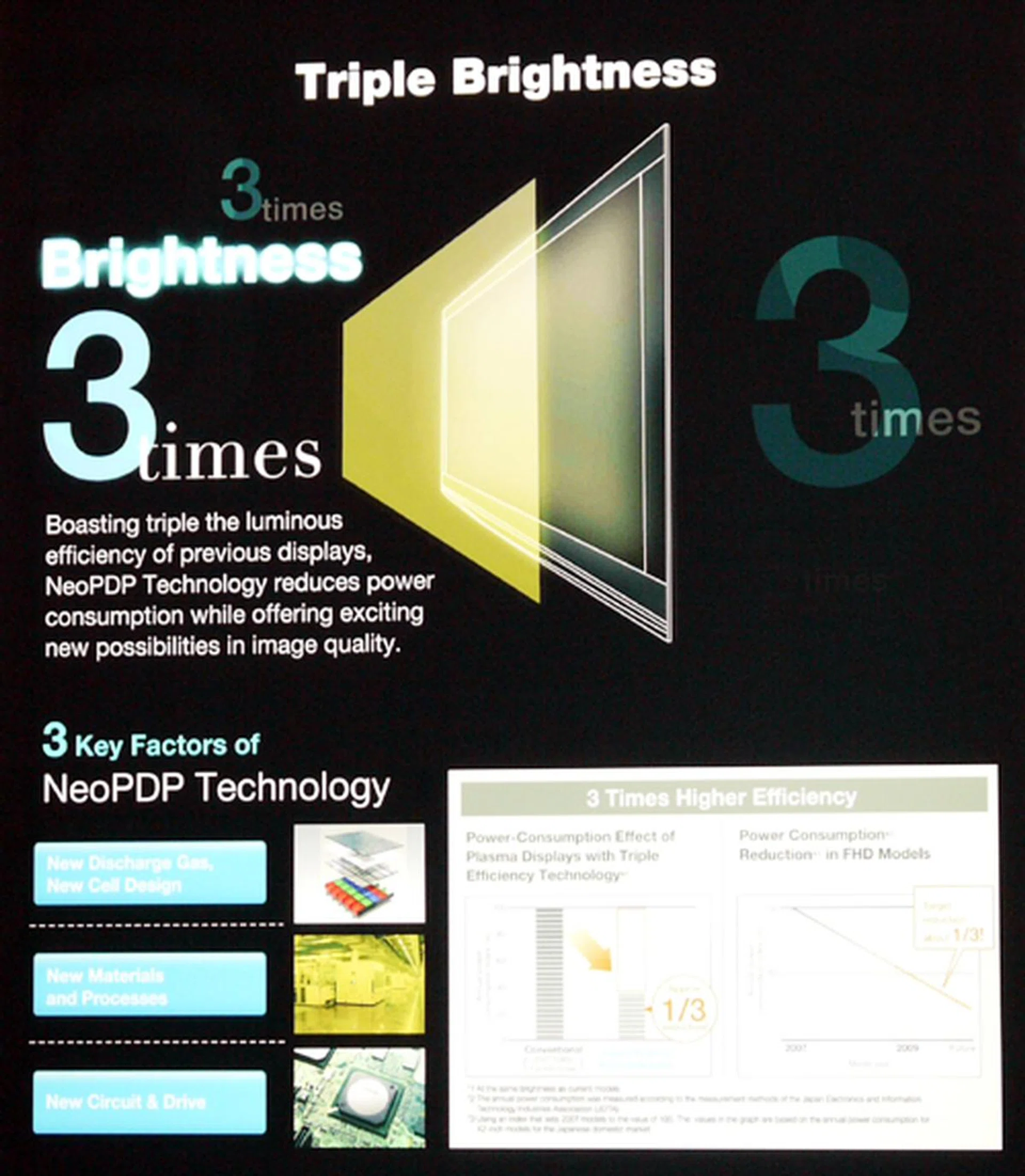
It's not easy to achieve a grand reduction in power consumption while boosting its luminance by three-folds, but Panasonic has done just that with a new cell design, coupled with a fresh circuit and drive for their NeoPDPs.
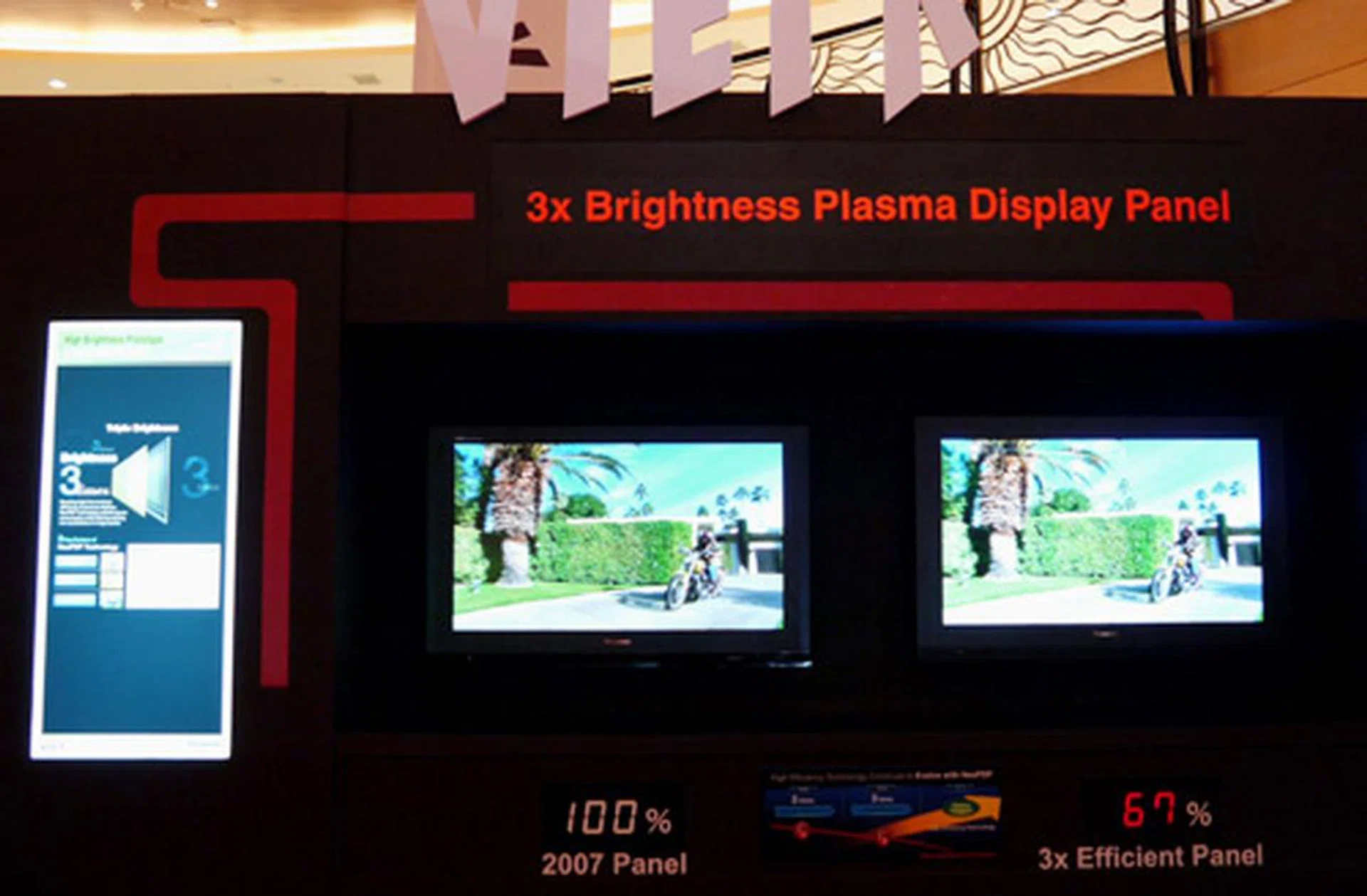
It's a little hard to tell based on this photo of the demonstration booth. Anyway, Panasonic has made a live comparison between the luminance dynamics between their old and new panels although the differences aren't too obvious.
Moving on, we'll first cover Panasonic's latest plasma panels followed by LCD TVs in the subsequent pages.
Prettify My Plasma!
Let's start off with the company's new Plasma panel technologies of which, another feather in Panasonic's cap would have to be their ecologically-aware NeoPDP technology. We're sure most of you AV buffs must have caught wind of this by now.
In most cases, home-theatre connoisseurs want solid blacks without comprising the display's brightness and intensity. Similarly, Panasonic seemed to have delivered a tangible answer in the form of their NeoPDP and Real Black Drive System. The end result? We can expect a native contrast ratio of 40,000:1 (dynamic contrast ratio of 2,000,000:1), deeper blacks, and a wider color gamut. That's an improved native contrast ratio of 33 percent compared to previous models.
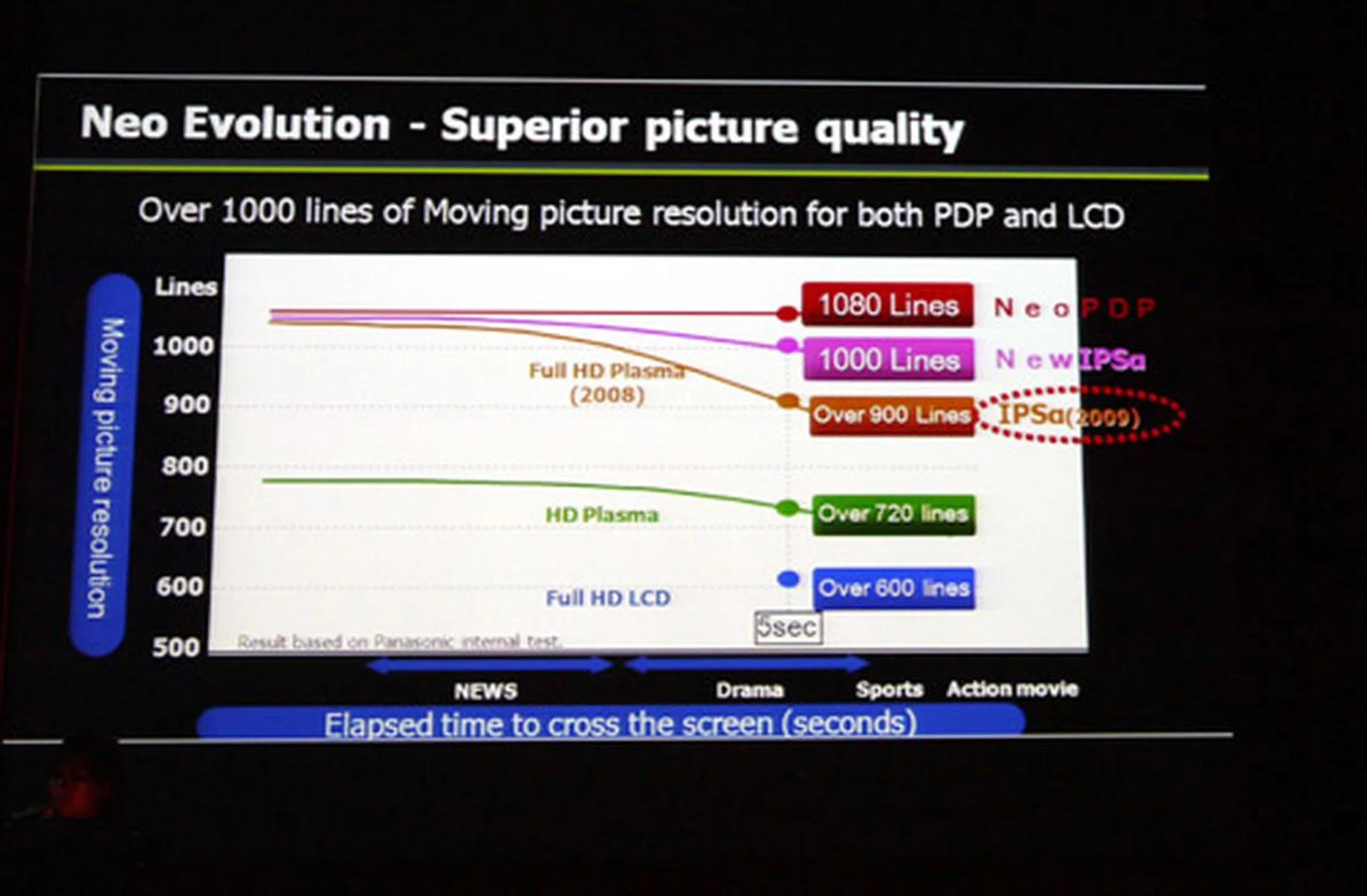
A general view of the improvements made to the VIERA panels. Panasonic is banking heavily on the popularity of their souped-up NeoPDP and IPS Alpha panels to bring in the big bucks for 2009.
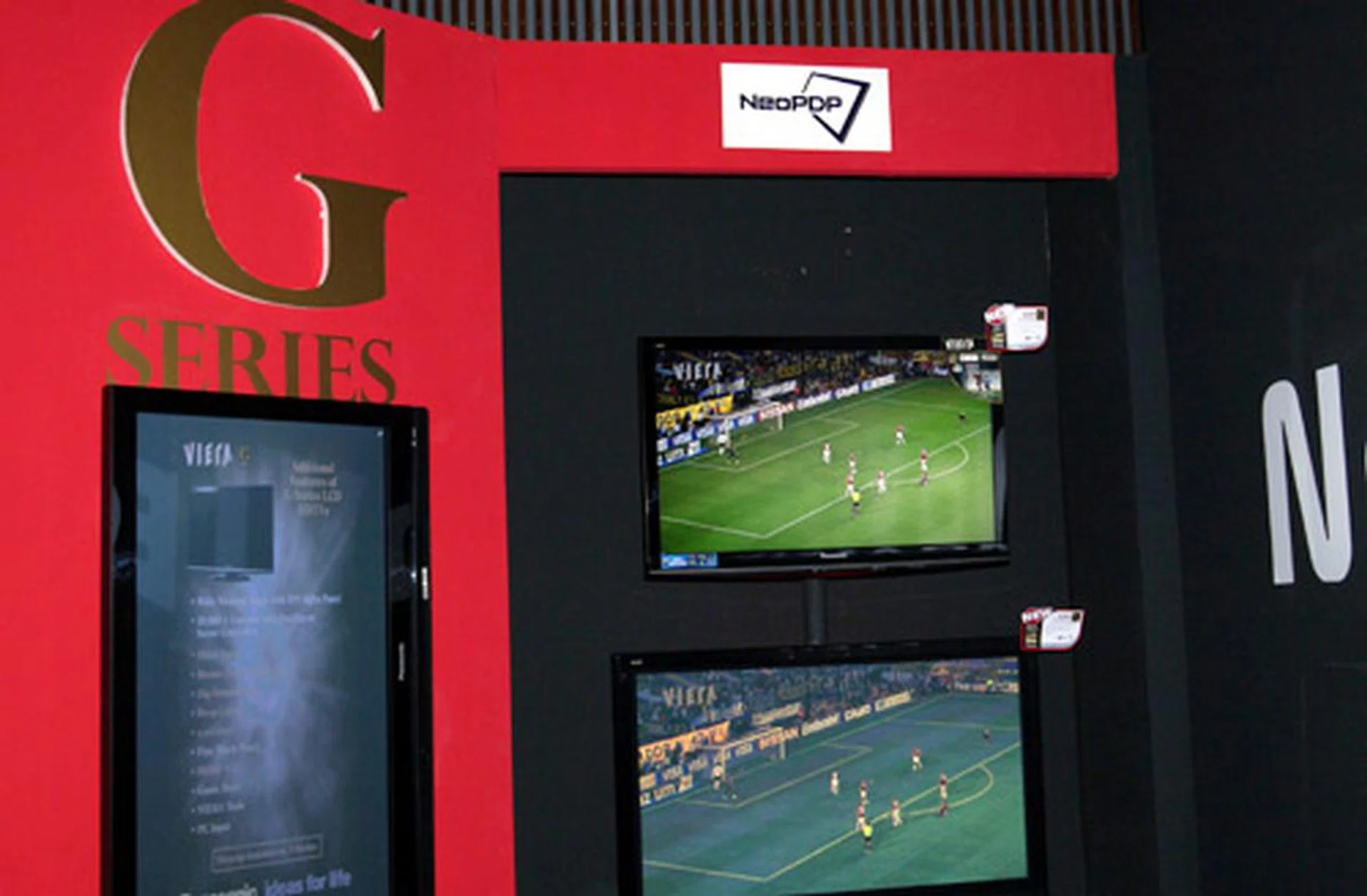
The G-series in all its glory. If you're leaning towards a TV with a slender bezel, then the G-series would make a viable choice. This PDP series packs 6,144 equivalent steps of gradation and are deployed with the robust VIERA Tough Panel.
With a new circuit drive, Panasonic's revitalized PDPs are capable of 1,080 lines of moving picture resolution for accurate dynamic reproductions with minimal detail loss. Conversely, standard PDPs are known to attain just 900 lines of picture motion. To improve their NeoPDP's dexterity further, Panasonic has another ace in hand, simply known as the "600Hz Sub-field Drive" technology. To put this into perspective, we know that a typical video frame-rate is equivalent to 60 frames per second, or 60Hz. With Panasonic's new technology, the panel is able to attain ten times that frequency, resulting in smoother image transitions and reduced motion-blur.
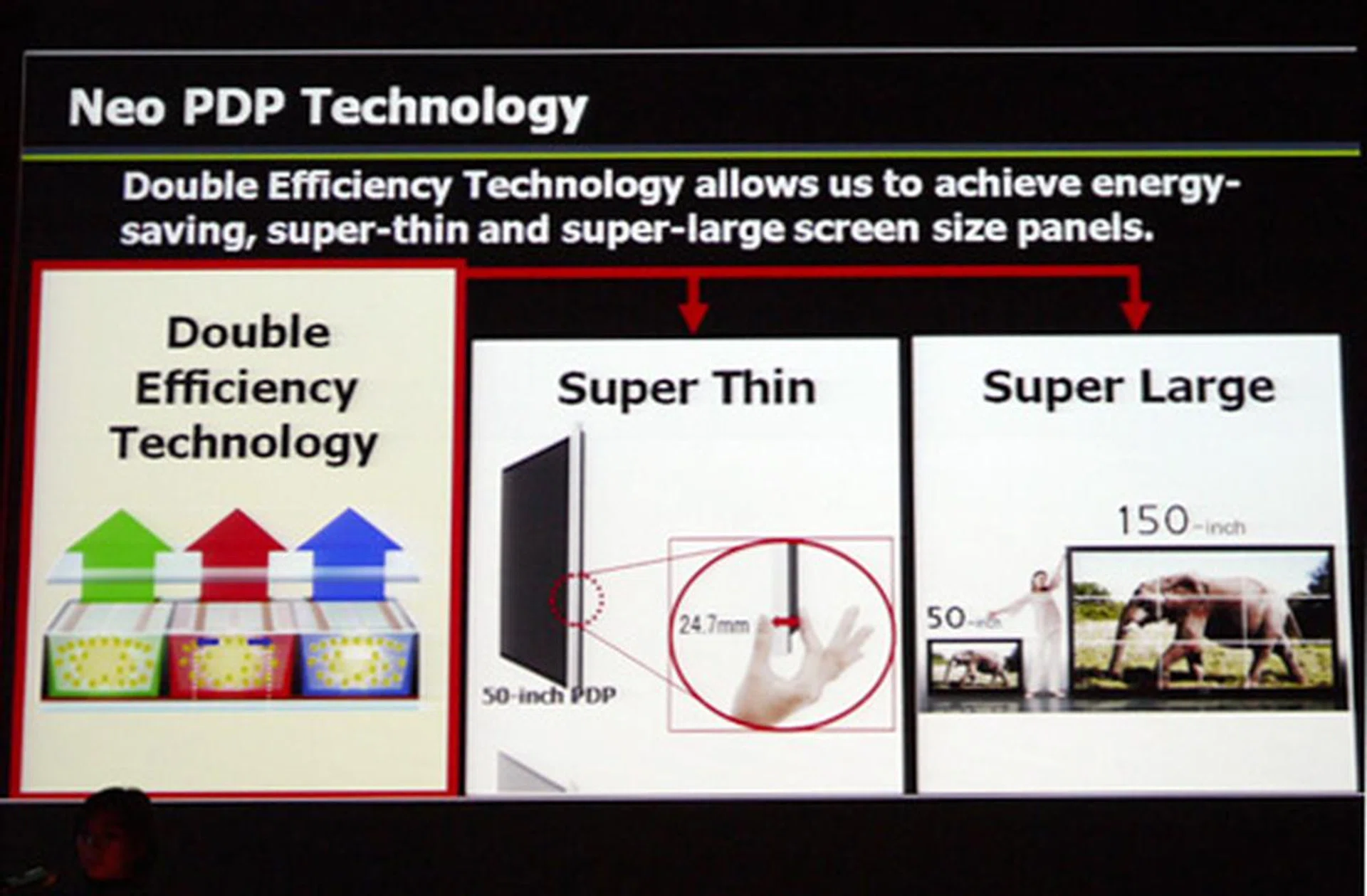
Simply put, Panasonic's NeoPDP technology and their use of lesser components spell of slimmer and larger displays. So if you're longing for an anorexic and huge panel, you'd probably know which name to go for.
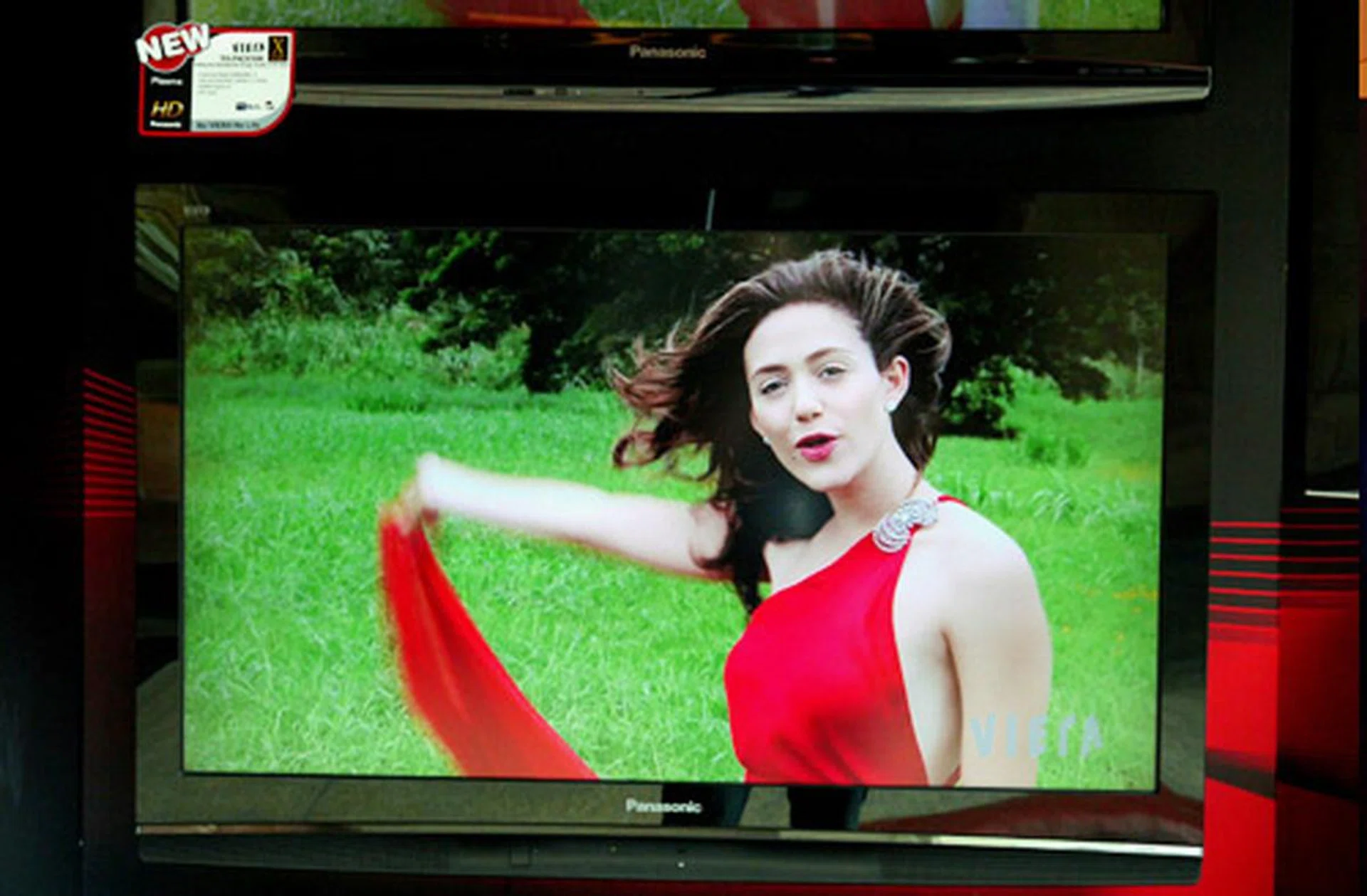
A 42-inch X-series (TH-P42X10) PDP television. The X-series would flaunt Panasonic's 100Hz Motion Picture Pro technology with three HDMI ports in all.
That said, what makes a slender VIERA even thinner? We were told that the answer lies with Panasonic's "triple luminance efficiency" technology, which not only halves the NeoPDP panel's power consumption but also prunes the number of components used, thus enabling them to churn out even thinner panels than before. The triple luminance efficiency technology equipped NeoPDP panel is currently only available on the Z-series. In fact, the svelte 50-inch Z-series PDP is only 8.8mm thick at its slimmest end as shown below.
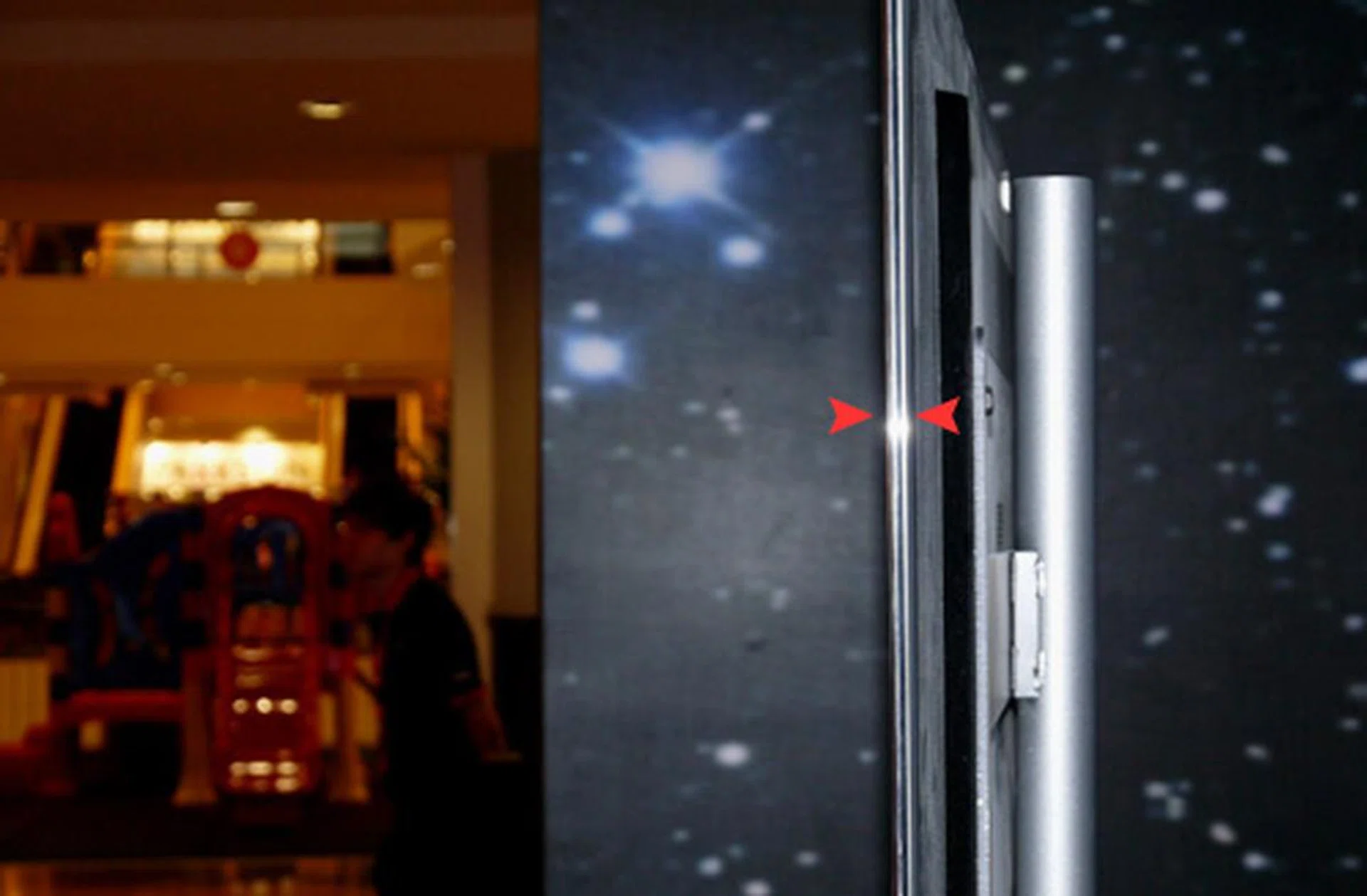
May all televisions in our cosy homes be as slim as this someday! Panasonic has one their unbelievably slim 8.8mm-thick NeoPDPs on display during the event, causing our current sets to look like clumsy behemoths.
Also present at the launch is their hotly anticipated 150-inch PDP which was widely talked about but never seemed to have landed on the consumer end. That's about to change in the months ahead, hopefully.
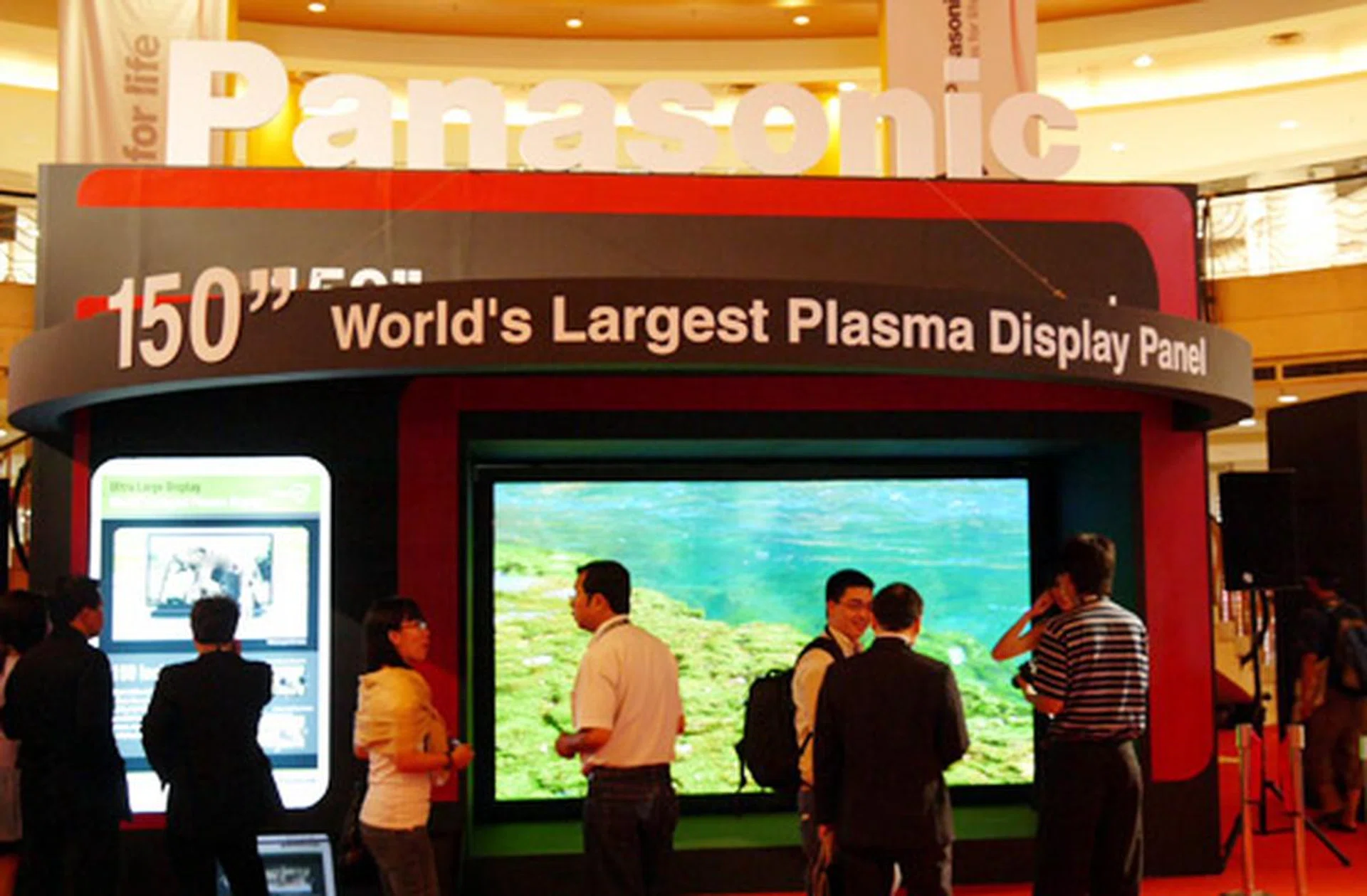
One of the event's highlights was the introduction of Panasonic's mammoth 150-inch PDP panel. Whilst many of us might not be able to afford this in our penny-pinching lifetime, affluent consumers here should be able purchase this monster of a TV sometime this year if all goes well.
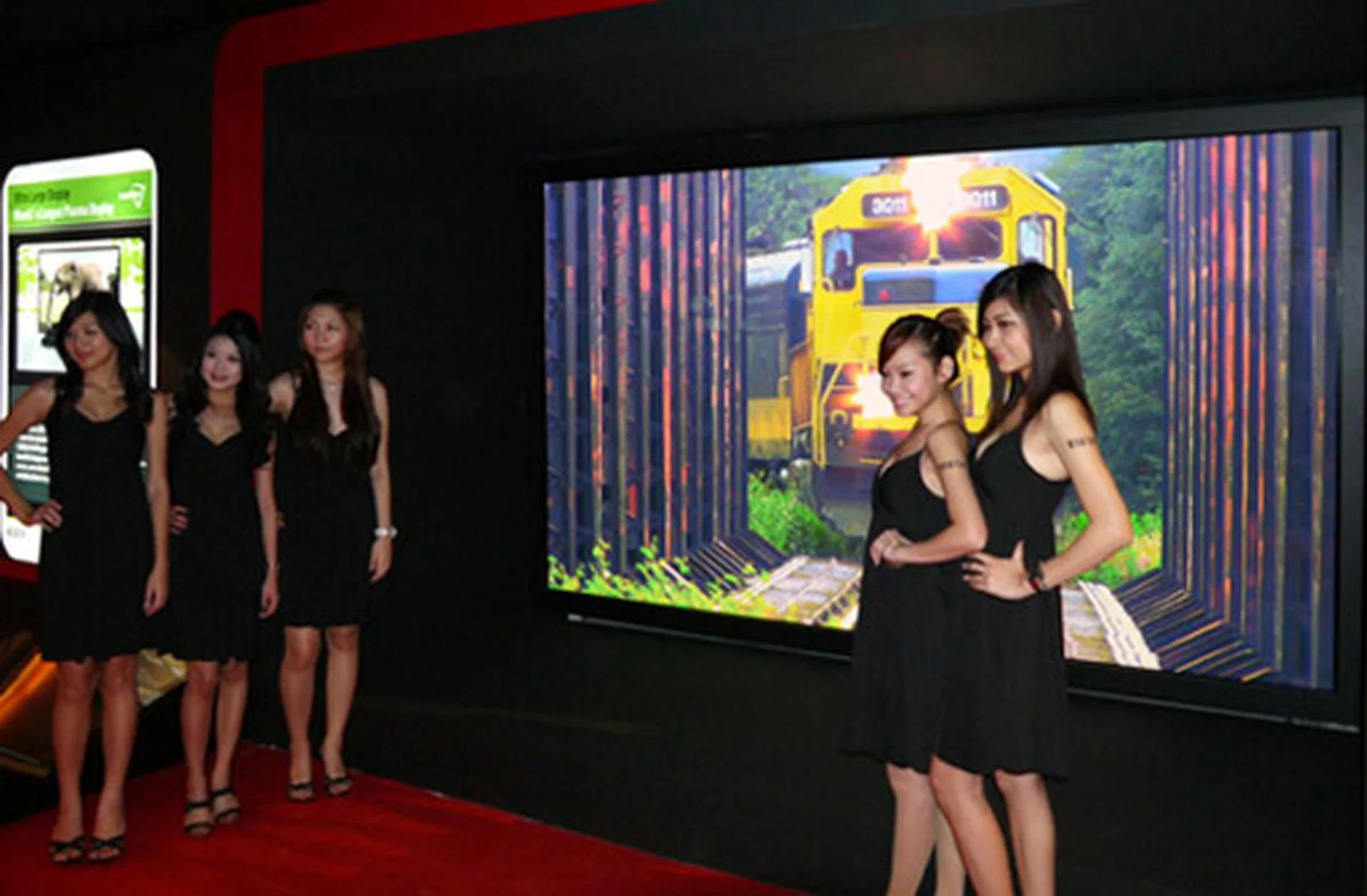
Purchase one these giants and get these babes for free! Ok, we're only kidding. With four times the resolution of Full-HD displays and measuring just about the size of nine 50-inch PDPs, you can only imagine how much the 150-inch PDP would cost you. Who needs a cinema when you have this?
VIERA's LCD Suite
There's actually more of the familiar here than the new.
Panasonic's latest LCD range will continue to deploy their celebrated IPS (In-Plane Switching) Alpha panels for specific models, like the TH-L32X10 for example. Again, the same formula applies. IPS Alpha LCD panels with larger aperture ratios are able to produce clearer moving pictures, wider viewing angles and a higher contrast.
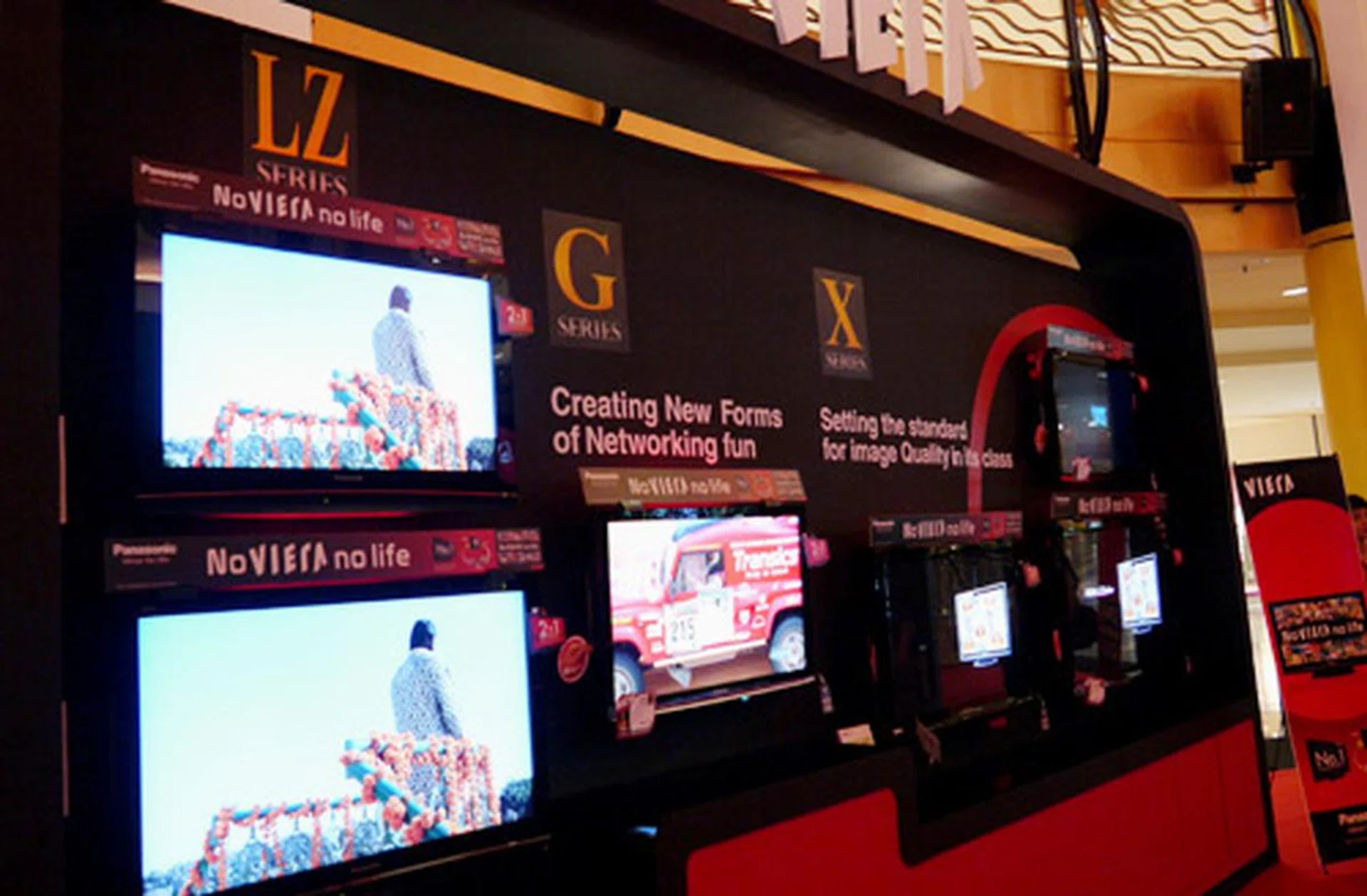
The new G and X-series VIERA LCD TVs. Do note that only the G-series is a Full-HD selection whilst the X-series are just HD-Ready offerings. However, both series are touting the 20,000:1 contrast ratio aspect.
A number of the newly-released LCD models, like the X15-series, will cart Panasonic's 100Hz Motion Picture Pro feature. It's nothing novel though, since this motion-interpolation processing aspect is already present in existing models like the TX-32LX800MS. On top of that, the new VIERA LCDs will brandish a 20,000:1 dynamic contrast ratio, and to quote Panasonic, they're able to "reproduce the twinkling of even a faint star clearly and beautifully". Of course, Panasonic's VIERA Link function will also be present in their new armada of display panels, meaning you'd get to control other compatible Panasonic AV devices like Blu-ray players or camcorders via a single remote.
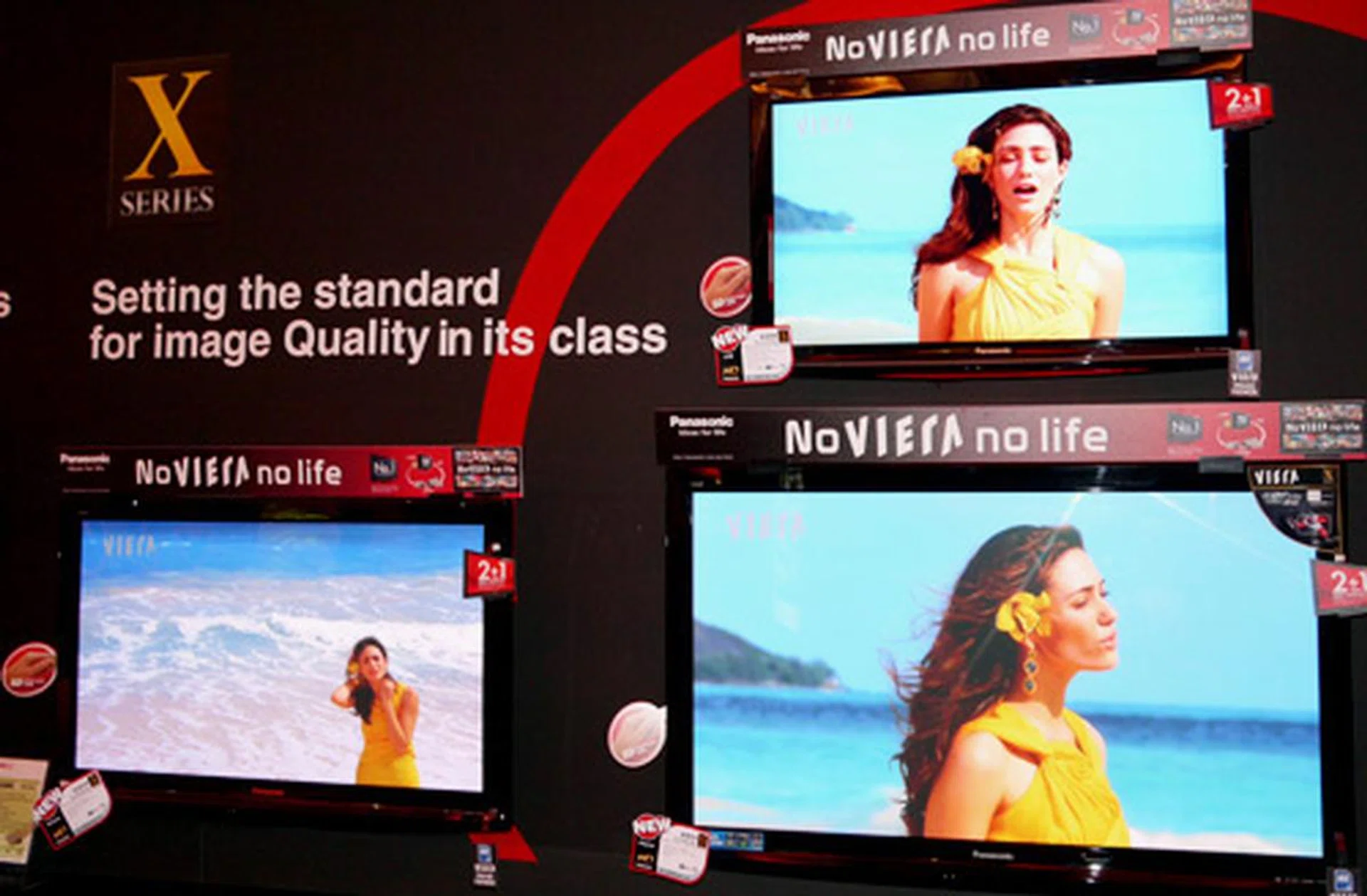
Strangely, Panasonic is breaking up the X-series into two segments; X10 and X15. The X10 line-up comes in four sizes, mainly 19, 26, 32 and 37 inch models. The X15 range will sport Panasonic's 24p Smooth Film feature.
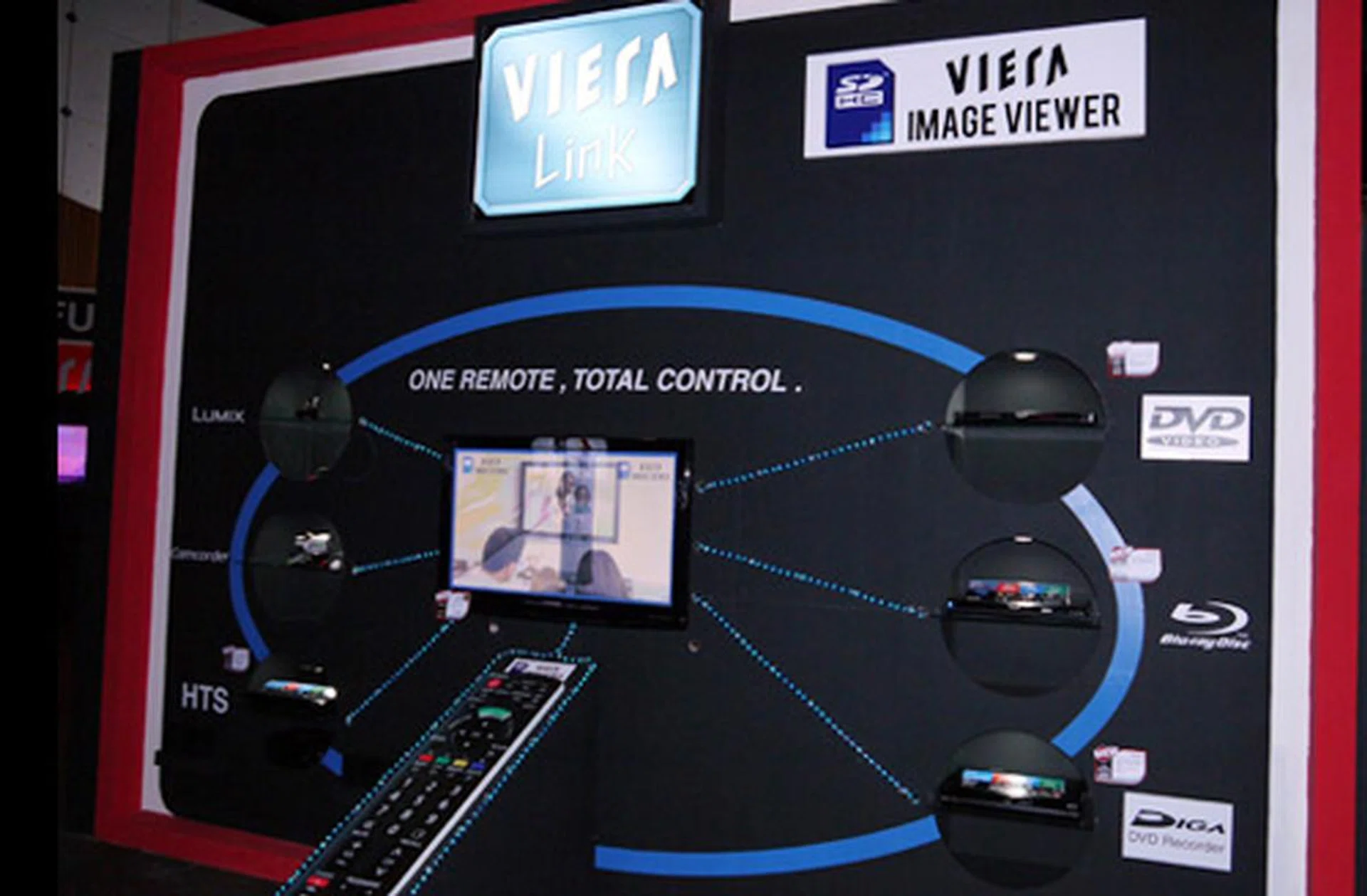
Just need one remote to rule them all! By the way, Panasonic's LUMIX cameras and Blu-ray players have been made compatible with VIERA Link recently.
If you're scouting around for a Full-HD VIERA LCD TV which offers various screen sizes, then the S-series might be suitable for your palette since Panasonic is offering three sizes for this range, namely 32, 37, and 42-inched models. Just note that its Image Viewer function is limited to viewing JPEG files only.
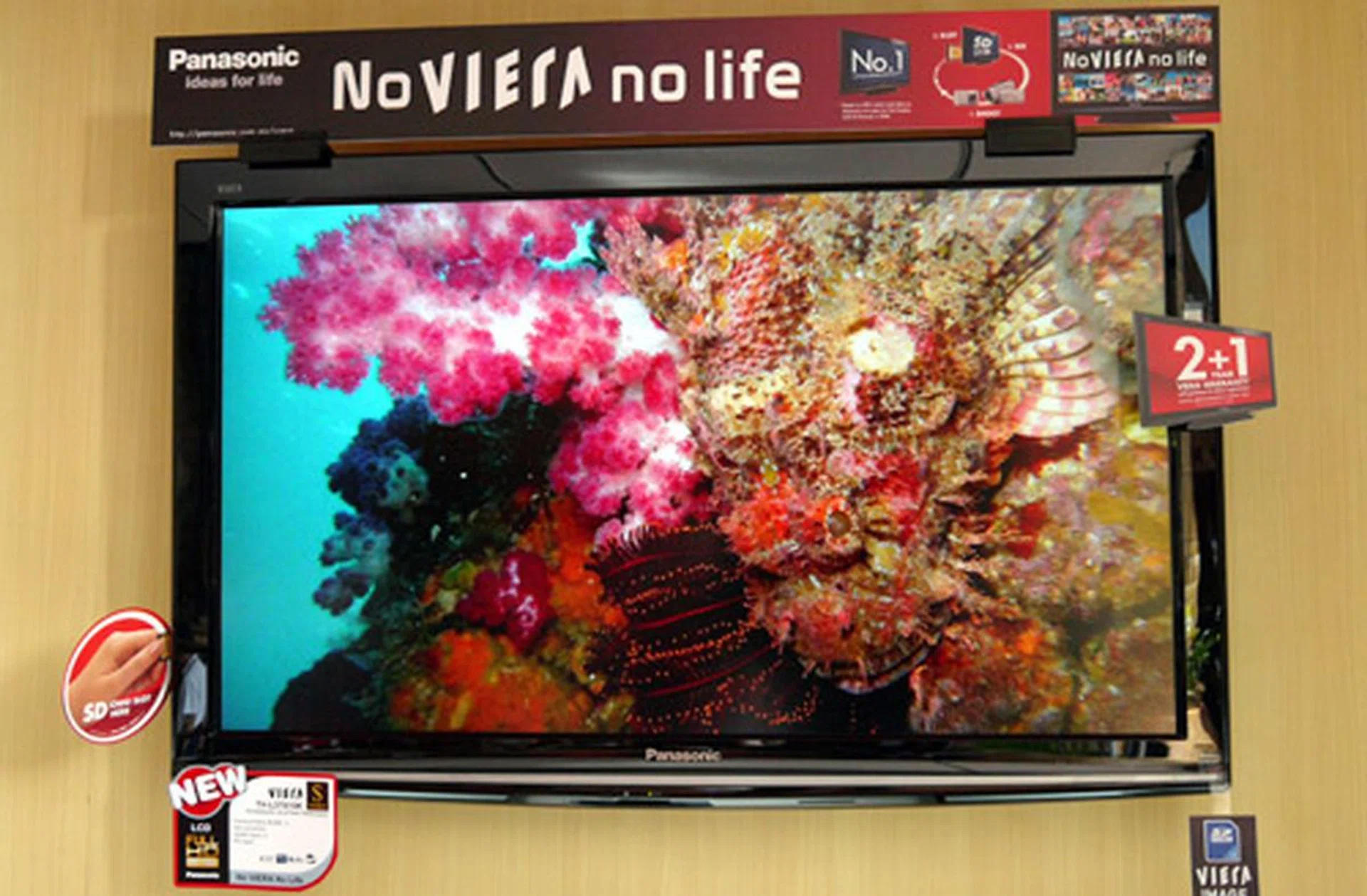
The TH-L37S10K, when decoded from Panasonic-speak, talks of an S-series 37-inch VIERA LCD panel. The S-series comes in three sizes, but note that only the 32-inch model is using the new IPS Alpha panel.
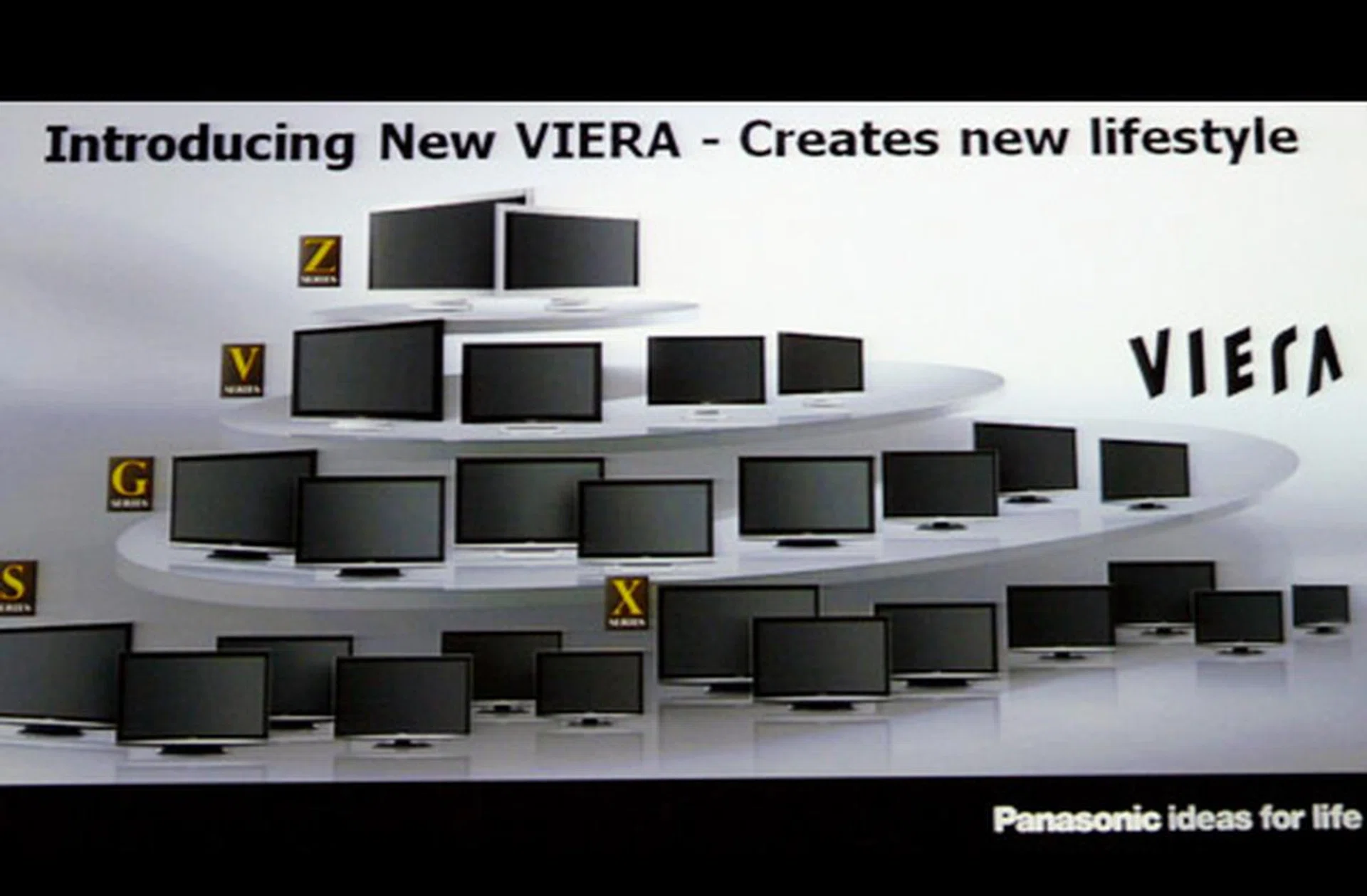
We leave you with an overview of the new VIERA TVs for 2009. Note that only the 54-inch Z-series flagship model will be made available here, instead of two sizes as released elsewhere.
Our articles may contain affiliate links. If you buy through these links, we may earn a small commission.