
NVIDIA GeForce GT 220 - New Budget Arrivals
The NVIDIA GeForce GT 220 is an all-new GPU that was initially meant for OEM but has since been made available to the public. Along with the GeForce GT 210, it is NVIDIA's first desktop GPU manufactured using a 40nm process. How will this budget GPU perform? Will it allow you to get some decent gaming done? Let's find out.
Budget-class GT 200 Arrives
When NVIDIA launched the GT200 class of GPUs, first with the GeForce GTX 260 and GTX 280, people were wondering when mainstream versions of these top-end cards will hit the store shelves. They never did. Instead, NVIDIA went ahead with the dual-GPU GeForce GTX 295, and later the improved single GPU based GTX 285 and finally the GTX 275.
These cards are meant for high-end users and while over a year has passed since their introduction, we've yet to see a single mainstream GT200 class card. Unless you are a keen follower of the graphics scene, however, you might not know that in July, NVIDIA released two low to mid-end SKUs to OEMs with little or no fanfare. These are the GeForce GT 210 and GT 220. Now, NVIDIA is making the GeForce GT 220 retail ready, and we are eager to see if this is the mainstream GT200 class GPU we have been waiting for.
Sadly, first impressions are not promising because the GeForce GT 220 packs only 48 CUDA cores (aka stream processors). In comparison, a 'mid-range' GeForce GTX 260 packs 216 CUDA cores, giving us the indication that the GT 220 is probably going to be really low-end. In fact as a rough gauge, the GT 220 would rank between a GeForce 9500 GT and a 9600 GT model going by the number of stream processors equipped in them. And our suspicions were confirmed when we noticed that the two GT 220 cards that landed in our labs didn't require power connectors - a trait common in most low-end cards. Thankfully, the GT 220 brings about full DirectX 10.1, PhysX and CUDA support.
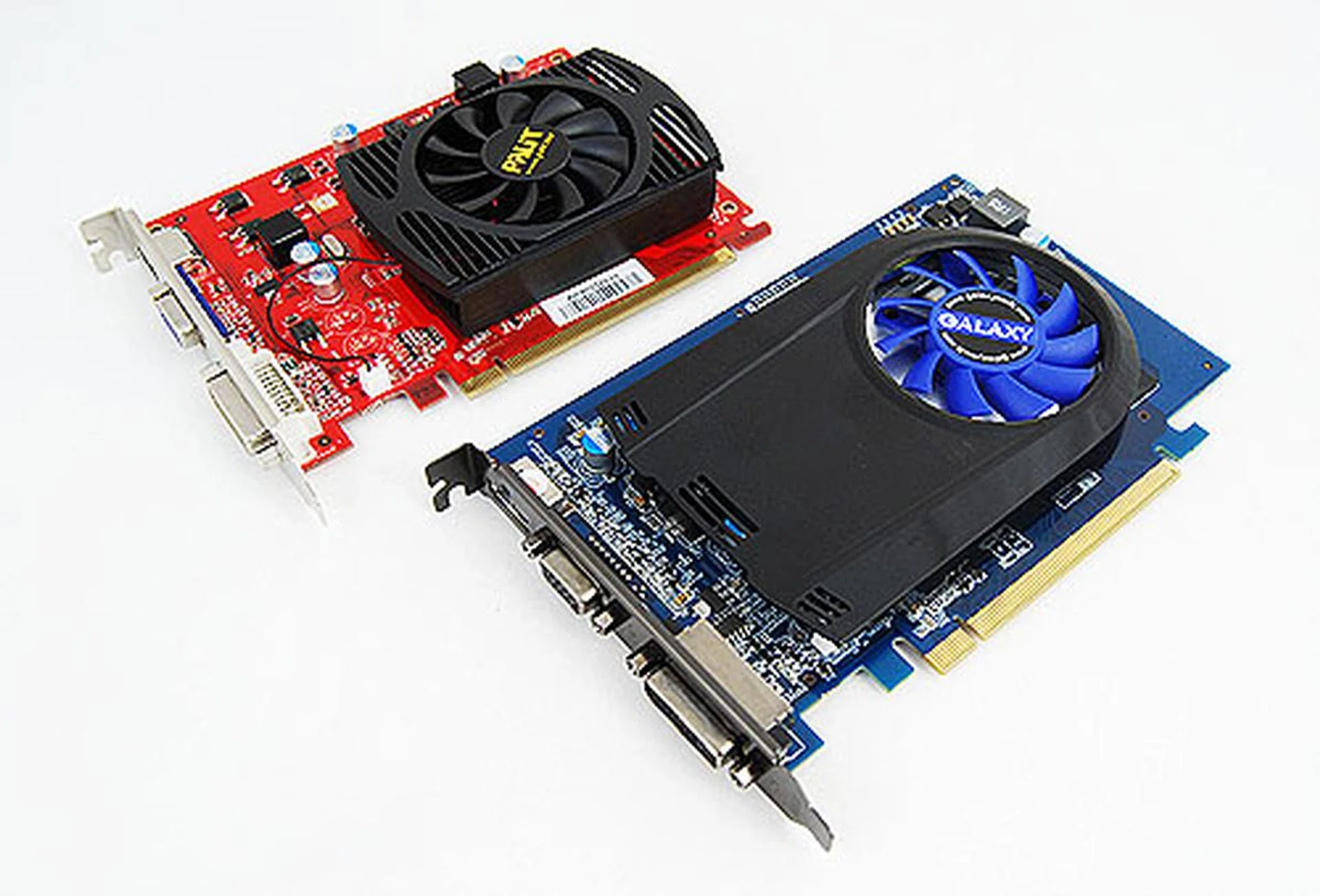
The GeForce GT 220 is NVIDIA's first 40nm GPUs and are aimed for the budget-minded. Question is, how would they fare?
Clock speeds, if you are wondering, are as follows: 615MHz at the core, 1335MHz at the shaders and 1580Mhz DDR at the memory. These are the clock speeds found on the OEM versions, and according to sources on the Internet, vendors are given free rein as to what clock speeds to use. Therefore, there are no strict 'reference' clock speeds so to speak, and it is no surprise that our two cards from Galaxy and Palit sport higher clock speeds. But before we go on to introduce the cards, here's a quick look at how the 'reference' OEM model of the GeForce GT 220 stacks up against competitive comparison SKUs.
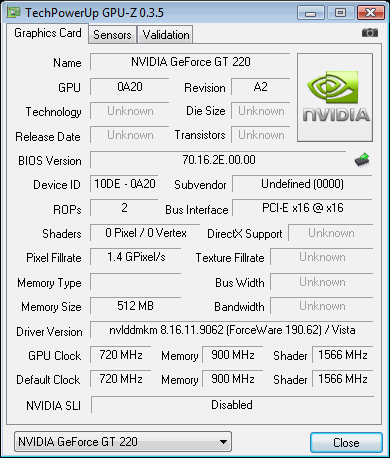
Yes, GPU-Z has some problems identifying the card.
Model | NVIDIA GeForce GT 220 | NVIDIA GeForce 9600 GT | NVIDIA GeForce 9500 GT | ATI Radeon HD 4670 | ATI Radeon HD 4550 |
Core Code | GT216 | G94 | G96a/b | RV730 | RV710 |
Transistor Count | Unknown | 505 million | 314 million | 514 million | 242 million |
Manufacturing Process | 40nm | 65nm | 55nm | 55nm | 55nm |
Core Clock | 615MHz | 650MHz | 550MHz | 750MHz | 600MHz |
Stream Processors | 48 | 64 | 32 | 320 | 80 |
Stream Processor Clock | 1335MHz | 1625MHz | 1400MHz | 750MHz | 600MHz |
Texture Mapping Units (TMU) or Texture Filtering (TF) units | Unknown | 32 | 16 | 32 | 8 |
Raster Operator Units (ROP) | Unknown | 16 | 8 | 8 | 4 |
Memory Clock | 1580 MHz DDR | 1800MHz DDR | 1600MHz DDR | 2000MHz DDR | 1600MHz DDR |
DDR Memory Bus | 128-bit | 256-bit | 128-bit | 128-bit | 64-bit |
PCI Express Interface | PCIe x16 ver 2.0 | PCIe x 16 ver 2.0 | PCIe x16 ver 2.0 | PCIe x16 ver 2.0 | PCIe x16 ver 2.0 |
PCIe Power Connectors | None | 1 x 6-pin | None | None | None |
Multi-GPU Technology | None | SLI | SLI | CrossFireX | CrossFireX |
DVI Output Support | Yes | Yes | Yes | Yes | Yes |
HDCP Output Support | Yes | Yes | Yes | Yes | Yes |
Street Price | ~US$80 | ~US$100 | ~US$60 | ~US$75 | ~US$50 |
The Galaxy GeForce GT 220 1GB GDDR3
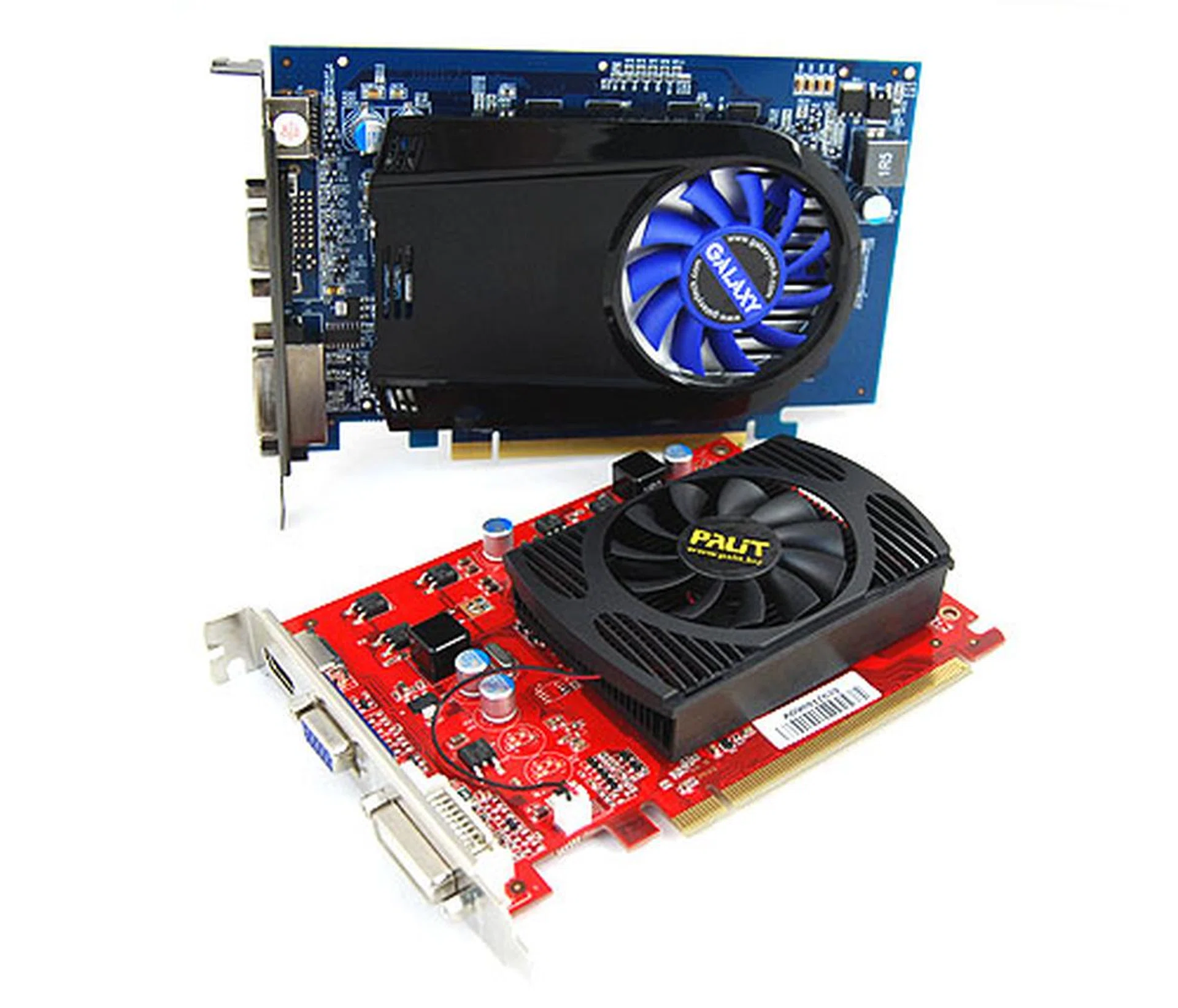
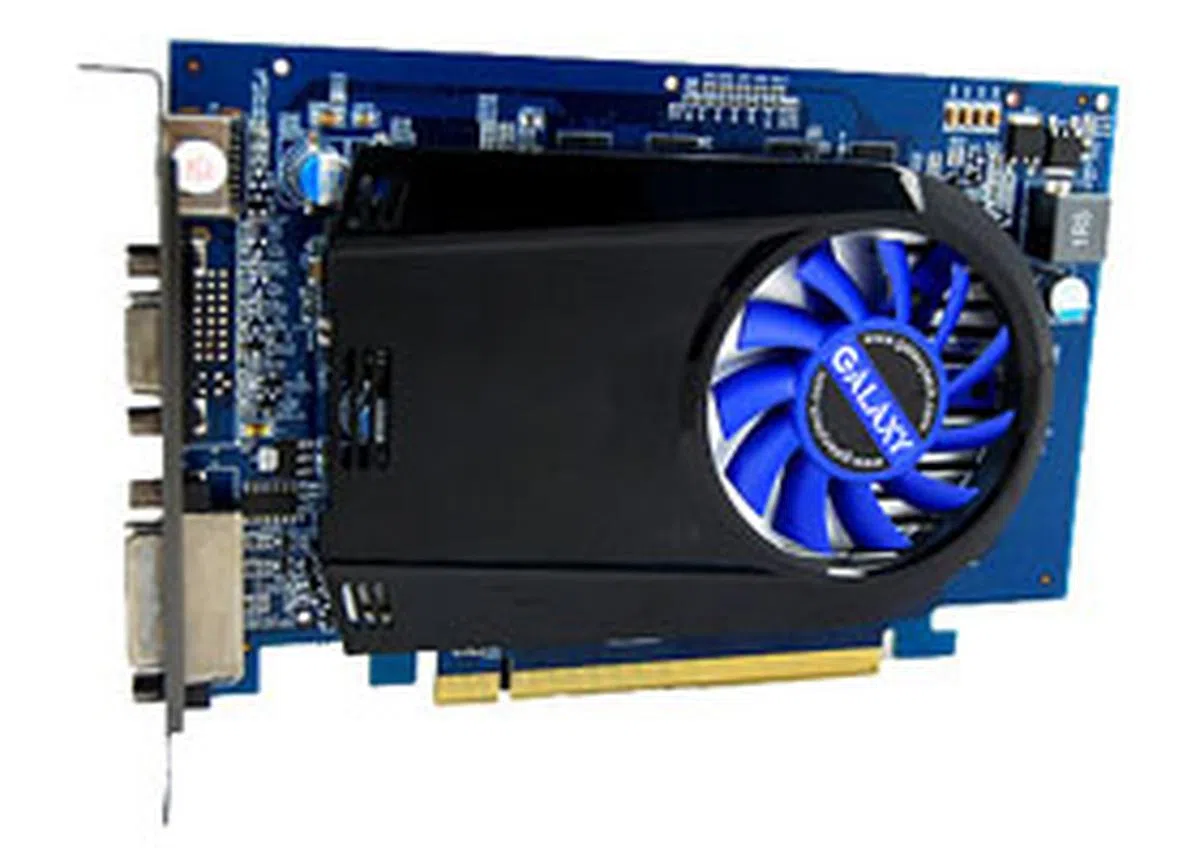
The Galaxy GeForce GT 220 comes clocked at 660Mhz at the core, 1436MHz at the shaders and 1600Mhz DDR at the memory. This is only slightly higher than NVIDIA's OEM card's reference clocks. Of the two cards on hand, the Galaxy GeForce GT 220 has the larger cooler, and so should perform better during the operating temperature test later. That aside, fan noise wasn't intrusive. To end, the Galaxy card also has a larger frame buffer size of 1GB.
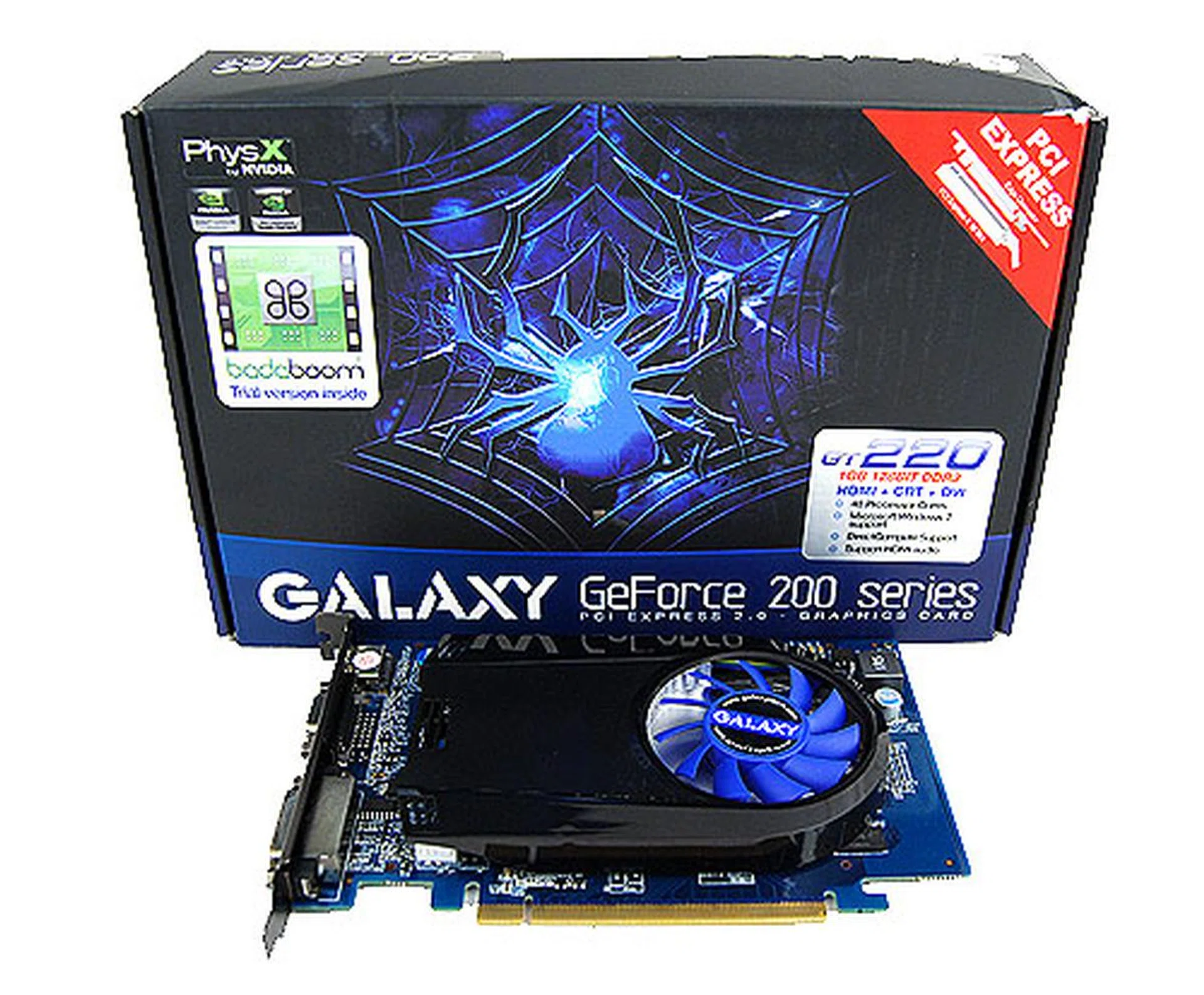
The Galaxy GeForce GT 220 comes in a compact packaging, which proudly proclaims that it supports PhysX and that it comes with a trial copy of Badaboom video converter.
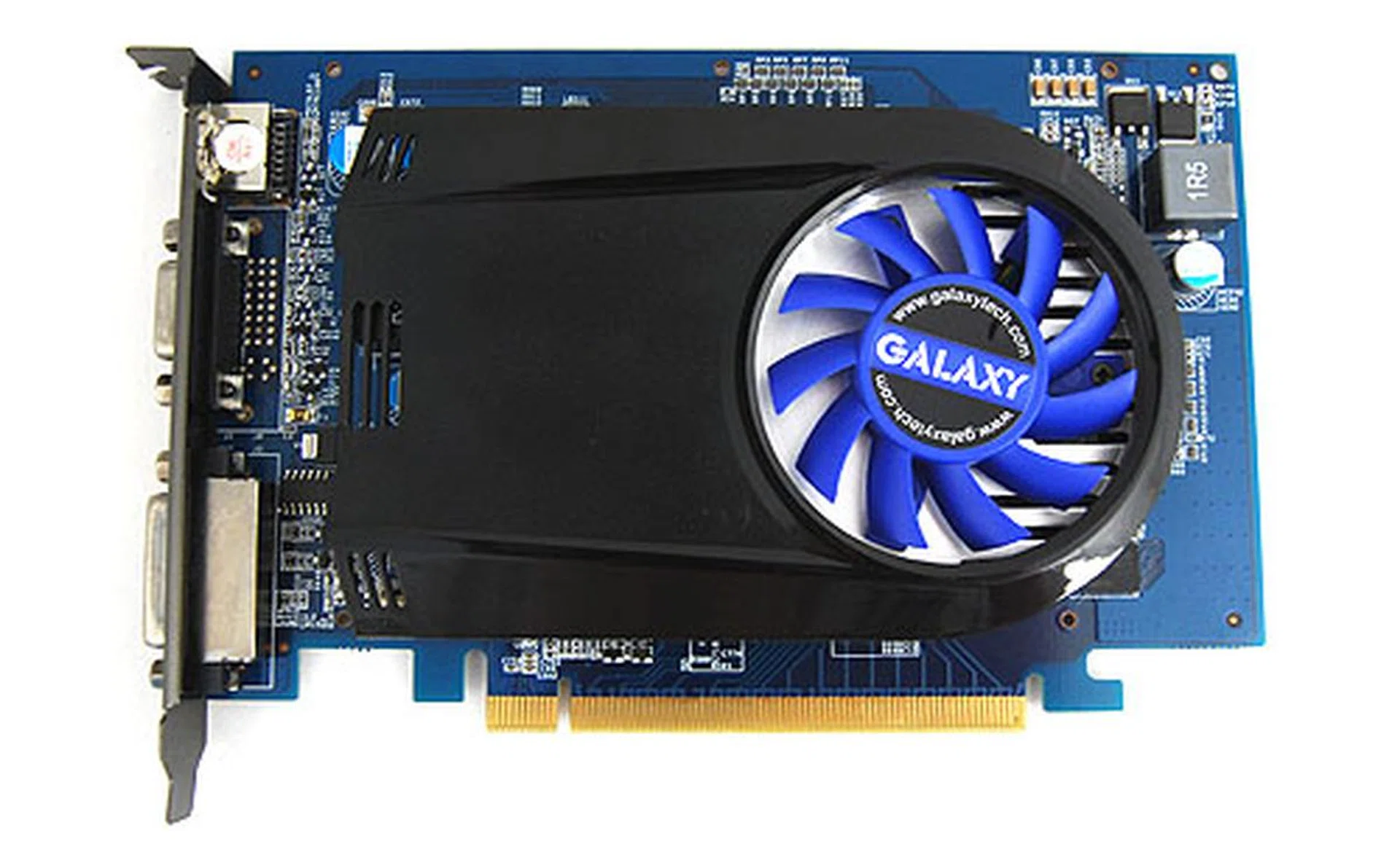
Of the two, the Galaxy card has the larger cooler and this should give it an edge where operating temperatures are concerned.
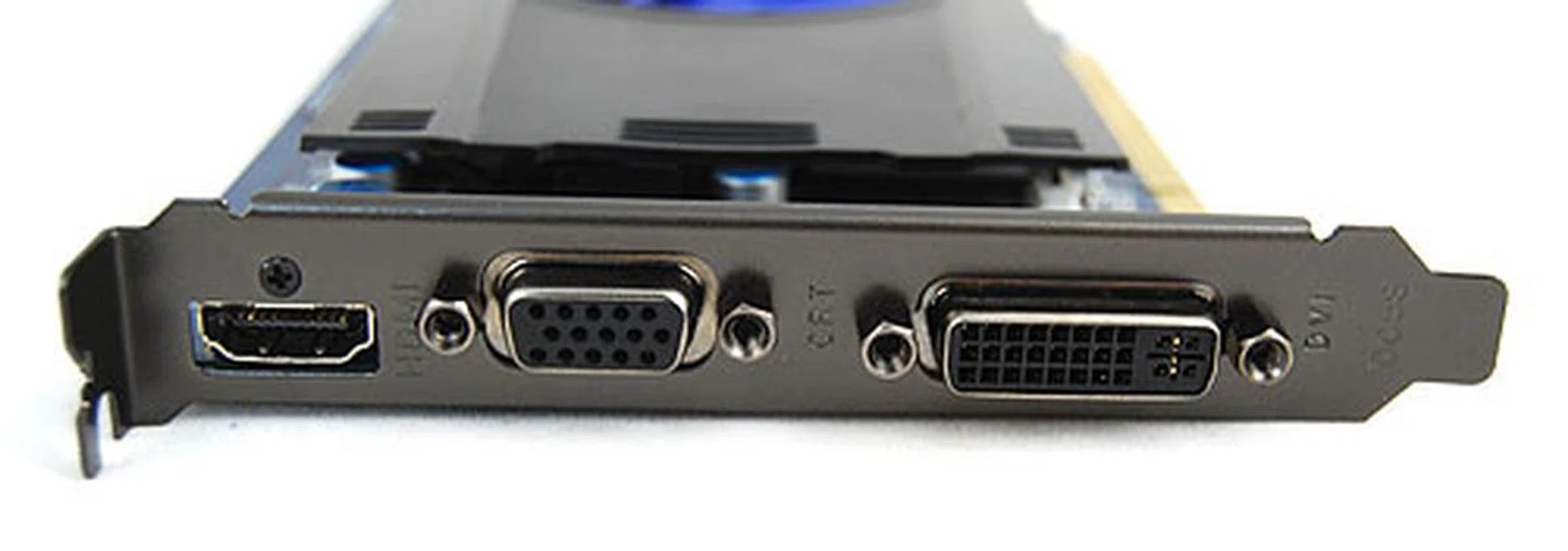
The Galaxy GeForce GT 220 comes with DVI, HDMI and VGA output, so it should have all bases covered.
The Palit GeForce GT 220 Sonic 512MB GDDR3
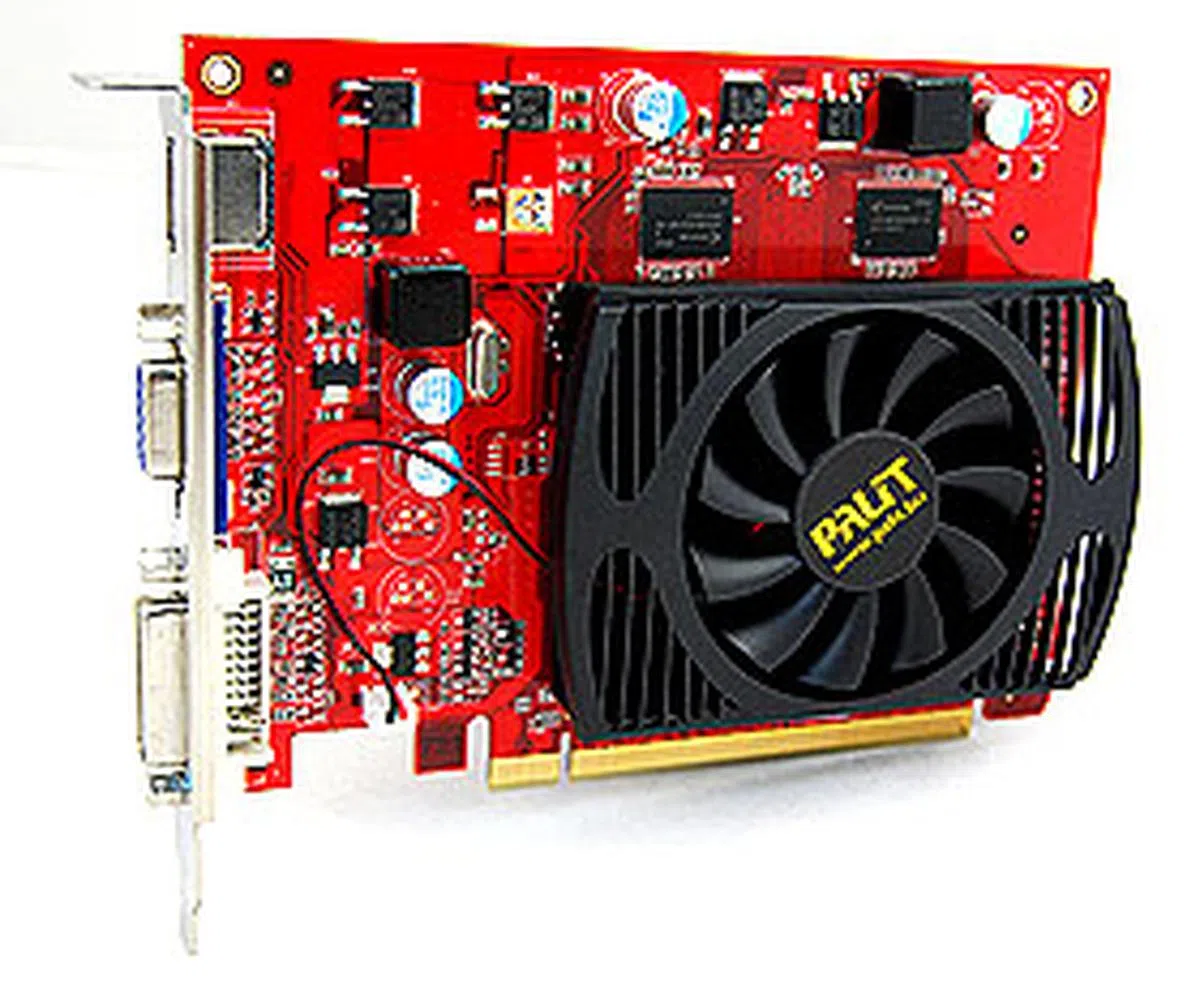
The Sonic moniker should tell you that this is an overclocked variant of the GeForce GT 220 from Palit and so the card comes with significantly higher clock speeds. The card is clocked 720MHz at the core, 1566MHz at the shaders and 1800MHz DDR at the memory - this is much higher than its Galaxy counterpart. However, it has a noticeably smaller cooler, and smaller frame buffer size of 'only' 512MB (though that should be more than adequate for its class).
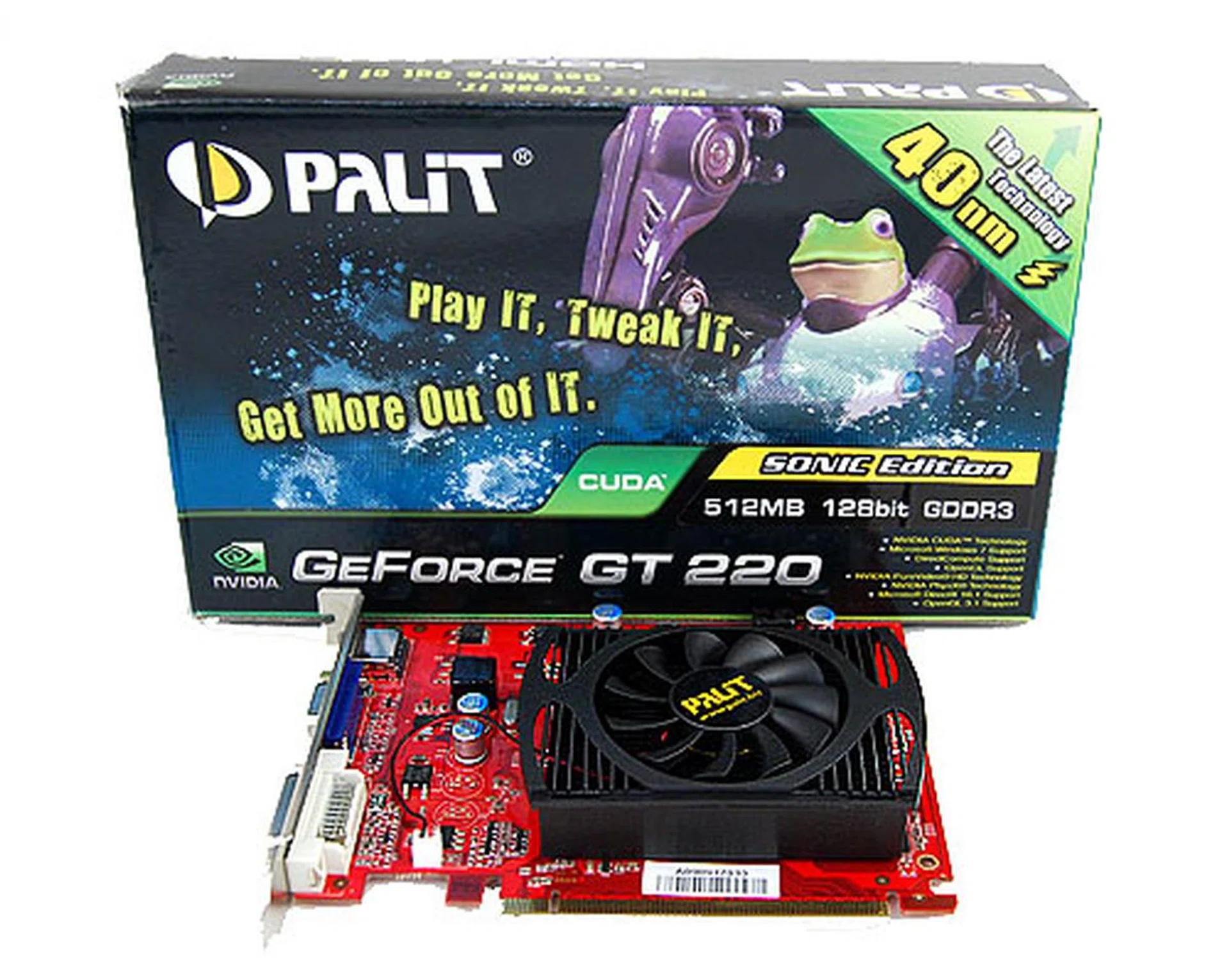
The Palit GeForce GT 220 Sonic has Frobo on the packaging and proudly states that it uses the latest 40nm manufacturing technology.
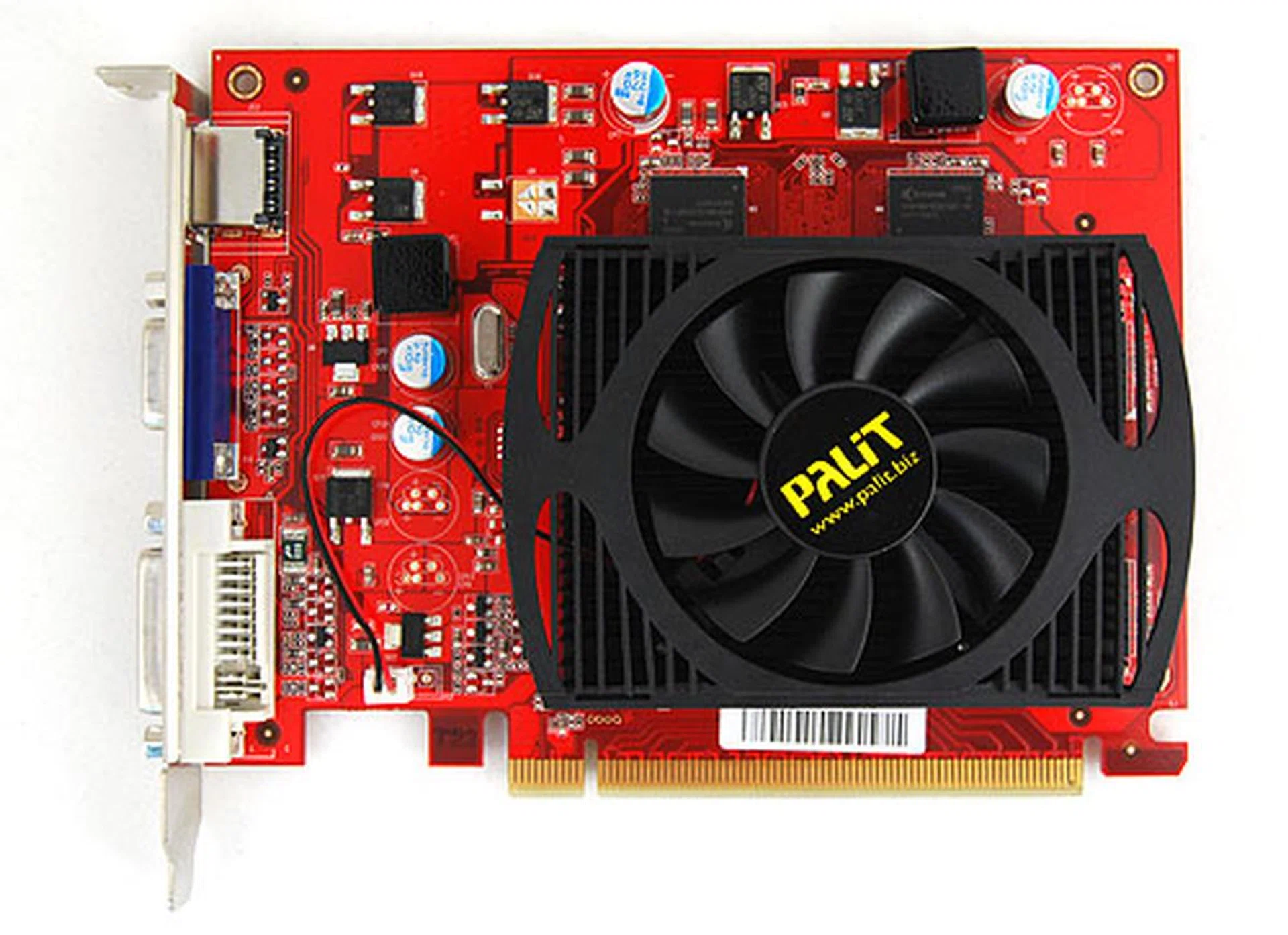
The Palit card is a tad smaller than the Galaxy one and it also uses a smaller cooler.
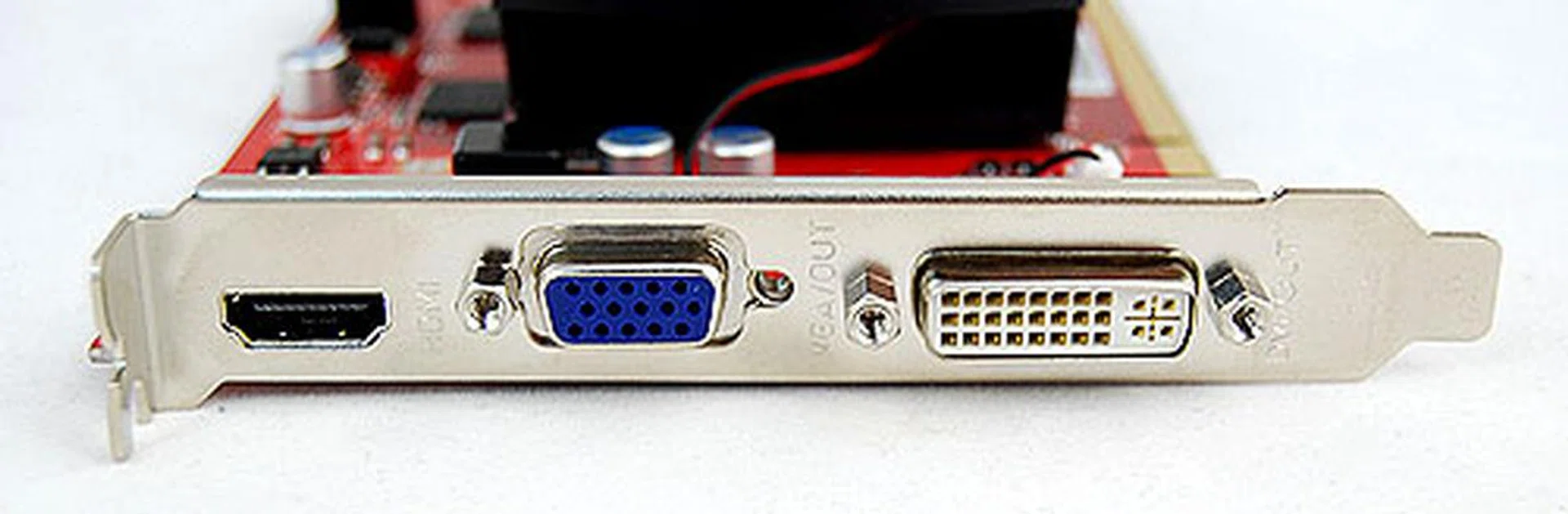
The Palit GeForce GT 220 Sonic also has the same DVI, HDMI and VGA video outputs as the Galaxy GeForce GT 220.
Test Setup
The two cards will be tested on our usual Windows Vista OS based Intel X38 system:
Windows Vista SP1 Test System:
- Intel Core 2 Extreme QX6850 (3.00GHz)
- Gigabyte X38T-DQ6 motherboard
- 2 x 1GB DDR3-1333 Aeneon memory in dual channel mode
- Seagate 7200.10 200GB SATA hard drive
- Windows Vista Ultimate with SP1
To see where the GeForce GT 220 stands, we'll be comparing it with other cards that are in the same price and performance range. We'll be hoping to see if it can at least match up to the GeForce 9600 GT, a very popular choice for mainstream users.
And From ATI, we have the Radeon HD 4760 and HD 3650. Why the HD 3650? To be honest, we wanted to use a HD 4550, but we didn't have one in our labs at the point of writing this. The Radeon HD 3650 offered the closest performance to the HD 4550, and will be an adequate substitute.
Note that because the GeForce GT 220 is targeted at the entry level market, we'll be scaling down the intensity of our benchmarks to give us more meaningful results. That means we'll be using tamer quality settings as noted below than what we normally use in our mid-range and high-end graphics card testing.
The complete list of cards and their driver versions tested:
- Galaxy GeForce GT 220 1GB GDDR3 (Forceware 190.62)
- Palit GeForce GT 220 Sonic 512MB GDDR3 (Forceware 190.62)
- NVIDIA GeForce 9600 GT 512MB GDDR3 (Forceware 190.62)
- NVIDIA GeForce 9500 GT 512MB GDDR3 (Forceware 190.62)
- ATI Radeon HD 4670 512MB GDDR3 (Catalyst 9.8)
- ATI Radeon HD 3650 512MB GDDR3 (Catalyst 9.8)
Also, the cards were tested using the following benchmarks (settings in brackets):
- Futuremark 3DMark06
- Futuremark 3DMark Vantage
- Crysis Warhead (Overall settings: Mainstream)
- Far Cry 2 (Overall settings: High)
- Dawn of War 2 (Overall settings: Low)
3DMark06 Results
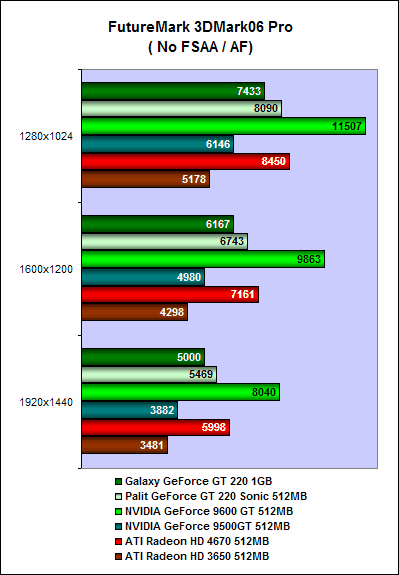
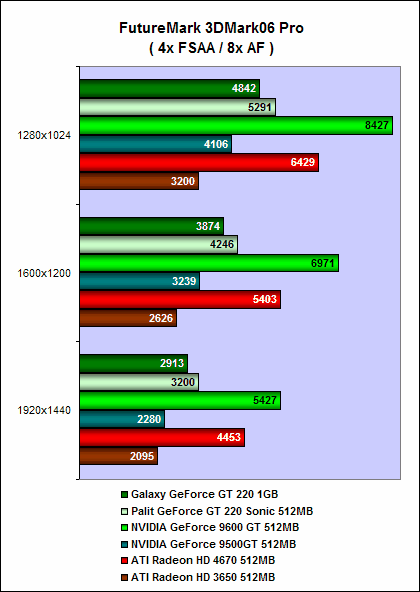
We begin as we usually do with 3DMark06 and we saw the two GeForce GT 220 cards get off to a promising start. It scored decently, but found itself sandwiched between the GeForce 9600 GT and 9500 GT. Given the Palit's higher clock speeds, it handily outscored the Galaxy card. It also scored better than the Radeon HD 3650, but was no match for the Radeon HD 4670, especially when anti-aliasing was enabled.
3DMark Vantage Results
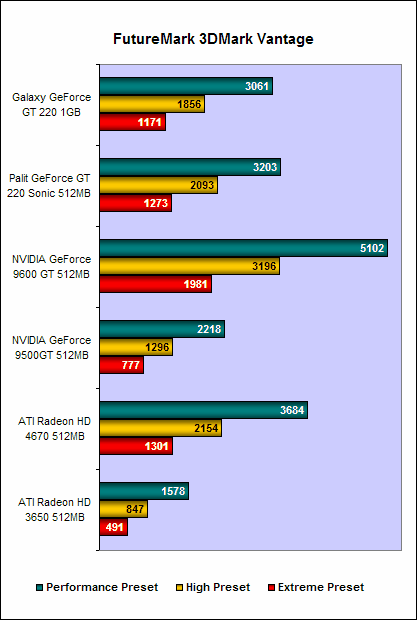
We found the pair of GeForce GT 220 sandwiched between the GeForce 9600 GT and 9500 GT again. Also once again, the Palit card outscored the Galaxy one, showing that the 1GB frame buffer on the Galaxy GeForce GT 220 is perhaps redundant. But despite the aggressive clock speeds, the Palit GeForce GT 220 Sonic could not find its way around the Radeon HD 4670, though it was close. Packing up the rear was once again the Radeon HD 3650.
Crysis Warhead & Far Cry 2 Results
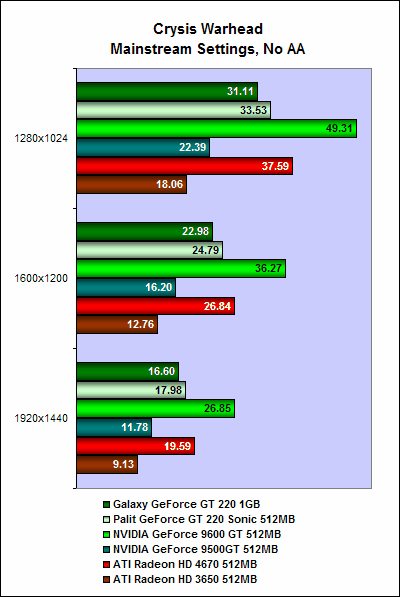
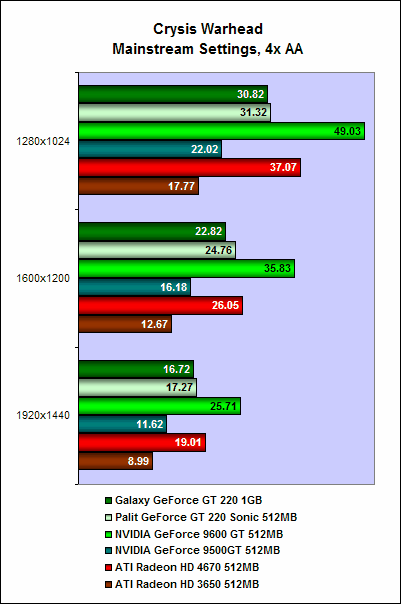
We make our way to real world gaming applications and we begin with Crysis Warhead. To accommodate the cards, we are running Crysis Warhead on "Mainstream" settings, instead of the usual uber-intensive "Enthusiast" settings.
The pair of GeForce GT 220 cards were left in the dust by the GeForce 9600 GT, which managed to produce some really impressive results. They were also no match for ATI's Radeon HD 4670. Nevertheless, this test shows that if you don't mind sacrificing graphics quality, you can actually get rather playable frame-rates from budget-class cards.
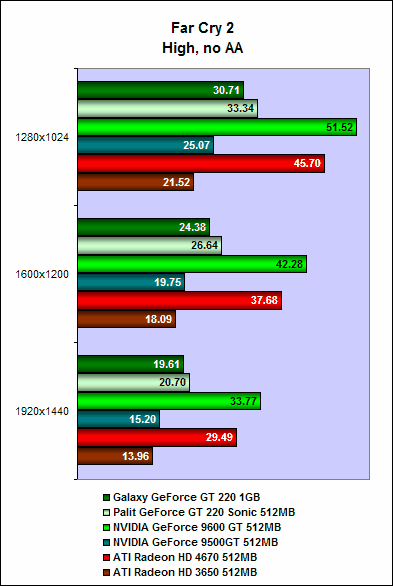
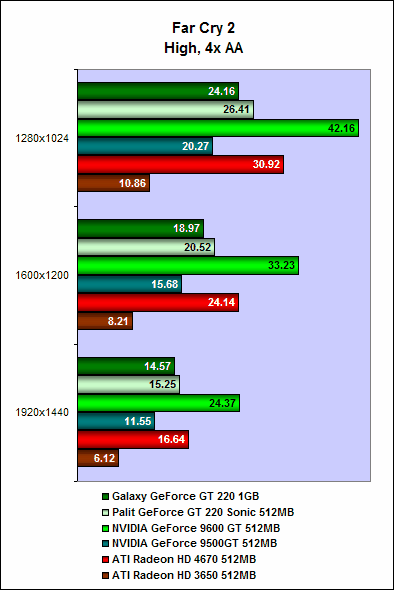
On Far Cry 2, the GeForce 9600 GT and Radeon HD 4670 were easily the fastest cards. The pair of GeForce GT 220 cards once again found themselves in the middle of the pack. They were markedly faster than a GeForce 9500 GT, but could not hope to go against the blazing 9600 GT.
Also, the Palit card was once again the quicker of the two, showing quite conclusively that the extra frame buffer on the Galaxy GeForce GT 220 does little to aid performance.
Dawn of War 2 Results
It would seem that Dawn of War 2 is a rather demanding game since we had to resort to Low settings to allow the cards to get at least playable results. While the two GeForce GT 220 cards performed decently, it was still quite some distance behind the GeForce 9600 GT and Radeon HD 4670.
That said, the gulf between the Palit and Galaxy card was significantly wider on Dawn of War 2 as opposed to the other benchmarks - the Palit card could be as much as 30% faster. In fact, the Galaxy card was only just about as quick as the GeForce 9500 GT.

Temperature
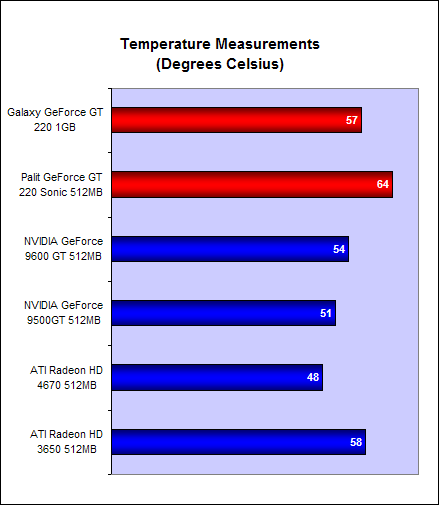
The operating temperatures of both cards were on the high side. Despite their GPUs being fabricated using a 40nm manufacturing process, the two cards were actually amongst the hottest cards in the pack. The Palit GeForce GT 220 Sonic, thanks to its high clock speeds and tiny cooler, recorded a toasty 64 degrees Celsius at the core. Though the Galaxy GeForce GT 220 sports a larger cooler, it could only manage 57 degrees Celsius, which is still significantly warmer than the other cards, save for the Radeon HD 3650.
Power Consumption
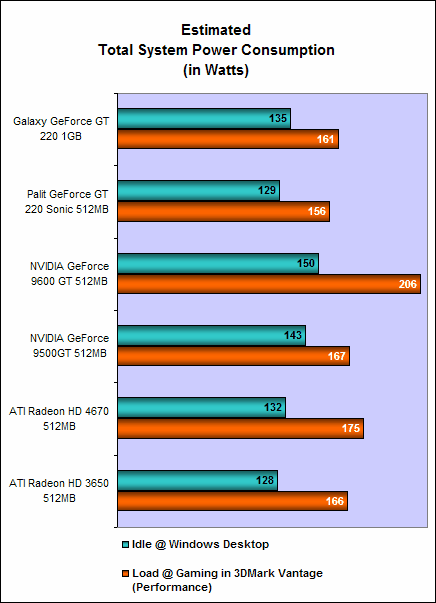
Though the two cards recorded reasonable power consumption figures, it wasn't anywhere to the extent of power savings we were expecting with a 40nm GPU core. We only noted marginal power savings when compared with a GeForce 9500 GT. Of course the GT 220 cards had better performance figures than a GeForce 9500 GT, but it wasn't by a huge degree either.
Note that of all the cards here, only the GeForce 9600 GT required an additional 6-pin PCIe power connector to power up, hence its much higher readings.
Overclocking
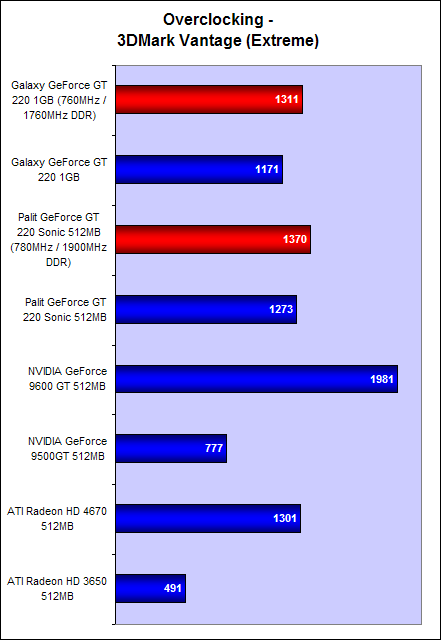
The two cards managed to managed to achieve significantly higher clock speeds at the core - 750MHz for the Galaxy and 780MHz for the Palit - which is pretty impressive, considering that a reference GeForce GT 220 is only clocked at 615MHz. This gave us about 8% boost in performance on 3DMark Vantage. This allowed it to overtake the Radeon HD 4670, but it still trailed the GeForce 9600 GT by a huge margin.
An Uneventful Budget Card
The new NVIDIA GeForce GT 220 is sadly not the mainstream monster we had hoped it would be, as our tests have shown that the older GeForce 9600 GT is still ahead by leaps and bounds. It is also no match for ATI's last-generation mainstream star the Radeon HD 4670. However, it was markedly faster than the GeForce 9500 GT and the Radeon HD 3650, which also means it'll outperform the HD 4670's lesser cousin, the HD 4550.
Performance aside, the GeForce GT 220 touts DirectX 10.1, CUDA and PhysX support as its other selling points. DirectX 10.1 has been supported by the all Radeon 4000 series cards from the get-go, so that's moot. CUDA and PhysX support is great, but for a card that is already struggling to cope with games, it is hard to see how it will cope with handling PhysX and graphics at the same time.
As its performance places it smack in the middle of a bunch of budget and mainstream cards, price is a crucial factor and unfortunately, it is also its greatest downfall. As the table on the introduction page shows, these cards here are tightly packed in the US$50 to U$$100 range. Discounting the underwhelming Radeon HD 4550, we find ourselves with cards that costs anywhere between US$60 to US$100.
Although NVIDIA hasn't set a price, the new GeForce GT 220 is likely to have a suggested retail price of around US$80 give or take some dollars, depending on the card at hand. As it is, Palit has confirmed with us that their card is going for S$115, which equates to about US$82. Which is a little pricey if you ask us since the Radeon HD 4670 handily outperforms it and can generally had for less at around US$75 (locally, it's more costly at S$135). And if you consider that the Palit GeForce GT 220 Sonic is presently one of the most heavily overclocked GT 220 in the market, and that our test comparisons used only a stock HD 4670, it becomes a no-brainer that the latter is a better bargain.
If ATI is not your cup of tea, users can opt for the older but much more powerful GeForce 9600 GT. Though the 9600 GT might only support DirectX 10, it's a small price to pay for much better performance in our opinion. Besides, it gets all the CUDA and PhysX goodies that the GeForce GT 220 offers. Better yet, it is going for around US$100 (S$139 locally) which means it costs only slightly more than the GT 220, making it the wiser, more value for money choice.
These cards might be really low-end, but if you turn the settings down low enough, you'll still be able to squeeze out some decent gaming performance out of them. Nevertheless, we'll pass and opt for the more powerful Radeon HD 4670 and GeForce 9600 GT.
However, if your new desktop system already came with the GeForce GT 220 and you're not interested in getting the best out of games, then you may want to hold on to your pockets, as our tests show that GT 220 is capable of producing playable frame rates so long as you are willing to sacrifice on graphics quality on the latest games. It'll also allow you to comfortably watch Full HD quality videos as well as take advantage of the small but growing breed of CUDA-enabled applications for accelerated computing.
To end, the GeForce GT 220 doesn't seem like a convincing update to NVIDIA's stable and might as well have been kept exclusively for OEM use since we cannot fathom why anyone would pick it over a more powerful Radeon HD 4670 or GeForce 9600 GT, both of which costs only a smidge more. Yes, it might be NVIDIA's first 40nm chip and it might be NVIDIA's first GT200 class card that is not meant for the high-end market, but it falls short somewhat in expectations - be it performance, heat output, power consumption or even price point.
 |  |
 | |
 | |
Our articles may contain affiliate links. If you buy through these links, we may earn a small commission.