
Gigabyte @ Computex 2008
Gigabyte's staggering number of motherboards on display at Computex 2008 made us dizzy but besides that, there are lots of other products at its booth, which shows the diversity of the brand. Join us as we kick off the 1st day with a look at Gigabyte's latest.
A Dynamic Gigabyte
It's looking like another 'dynamic' year ahead for Gigabyte, which showed off its entire range of products from components to consumer electronics at Computex 2008. As you may have noticed, Gigabyte has been rather aggressive in marketing its motherboards, to the extent of directly attacking rival ASUS' marketing claims as false while promoting its own Dynamic Energy Saver technology. While a war of words (aka press releases) have broken out between the two sides, we'll be skipping the histrionics and focusing solely on the products. In the case of Gigabyte, they have a staggering number of motherboards available using the latest chipsets at its booth and here are some of our picks
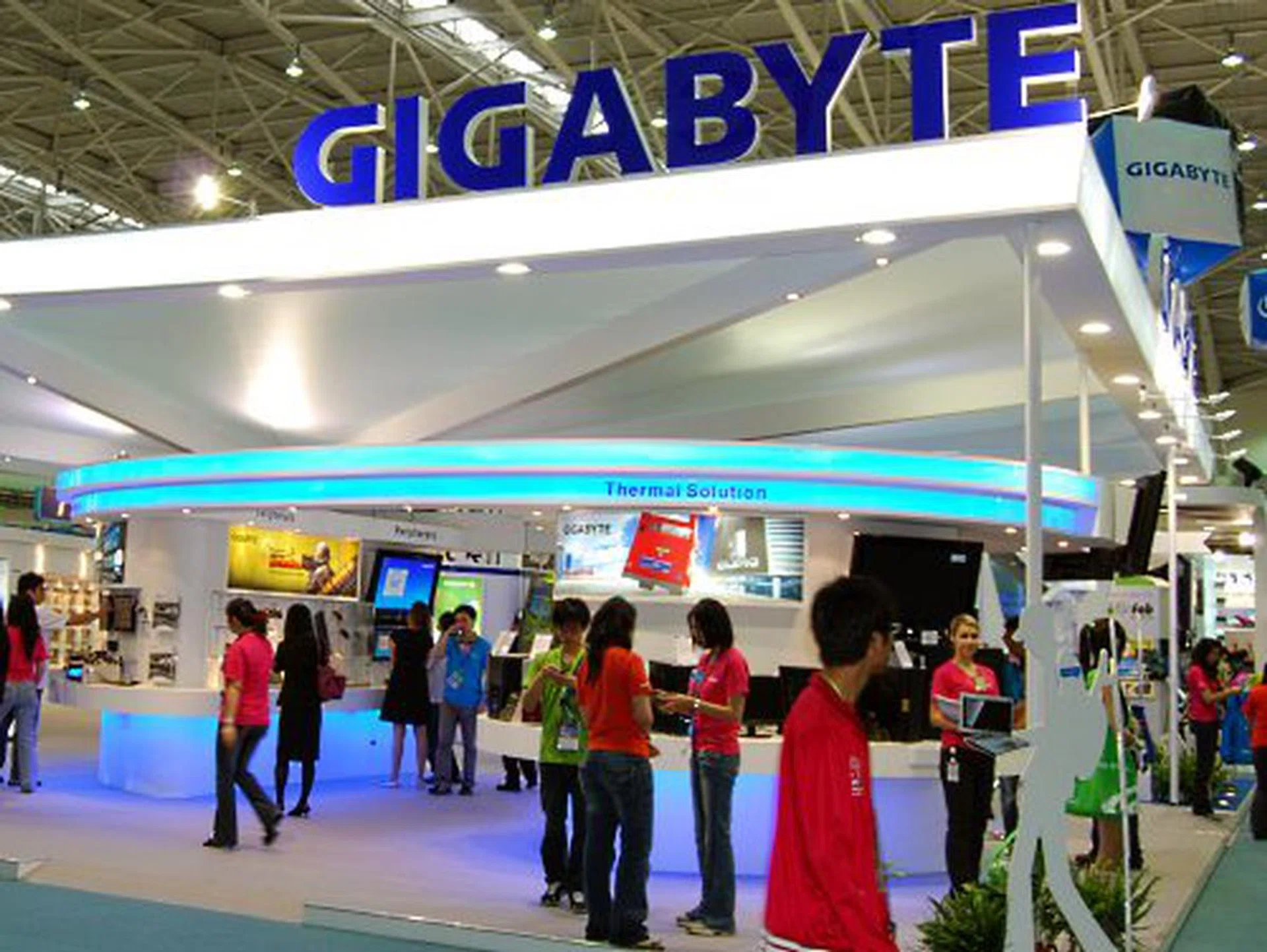
Gigabyte has one of the larger booths at Computex, as one would expect from a major manufacturing vendor.
.
P45 Motherboards
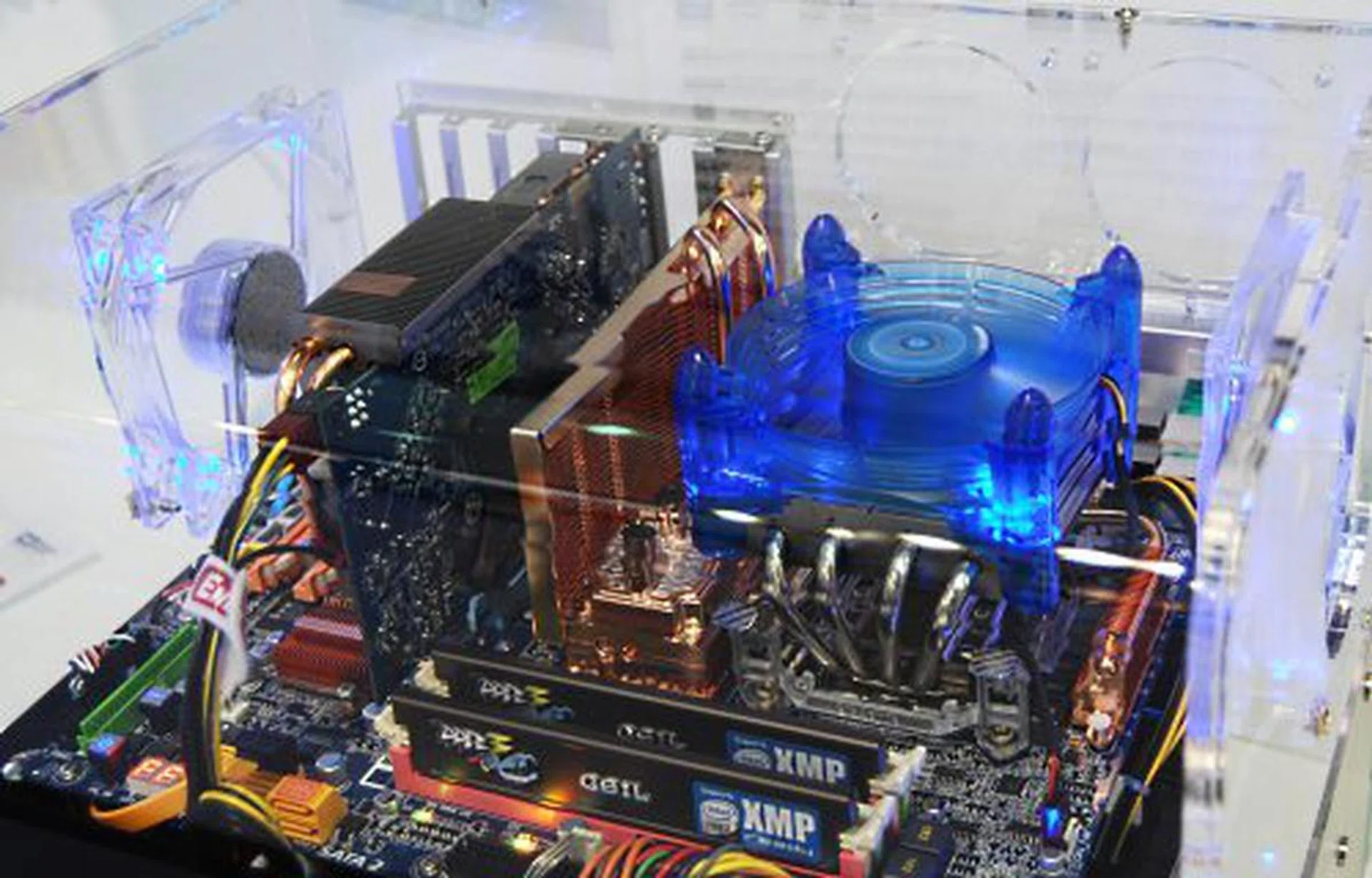
Featuring a new Hybrid Silent-Pipe, which consists of a separate, almost full length sized array of radiating fins for the motherboard's cooling system, the Gigabyte GA-EP45T-Extreme is as extreme a solution as its name suggest. Here it is paired with a GeForce 9600 GT and there's no interference between the heat pipe and the graphics card.
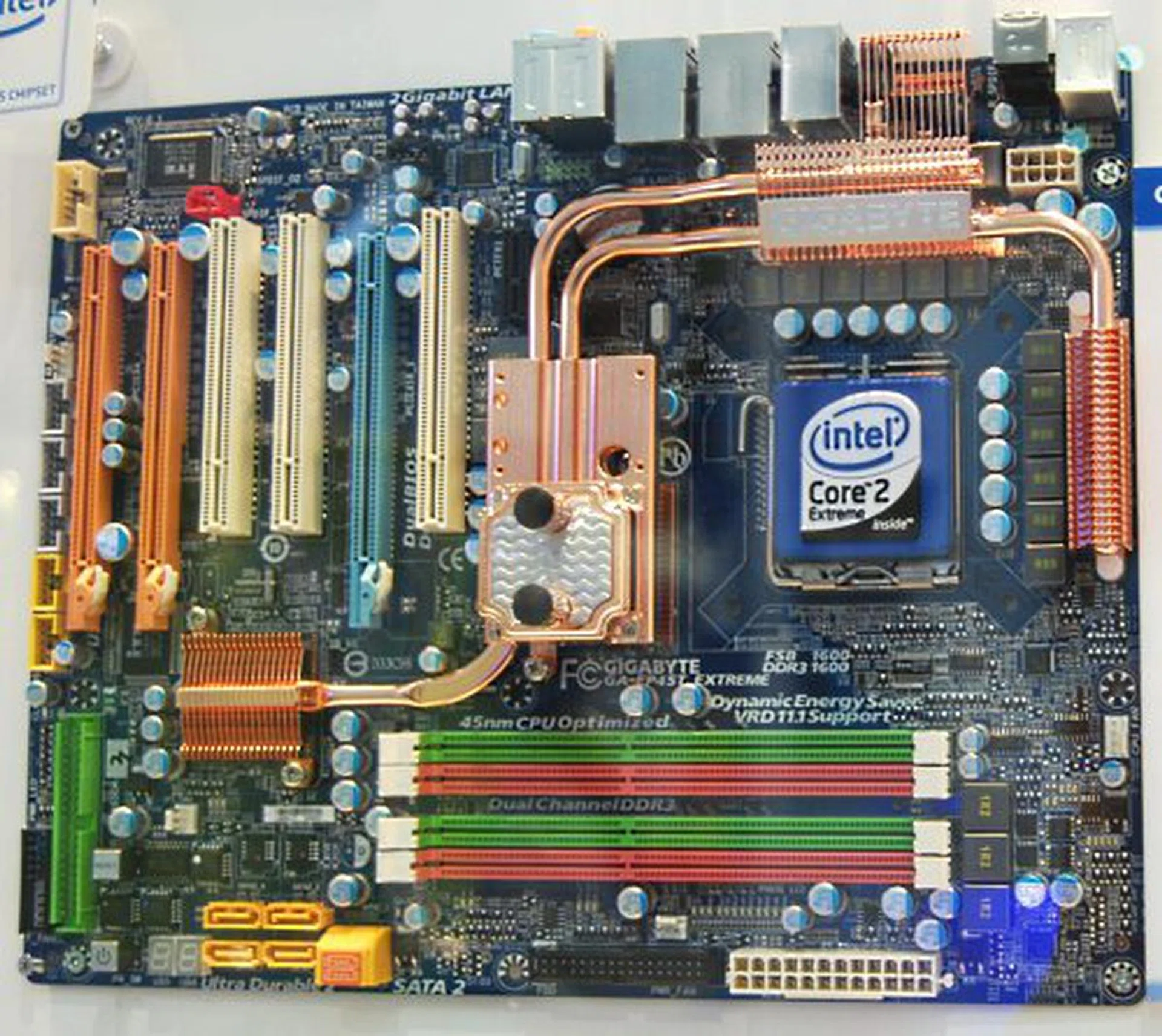
Looking at the board alone, the EP45T-Extreme uses Intel's latest P45 chipset with a ICH10R Southbridge and supports up to 1600MHz FSB 45nm Intel Core 2 processors. It can do DDR3 up to 1900MHz overclocked. Gigabyte claims it has a virtual 12 CPU power phase with 2 phases each for memory and the Northbridge. Besides supporting CrossFireX via two PCIe x 16 Gen 2 interface, this board also has Realtek's ALC889A HD Audio providing it with a SNR of 106dB and Dolby Home Theater.
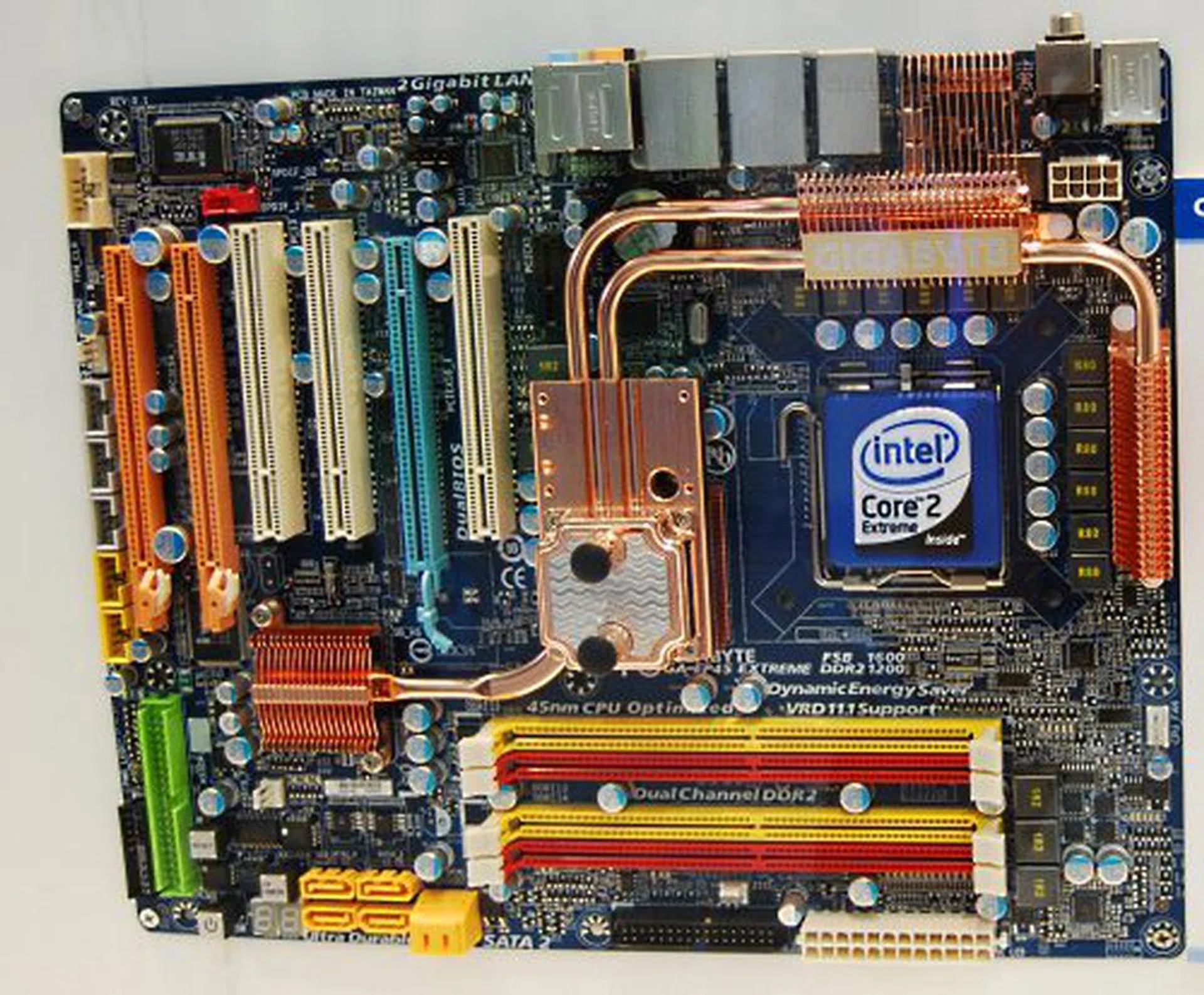
The DDR2 version of the EP45-Extreme is exactly the same as the 'T', DDR3 version in every other way except for the memory support.
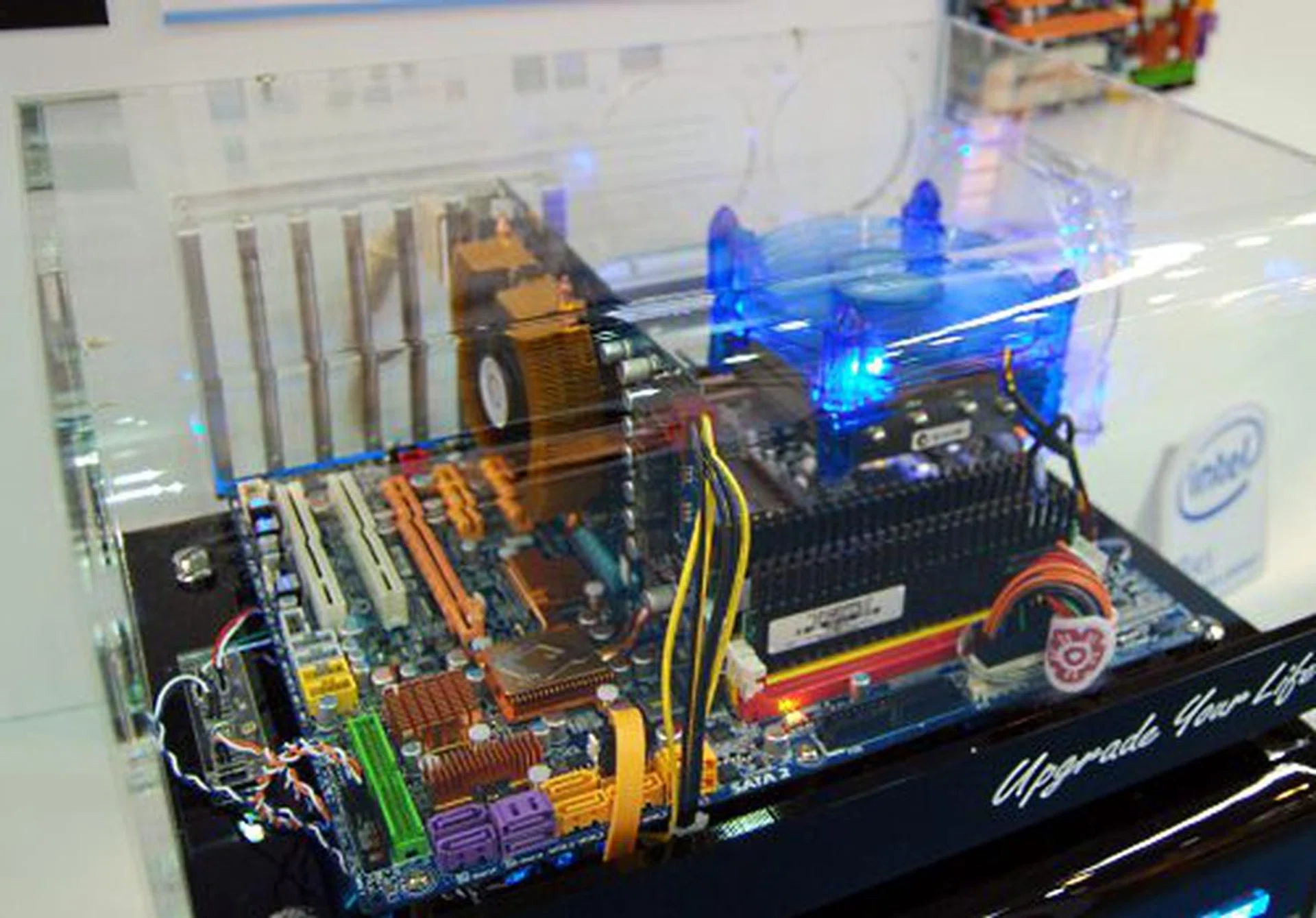
The ultra high-end P45 flagship in Gigabyte's stable is of course its DQ6 variant. Here it is paired with a GeForce 8800 GT.
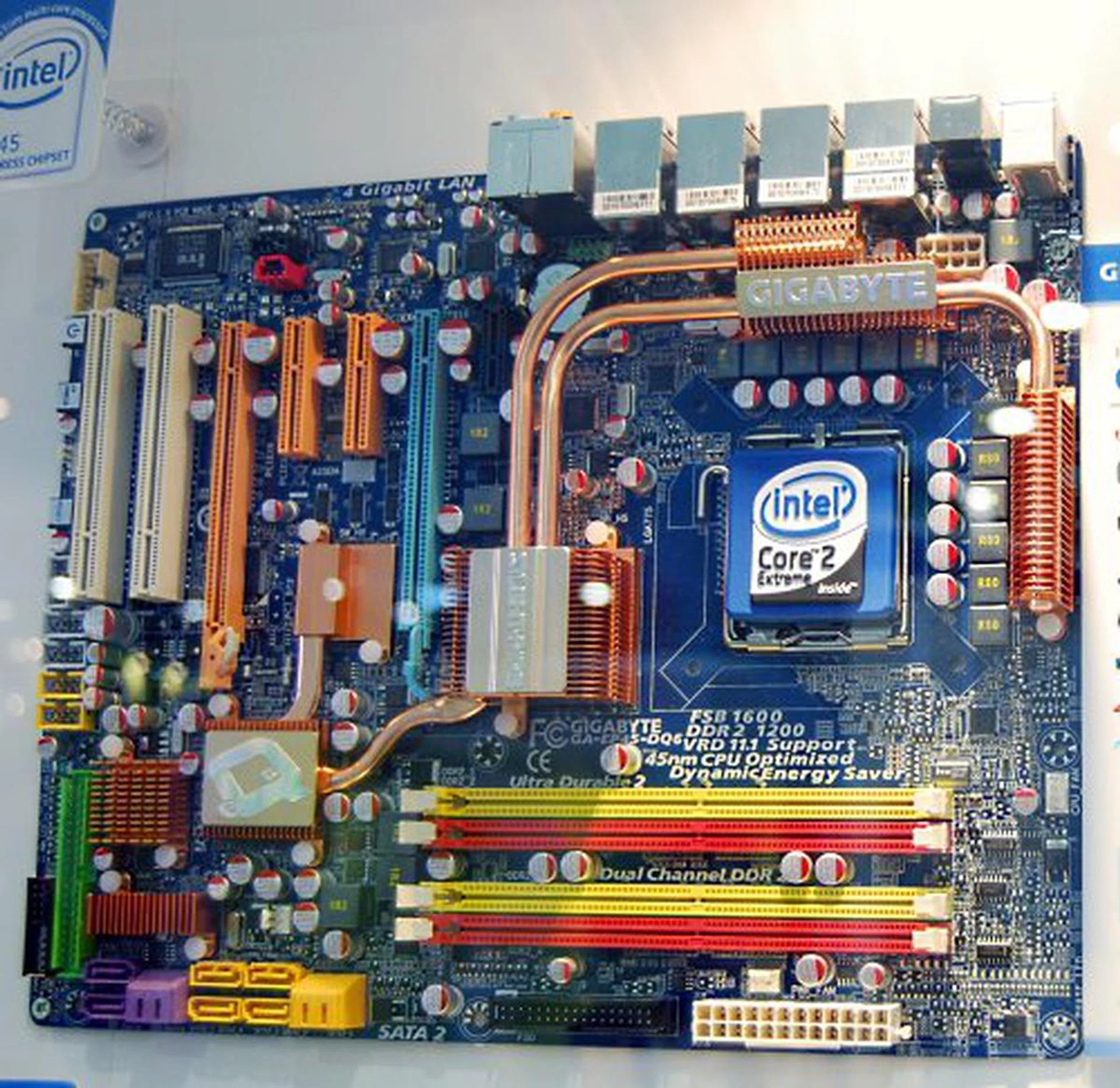
For those desiring the extreme high-end (in terms of features) solution, the DQ6 is Gigabyte's answer. Supporting DDR2 1600MHz along with Gigabyte's full suite of energy saving/efficiency technologies like its 6-Gear switching, this board has all the standard P45 chipset features (and a lot of the high-end stuff you saw on the Extreme), 4 x Gigabit Ethernet and even a TPM chip onboard for full 2048-bit encryption. You can read more about it in the preview article done before Computex.
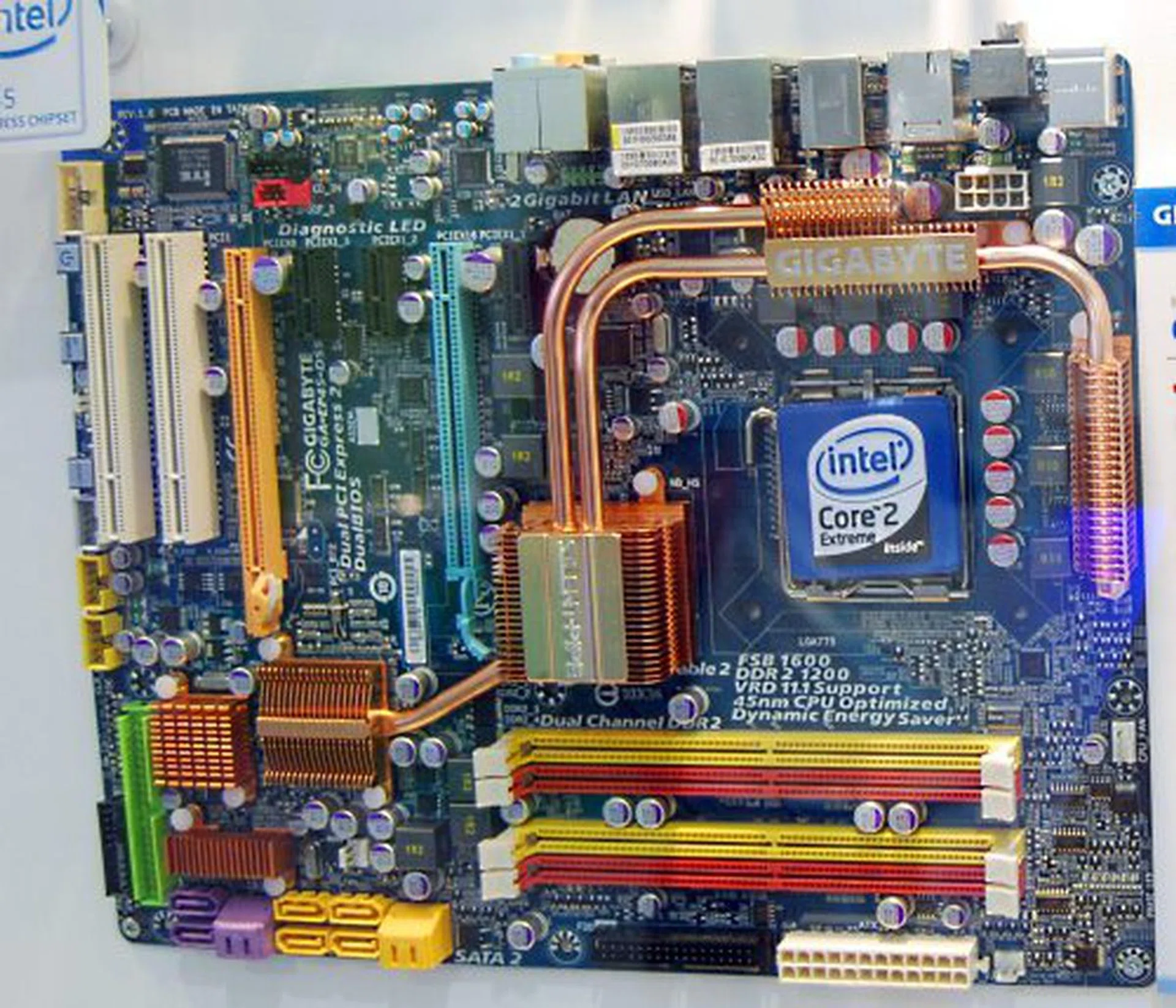
Almost the equal of the DQ6, the Gigabyte GA-EP45-DS5 has the more typical dual Gigabit Ethernet instead of the DQ6's four and apparently lacks the virtual 12 power phases on the DQ6.
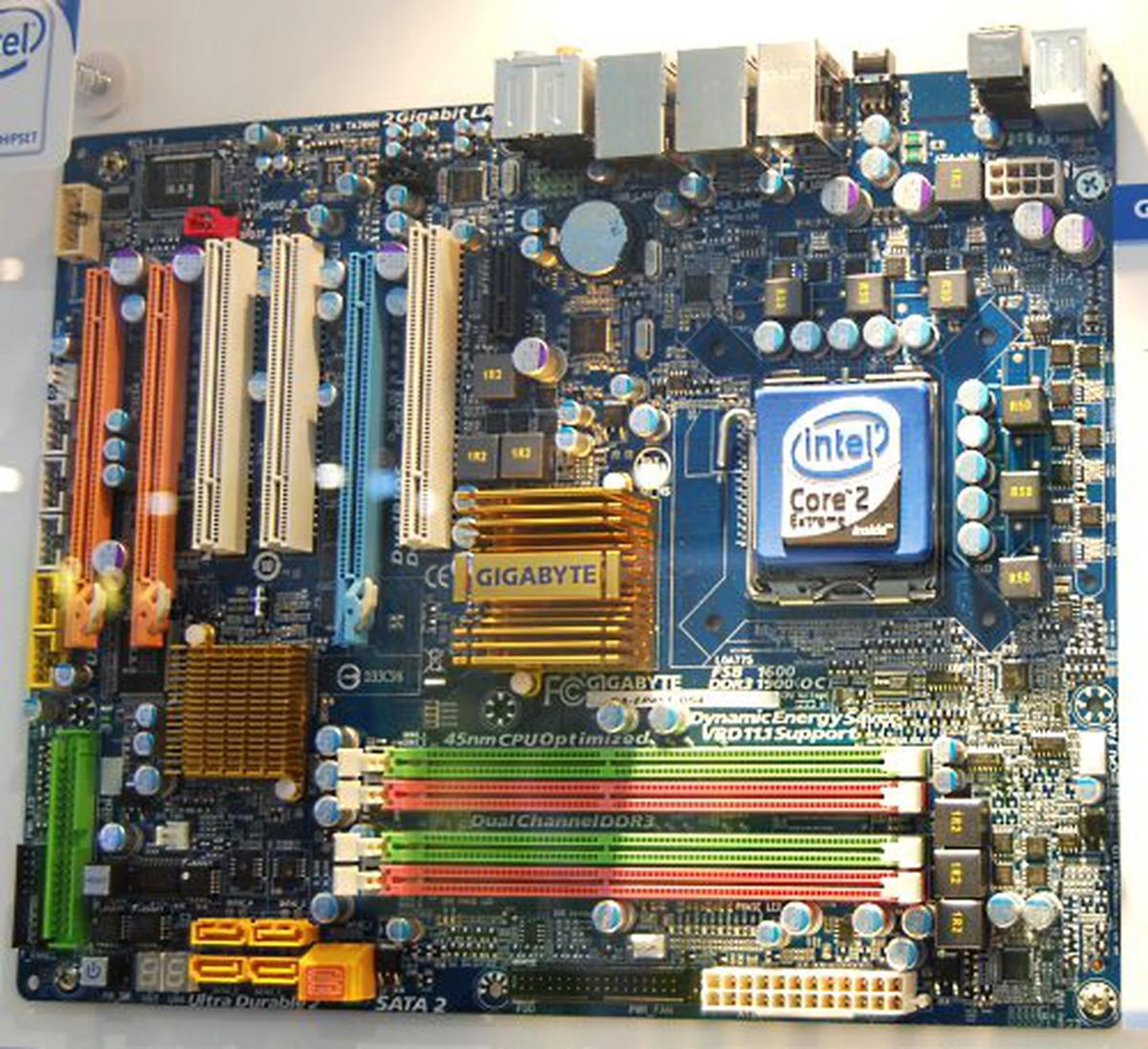
With a less prominent cooling system, the EP45T-DS4 has the usual Advanced DES found on Gigabyte's new motherboards, along with the standard P45 features and dual channel DDR3 support.
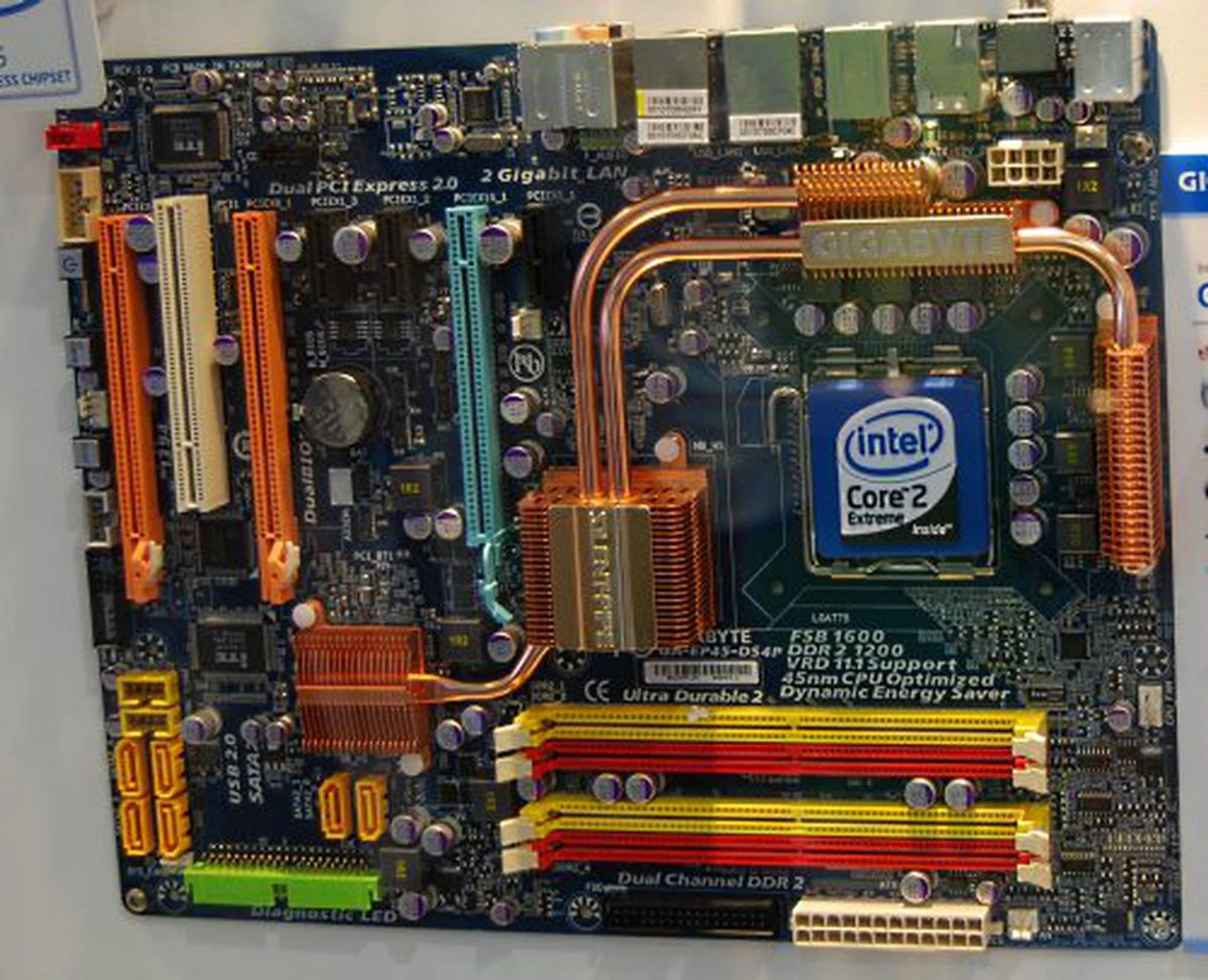
This DDR2 GA-EP45-DS4P is equipped with a more comprehensive cooling system than the DDR3 DS4 and has the TPM chip found on higher end Gigabyte boards. Confused yet about the differences?
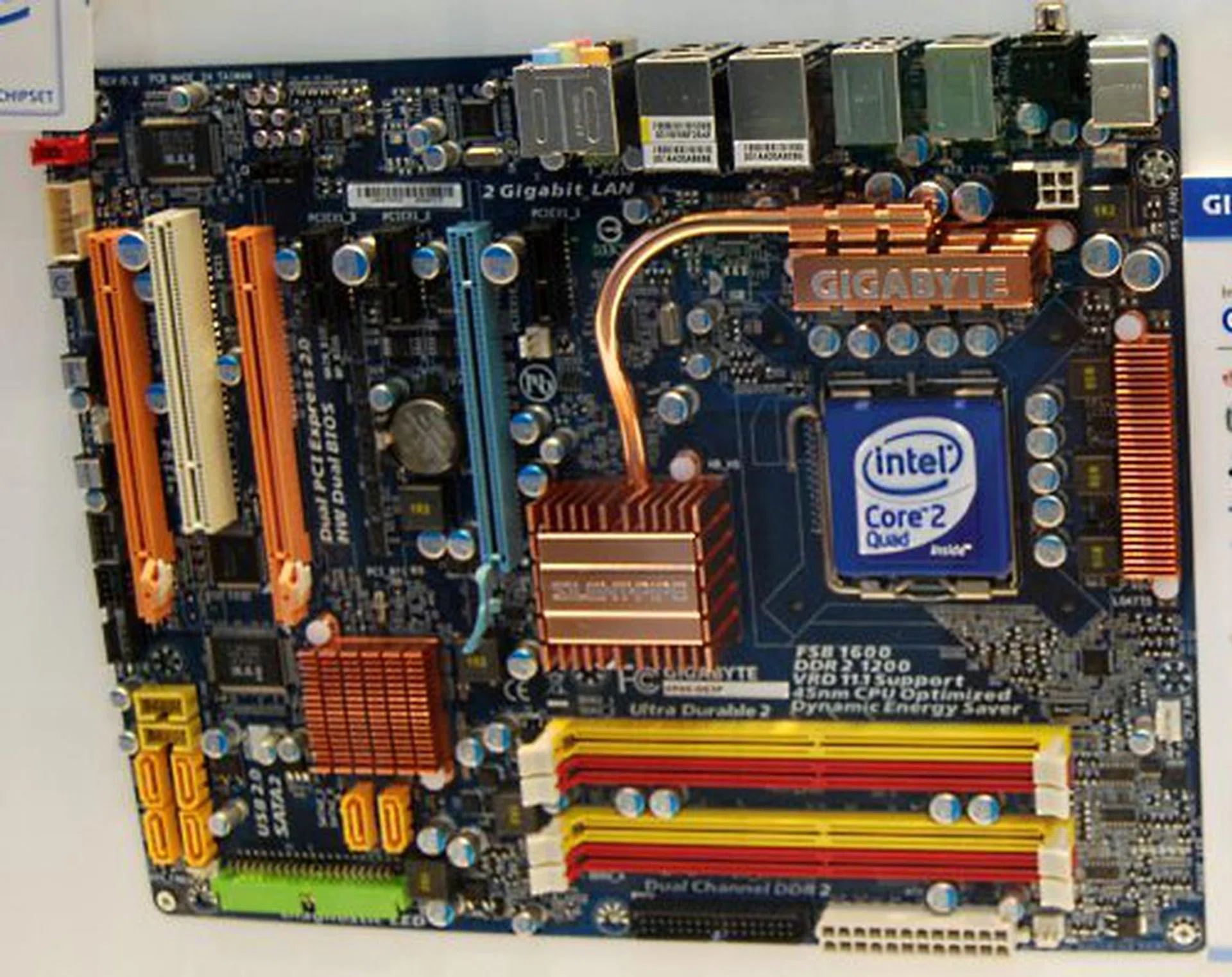
Mainstream enthusiasts are more likely to go for the EP45-DS3P, which besides the standard P45 features, also has Advanced DES with 6-gear switching and the same ALC889 HD Audio CODEC as its high-end relatives.
More Motherboards
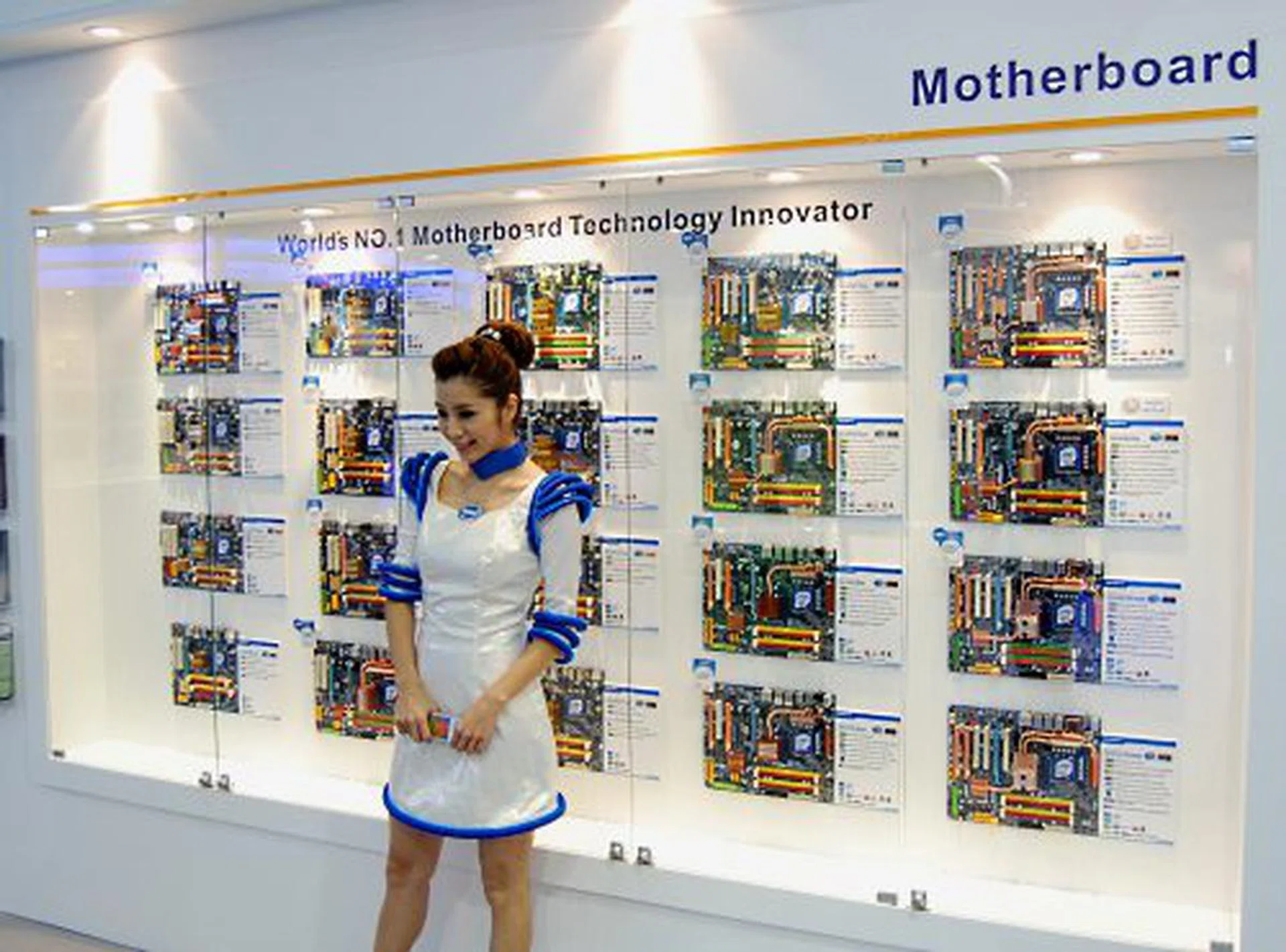
Gigabyte is justifiably proud of its motherboards and this wall of boards is a reminder of why.
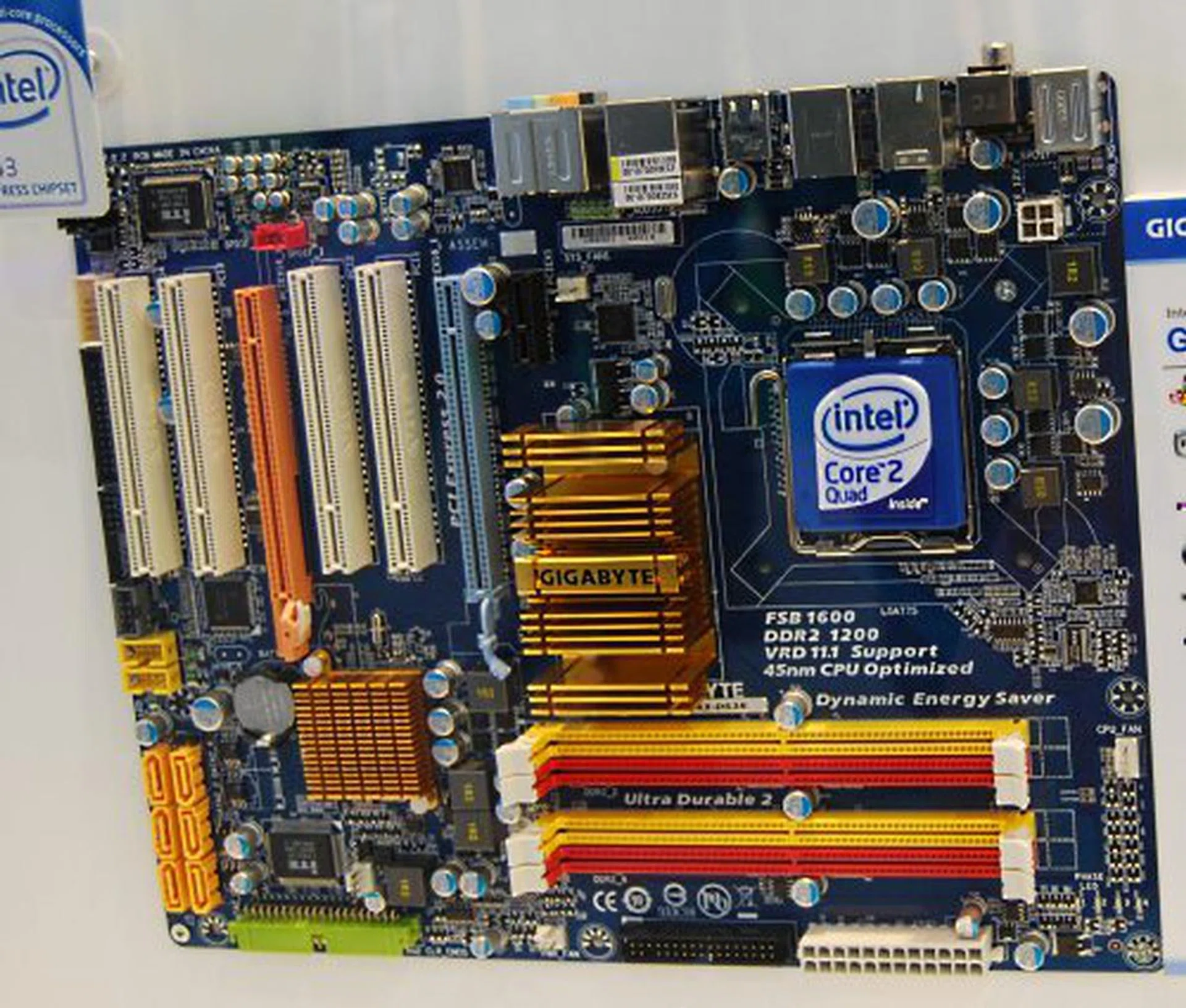
With only Dynamic 4-Gear switching, the P43 based EP43-DS3R has a much simpler heatsink solution, while its FSB is 1600MHz, achieved only by overclocking (default is 1066MHz). It also drops the dual x8 channel CrossFireX capabilities of the P45 chipset and just one Gigabit Ethernet and a less capable HD Audio CODEC than the ALC889A.
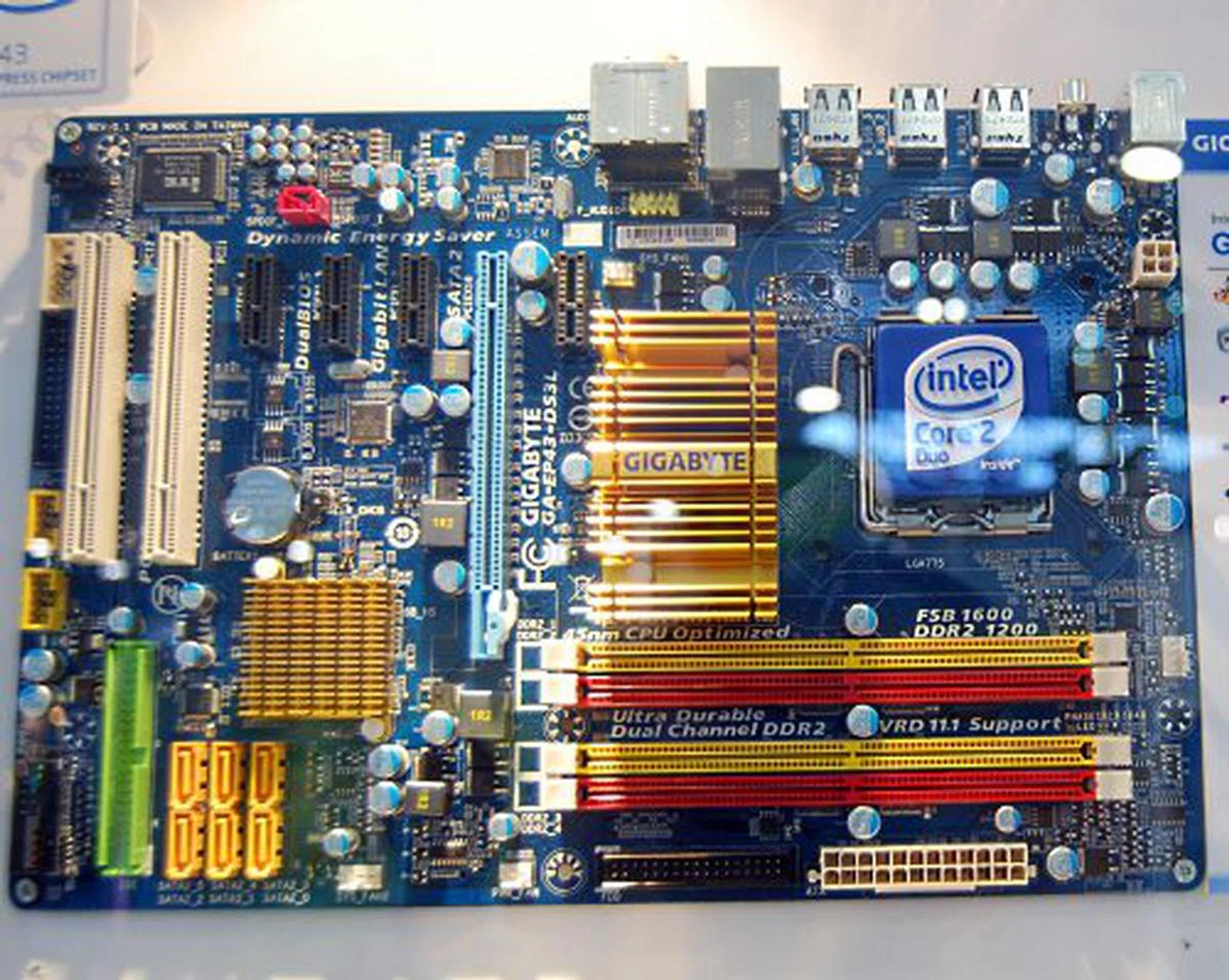
Drop one of the PCIe x 16 slots, the RAID capabilities of the EP43-DS3R and the TMP chip and you'll get the Gigabyte GA-P43-DS3L.
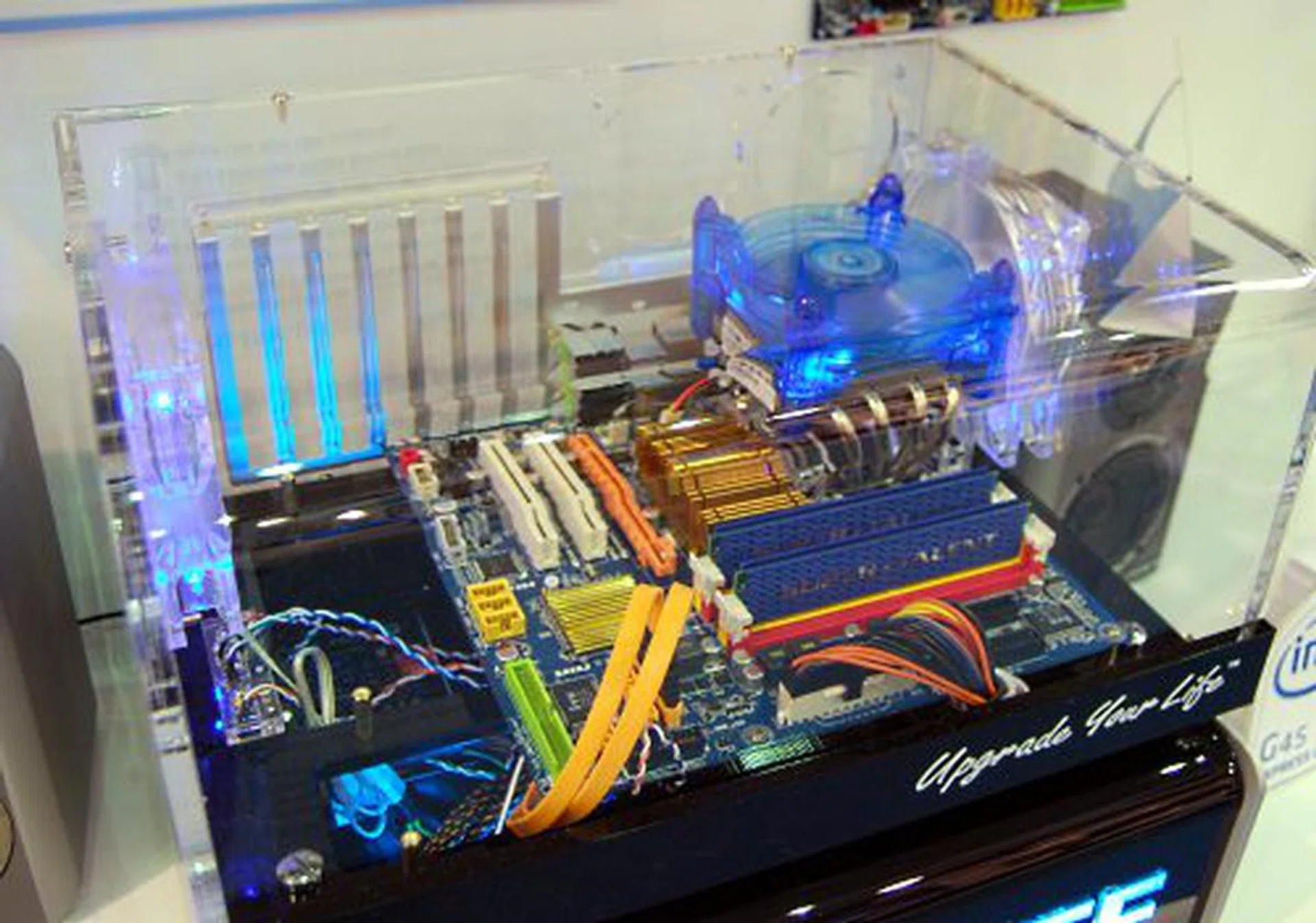
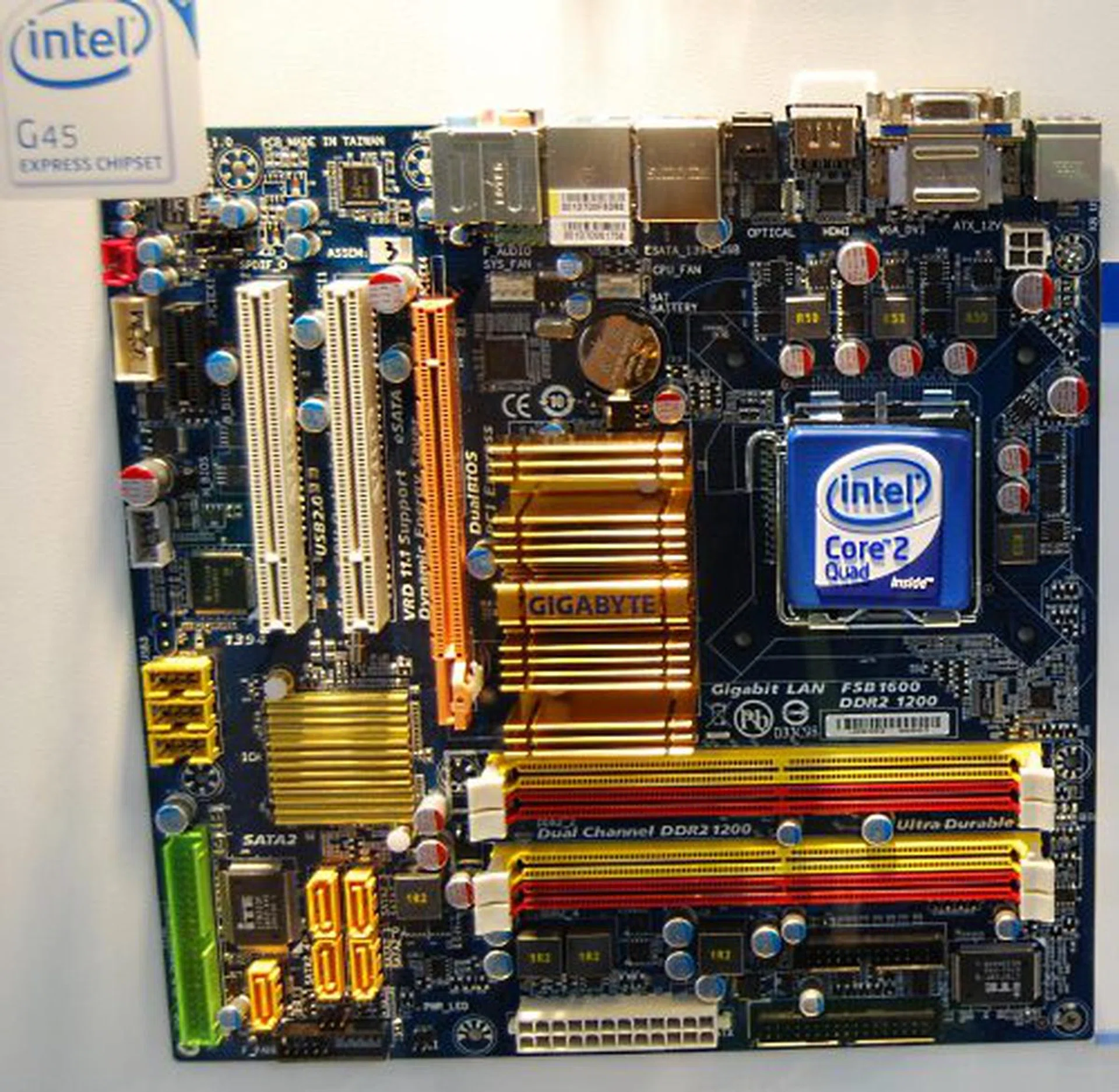
The G45 chipset also got an airing at Gigabyte's booth, where its HD playback capabilities were showcased.
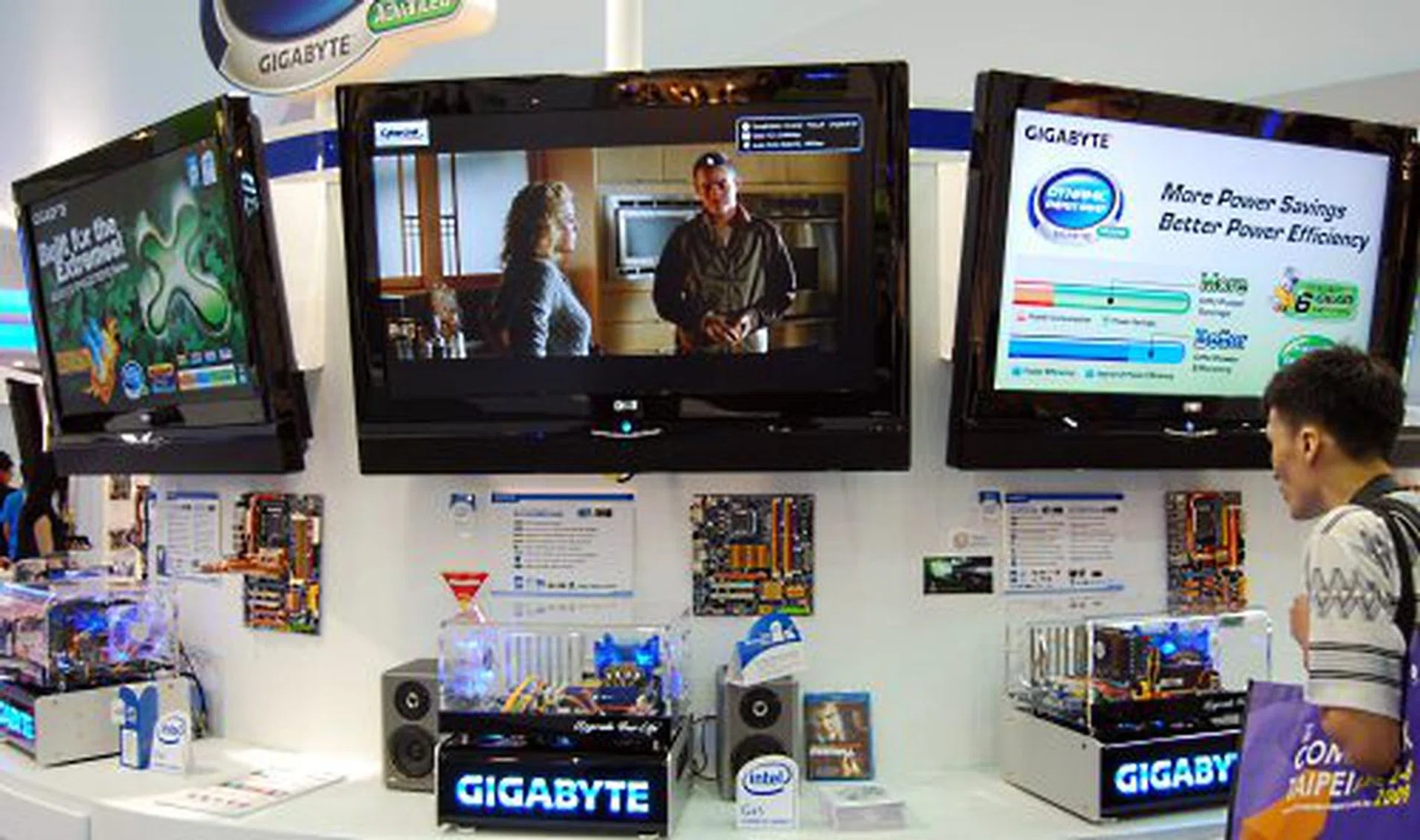
In case you missed the demo, the middle one shown here is the G45 system running a Blu-ray movie. We couldn't check CPU utilization on it to verify the actual numbers but at least the playback was smooth.
In case you missed the demo, the middle one shown here is the G45 system running a Blu-ray movie. We couldn't check CPU utilization on it to verify the actual numbers but at least the playback was smooth.
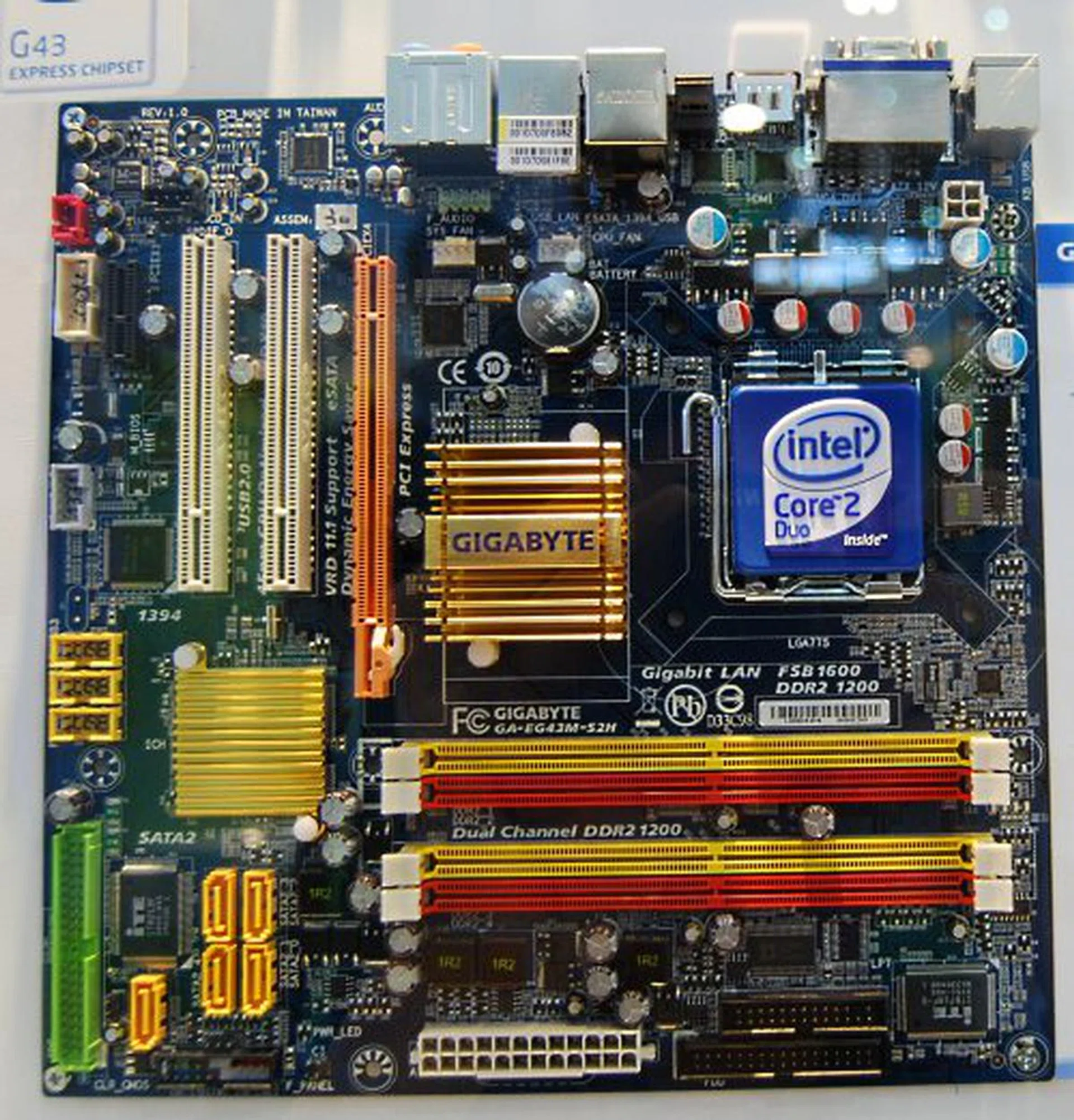
With no RAID support and a FSB of 1600MHz (unofficial, only via oveclocking), the GA-EG43M-S2H has the integrated X4500 GMA for full 1080p playback with HDCP support but replaces the ALC889A HD Audio CODEC with only the standard 8-channel HD Audio CODEC.
All Quiet on the Graphics Front
While we were expecting the next generation GPUs from both ATI and NVIDIA this month, there were none on show at Gigabyte's booth. Only the last generation products were on display, though Gigabyte is showcasing its silent, passively cooled solutions.
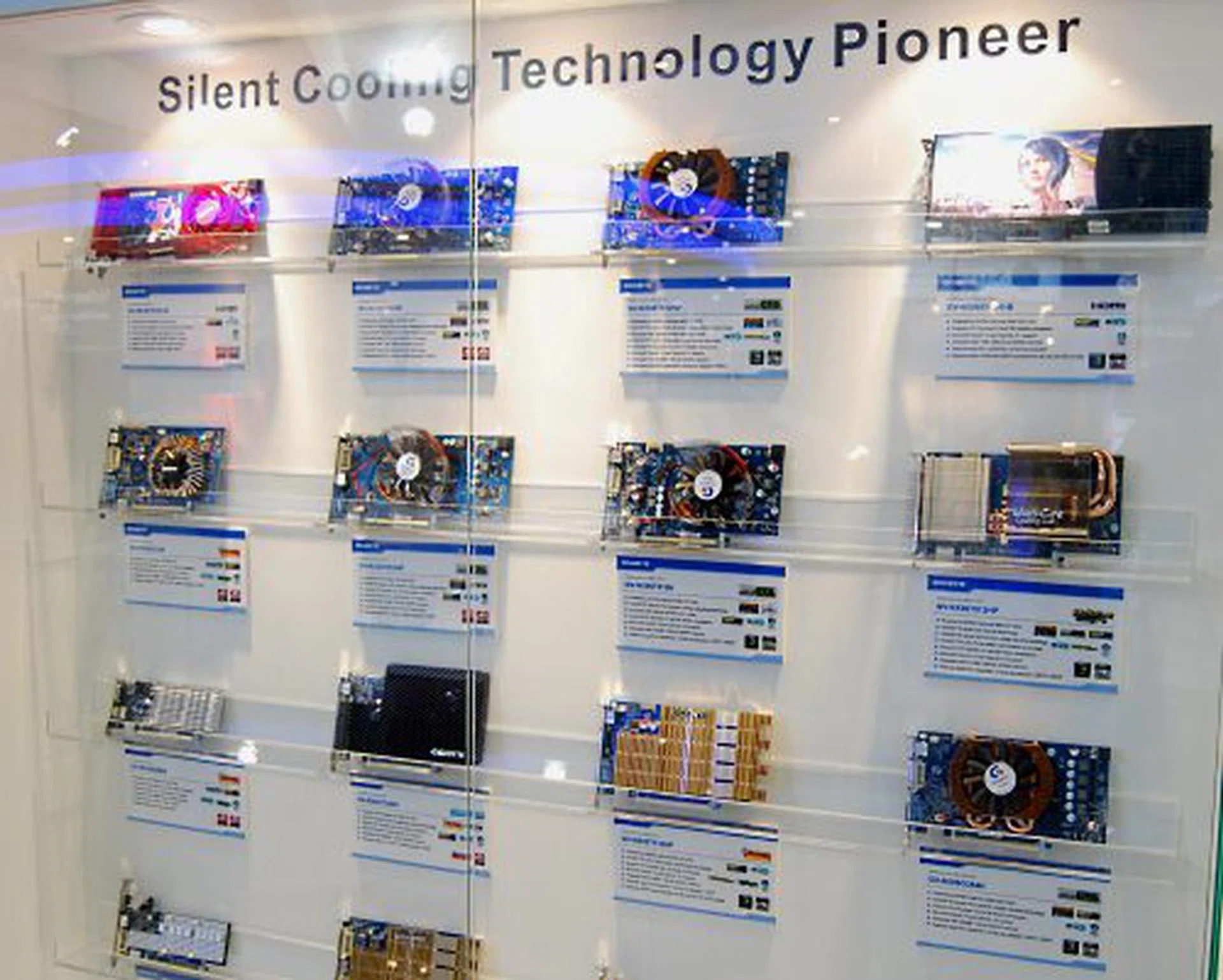
Displaying Gigabyte's passively cooled or quiet graphics cards in recent times.
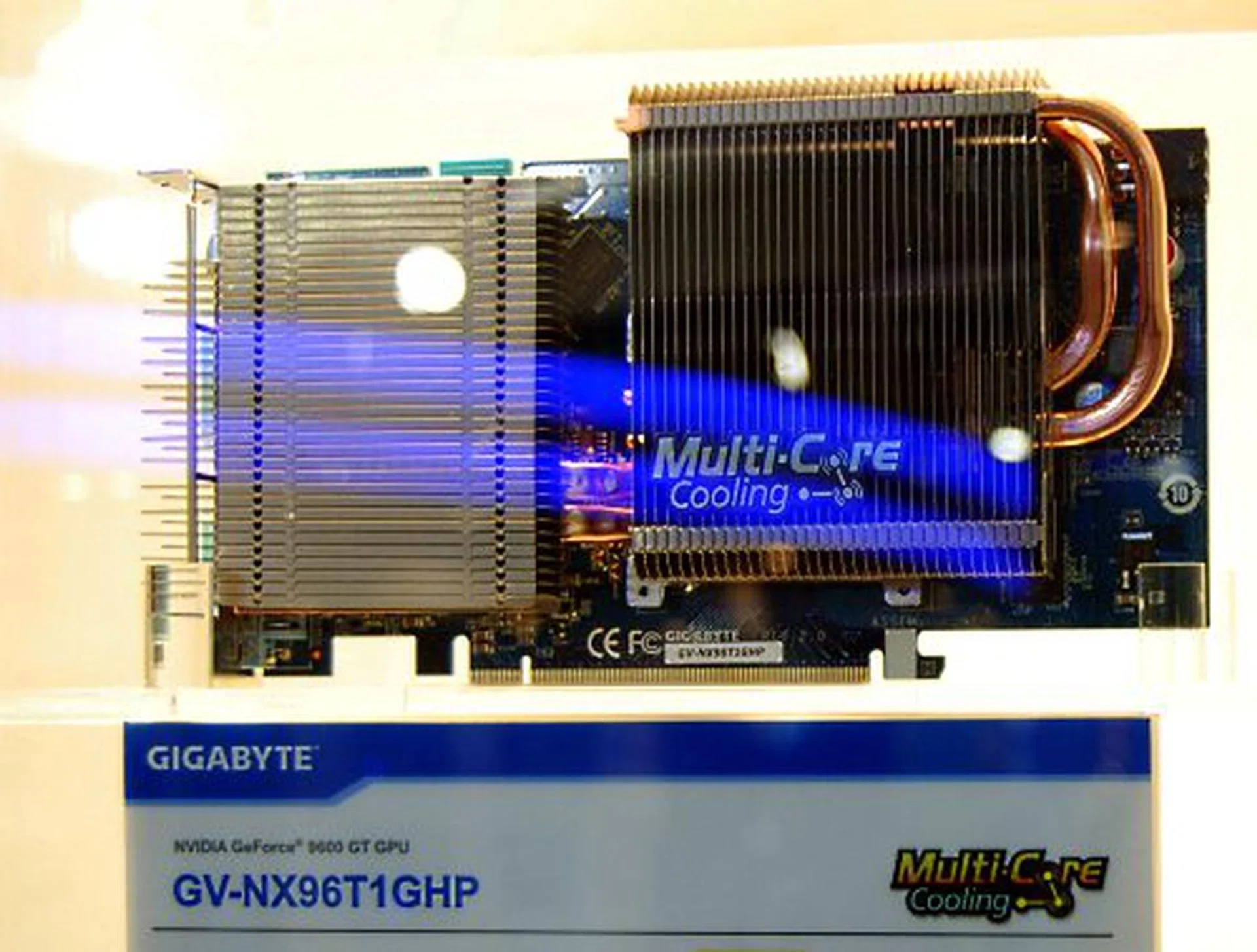
A passively cooled GeForce 9600 GT with 1GB of memory, this Gigabyte card uses its Multi-Core cooling technology to dissipate heat more effective via multiple heat transfer 'points' on the heat pipes. This card also comes with Gigabyte's TurboForce, which usually means it's overclocked.
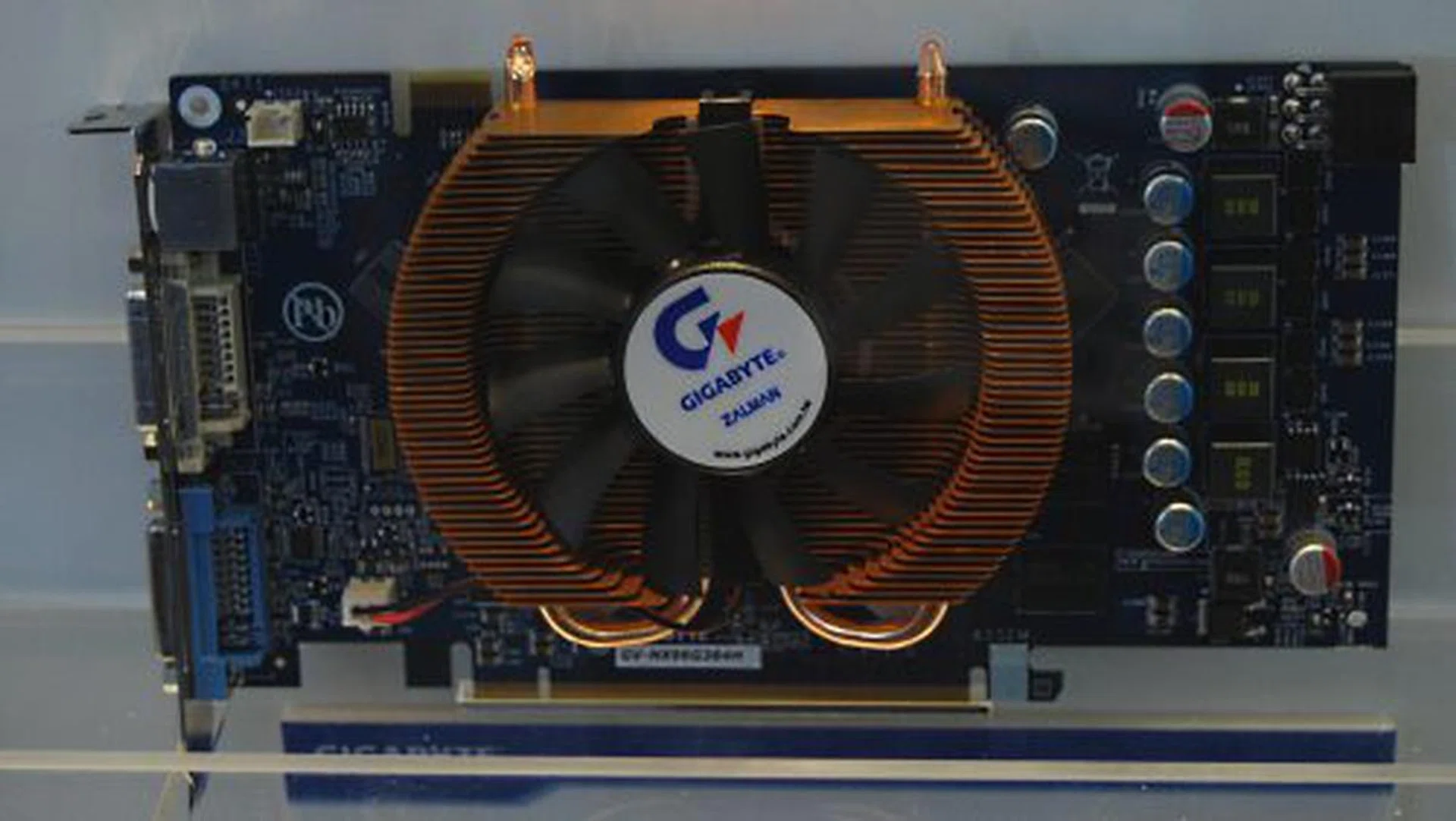
It may be a rebadged GeForce 8800 GS but from what we have seen, NVIDIA's board partners all have their versions for show at Computex. It's the lull before the storm. In case you didn't know, the GSO has 384MB of DDR3 memory (192-bit bandwidth) and uses the G92 core.
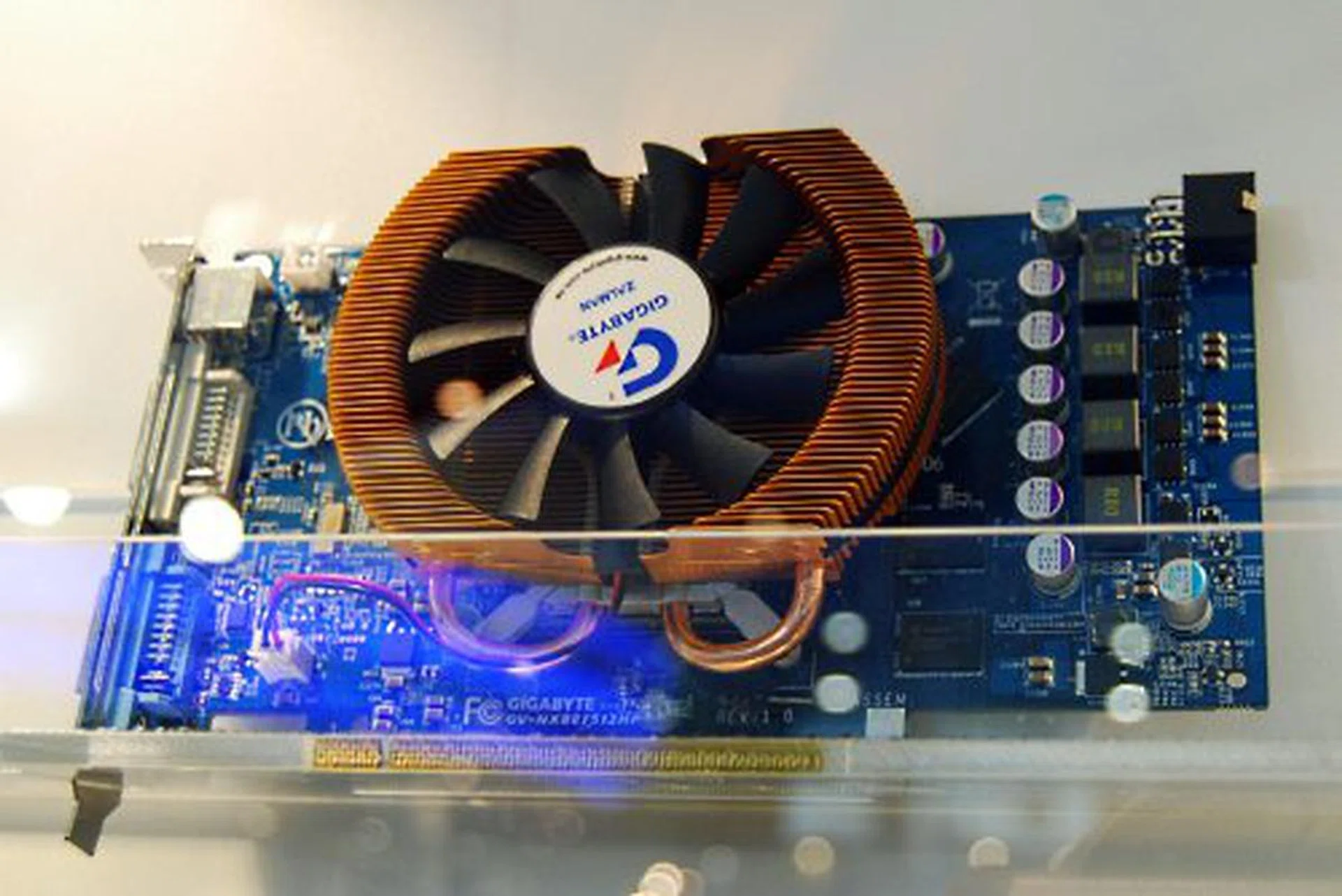
Featuring a Zalman VF830 heat pipe based cooler, the Gigabyte GV-NX88T512HP is another TurboForce powered card using the popular GeForce 8800 GT GPU. It's not new like we said, but we bet sales are still healthy for this GPU in general.
Joining the 'Atomic' Age
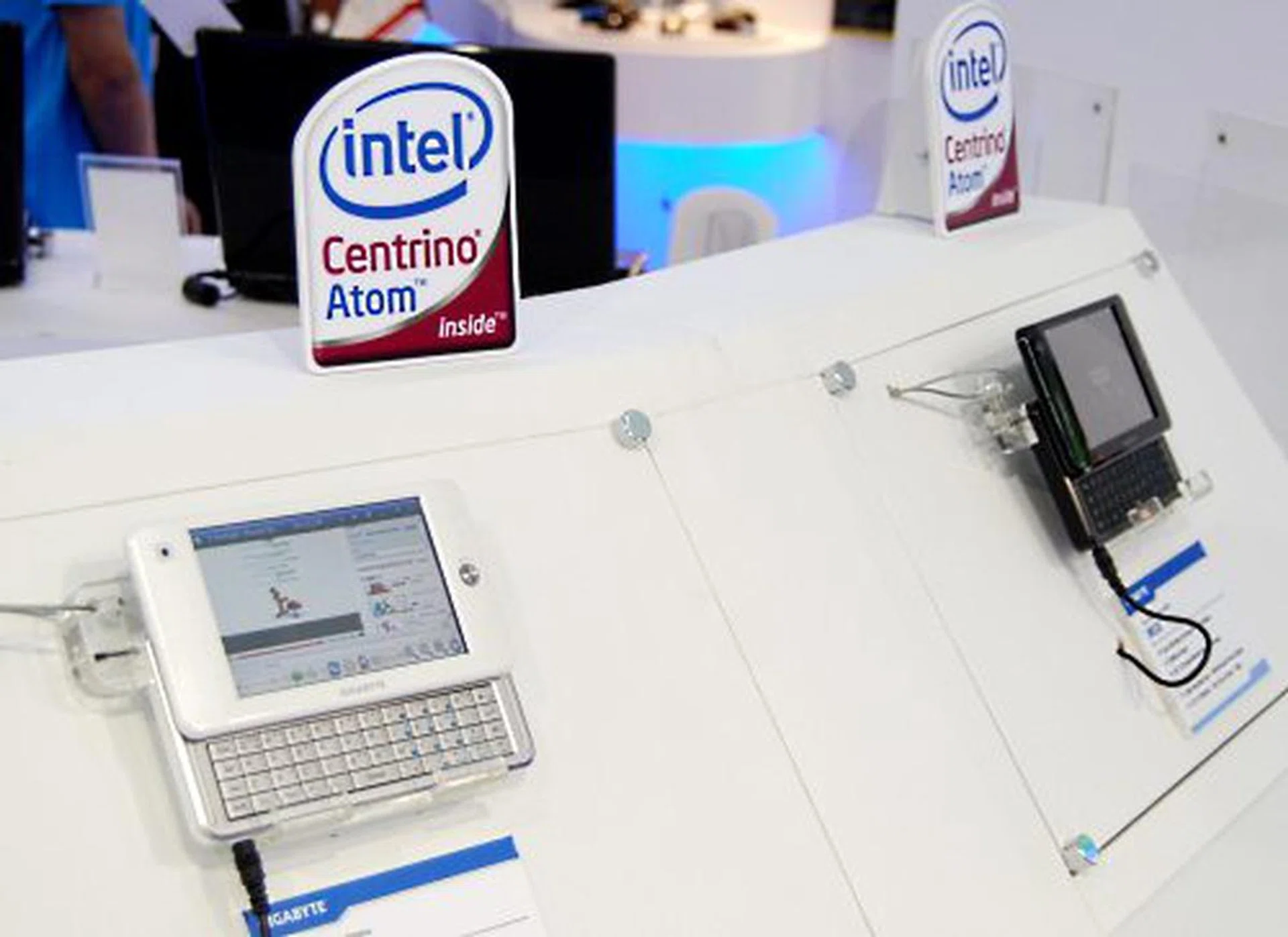
Intel's Atom has sparked a whole lot of excitement in the handheld and subnotebook/netbook segments and Gigabyte too has a model to show at Computex.
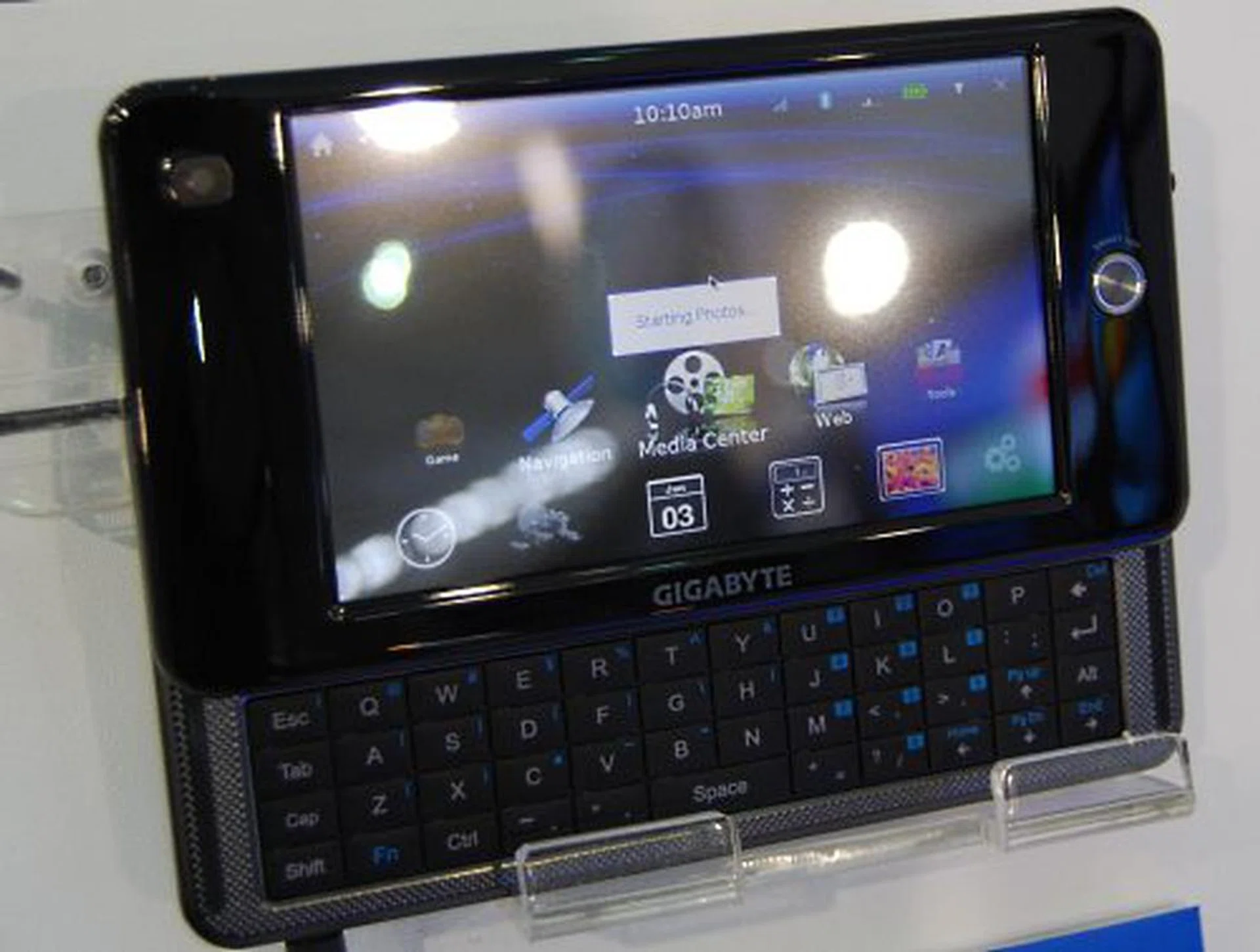
The upcoming M528 will have an Intel Atom processor at 800MHz and uses a Linux OS with what Gigabyte calls a 'Merry-Go-Round i-CON interface'. It is basically a touchscreen device (4.8-inch LCD) with 512MB of onboard memory and using a 4GB SSD for storage. Wireless connectivity is via 802.11b/g (SDIO) or HSDPA (mini card module). Weighing only 340g, it will be available soon in both black and white.
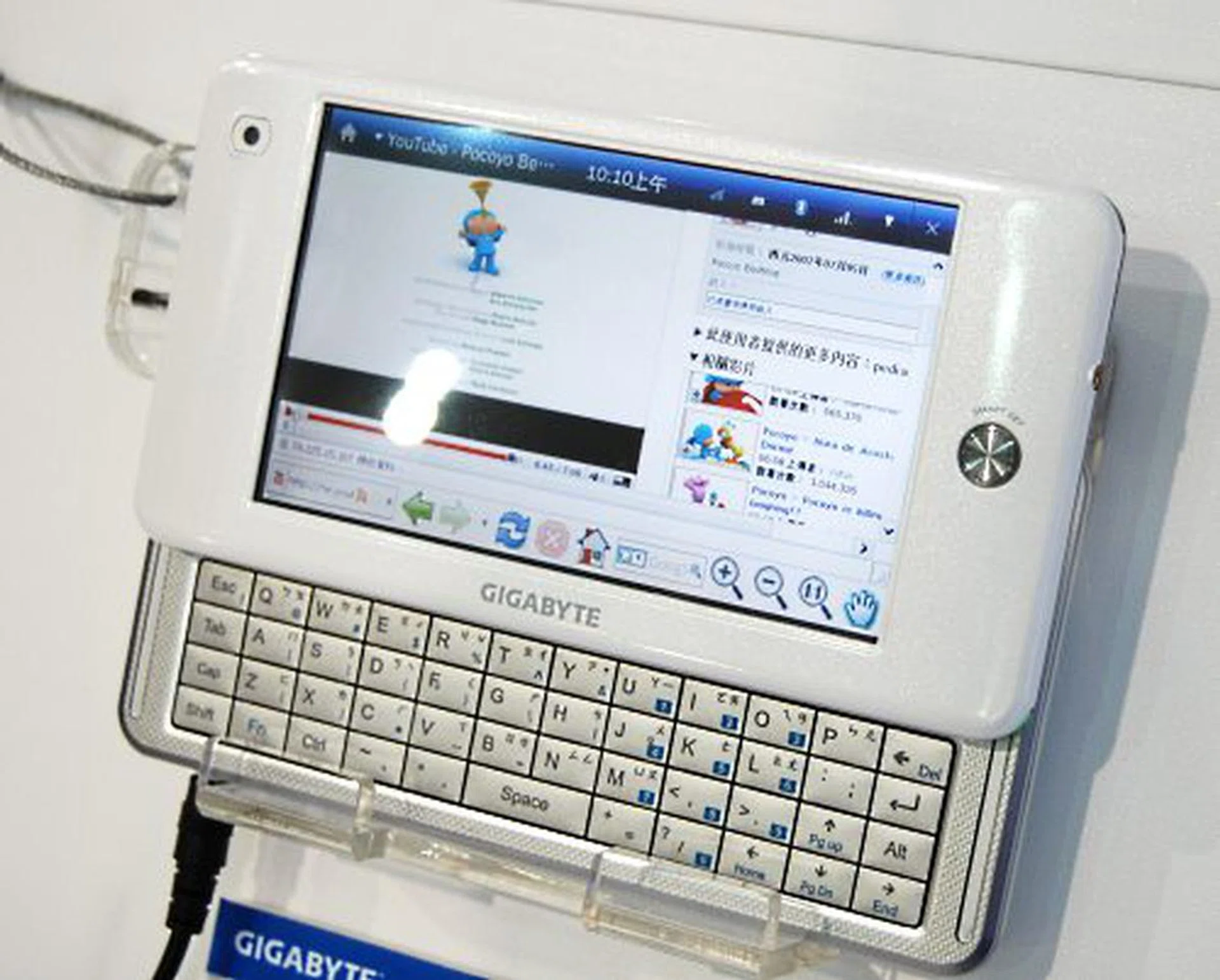
The white version of the M528. When we had a chance to play around with it, the test unit did not seem as responsive as we would have liked. However, it's early days still for this product.
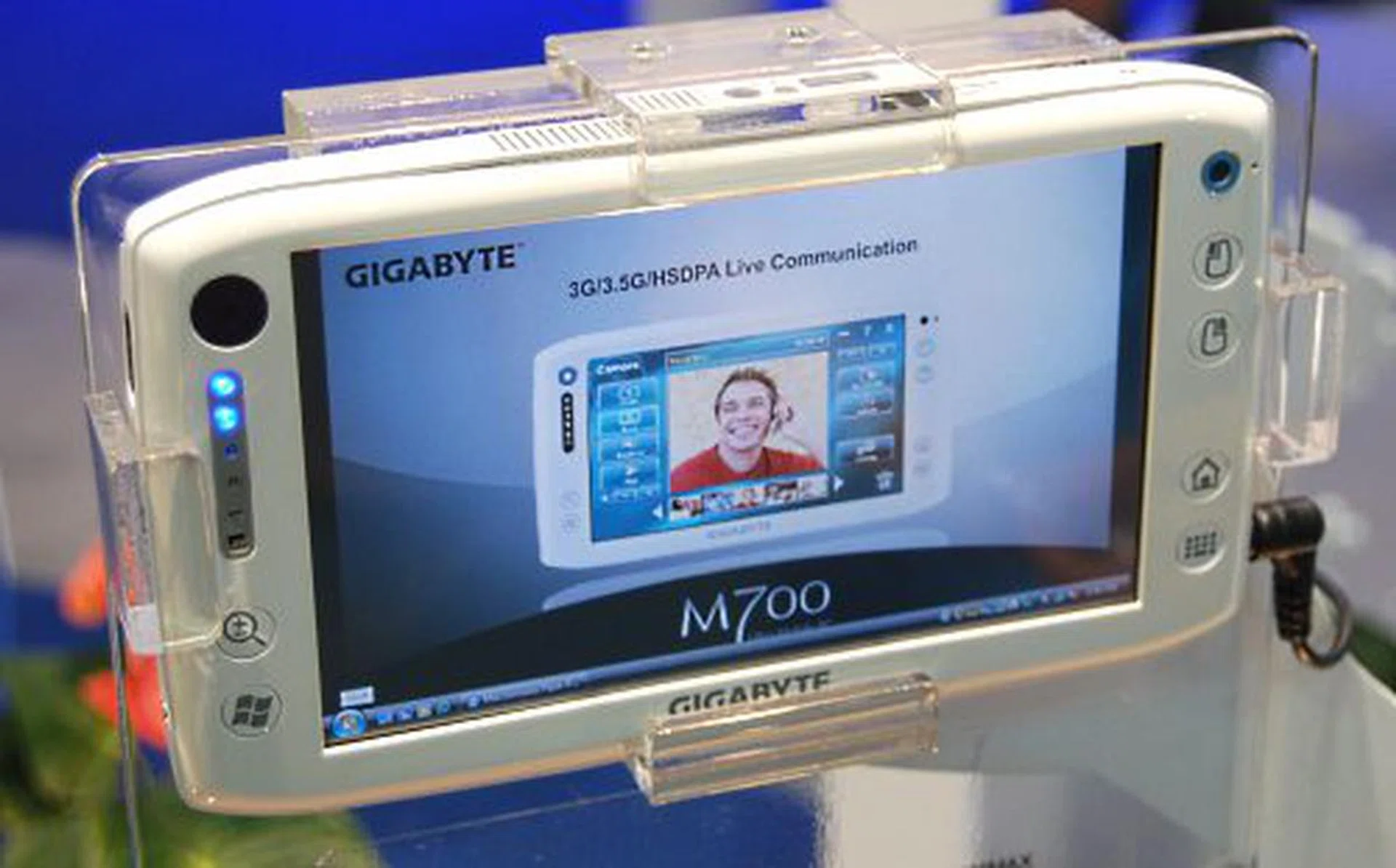
This UMPC class device, the M700 is another up and coming product from Gigabyte. Equipped with a VIA C7-M ULV 1.2GHz processor, it runs Windows Vista Home Premium and has 1GB of DDR2-533 RAM. A 7-inch touchscreen with a resolution of 1024 x 600 is complemented by VIA's integrated Chrome9 HC 3D graphics. According to Gigabyte, the built-in Express Card slot on the device supports both WiMax and 3.5G. Battery life is rated at 3 hours for this 650g handheld.
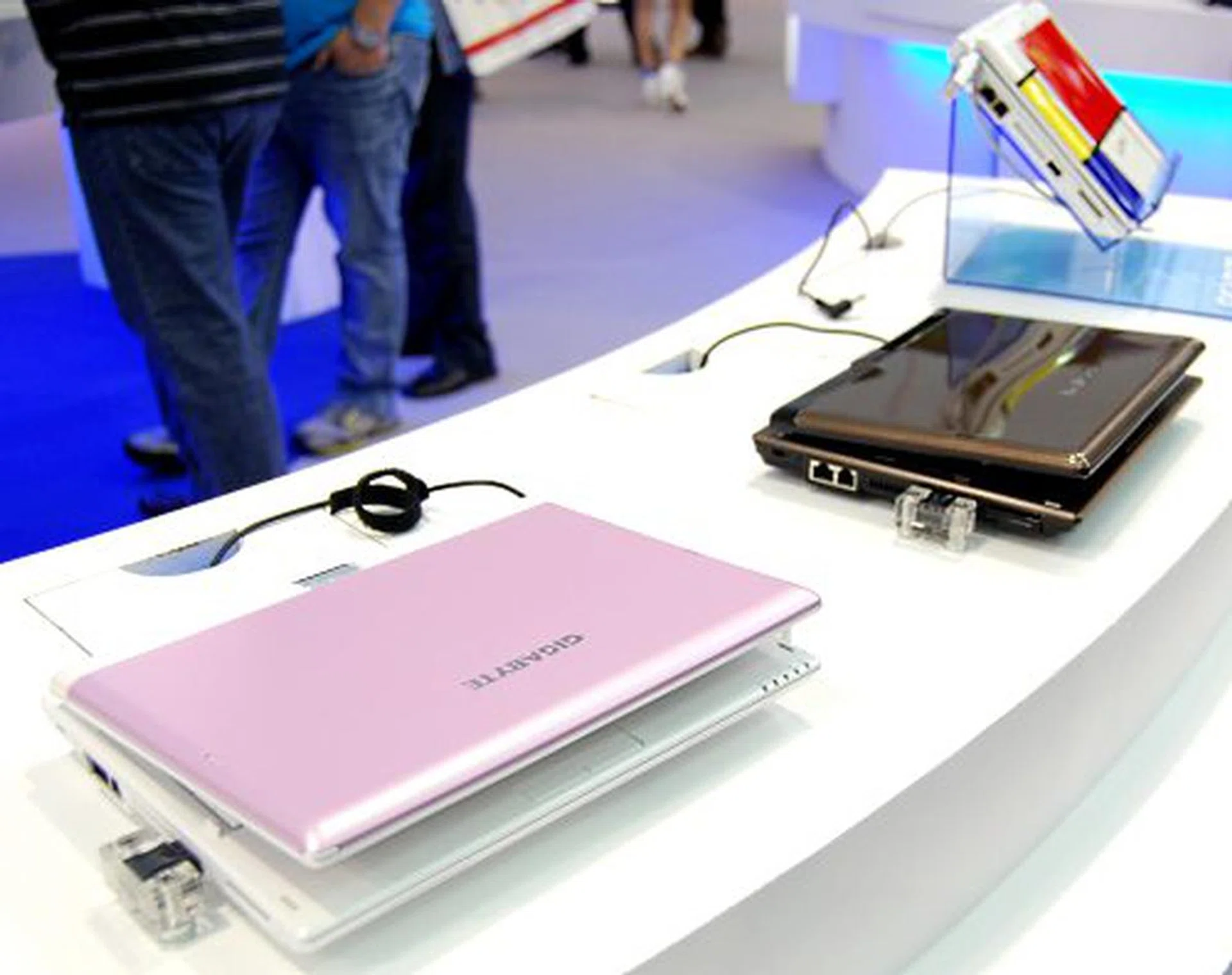
Another new entrant to the increasingly crowded Netbook or subnotebook genre is Gigabyte's M912. We found up to four colors/skins to choose from at the booth, all of them powered by Intel's Atom (1.6GHz).
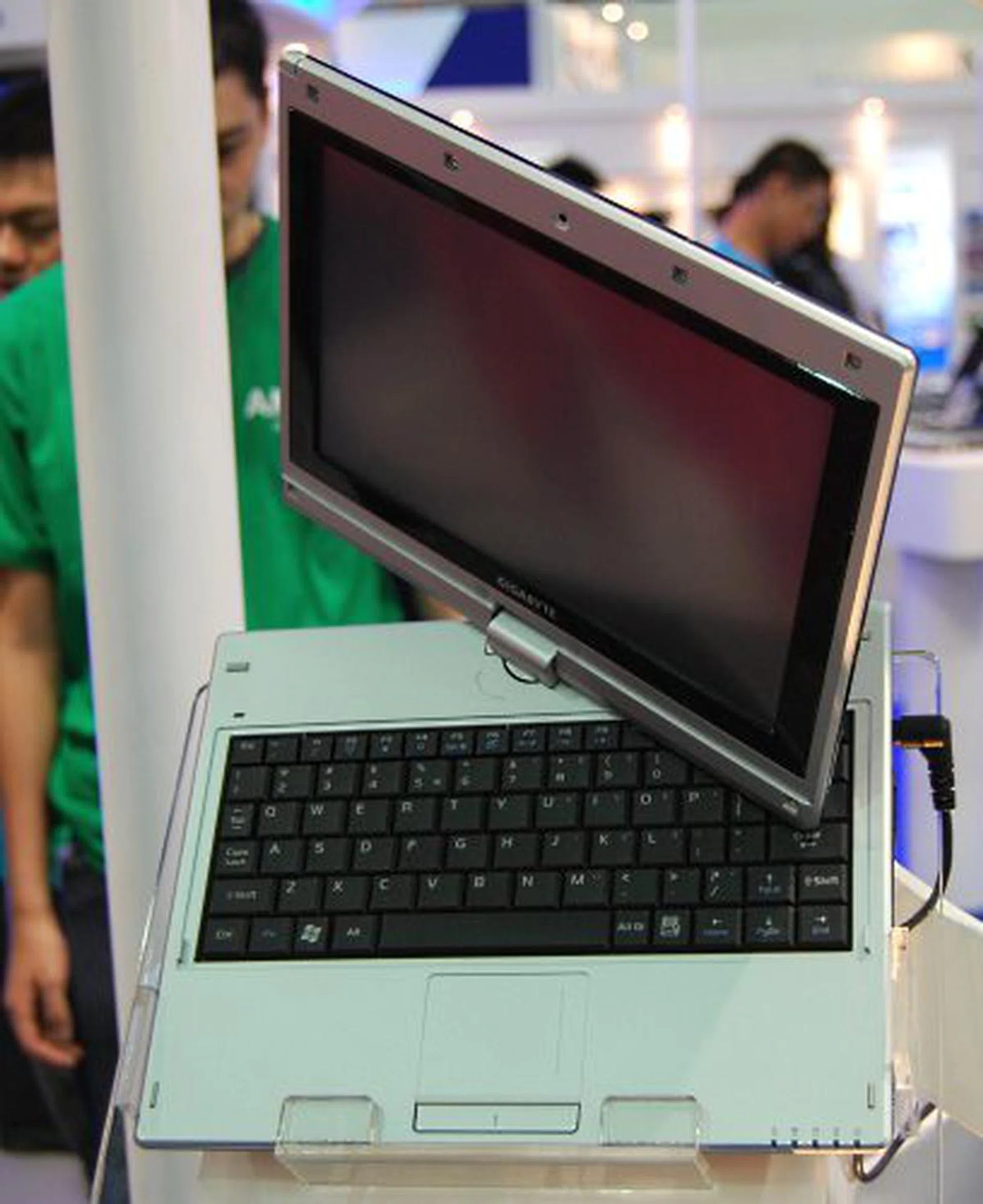
Weighing up to 1.2kg and with a 8.9-inch adjustable touchscreen, the M912 can run on both Windows XP or Linux. It has up to 1GB of DDR2-667 RAM with integrated Bluetooth 2.0 and wireless 802.11b/g via mini-card.
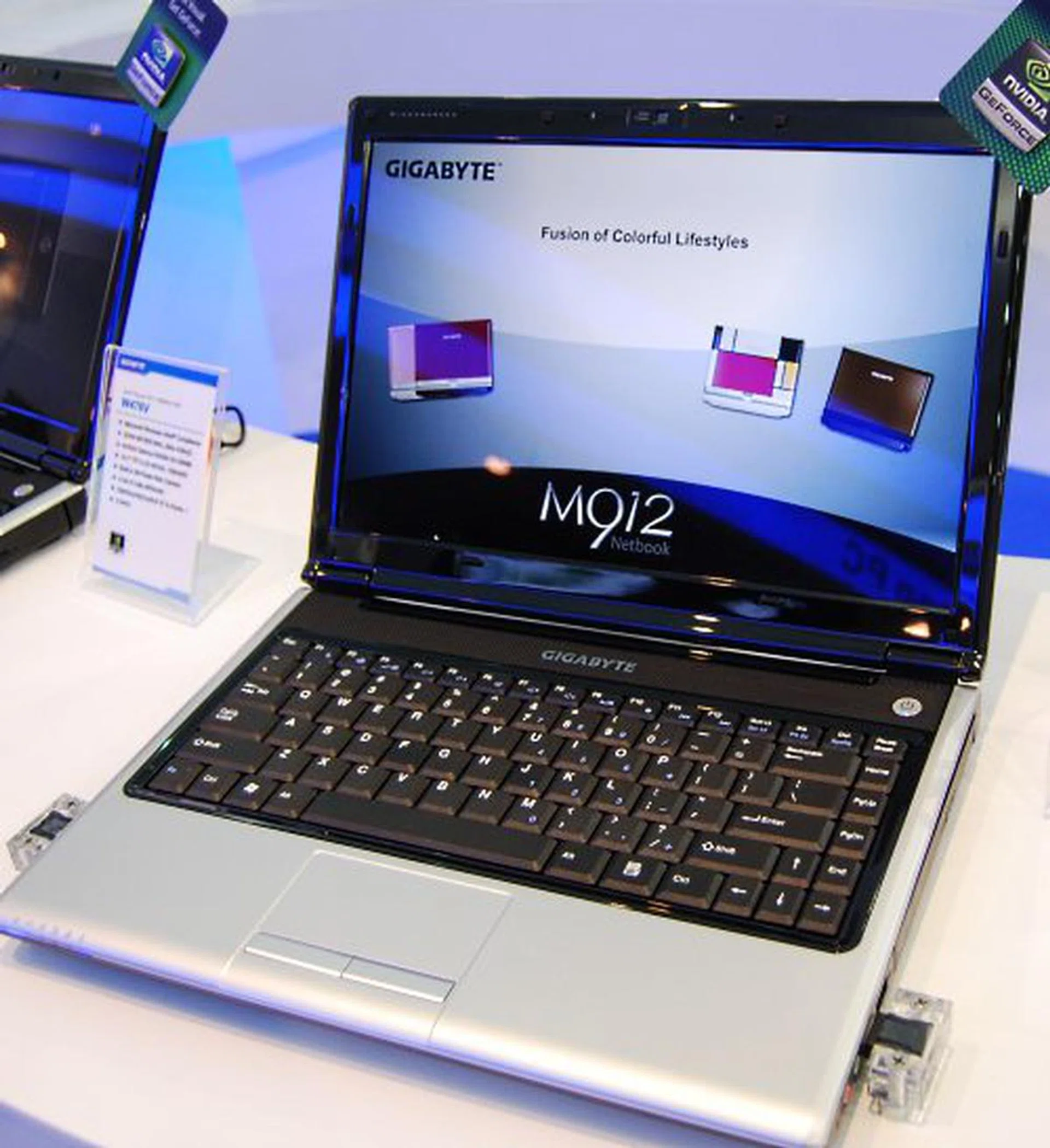
Despite what its wallpaper says, this is a notebook, the new Gigabyte W476V to be precise, which uses a 45nm Intel processor and an NVIDIA 9300M GS GPU with 256MB of video memory. With a 14.1-inch screen and weighing up to 2.34kg, this looks to be suitable for average users looking to mix work and entertainment on a notebook.
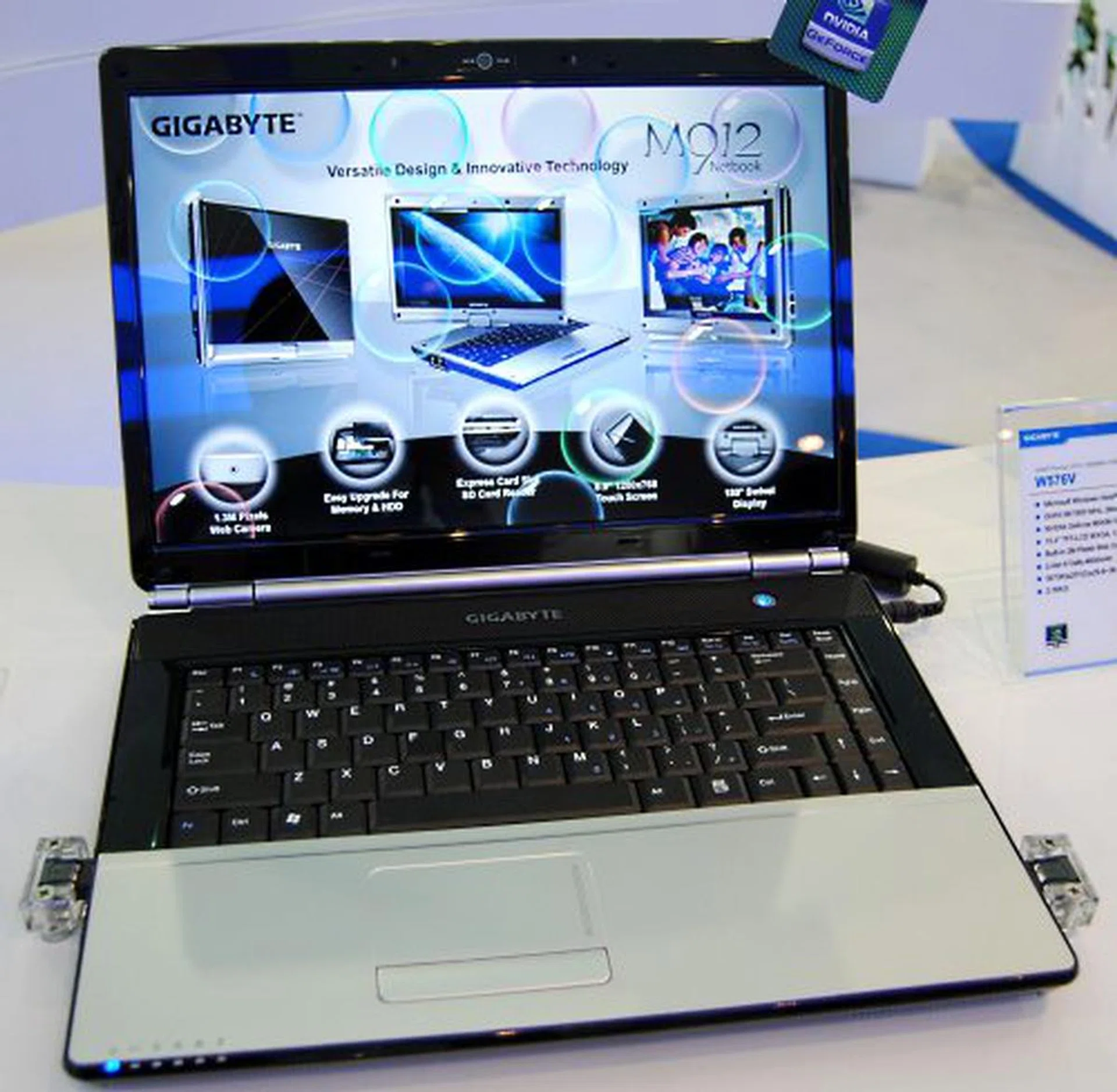
If you require more power, especially for gaming or 3D applications on a notebook, the W576V is the answer, with its bigger 15.4-inch screen and a better GeForce 9600M GS (512MB) graphics chipset. As usual, it uses a Penryn 45nm CPU and DDR2-800 memory. It will be heavier too at 2.76kg and possibly a lower battery life.
Miscellaneous Sightings - Part 1
Besides its strong components background, Gigabyte also dabbles in various segments with varying degrees of success. With little marketing however, most of these products are unlikely to be seen in international markets outside Taiwan.
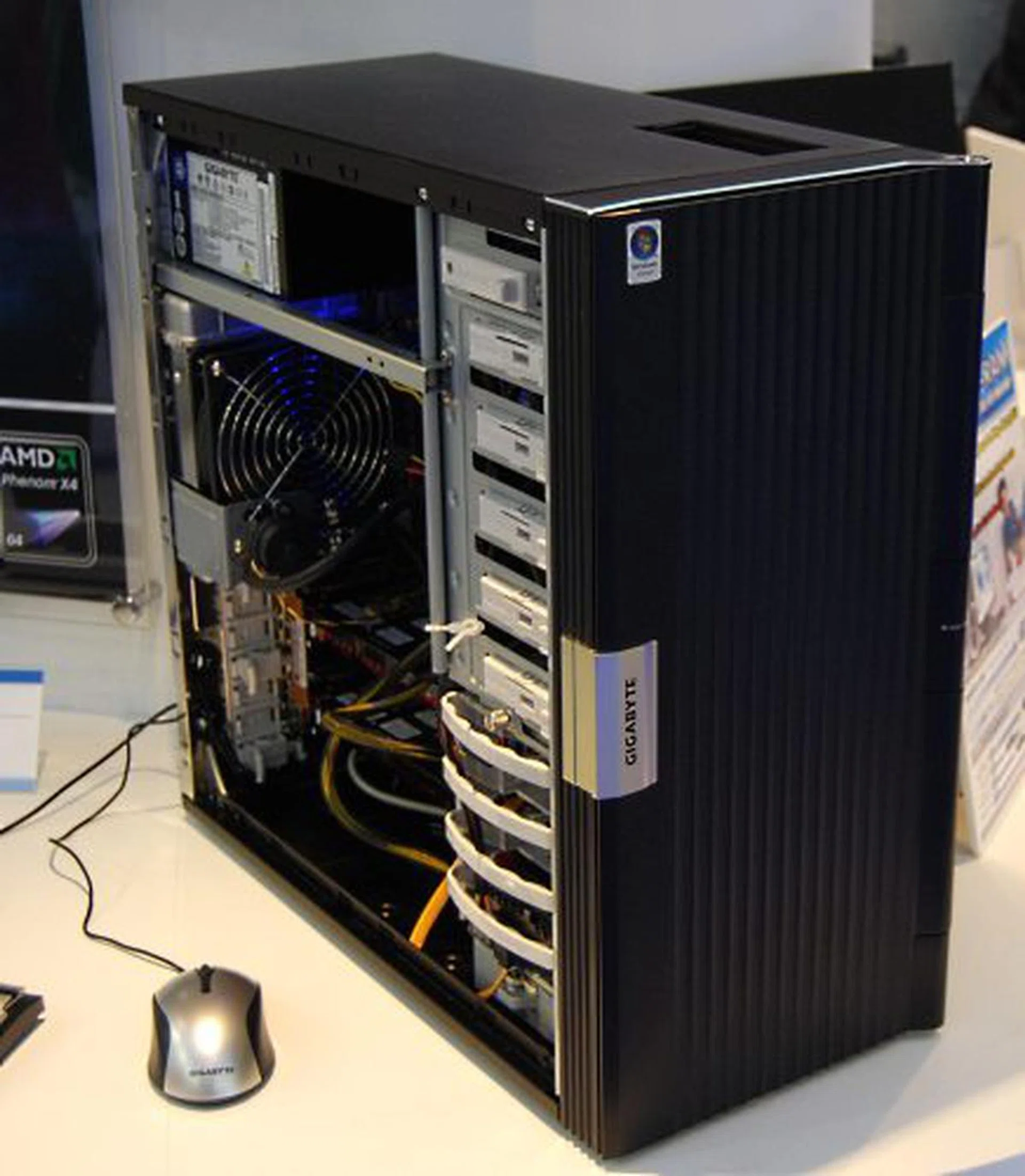
Gigabyte has pushed out a few large chassis in recent times but this time round at Computex, it's part of a complete system. The Gigabyte Eagles II is a gaming PC built by Gigabyte and naturally using some of its internal components like its MA790FX-DQ6, it goes for the AMD Phenom 9850 CPU and a pair of Radeon HD 3870 x2 in CrossFireX mode. Throw in Raptor hard drives from Western Digital, a Blu-ray drive and a 800W PSU, this is a true gaming rig.
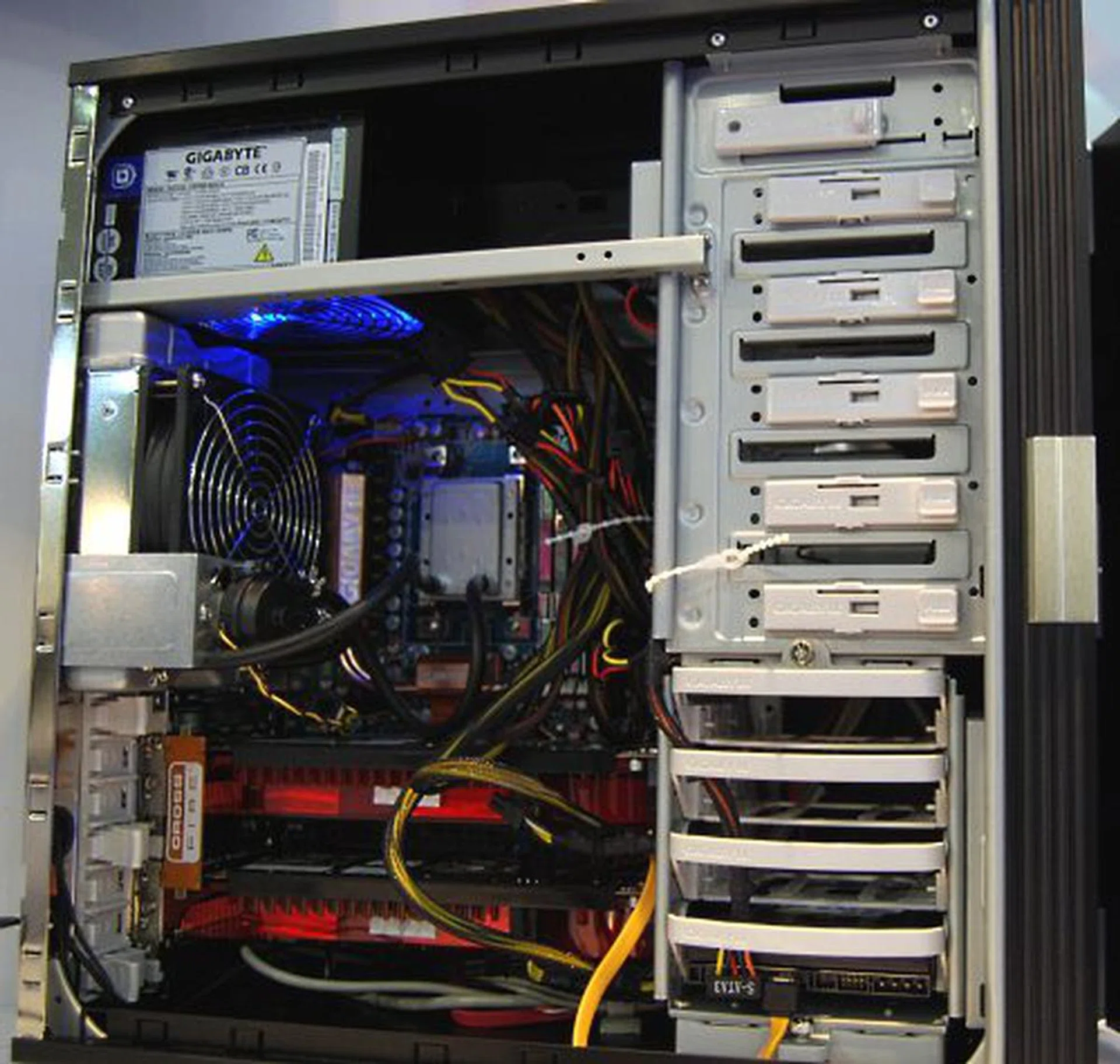
Gigabyte uses its own liquid cooling system to cool both the CPU and the Northbridge.
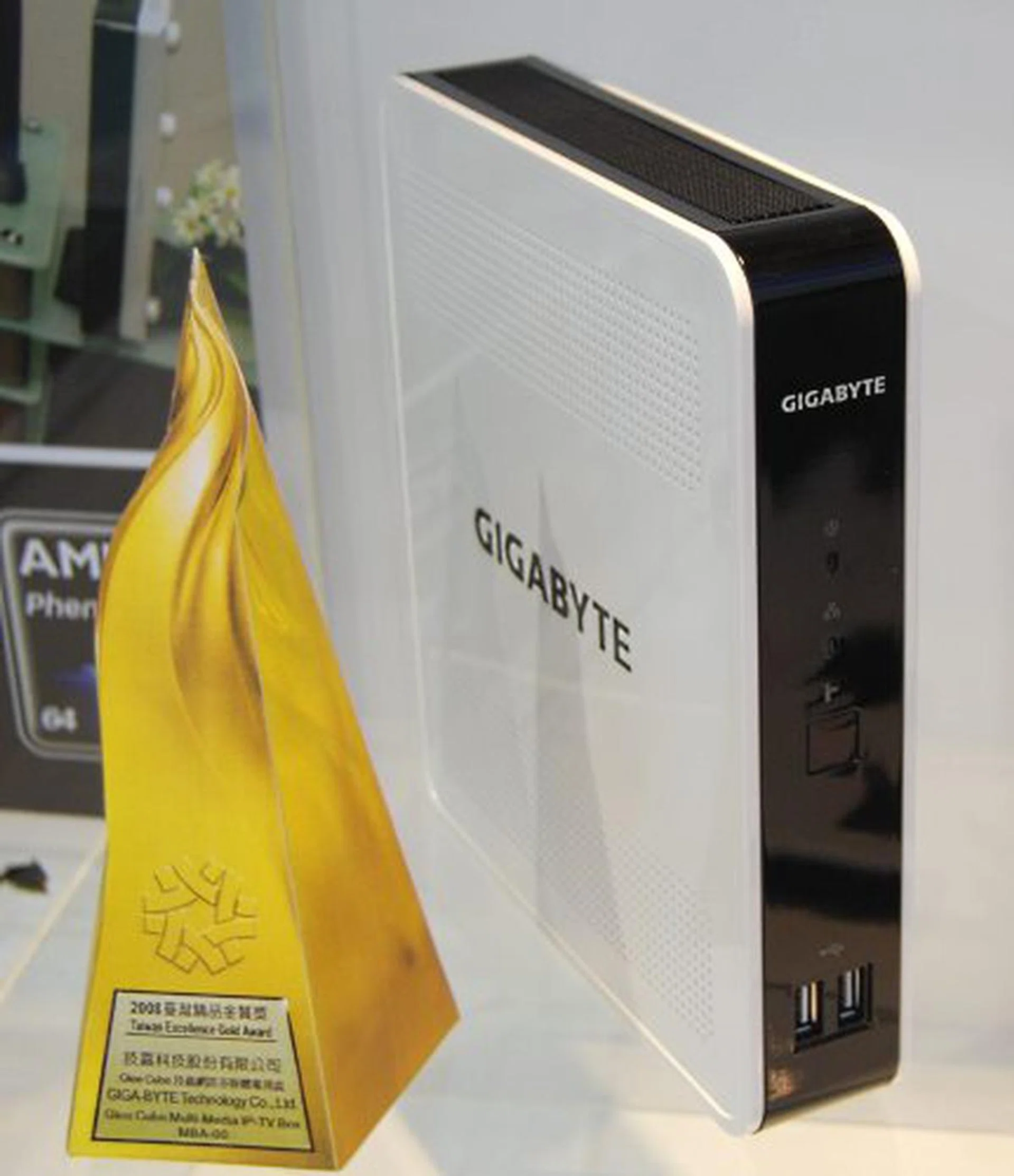
Another segment that's being pursued by quite a few vendors now is that of the multimedia networked IP TV box, which allows one to watch local TV channels even when in a foreign country via the Internet. Gigabyte's answer is the GleeCube, which allows even a PDA to access the TV programs recorded or streamed using the GleeCube (connected to both the TV cable and router). With a video/security camera, you can also monitor your home from aboard using this device as the go-between.
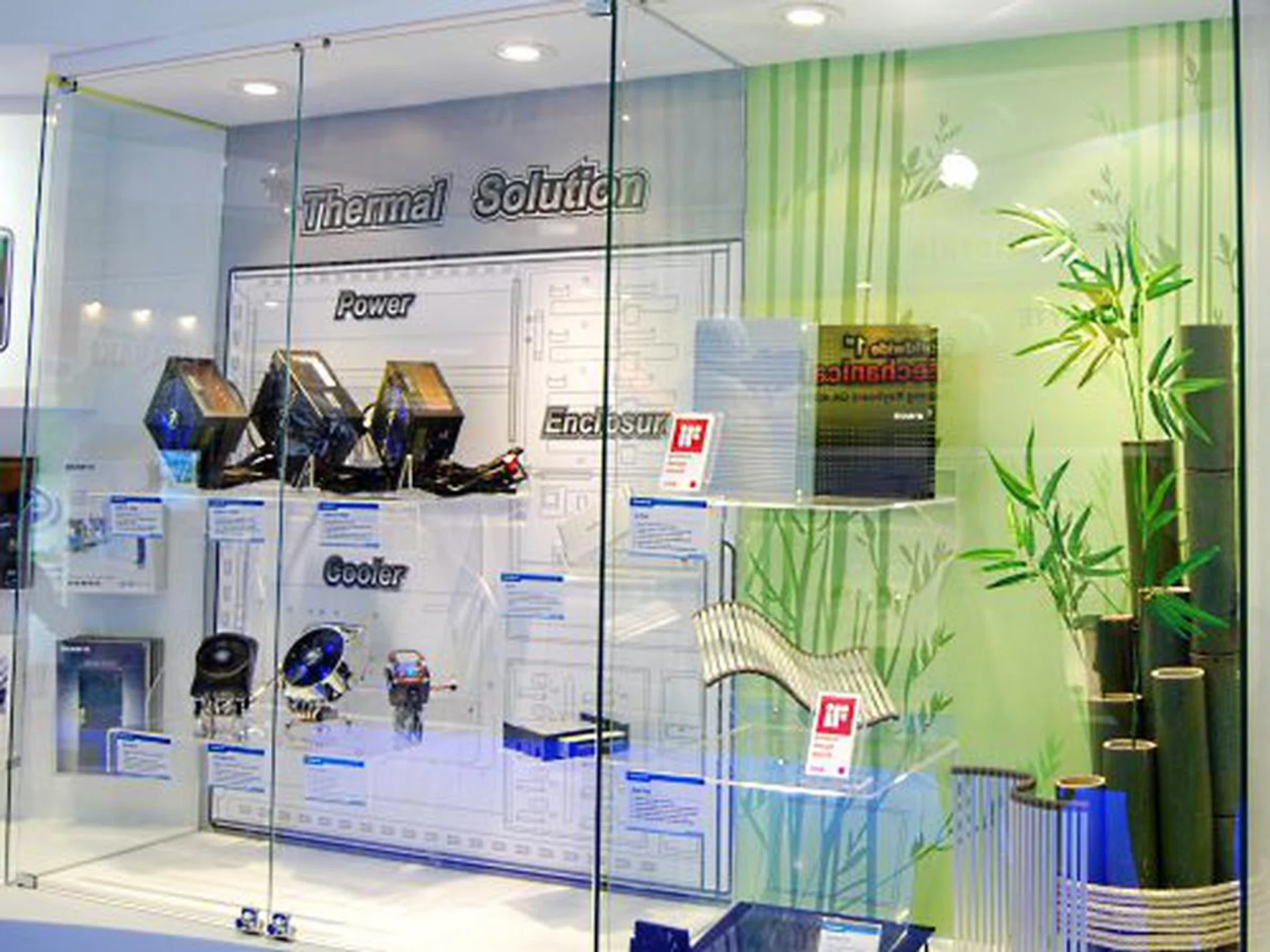
Most of these products classified under Gigabyte's thermal solutions are not exactly new, hence they are not the main focus of the Gigabyte booth. Here are its power supply units (including the high-end Odin series) that have cable management and up to 1200W.
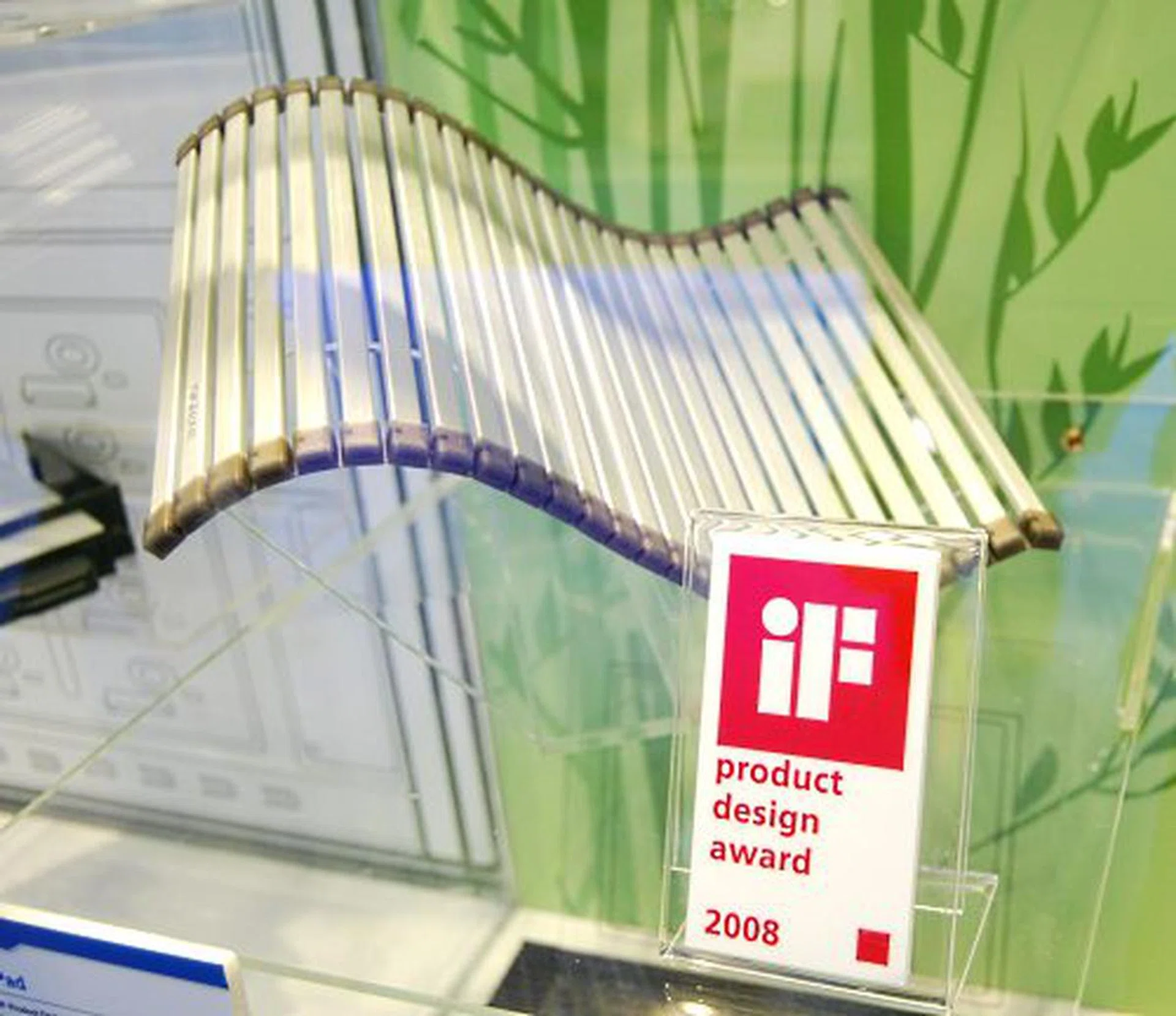
One of Gigabyte's more recent innovations, the Roll Pad is both simple and practical, while exuding a zen style. This is a notebook cooler that can be easily bundled up and stowed away just by rolling it up.
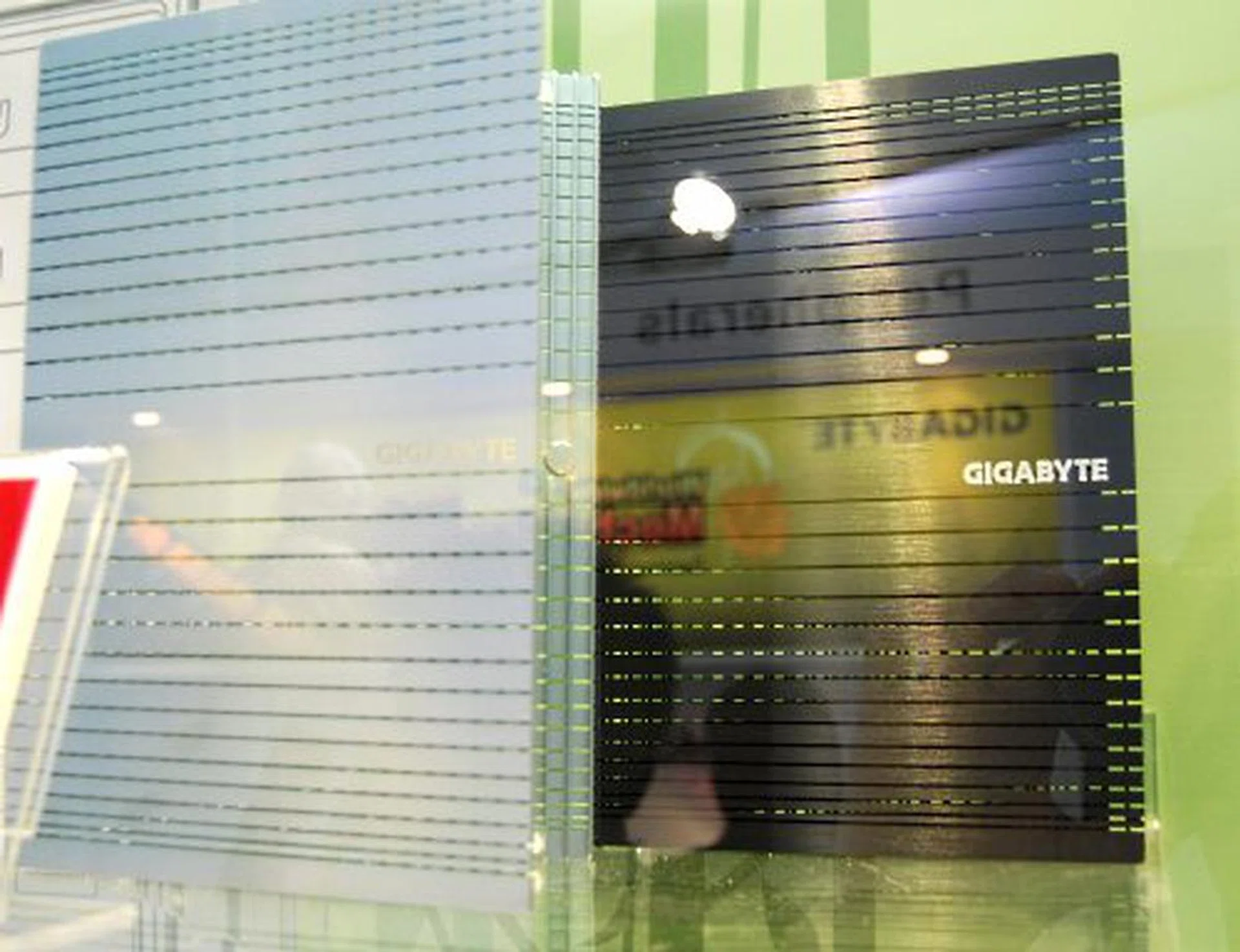
Another similar product is the G-Pad, which is foldable instead of being rolled up.
Miscellaneous Sightings - Part 2
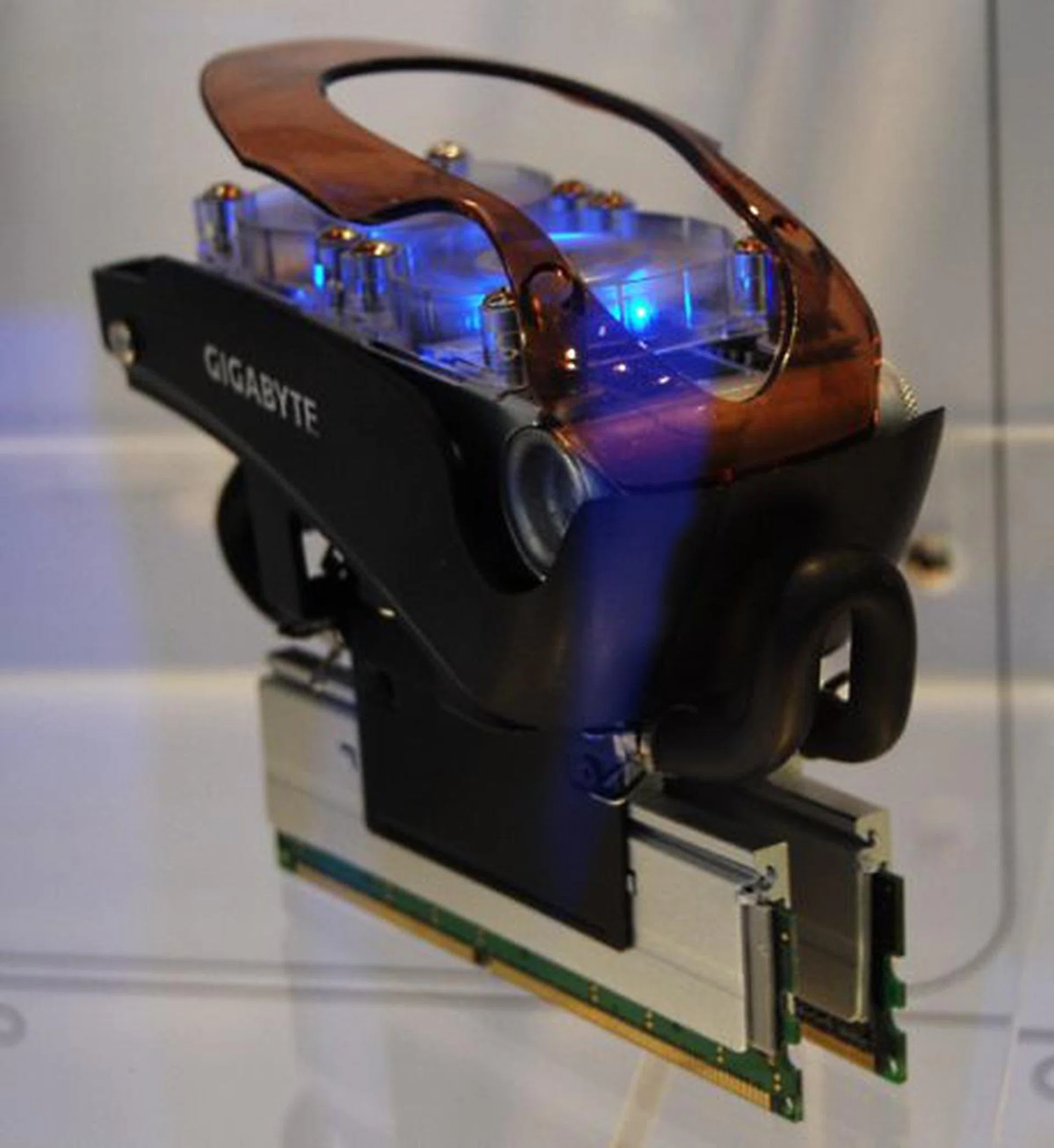
For those with memory modules that are in dire need of cooling, the Cool Rain liquid cooler for RAM may be your answer. This is an independent liquid cooling system supporting dual channel memory and you won't notice how slim the water tank is, thanks to its brillant blue LED. We're just not sure who requires such extreme methods.
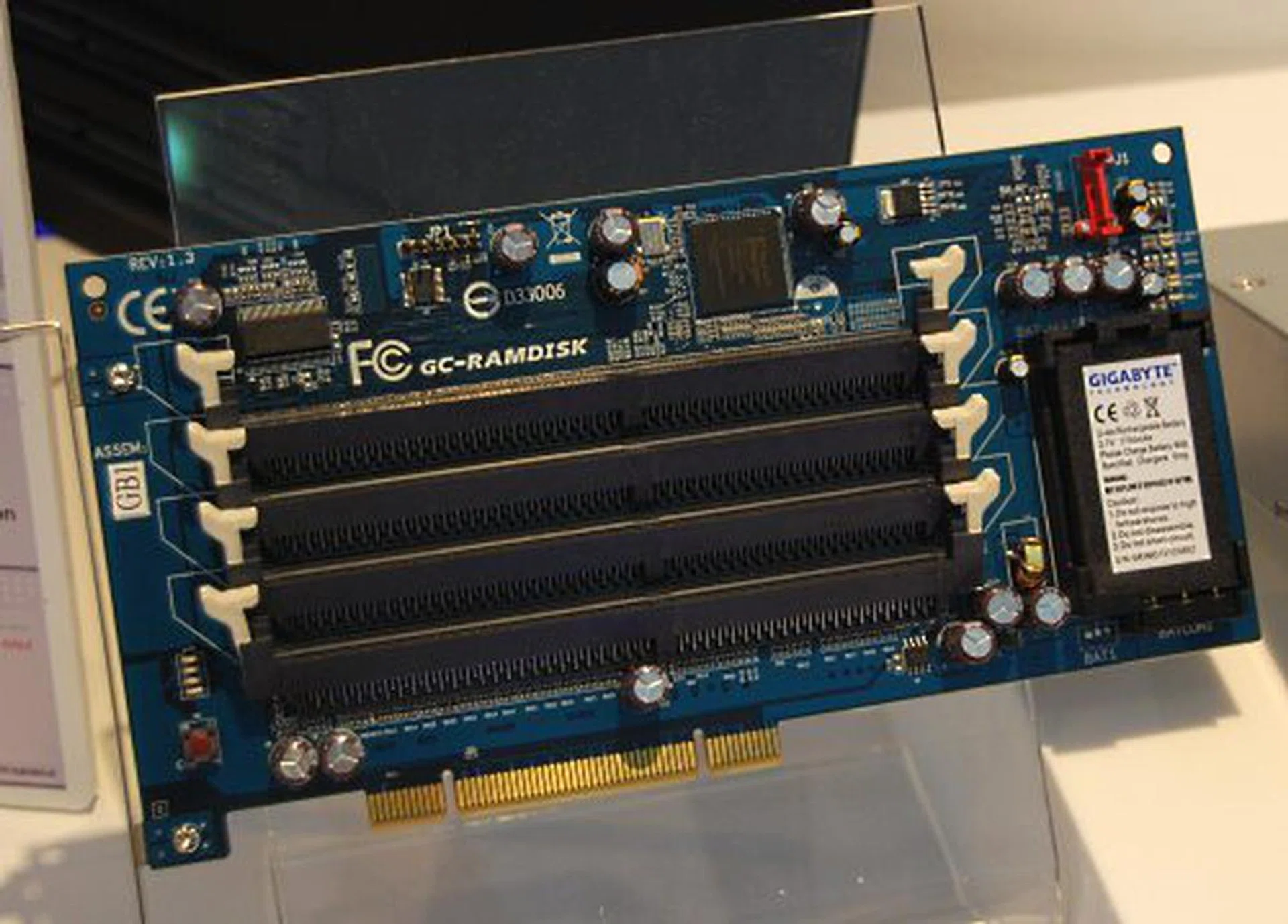
Apparently, the i-RAM is still alive, though we can't be sure if Gigabyte just puts it out for display every Computex. With true SSDs going mainstream in the next couple of years, could this be the last time we're seeing it?
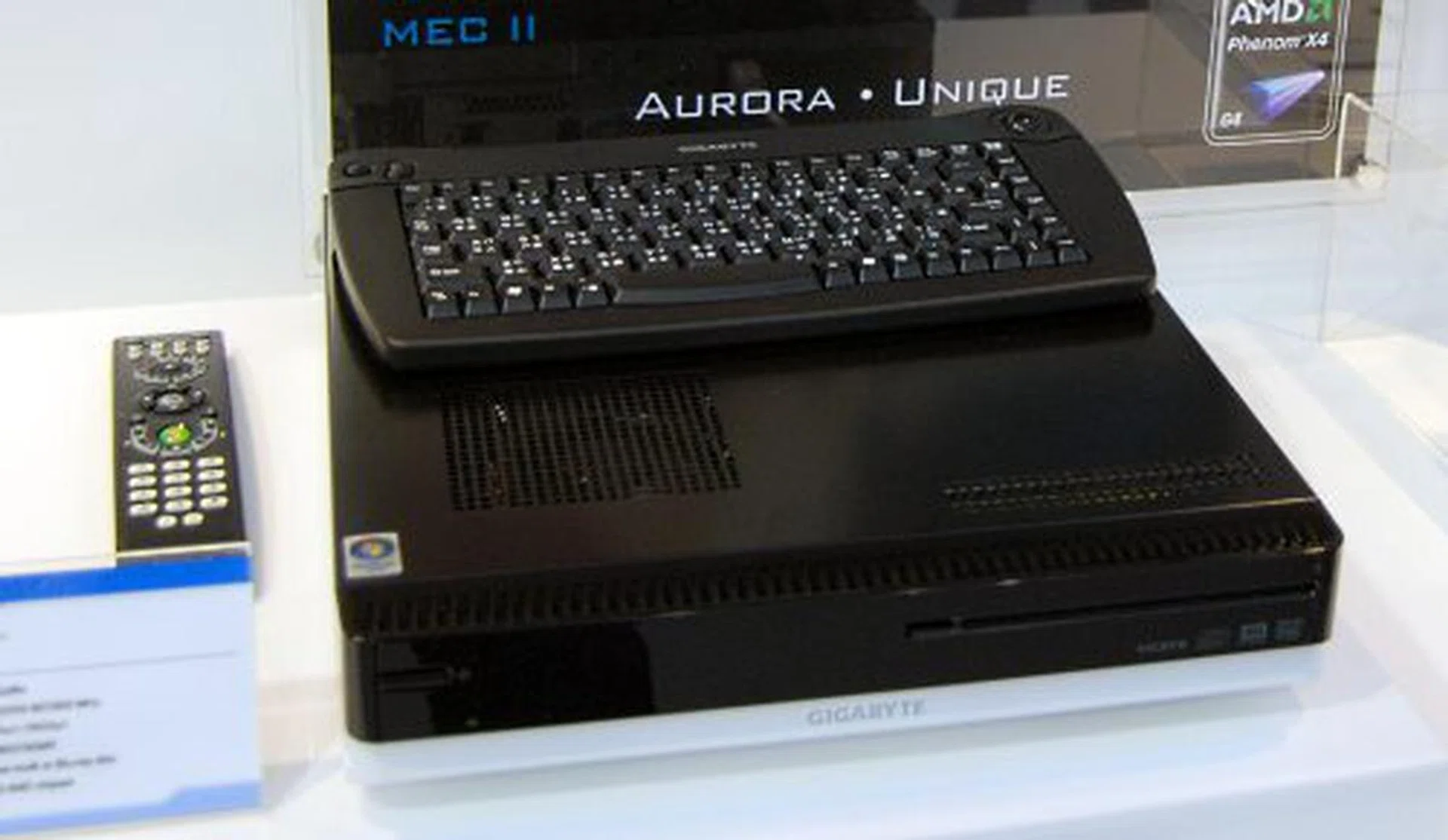
Gigabyte has also dabbled in HTPC setups and the MEC II is another example. Using a K8 Griffin CPU and an AMD 780M + SB700, this slim PC can support a Blu-ray optical drive and up to 4GB of DDR2-667/800 memory.
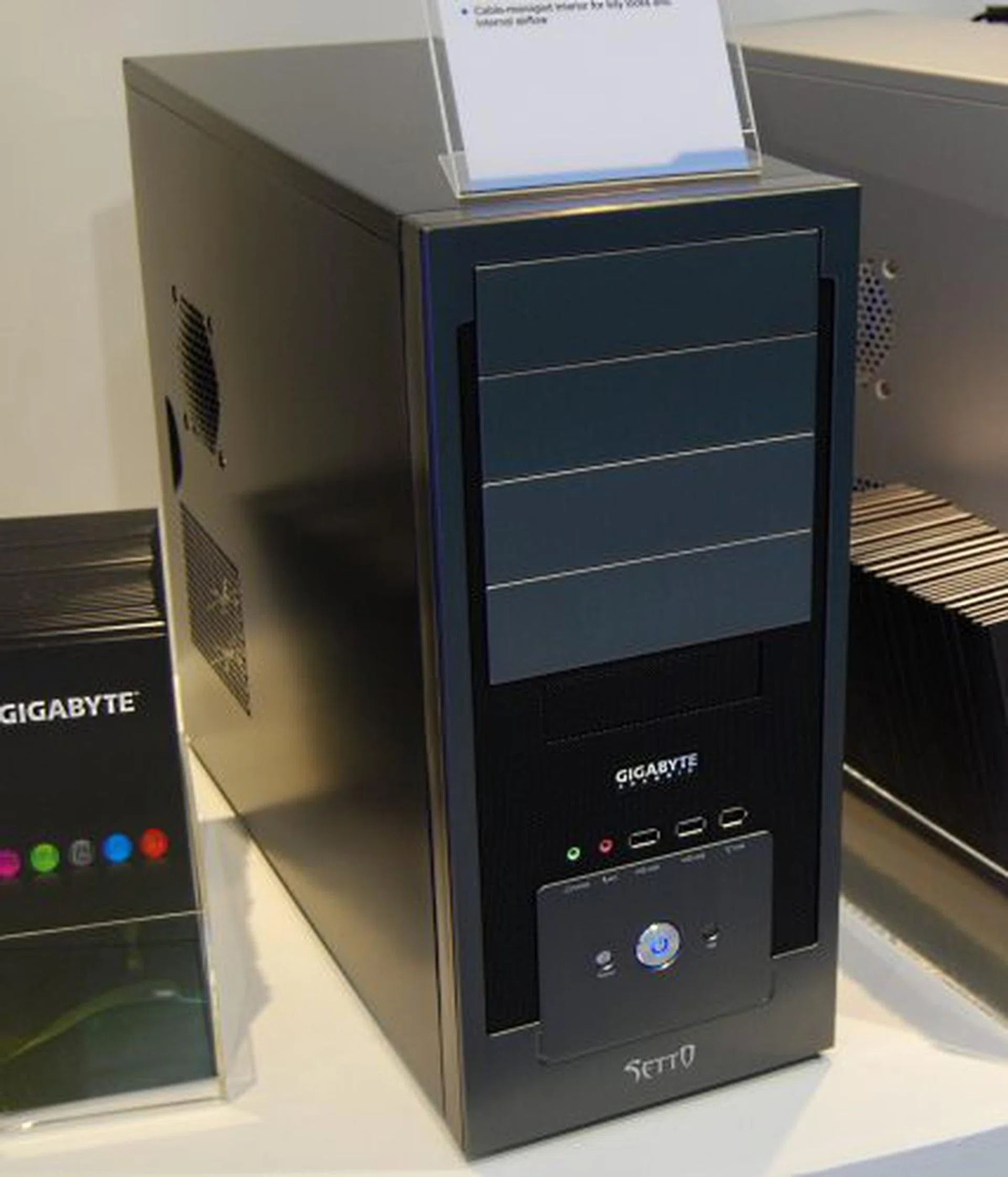
The aluminum Setto 1000 has a large 120mm filtered intake fan at the front but is suitable for liquid cooling, with outlets and mounting points for a radiator. Tool-free installation and cable management makes it a modern chassis, even if it does look slightly bland.
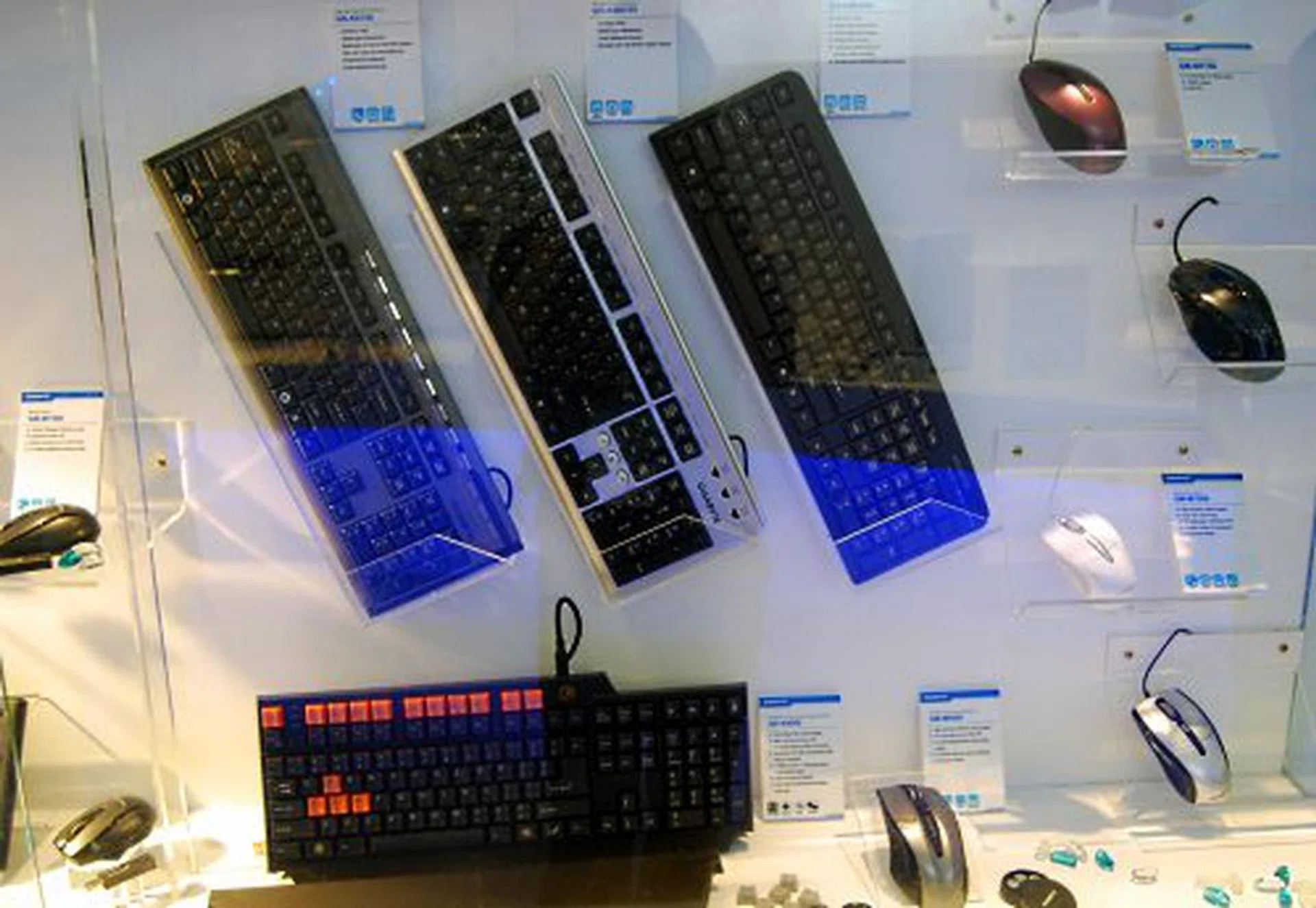
Gigabyte is not known for its mouse and keyboard peripherals but its new gaming keyboard (the one with the orange keys) has up to 103 customizable profiles and has USB audio I/O, along with a detachable, self standing, mechanical design for the wrist rest.
Our articles may contain affiliate links. If you buy through these links, we may earn a small commission.