
GeForce GTX 460 Roundup - Sparking NVIDIA's DX11 Revival
The GeForce GTX 460 is the best thing out of the green camp for some time. We take a look at four factory overclocked cards from ASUS, Galaxy, Gigabyte and Sparkle to help you pick the best.
Green Revival
If you’ve been following the graphics industry intently, you'd know by now that NVIDIA has scored a hit with its awesome GeForce GTX 460. If you haven't check out our full review, you can do so here. To bring you up to speed, while the GeForce GTX 460 might not be the fastest graphics card in NVIDIA’s stable, it is definitely one of the best the company has given us ever since ATI introduced their Evergreen series.
Key to the GeForce GTX 460’s success is its combination of fearsome performance, decent power and thermal requirements, and an attractive price. Presently, no other graphics card in the US$200 to US$250 range even comes close to challenging the GeForce GTX 460’s performance. In fact, the GeForce GTX 460 is so quick that it is on a par with its more powerful sibling, the GeForce GTX 465, and it even challenges the US$300 Radeon HD 5850.
Furthermore, unlike the older Fermi cards, the GeForce GTX 460 uses the new GF104 chip, a scaled-down version of the original GF100 chip that made its debut in the GeForce GTX 480. The new GF104 chip proved to be a revelation of sorts, maintaining the excellent performance characteristics of the older GF100, while using less power and emitting less heat.
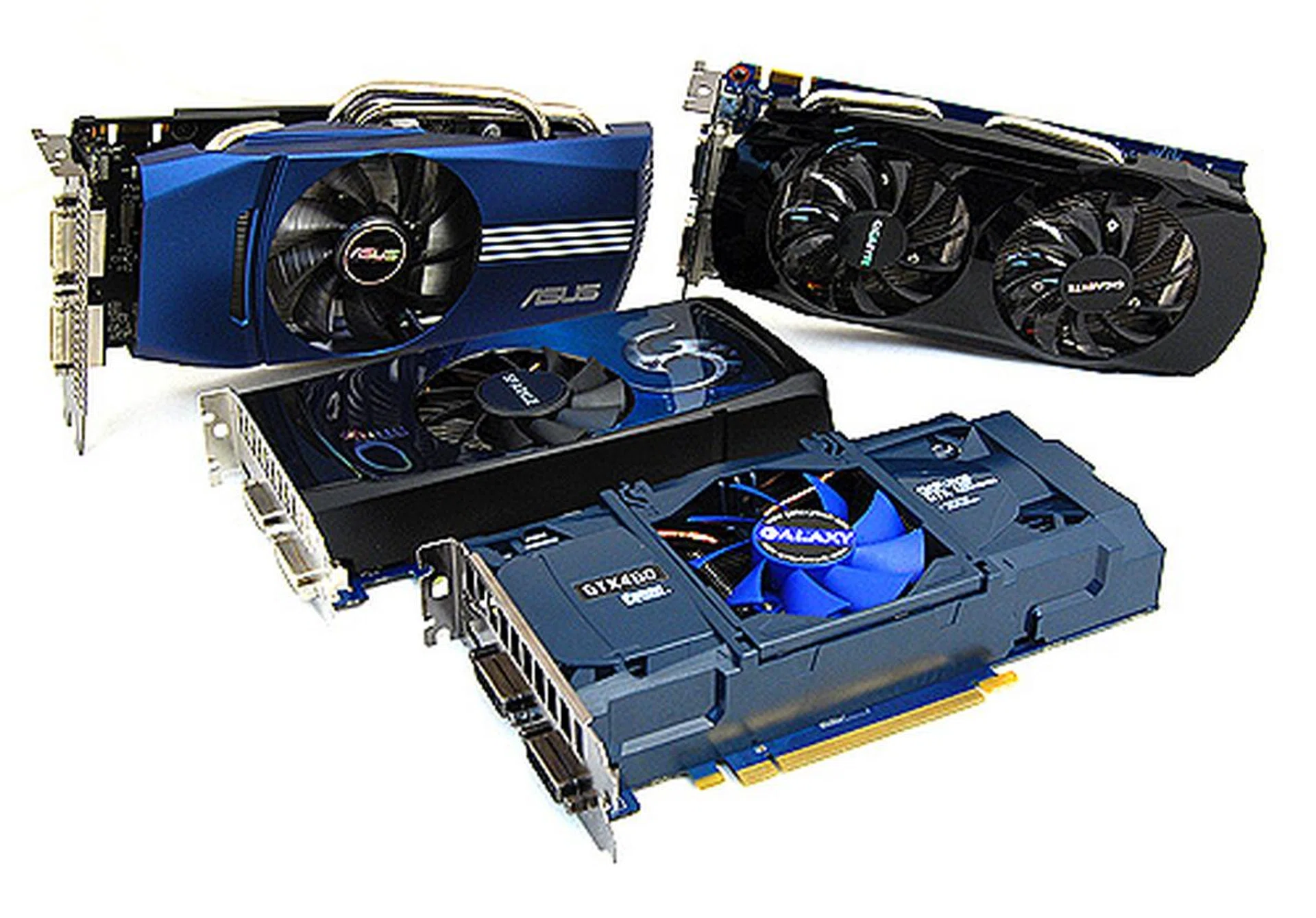
NVIDIA's GeForce GTX 460 has been a hit since its release, and vendors are now offering customized and factory overclock versions to cater to consumers' needs.
However, to improve on the already capable GeForce GTX 460, vendors and partners of NVIDIA are coming up with customized versions of the GeForce GTX 460. Sporting custom coolers and factory overclocked for greater performance, these cards are the crème de la crème of the GeForce GTX 460 crop.
And here with us are four hand picked models representing some of the best in the market today:
- ASUS ENGTX460 DirectCU Top
- Galaxy GeForce GTX 460 Super OC
- Gigabyte GeForce GTX 460 OC
- Sparkle GeForce GTX 460
ASUS ENGTX460 DirectCU TOP
The ASUS ENGTX460 DirectCU TOP is the Taiwanese hardware giant’s flagship GeForce GTX 460, so it comes as no surprise that it sports a wide range of high-end features. The card sports ASUS' latest DirectCU cooler, which we first saw on their EAH5850 DirectCU TOP card. The cooler on this card is unique in that it has three flattened copper heat pipes which are in direct contact with the GPU core for better heat dissipation and hence cooling efficiency.
Also, the card comes factory overclocked to a heady 775MHz at the core and 4000MHz DDR at the memory, which is certainly substantial considering a reference card has clock speeds of 675MHz at the core and 3600MHz DDR at the memory. On top of that, it also comes with ASUS' Voltage Tweak overclocking utility, which allows users to adjust GPU core voltage values to achieve higher clock speeds.
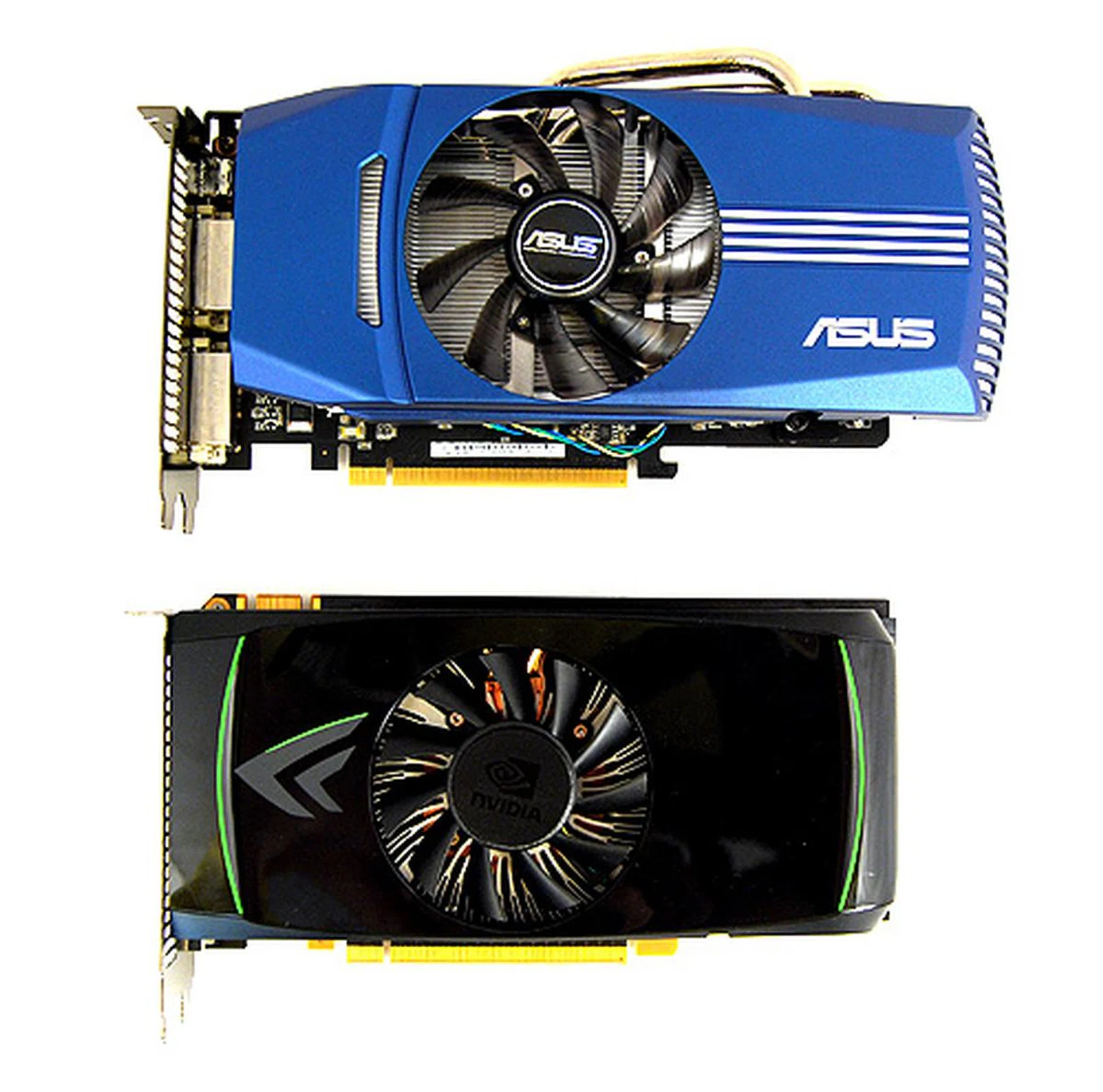
The ASUS ENGTX460 DirectCU TOP is slightly larger than the reference card thanks to the DirectCU cooler, which has a massive heatsink for better heat dissipation.
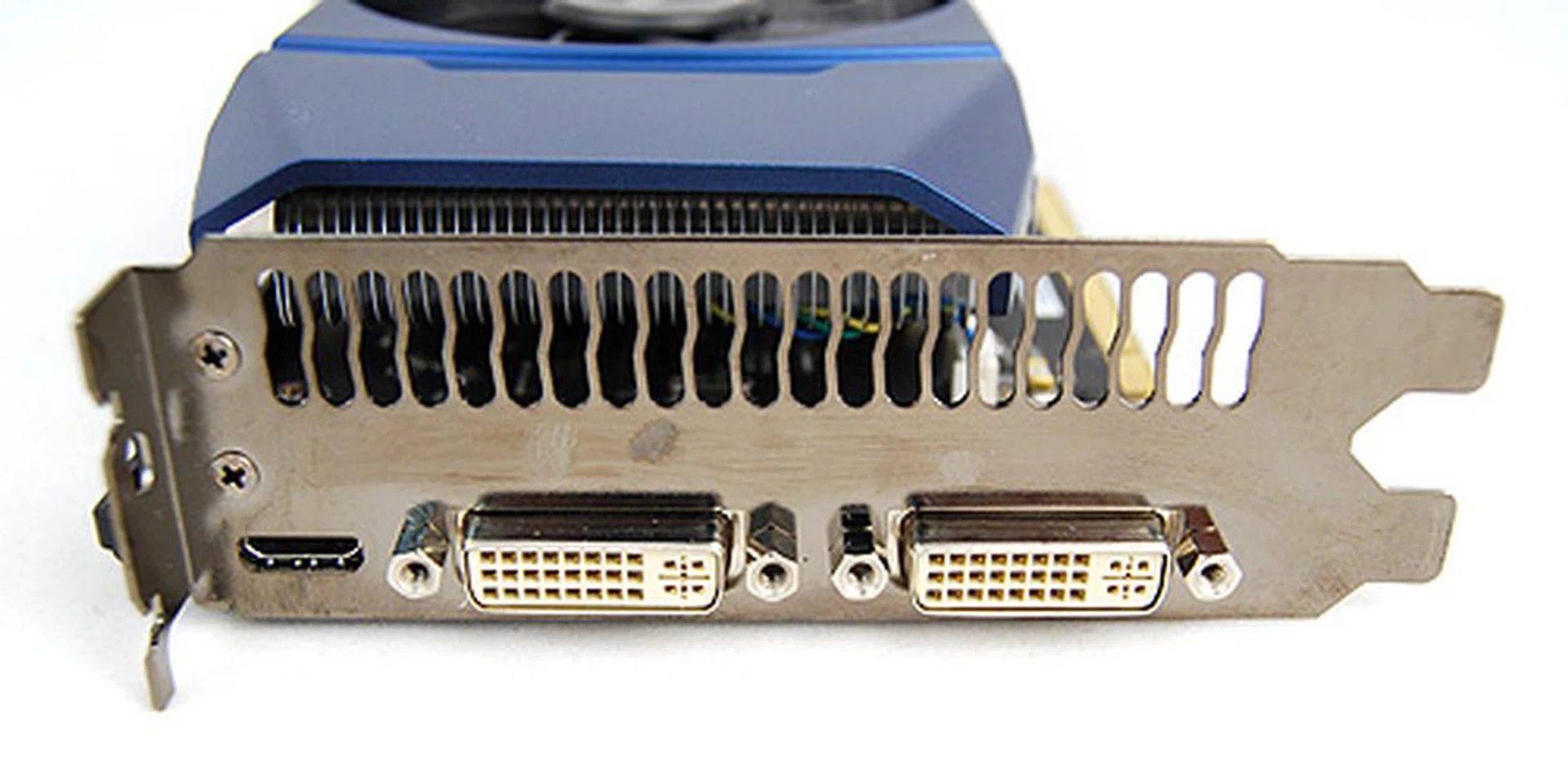
No surprises in terms of video output option as the ASUS card has the same twin DVI and single mini-HDMI ports as do most other GTX 400 series cards.
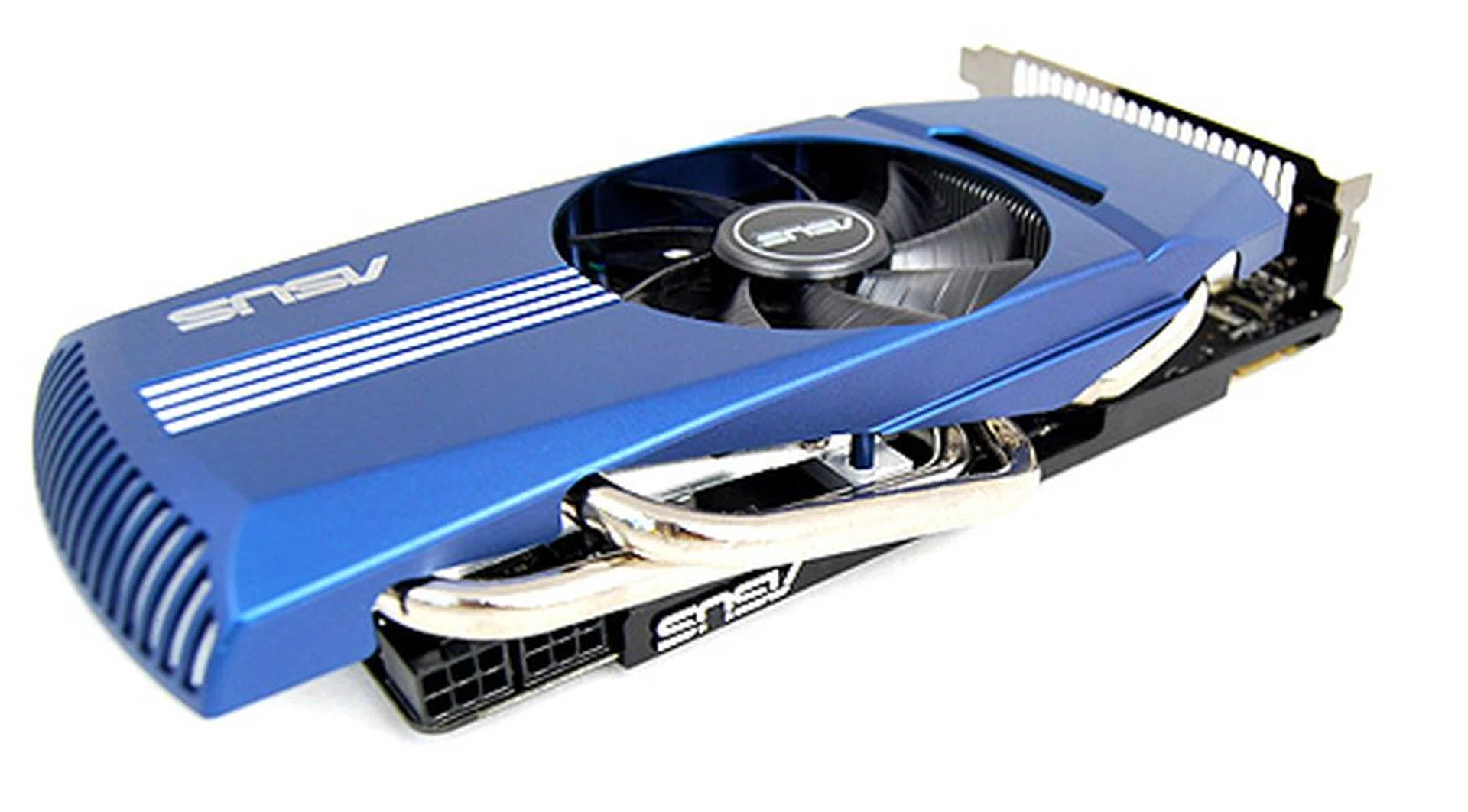
Three thick flat copper heat pipes are extended from the core of the heatsink to ensure that heat from the GPU core is quickly and evenly distributed to other parts of the large heatsink.
Galaxy GeForce GTX 460 Super OC
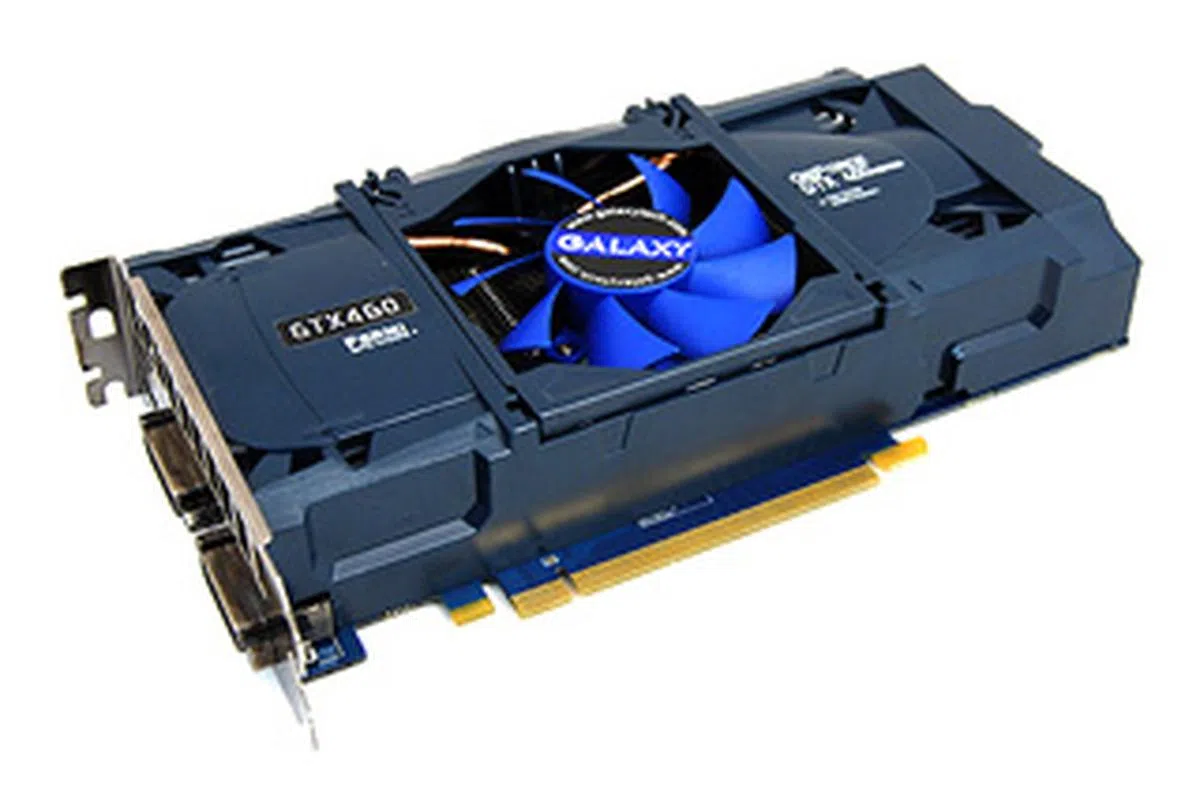
Galaxy was one of the first vendors to give us customized versions of NVIDIA’s latest Fermi cards (remember their GeForce GTX 470 GC version?) and they are back at it again with the Galaxy GeForce GTX 460 Super OC. The card features the same detachable 'flip-fan' cooler that we’ve seen on their customized GeForce GTX 470, which allows users to gain quick access to the fan for easy cleaning and maintenance. Galaxy also claims that its cooler is quieter and also more efficient than the reference one.
The card won’t be called Super OC if it wasn’t significantly overclocked and so it is appropriate that the card is clocked at a heady 810MHz at the core, a 135MHz bump over a reference GeForce GTX 460. Memory clock speeds have also been given a substantial boost to 4000MHz DDR, up from 3600MHz DDR. And lastly, the card comes bundled with Galaxy's Xtreme Tuner HD overclocking utility, which is easy to use and allows users to adjust the all-important GPU core voltage values to attain higher clock speeds.
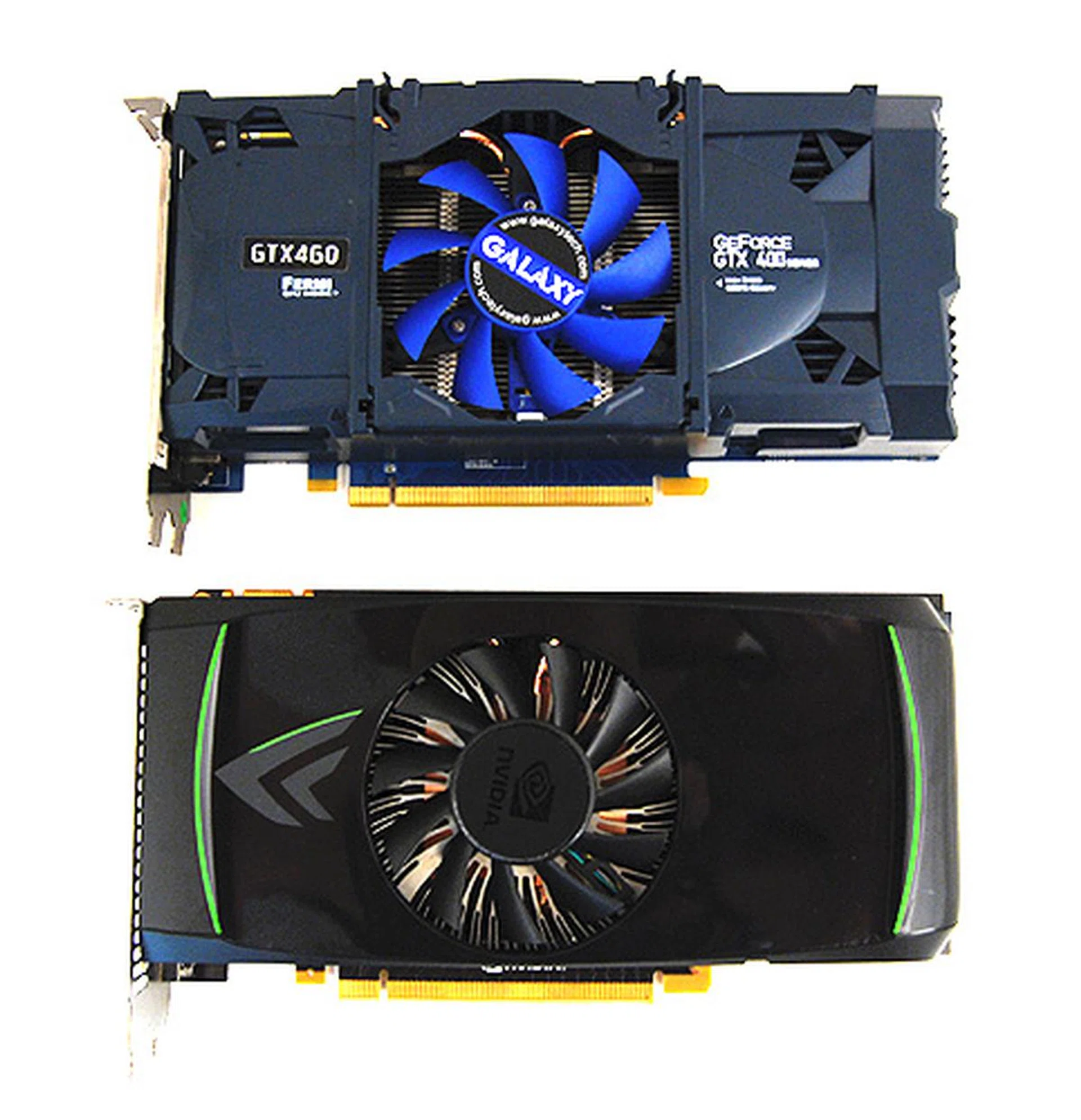
The Galaxy GeForce GTX 460 Super OC sports a unique cooler which allows users to easily detach the fan for maintenance.
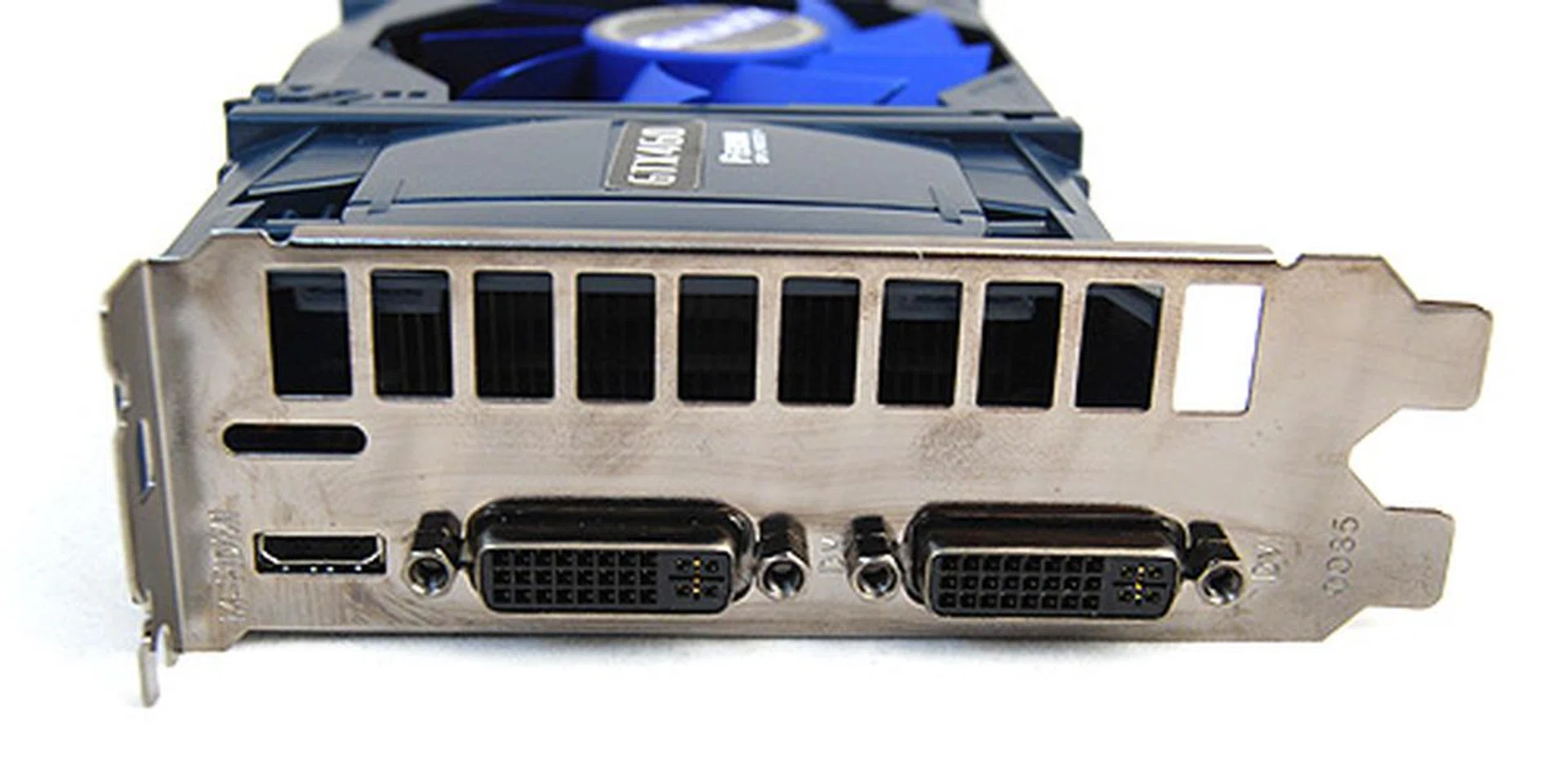
For video output, the Galaxy card offers two DVI ports and a single mini-HDMI port.
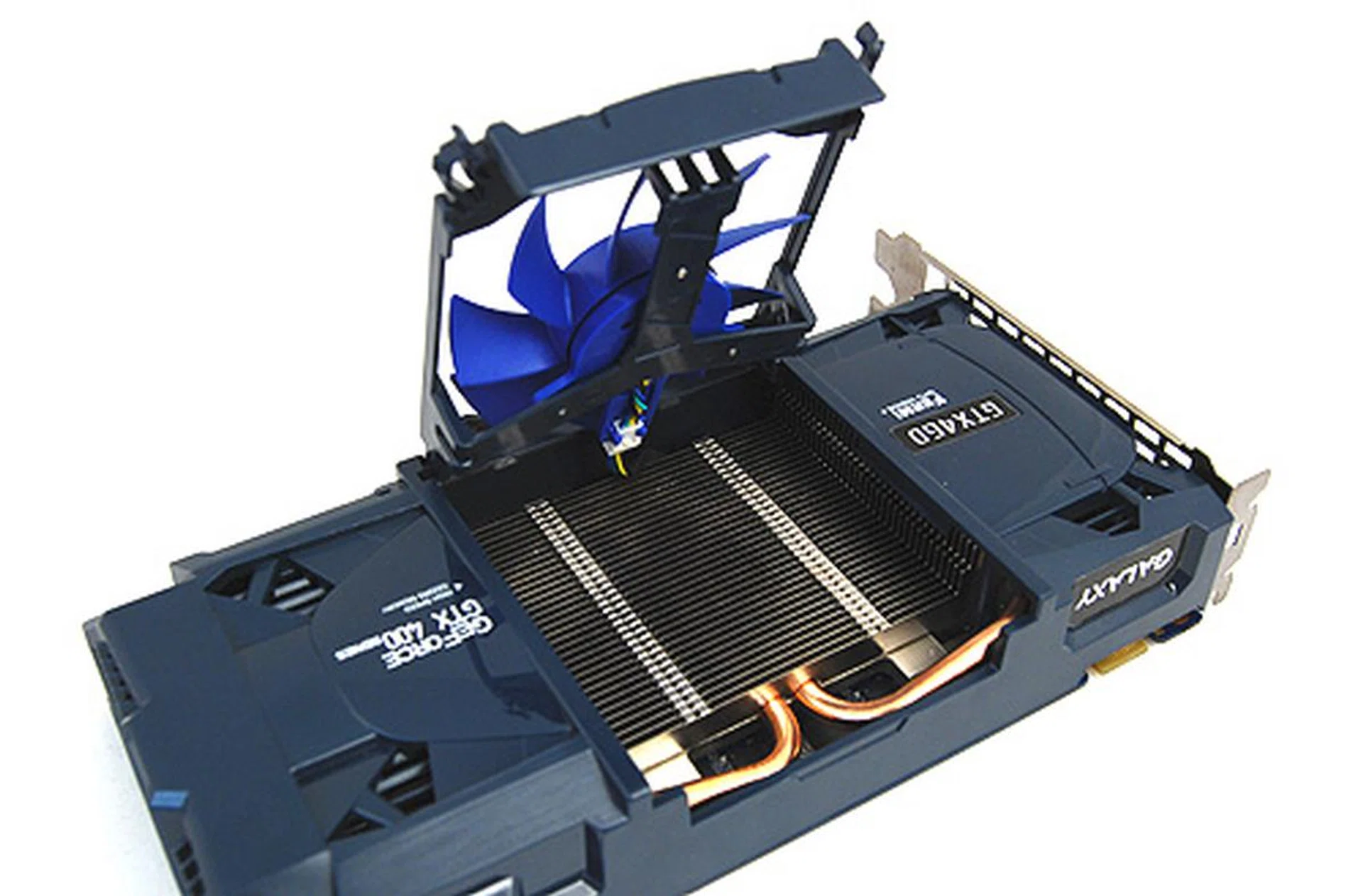
The fan can be detached like so for easy cleaning, ensuring dust-free operation.
Gigabyte GeForce GTX 460 OC
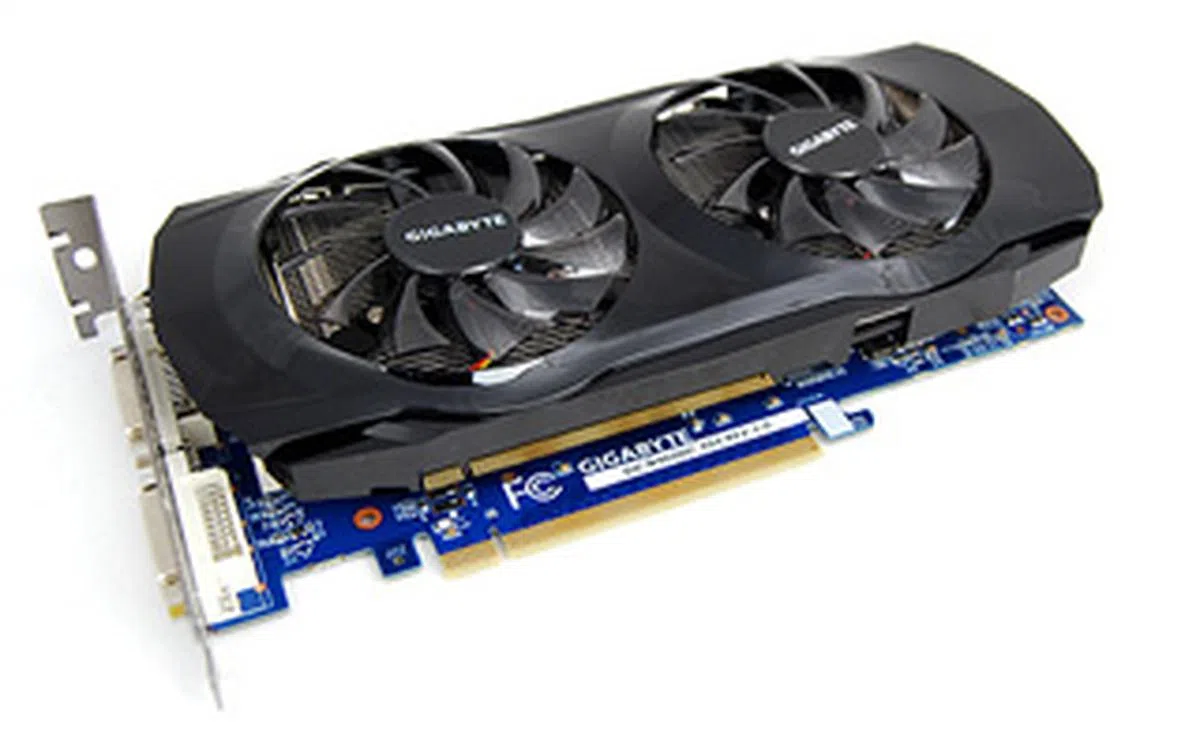
The Gigabyte GeForce GTX 460 OC features the company’s WindForce cooler, which is basically the same inclined fan design that we’ve seen on some of their new custom-designed cards. The specially-designed fan is said to minimize turbulence between the two fans, which in turn helps promote better air ventilation and hence cooling.
The card also features Gigabyte’s Ultra Durable VGA component such as ferrite core chokes, solid capacitors and a 2oz copper PCB (following their successful formula on their motherboards business) for better overall performance, and power and cooling efficiency.
And lastly, the card comes factory overclocked at a more modest 715MHz at the core, while memory remains unchanged at 3600MHz DDR.
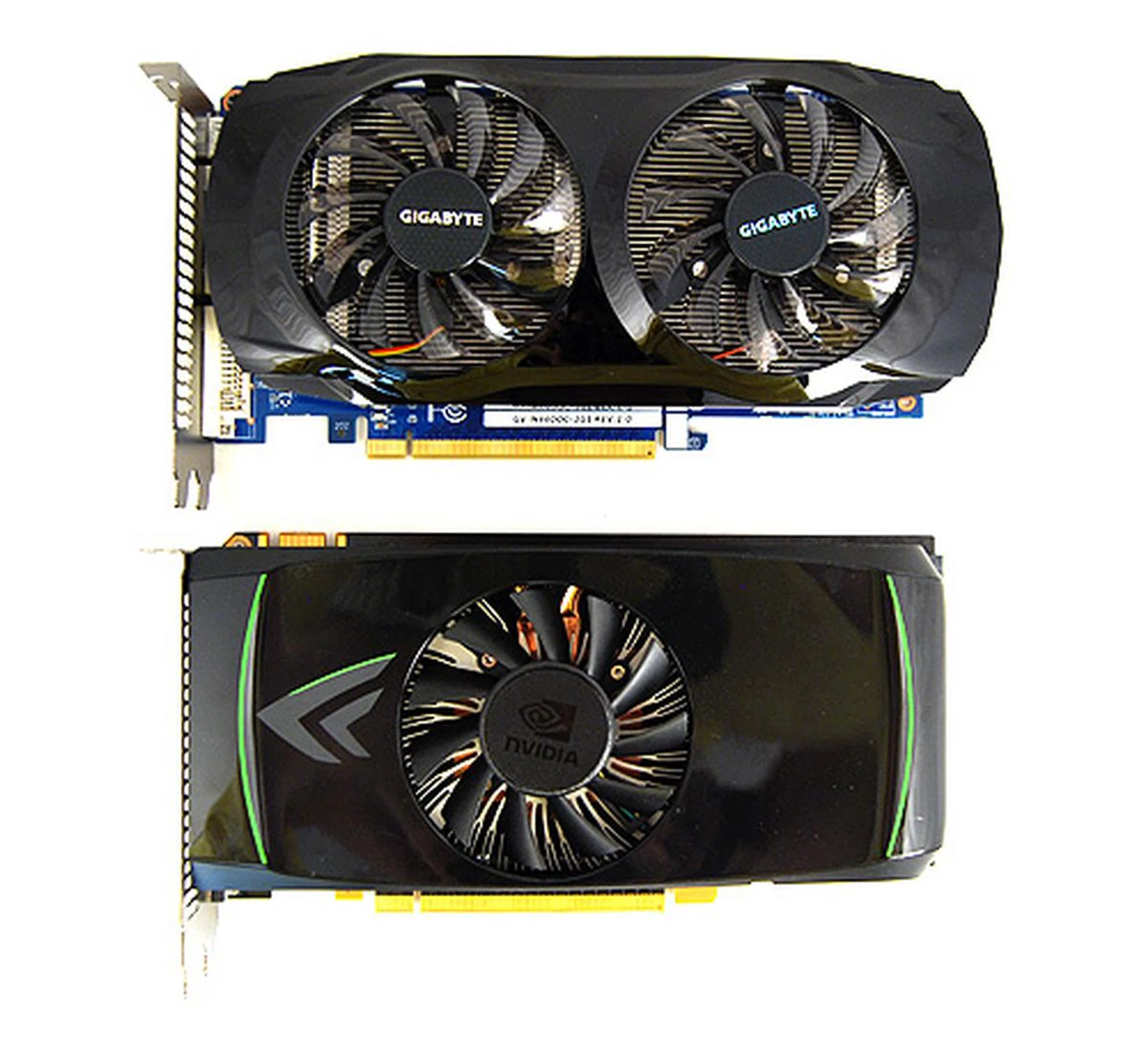
The Windforce cooler features slightly inclined fans which Gigabyte says reduces turbulence and forces more air onto the heatsink.

The Gigabyte card sports the usual twin DVI ports and single mini-HDMI for video output.
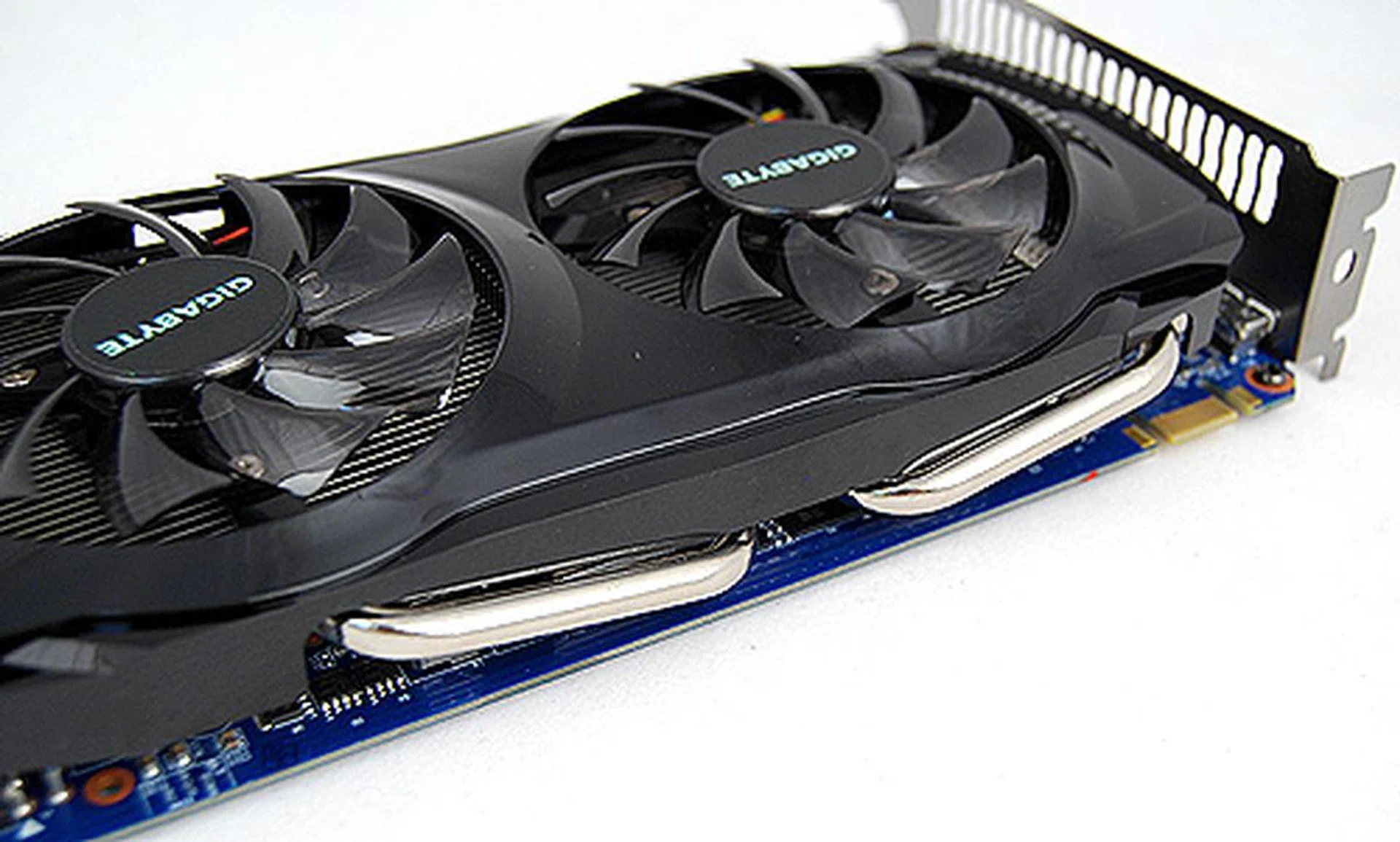
Apart from the two inclined fans, the Windforce cooler also sports two heat pipes to draw heat away from the GPU core.
Sparkle GeForce GTX 460
The Sparkle GeForce GTX 460 is perhaps the plainest card here, sporting NVDIA’s reference design cooler. It is also only mildly overclocked, having received just only a 25MHz bump to the core bringing it up to 700MHz. Memory clock speeds have been left untouched at 3600MHz DDR.
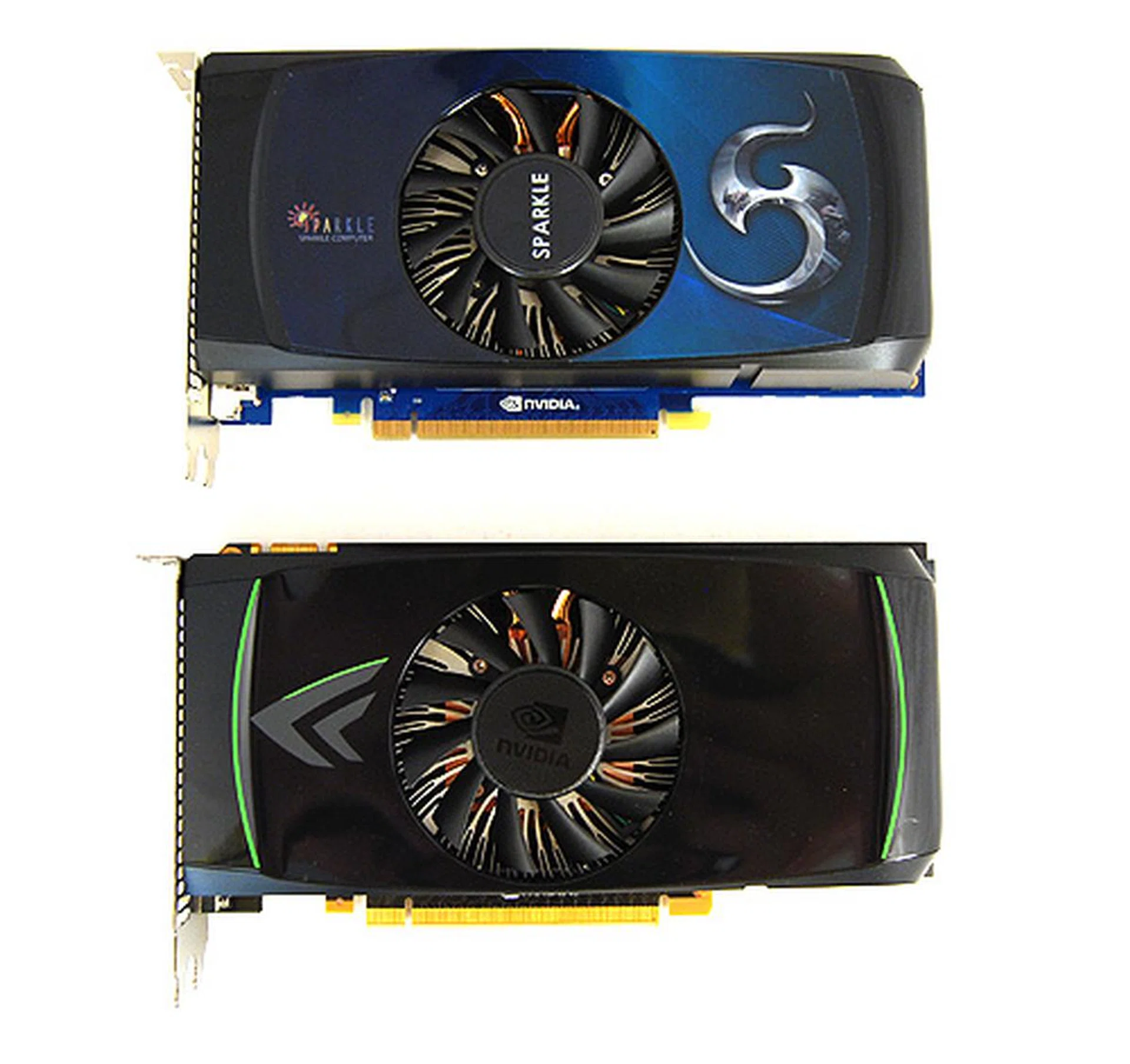
The Sparkle GeForce GTX 460 is completely identical to our reference card save for the Sparkle sticker adorning the cooler cover.
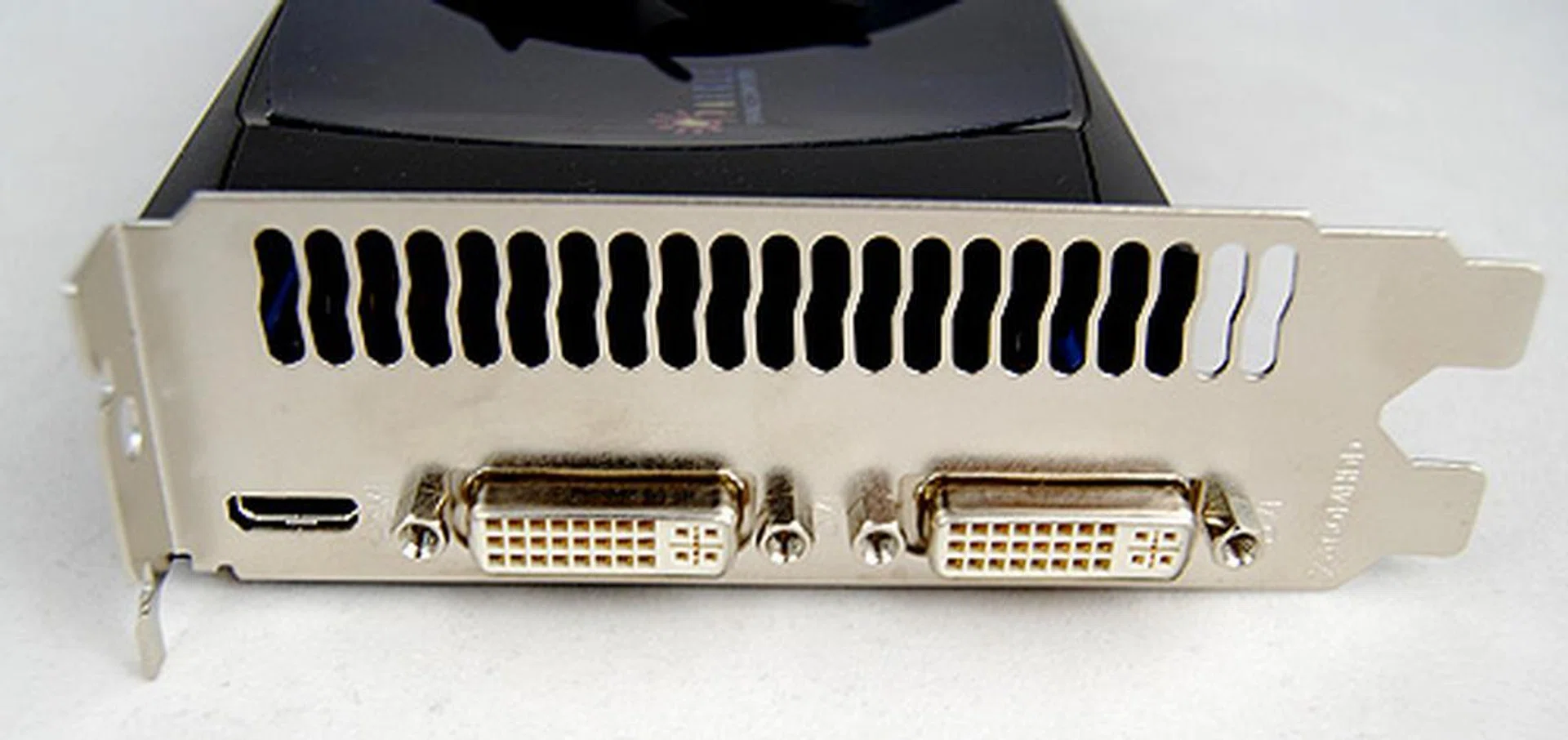
Again, the same twin DVI and single mini-HDMI ports for video output.
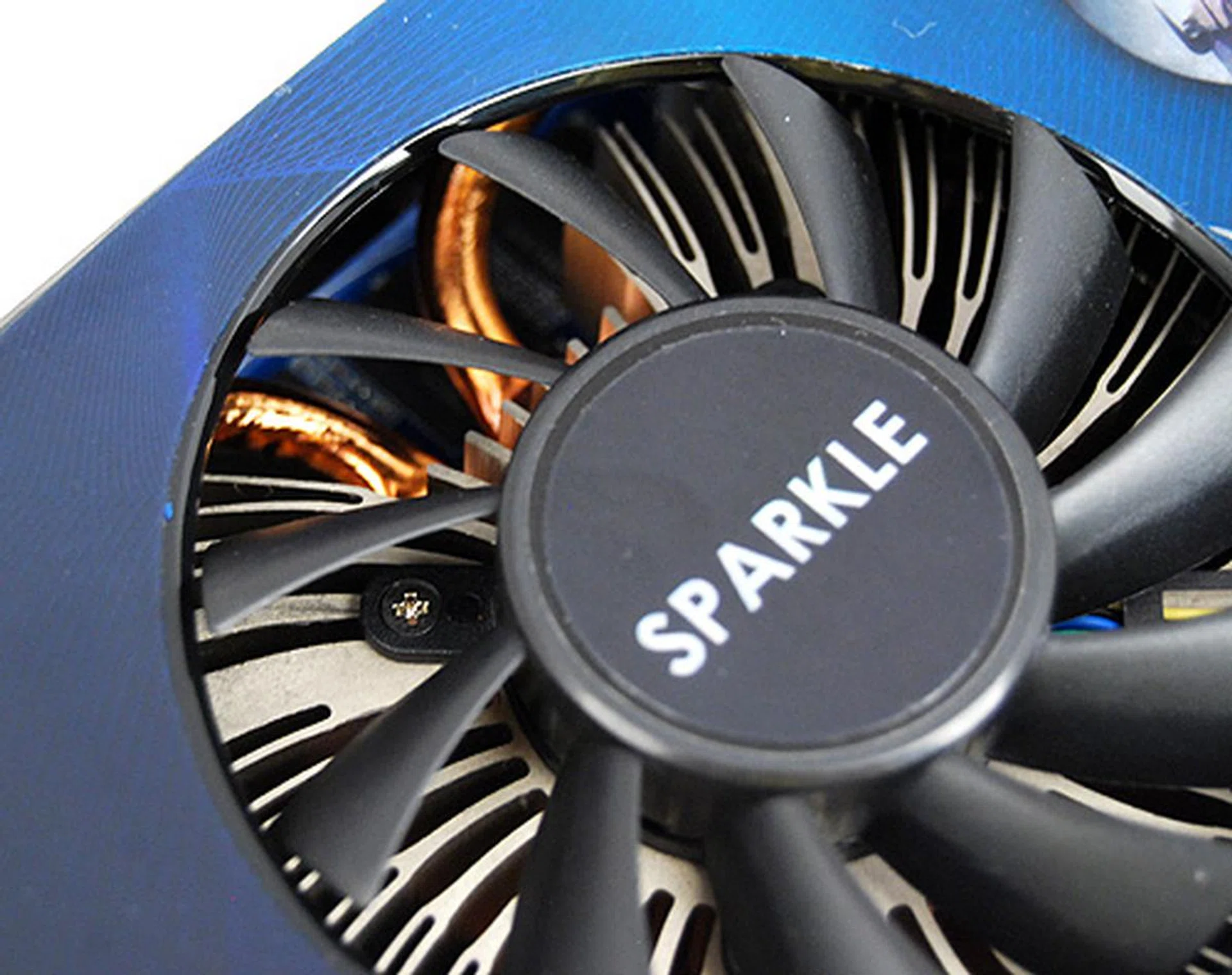
Underneath the cooler cover, the Sparkle card uses the same radial heatsink design as the reference card. And peering closely, we can see the use of copper heat pipes to quickly draw and dissipate heat away from the GPU core.
Test Setup
The cards will be tested using our high-end X58 system with the following specifications:
- Intel Core i7-975 (3.33GHz)
- Gigabyte GA-EX58-UD4P motherboard
- 3 x 1GB DDR3-1333 OCZ memory in triple-channel mode
- Seagate 7200.10 200GB SATA hard drive
- Windows 7 Ultimate
Clock speeds are often a good gauge of a card’s performance and we are expecting the Galaxy GeForce GTX 460 Super OC to come out tops thanks to its insanely high core clock speeds of 810MHz. The ASUS ENGTX 460 DirectCU TOP, however, should be a keen challenger as it matches the Galaxy card in terms of memory clock speeds, and its core clock speed of 775MHz comes close to the Galaxy’s 810MHz. On the other hand, we expect to see the Gigabyte GeForce GTX 460 OC and Sparkle GeForce GTX 460 struggling against the ASUS and Galaxy cards because of their lower clock speeds. Here's a quick comparison of the card's clock speeds:
Cards | Core Clock Speed | Shader Clock Speed | Memory Clock Speed |
ASUS ENGTX 460 DirectCUTOP | 775MHz | 1550MHz | 4000MHz DDR |
Galaxy GeForce GTX460 Super OC | 810MHz | 1620MHz | 4000MHz DDR |
Gigabyte GeForce GTX460 OC | 715MHz | 1430MHz | 3600MHz DDR |
Sparkle GeForce GTX460 | 700MHz | 1400MHz | 3600MHz DDR |
Apart from comparing the performance of the four cards against each other, we’re also interested to see how overclocked GeForce GTX 460s will match up against the more powerful GeForce GTX 470 and Radeon HD 5850. We believe that the aggressively overclocked Galaxy and ASUS cards could give the two more powerful and costly cards a run for their money. H
The full list of cards tested and their driver versions:
- ASUS ENGTX460 DirectCU TOP 1GB GDDR5 (ForceWare 258.96)
- Galaxy GeForce GTX 460 Super OC 1GB GDDR5 (ForceWare 258.96)
- Gigabyte GeForce GTX 460 OC 1GB GDDR5 (ForceWare 258.96)
- Sparkle GeForce GTX 460 1GB GDDR5 (ForceWare 258.96)
- NVIDIA GeForce GTX 460 1GB GDDR5 (ForceWare 258.80)
- NVIDIA GeForce GTX 470 1280MB GDDR5 (ForceWare 257.21)
- ATI Radeon HD 5850 (Catalyst 10.6)
- ATI Radeon HD 5830 (Catalyst 10.5)
The list of benchmarks used are as follows:
- Futuremark 3DMark Vantage
- Crysis Warhead
- Far Cry 2
- Warhammer: Dawn of War 2
- Battlefield Bad Company 2
- "Heaven" from Unigine v1.0
- S.T.A.L.K.E.R.: Call of Pripyat
3DMark Vantage Results
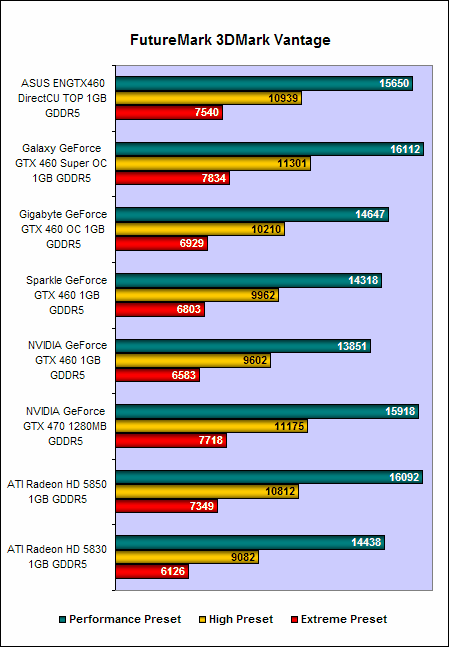
As we've predicted, the Galaxy card scored the highest amongst the four, followed by ASUS, Gigabyte and then Sparkle. What's impressive, however, is that the Galaxy GeForce GTX 460 Super OC managed to outscore the GeForce GTX 470 and even the Radeon HD 5850. Overall, the Galaxy card, with its super high clock speeds was around 16% to 19% quicker than a bone stock reference GeForce GTX 460.
Crysis Warhead & Far Cry 2 Results
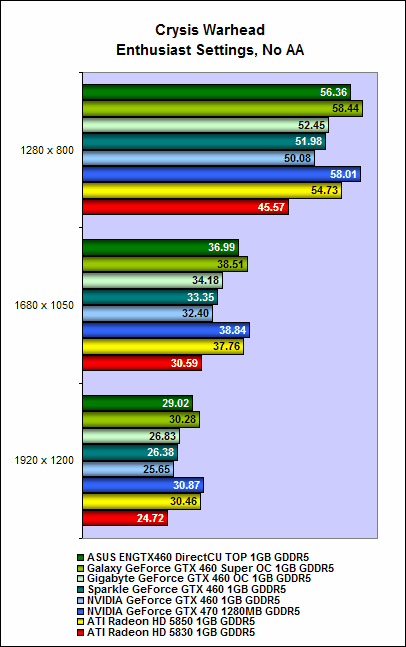
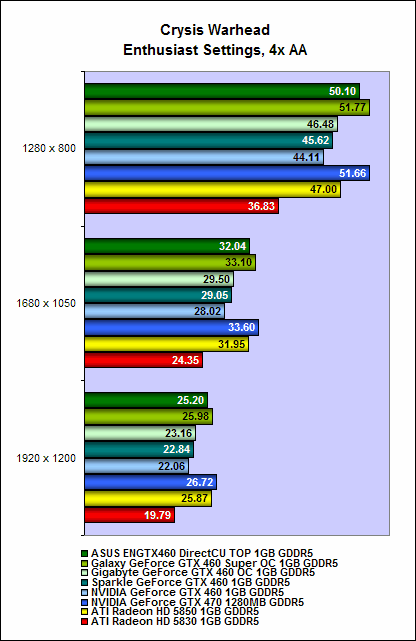
The aggressively overclocked Galaxy GeForce GTX 460 Super OC showed it was not one to be messed about with, managing impressive frame rates comparable to that of the more costly GeForce GTX 470. It also managed to outperform the Radeon HD 5850 by a slight margin.
The ASUS ENGTX 460 DirectCU TOP did well too, recording frame rates that were a good 15% faster than the reference GeForce GTX 460. To round up, the Gigabyte and Sparkle card, though faster than a reference GeForce GTX 460, is clearly not in the same league of its heavily overclocked rivals.
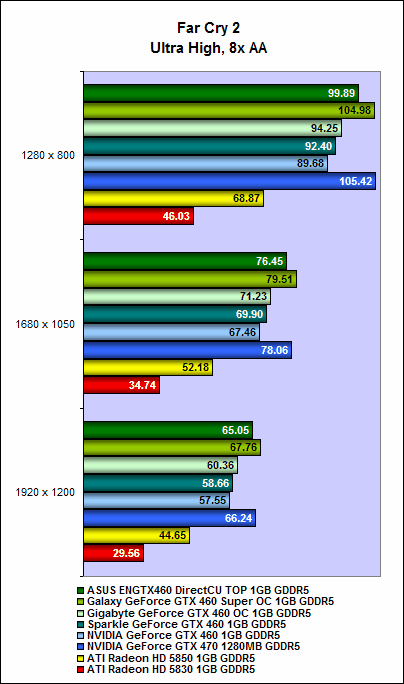
On Far Cry 2, the Galaxy GeForce GTX 460 Super OC was on a par with the GeForce GTX 470, which is certainly impressive. However, the ASUS ENGTX 460 DirectCU TOP wasn’t that far behind, and was on average, only about two to three frames slower than the quicker Galaxy card. Further back the pack are the Gigabyte and Sparkle cards, which is not surprising considering their significantly lower clock speeds.

Dawn of War 2 and Battlefield Bad Company 2 Results
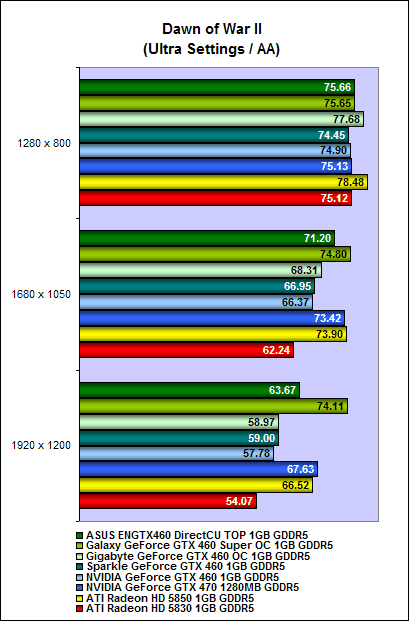
On Dawn of War 2, all four cards were pretty competitive on the lowest resolution of 1280 x 800, but as we increased the resolution, we started to notice significant differences. The Galaxy card was once more the strongest performer, consistently maintaining a good 74+ fps across all three resolutions and handily beating both the GeForce GTX 470 and Radeon HD 5850.
The ASUS ENGTX 460 DirectCU TOP did well too as it was considerable quicker than the reference card. Again, the Gigabyte and Sparkle cards were left trailing in the wake of its more powerful rivals.
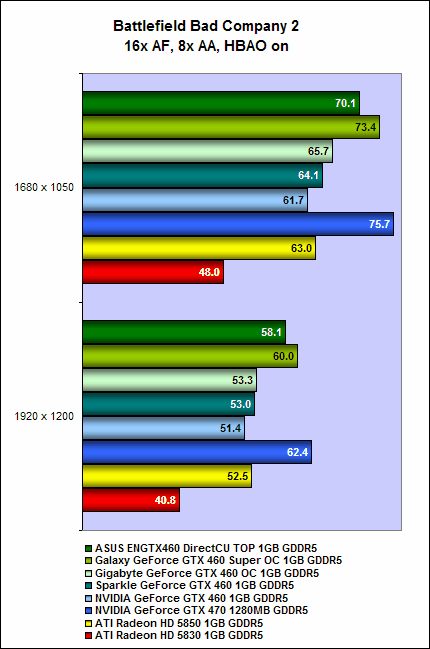
On Bad Company 2, the GeForce GTX 470 put up a strong performance, holding off the Galaxy GeForce GTX 460 Super OC, which has proved to be tough competitor thus far. The ASUS ENGTX 460 DirectCU TOP did well here as it outperformed the Radeon HD 5850 and wasn’t that far off the mark from the ultra-quick Galaxy card. And although the pair of Gigabyte and Sparkle cards are no match for the heavily overclocked Galaxy and ASUS cards, they were still noticeably quicker than a reference card.
Unigine "Heaven" Results
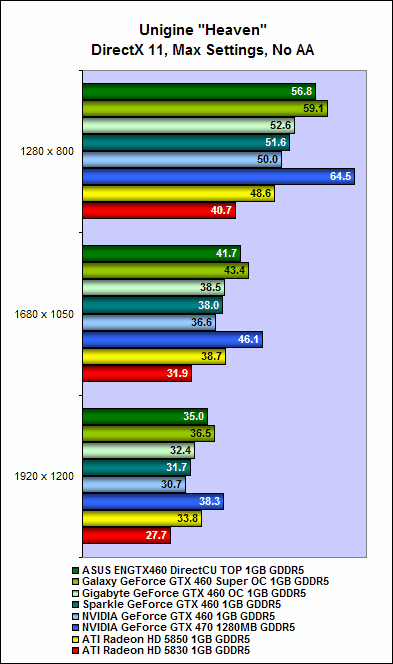
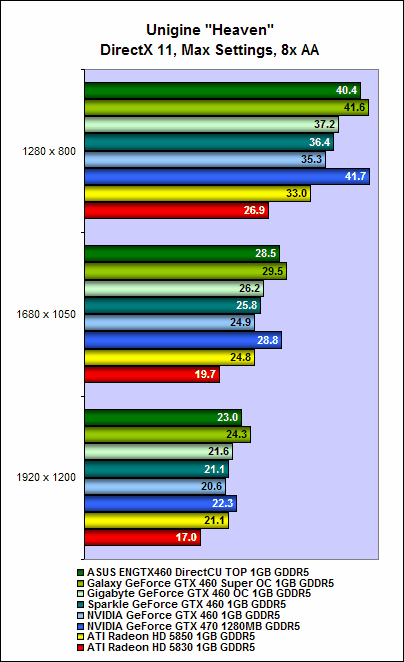
On Unigine, the Galaxy GeForce GTX 460 Super OC found itself stumped by the GeForce GTX 470. The GeForce GTX 470 boasts more tessellation units, which allowed it to maintain its lead over the Galaxy card. Nevertheless, the Galaxy card put up an impressive showing, comfortably outperforming its rivals by a significant margin and maintaining its position as the quickest GeForce GTX 460 in our roundup. The ASUS ENGTX 460 DirectCU TOP did well too, coming in second, followed by the Gigabyte GeForce GTX 460 OC and finally the Sparkle GeForce GTX 460.
S.T.A.L.K.E.R.: Call of Pripyat Results
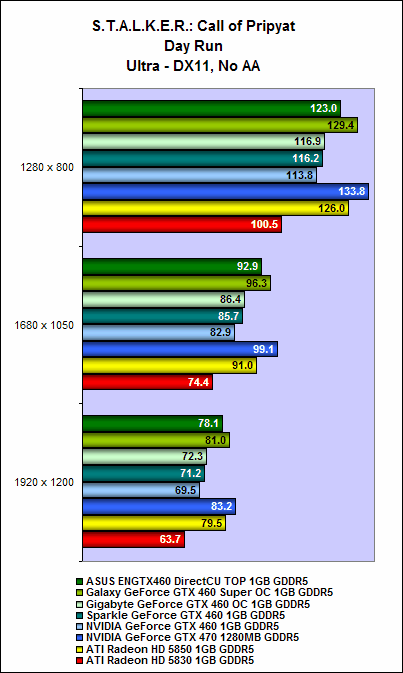
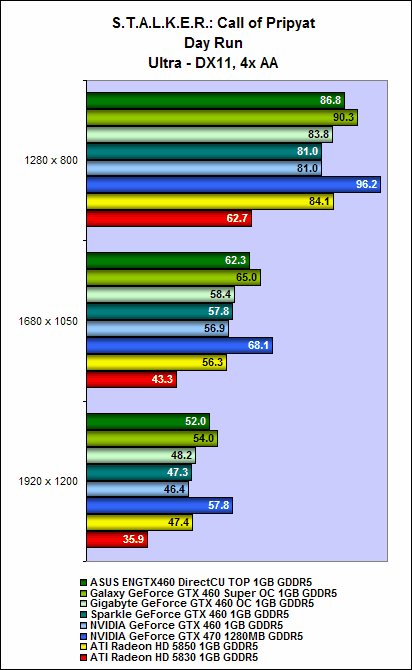
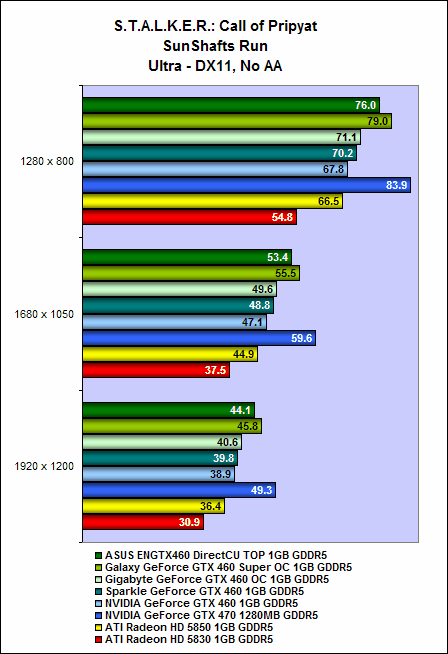
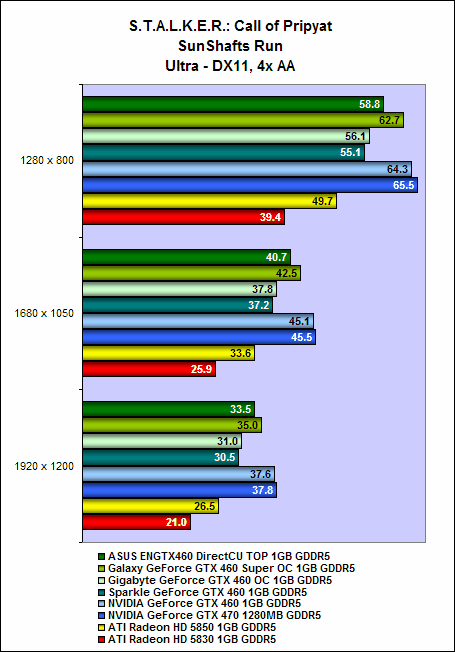
On our final benchmark, the Galaxy GeForce GTX 460 Super OC was again the quickest card in our roundup - it was on average about a good 10% quicker than a reference card. The ASUS ENGTX 460 DirectCU TOP was easily the second quickest, followed by the Gigabyte GeForce GTX 460 OC and the Sparkle GeForce GTX 460.
 |  |
 |  |
Temperature
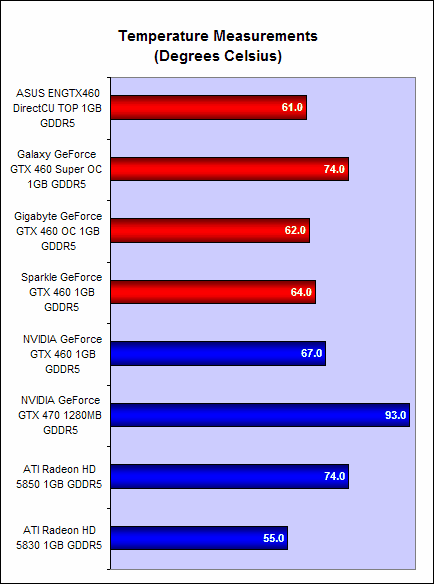
The reference cooler of the GeForce GTX 460 is already a decent one, but it never hurts to have a cooler operating card. The stand out mention here has to be the ASUS ENGTX 460 DirectCU TOP, because in spite of its fairly high clock speeds (775MHz at the core), it managed to be the coolest card here, recording an unbelievable 61 degrees Celsius. The Gigabyte GeForce GTX 460 with its Windforce cooler did well too, coming in at 62 degrees Celsius. The Sparkle card, despite sporting NVIDIA’s reference cooler, managed 64 degrees Celsius.
The most disappointing performer, however, is the Galaxy GeForce GTX 460 Super OC. Evidently, it’s blazing fast performance has come at a price, because it runs even hotter than the reference card. Clearly, the unique “flip-fan” cooler is not up to the task.
Power Consumption
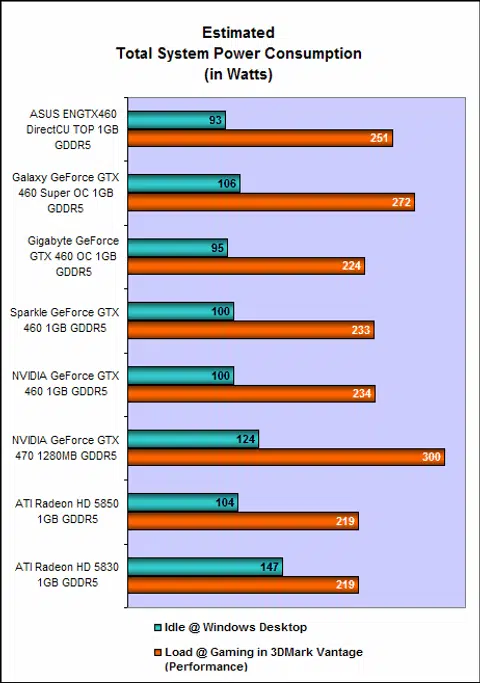
Despite being overclocked the Gigabyte GeForce GTX 460 OC and Sparkle GeForce GTX 460 both recorded readings that were similar to a reference GeForce GTX 460. In fact, the Gigabyte card fared the best of the lot. On the other hand, the ASUS and Galaxy cards both recorded significantly higher power draw, particularly the Galaxy GeForce GTX 460 Super OC as we recorded a peak power draw reading of a whopping 272W.
Overclocking
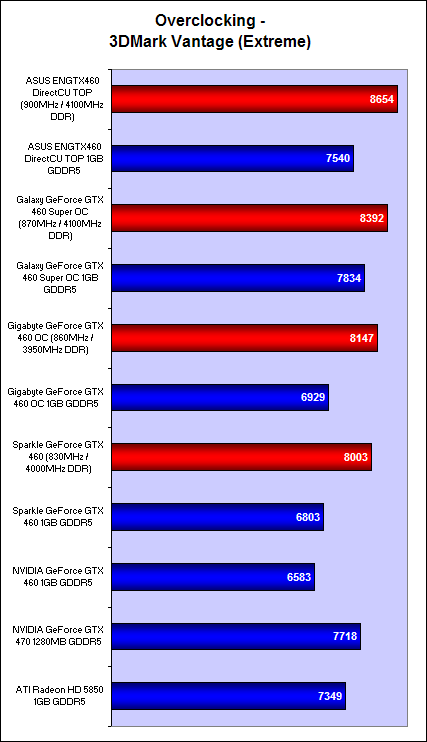
Thanks to its effective cooler and Voltage Tweak software, which allowed us to adjust the card’s core voltage values, the ASUS ENGTX 460 DirectCU TOP was our most able overclocker, as we achieved a maximum overclocking state of 900MHz at the core and 4100MHz DDR at the memory - compared to the reference card’s 675MHz and 3600MHz DDR. This was simply amazing, allowing us to attain 8654 3DMarks on the Extreme Preset, a significant 12% greater than even a GeForce GTX 470.
The Galaxy GeForce GTX 460 Super OC did commendably too, reaching 870MHz at the core and 4100Mhz DDR at the memory, resulting in 8392 3DMarks. That said, Galaxy’s Xtreme Tuner HD software, like MSI’s Afterburner and ASUS’ Voltage Tweak software allowed for easily core voltage manipulation, and this was crucial to its performance here.
The Gigabyte GeForce GTX 460 OC didn’t come with Gigabyte’s OC Guru overclocking utility, but that didn’t stop it from reaching a respectable 860MHz at the core and 3950MHz DDR at the memory. This gave us 8147 3DMarks, which is still greater than both the GeForce GTX 470 and Radeon HD 5850.
Lastly, we managed to get the Sparkle GeForce GTX 460 up to 830MHz at the core and 3950MHz DDR, which was enough for it to outscore the GeForce GTX 470 and Radeon HD 5850 on the Extreme preset of 3DMark Vantage.
Conclusion
On a whole, our selection of factory overclocked GeForce GTX 460 cards performed commendably. But before we offer our analysis of the cards, here’s a quick summary of their clock speeds and prices, followed by the breakdown of scores.
Cards | Core Clock Speed | Shader Clock Speed | Memory Clock Speed | Price (USD) |
ASUS ENGTX 460 DirectCUTOP | 775MHz | 1550MHz | 4000MHz DDR | ~$275 |
Galaxy GeForce GTX460 Super OC | 810MHz | 1620MHz | 4000MHz DDR | $269 |
Gigabyte GeForce GTX460 OC | 715MHz | 1430MHz | 3600MHz DDR | $229 |
Sparkle GeForce GTX460 | 700MHz | 1400MHz | 3600MHz DDR | $229 |
Cards | Performance | Features | Value | Overall |
ASUS ENGTX 460 DirectCUTOP | 9.5 | 8.5 | 8.5 | 9.0 |
Galaxy GeForce GTX460 Super OC | 9.5 | 8.5 | 8.5 | 9.0 |
Gigabyte GeForce GTX460 OC | 8.5 | 8.5 | 8.5 | 8.5 |
Sparkle GeForce GTX460 | 8.0 | 7.0 | 7.5 | 7.5 |
In terms of raw performance, the Galaxy GeForce GTX 460 Super OC is simply unrivaled. Not only was it the quickest card in our roundup, it even outperformed the more costly Radeon HD 5850 and was capable of challenging the GeForce GTX 470.
Not far behind in the performance stakes is the Galaxy card is ASUS’ formidable ENGTX 460 DirectCU TOP. Clocked at a lower 775MHz at the core, it wasn’t as fast as the Galaxy card; but nevertheless, it was markedly faster than a reference GeForce GTX 460 and also the Gigabyte and Sparkle cards.
From the get-go, we knew the Gigabyte GeForce GTX 460 OC and Sparkle GeForce GTX 460 would have difficulty keeping pace with the faster Galaxy and ASUS cards. With core clock speeds of 715MHz and 700MHz respectively, they were faster than a reference card, but was significantly slower than its faster clocked rivals.
That said, considering both cards are priced the same as a reference card - US$229 - the two are actually value buys for those who want a no-frills GeForce GTX 460. Between the two, however, our pick would be the Gigabyte GeForce GTX 460, as it's the better of the two in performance and is also cooler to run thanks to its custom-designed Windforce cooler.
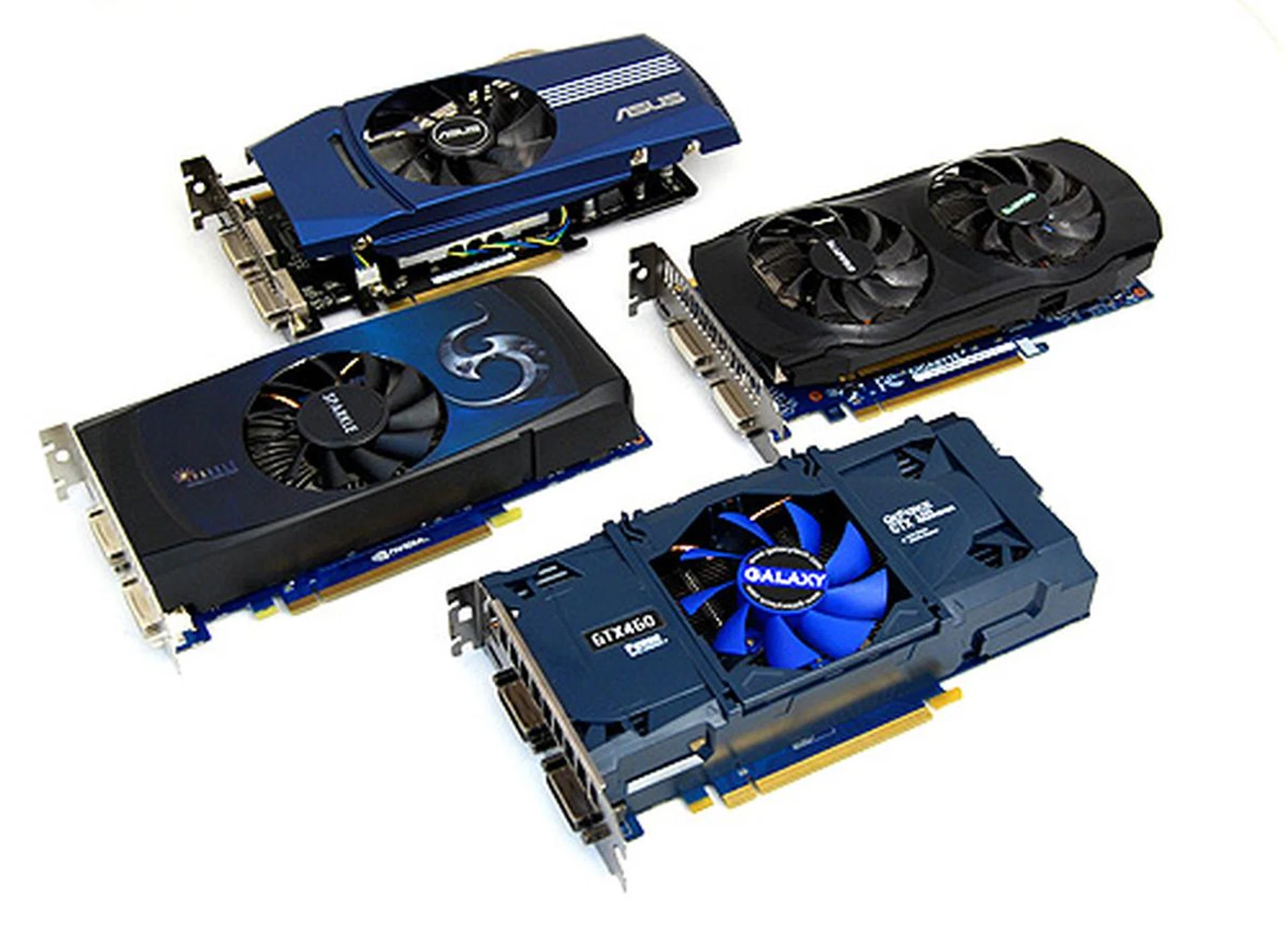
The ASUS and Galaxy cards are perfect for speed freaks; whereas the Gigabyte card offers great value for the casual user.
This leaves us with the Galaxy GeForce GTX 460 Super OC and the ASUS ENGTX 460 DirectCU TOP. The Galaxy card might be blisteringly fast, but its performance has come at the price. In our tests, we found that the Galaxy card runs a good deal hotter than a reference GeForce GTX 460. Furthermore, it is also more power hungry, no doubt due to its high clock speeds.
With that in mind, the ASUS ENGTX 460 DirectCU TOP is the better all-rounder. It might not be as fast as the Galaxy card, but it is appreciably quicker than a reference card and also both the Gigabyte and Sparkle cards. Despite that, it manages to record the lowest operating temperatures. The only chink in its armor is its slightly higher than average power draw figures.
Between the Galaxy and ASUS cards, it’s difficult to pick a winner, because the two are so competitive. Furthermore, at US$269 and around US$275 respectively, the two are also aggressively priced. In the end, we think it really boils down to what users want.
If you want a GeForce GTX 460 that’s fast out of the box, the Galaxy GeForce GTX 460 Super OC is an excellent choice. On the other hand, if you want a card that offers more overclocking potential, then the ASUS card, with its effective custom cooler, is probably the better buy.
<img height="211" width="320" alt="" src="https://cassette.sphdigital.com.sg/image/hardwarezone/5d95704a0498ca8db291cf651c0e9754341198c30cbfc4a5e14406d729460620" title="The ASUS ENGTX 460 DirectCU TOP " class="caption"> | 
|
|  |
|  |


Our articles may contain affiliate links. If you buy through these links, we may earn a small commission.